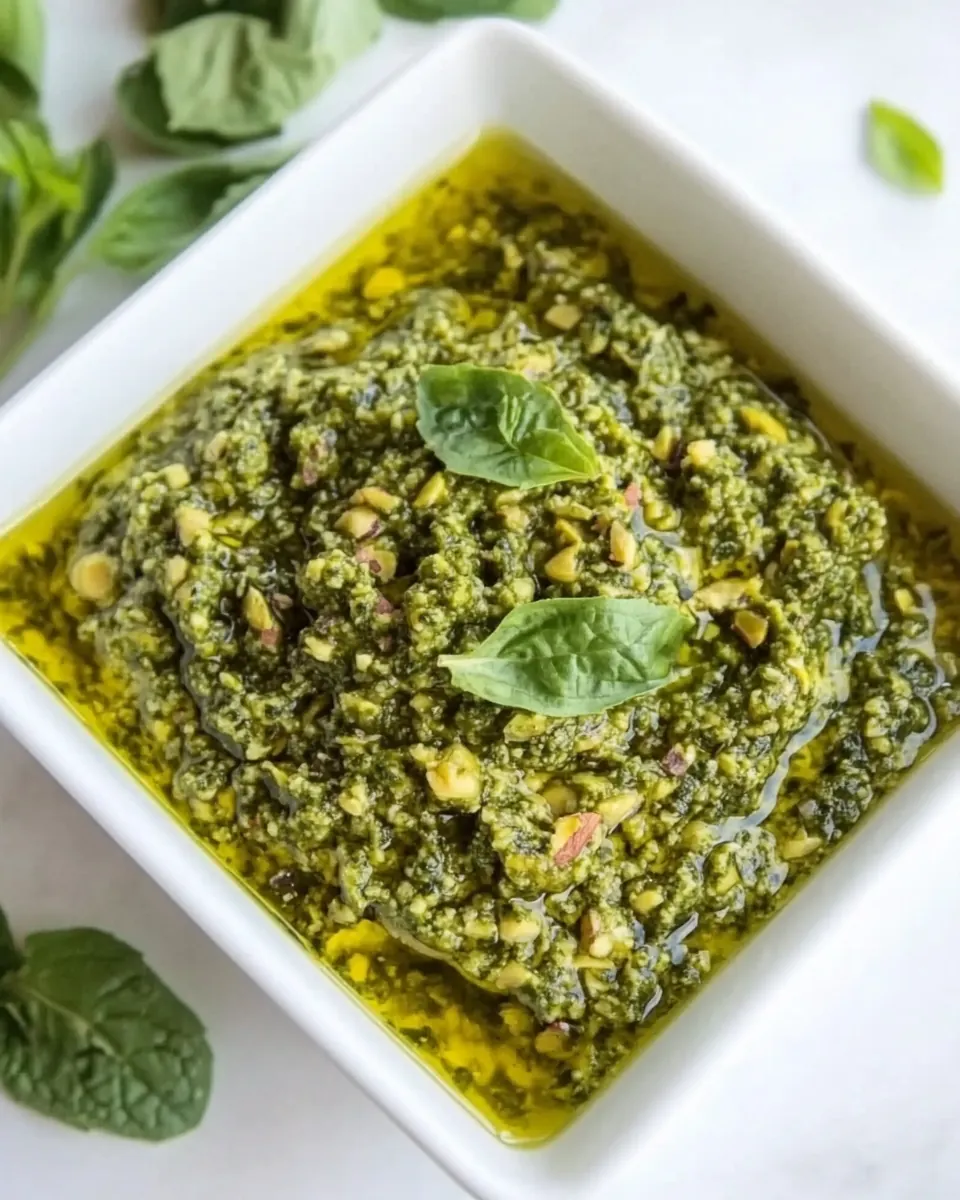
Pistachio Mint Pesto
Pistachio Mint Pesto is one of those recipes I reach for when I want something bright, nutty, and just a little unexpected on the table.
I remember the first time I made this, I had a bag of shelled pistachios left over from a party and a huge bunch of mint that was taking over my herb pot. I roasted the nuts until they smelled warm and toasty, and I slowly infused olive oil with garlic so the oil picked up an aromatic sweetness without any harsh raw bite. That combination, plus lemon and a pinch of cheese, created a punchy green sauce that changed how I thought about pesto forever.
Since then I’ve used Pistachio Mint Pesto as everything from a simple pasta topper to a quick smear on toasted bread for guests. It travels well, keeps in the fridge for days, and adapts to textures you love, whether you prefer it spoonable or silky enough for drizzling. Each time I make it I tweak the oil for texture, and I always toast the pistachios to pull out their full fragrance. This pesto is playful, versatile, and a little luxurious without being fussy.
Recipe Snapshot
31 mins
30 mins
1 mins
Easy
180 kcal
Mediterranean
Keto, Gluten-Free
Appetizers
Food processor, Skillet, Small pot
The Beauty of This Pistachio Mint Pesto
Vibrant Herb Profile
I love how Pistachio Mint Pesto flips the usual basil forward pesto into something herbal and lively. The fresh mint gives a cool aromatic lift while the basil keeps that classic pesto backbone. When I taste it, the mint arrives first, then basil rounds it into a familiar savory groove, and that contrast sings with simple preparations.
Nuts that Bring Texture
The shelled unsalted pistachio nuts are a revelation here. I toast them to coax out oils and a deeper, warm flavor. Pistachios create a creamy but slightly grainy texture that is more interesting than typical pine nuts, and that nutty density helps the pesto cling to pasta and bread. I appreciate how the nuts give substance without overpowering the herbs.
Garlic Infused Oil for Balanced Depth
I always infuse the olive oil with garlic at low heat rather than throwing raw garlic straight into the blender. That technique softens the bite and adds a rounded, savory backbone. It gives the pesto a subtle sweetness and eliminates that harsh, sharp edge that raw garlic sometimes brings. For me, it makes the sauce more approachable and layered.
Bright Citrus Finish
The combination of fresh lemon juice and lemon zest is crucial. I use them to lift and brighten the pesto, cutting through the richness of parmesan or pecorino cheese and nuts. The citrus keeps the sauce tasting lively, which means it pairs beautifully with heavier mains or simply with grilled vegetables. I find it makes the pesto taste fresher on day two, not duller.
Extremely Versatile
Finally, Pistachio Mint Pesto is staggeringly adaptable. I use it as a condiment, a salad topper, a marinade, or a quick pasta sauce. Because you can adjust the oil for a thicker or thinner texture, it’s easy to tailor the pesto to the dish at hand. I keep a jar in the fridge and it often saves an otherwise ordinary weeknight plate.
What to Buy for Pistachio Mint Pesto
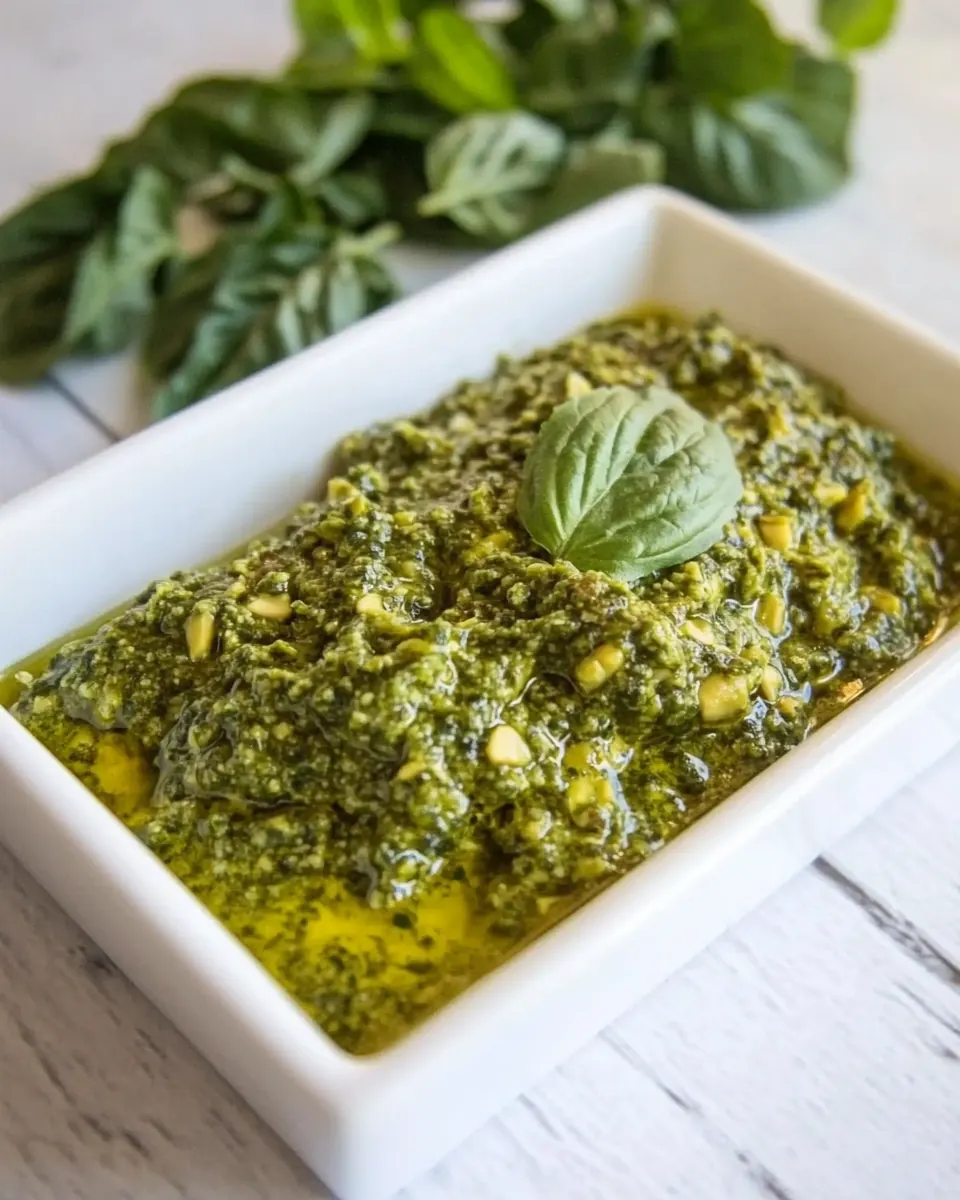
This pesto thrives on contrast: bright herbs, toasted nuts, and gentle garlic oil. The key players are the fresh mint and basil for aromatic lift, the toasted shelled unsalted pistachio nuts for body, and the lemon juice and lemon zest to sharpen and balance. Together they create a sauce that is at once verdant, nutty, and refreshingly citrus keyed.
- 1/2 cup olive oil (or more to taste): Adds a silky, fruity base that carries flavors and helps create a smooth, spreadable pesto; adjust quantity to reach desired texture and mouthfeel, and warm briefly if combining with cooked pasta so it emulsifies evenly.
- 4 cloves garlic: Brightens and sharpens the pesto with pungent aromatics; mince or smash to release essential oils, then blend thoroughly to distribute savory depth throughout the sauce.
- 1 cup shelled unsalted pistachio nuts: Provides a rich, creamy texture and nutty flavor while contributing body and healthy fats; toast lightly for deeper flavor if desired before pulsing to incorporate evenly into the paste.
- 2 1/2 cups roughly chopped fresh mint: Contributes a refreshing, aromatic backbone with vibrant green color and cooling notes; pack loosely when chopping and pulse with other herbs to preserve bright flavor and prevent oxidation.
- 1 cup roughly chopped fresh basil: Introduces sweet, peppery, and slightly anise-like herbal complexity that balances the mint; chop roughly and combine to create layered herbaceousness in the pesto.
- 1/3 cup grated parmesan or pecorino cheese: Delivers salty, umami richness and a sharp savory finish; grate finely and blend in to enhance depth, or reserve a little for sprinkling over the finished dish.
- 1/4 cup fresh lemon juice: Adds bright acidity and citrusy balance that lifts the richness of oil and nuts; squeeze freshly and taste as you blend to avoid over-acidifying the pesto.
- 1 teaspoon lemon zest: Contributes concentrated citrus aroma and an intense lemon flavor that intensifies freshness; grate finely and mix in sparingly to avoid overpowering delicate herbs.
- 1/2 teaspoon salt (or to taste): Provides seasoning control and enhances overall flavor harmony; add incrementally while blending and adjust at the end to suit your palate.
- Food processor, skillet, small pot: Enables efficient processing and finishing of the pesto as well as heating and serving when needed; use the food processor for emulsifying, the skillet for toasting or warming, and the small pot for combining with pasta or keeping sauce warm.
Making Pistachio Mint Pesto
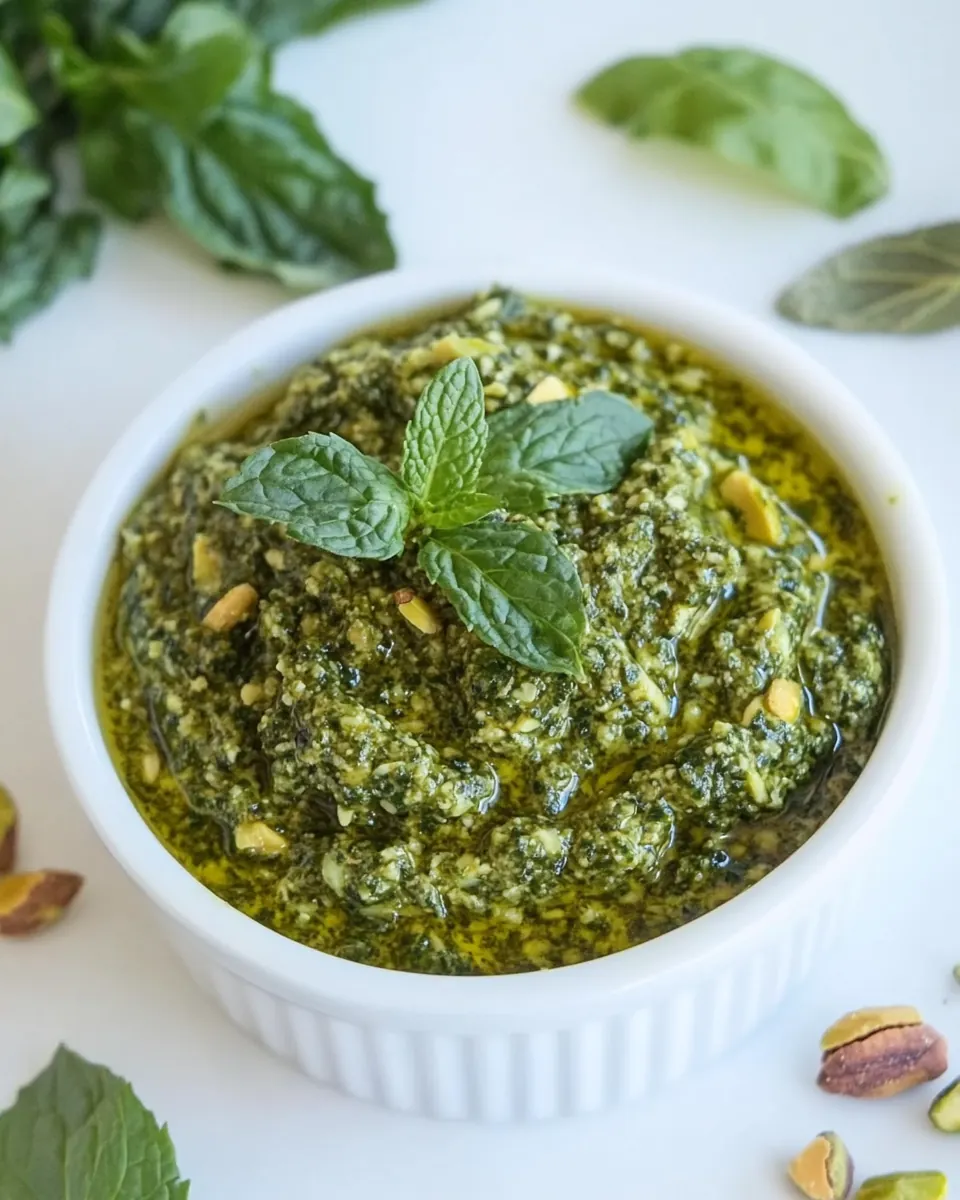
Making this pesto is meditative and tactile, and the payoff is immediate when the aroma fills your kitchen. The directions are straightforward but each small technique shapes the final flavor, so I talk you through sensory cues and common pitfalls.
- In a small saucepan, combine olive oil and the garlic cloves. Cook over low heat, stirring occasionally to prevent burning, until the garlic turns light golden brown and tender, about 15 minutes. Carefully remove from heat. The oil will be very hot. Once the oil has cooled to room temperature, remove and reserve the garlic cloves. Keep the garlic-infused oil; you will need it soon. Meanwhile, warm a skillet over medium heat. Add the pistachio nuts to the skillet. Stir them continuously over medium heat until they are toasted and fragrant. Remove from heat.: The first thing you will notice is the gentle shiver of heat on the oil as it warms. As the olive oil and garlic sit together over very low heat, delicate garlic aromas bloom into the oil, creating a soft, savory perfume. You want tiny bubbles near the edge, not a full simmer. Stirring occasionally keeps hot spots from forming, which prevents the garlic from developing bitter, burnt notes. If the oil starts to pop aggressively or the garlic darkens quickly, the heat is too high; lower the flame and scoop out any pieces that are getting too brown. Let the oil cool before processing, otherwise the heat will wilt the herbs too much and alter the freshness of the mint and basil .
- Add toasted pistachios to a food processor along with room temperature garlic infused olive oil, roasted garlic pieces, fresh mint and basil, parmesan or pecorino cheese, fresh lemon juice, and lemon zest.: You should watch for a pale golden color and a softened texture in the garlic , which signals that its sharp sulfur compounds have transformed into sweeter, mellow flavors. The sound is quiet and gentle, not crackling, and the kitchen will fill with a warm, roasted scent. If you rush this step with higher heat, the garlic will char and introduce bitter notes; patience yields the best flavor. When done, remove the saucepan from heat and let the oil cool to room temperature before moving on, because hot oil will overcook the herbs later.
- Pulse the mixture, scraping the sides periodically, until the mixture is creamy but still has a nutty texture.: The cooled oil should carry the aroma of roasted garlic without any burnt edge. Handling it carefully means you avoid splatters and you preserve that infused aroma. If the oil still seems hot to the touch, wait longer; adding it while hot can wilt the herbs prematurely and change the pesto’s bright color. A common misstep is trying to hurry by chilling the oil in the fridge, which can stiffen the oil and dull its aroma, so just allow gentle cooling at room temperature.
- Scrape the pesto into a bowl and taste. Stir in salt to taste if needed. I add about 1/2 tsp of salt, but you can add more or less to taste. Some cheeses have more salt than others, so the taste test is important here. Stir in additional olive oil for texture if desired. Some people like a thicker pesto, while others prefer a more liquid pesto for drizzling. If you prefer a more liquid texture, add more olive oil by the tablespoon and stir until it's right.: The roasted garlic cloves have become spreadable and sweet, almost caramelized in profile. Reserving them lets you include small chunks back into the pesto for a savory hit. If the cloves are overly browned, discard them rather than introduce bitterness. When you add them later, they will lend a mellow garlic note that is more subtle than raw garlic would.
- Serve as a sauce, condiment, or topping, or use as a marinade depending on your preference.: This infused olive oil is like flavor glue for the pesto, carrying the essence of the garlic throughout the sauce. Measure out what you will use, but know you can always add more oil by tablespoon to adjust texture. Avoid adding the oil while it is still hot, as that will cook the fresh herbs and can make the pesto dull in color and aroma.
- Meanwhile, warm a skillet over medium heat: Heating the pan prepares it to toast the shelled unsalted pistachio nuts evenly. When the skillet is ready you will notice a faint shimmer of heat, and the nuts will respond quickly once they are added. A properly warmed pan gives even toasting and ensures the pistachios release sweet, nutty aromas rather than steam. If your pan has hot spots, the nuts will toast unevenly, so keep them moving.
- Add the pistachio nuts to the skillet: As you add the shelled unsalted pistachio nuts , you will hear a soft toasting sound and smell a fragrant, warm nuttiness. Toss them or stir continuously to promote even browning, watching for tiny dark flecks and a deeper toasted scent. Do not walk away, because nuts can go from perfectly toasted to burnt in seconds. If you notice any pieces char, remove them right away to prevent bitterness.
- Stir them continuously over medium heat until they are toasted and fragrant: Toasting draws out oil and amplifies flavor, and the nuts will turn a slightly deeper hue and emit a warm, almost sweet aroma. The surface may sheen slightly as oils surface. Remove from the heat promptly and transfer to a cool plate so residual heat does not continue to cook them. A common mistake is leaving them in the hot skillet, which will overcook them and produce an acrid taste that will carry through the pesto.
- Remove from heat: Once toasted, cool the shelled unsalted pistachio nuts quickly to preserve their crispness and prevent additional cooking from pan heat. Cooling also makes them easier to process without overheating the mixture. If the nuts remain hot when added to the processor, they can warm the herbs and change the vibrant green color and fresh aroma of the pesto.
- Add toasted pistachios to a food processor along with room temperature garlic infused olive oil, roasted garlic pieces, fresh mint and basil, parmesan or pecorino cheese, fresh lemon juice, and lemon zest: When you assemble these elements the aroma becomes complex and layered, with citrus lifting the herbal notes and cheese adding savory depth. The food processor blends everything into a cohesive paste, but the room temperature oil ensures the herbs do not wilt prematurely. If you rush with warm ingredients, you risk losing bright color and fresh aroma, so ensure the oil and toasted nuts are cool enough that the herbs stay green.
- Pulse the mixture, scraping the sides periodically, until the mixture is creamy but still has a nutty texture: You should pulse rather than run the processor continuously, which helps keep some grain and pleasant texture from the shelled unsalted pistachio nuts . Listen for changing motor pitch as the mixture becomes more homogenous, and stop to scrape and redistribute so everything gets an even grind. The texture should be creamy yet textured, not a smooth puree. Overprocessing will create a paste that loses the delightful nutty mouthfeel.
- Scrape the pesto into a bowl and taste: A quick taste reveals the balance of herb, nut, cheese, and citrus. Expect a fragrant green lift from the mint and basil , a toasty nuttiness from the shelled unsalted pistachio nuts , and a rounded savor from the parmesan or pecorino cheese . If any single component stands out too strongly, adjust in small increments to avoid throwing the balance off.
- Stir in salt to taste if needed: Salt brings out hidden flavors and knits the pesto together. You may need less if you used a salty cheese, so add sparingly and taste between additions. The wrong amount of salt can mask the delicate mint character, so err on the side of caution and adjust slowly.
- Stir in additional olive oil for texture if desired: Adding more olive oil will loosen the pesto and make it easier to drizzle or toss with hot pasta. I recommend adding oil by the tablespoon, stirring, and tasting until you reach the desired consistency. Avoid adding too much at once because you can always add more but cannot easily remove it.
- Some people like a thicker pesto, while others prefer a more liquid pesto for drizzling: Decide how you plan to use the sauce before you finalize its texture. A thicker pesto is great as a spread or stuffing, while a looser pesto is better for dressing warm pasta or steamed vegetables. If you want the drizzle effect, thin gradually with more olive oil to avoid making it too runny.
- If you prefer a more liquid texture, add more olive oil by the tablespoon and stir until it's right: As you incorporate additional oil, note the change in sheen and mouthfeel. The scent opens up and the sauce coats more evenly. Keep tasting so the citrus and cheese remain balanced; adding oil dilutes flavors as it smooths texture.
- Serve as a sauce, condiment, or topping, or use as a marinade depending on your preference: When you plate the pesto it should look glossy and vibrant green. Spoon it over warm pasta so it loosens slightly and clings, smear it onto toasted bread for contrast of crunch, or use it as a finishing dollop on grilled vegetables. If marinating, the oil and lemon help carry flavors into proteins or veg, but remember the pesto is concentrated, so use sparingly. If you store it, a thin layer of olive oil on top helps prevent oxidation and keeps the color fresh.
Tips and Tricks about Pistachio Mint Pesto
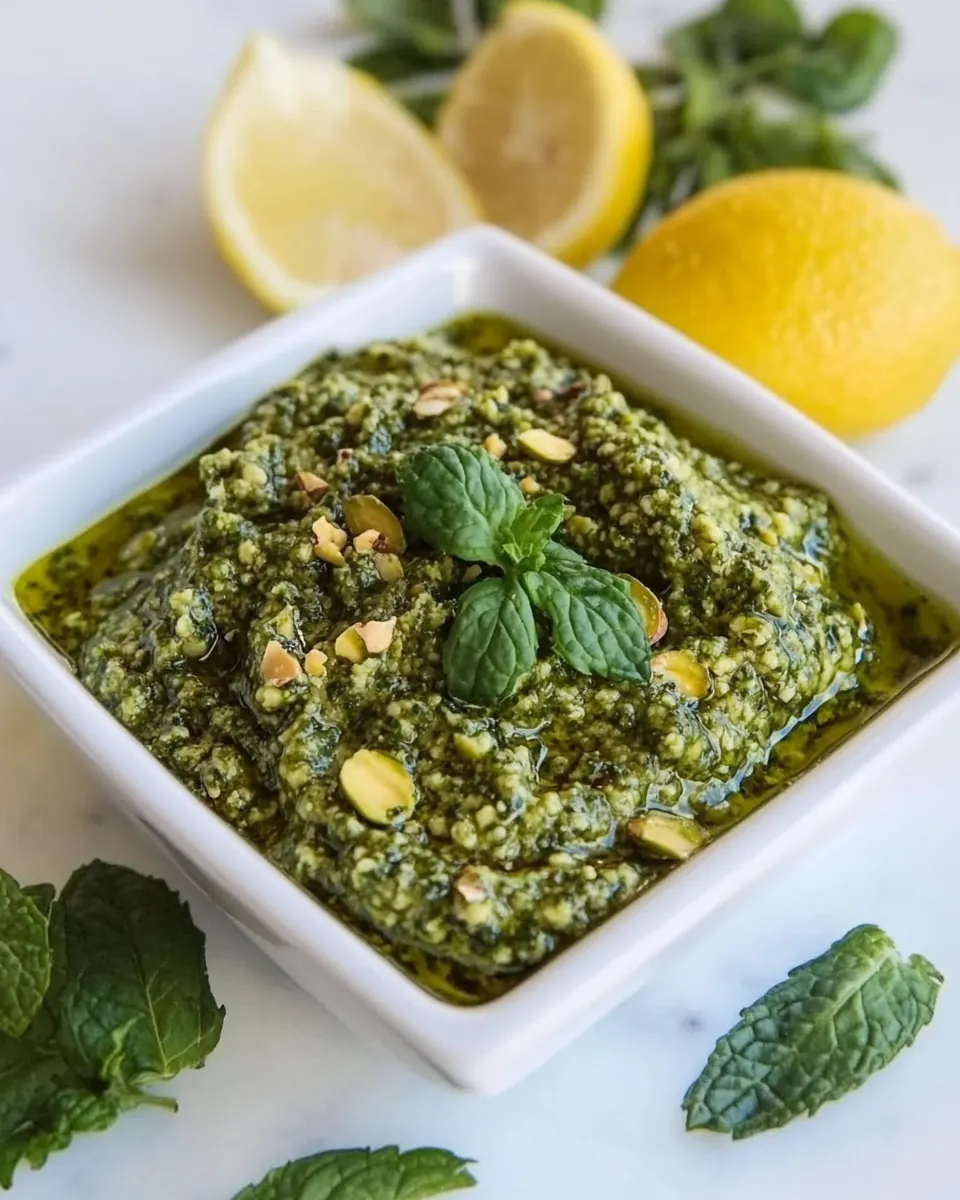
This pesto rewards attention to small techniques, from gentle oil infusion to careful toasting. The following tips expand each idea into practical advice so you can make a pesto that is balanced, aromatic, and full of personality.
- Keep herbs cool: Chill your mint and basil briefly before processing to preserve bright color and fresh aroma, avoiding any cooking from warm ingredients.
- Toast nuts in small batches: Toast the shelled unsalted pistachio nuts in a single layer and stir constantly for even color and prevention of hot spots that cause burning.
- Low and slow garlic: Infuse the olive oil over very low heat until the garlic is pale golden to achieve sweet, mellow garlic essence without bitterness.
- Adjust texture gradually: Add additional olive oil by the tablespoon and test the consistency so you don’t overthin the pesto for your intended use.
- Cheese caution: Add the parmesan or pecorino cheese incrementally and taste first, since cheeses vary in saltiness and can dominate the flavor quickly.
Accompaniments for Pistachio Mint Pesto
Pistachio Mint Pesto works across meals and seasons, and pairing it thoughtfully makes it shine. Below are serving ideas, occasions, and storage notes to help you integrate this pesto into menus from casual lunches to special dinners.
- As a pasta sauce: Toss warm pasta with a few tablespoons of pesto and a splash of pasta cooking water, serve as a simple weeknight dinner or light main.
- On toasted bread: Spread thicker pesto on grilled or toasted bread for an appetizer or snack, topped with a few shavings of parmesan or pecorino cheese if desired.
- With roasted vegetables: Dollop pesto over hot roasted vegetables to add fresh herbal contrast and a nutty finish.
- As a condiment for gatherings: Offer bowls of pesto alongside crudites and breads at parties for an elegant, easy-to-eat option during social occasions.
- For seasonal occasions: The bright mint makes this pesto well suited for spring and light summer menus, and it also brings a green, festive note during holidays that favor fresh flavors.
- Storage tips: Refrigerate in an airtight container for up to a week, covering the surface with a thin layer of olive oil to slow oxidation, or freeze portions in an ice cube tray for long term use.
FAQ
Conclusion
Pistachio Mint Pesto stands out because it pairs bright herbal lift with toasted nut richness, yielding a sauce that is both fresh and deeply flavorful. Give it a try the next time you want a quick way to elevate pasta, bread, or roasted vegetables; the techniques are simple and the results are reliably impressive. I hope you enjoy how this pesto makes ordinary meals feel a bit more intentional and festive, and that it becomes one of those go to jars in your fridge.
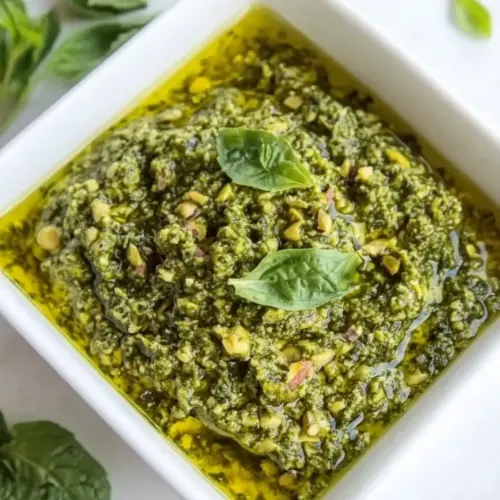
Pistachio Mint Pesto
Equipment
- Food Processor
- Skillet
- Small pot
Ingredients
- 1/2 cup olive oil (or more to taste) Adds a silky, fruity base that carries flavors and helps create a smooth, spreadable pesto; adjust quantity to reach desired texture and mouthfeel, and warm briefly if combining with cooked pasta so it emulsifies evenly.
- 4 cloves garlic Brightens and sharpens the pesto with pungent aromatics; mince or smash to release essential oils, then blend thoroughly to distribute savory depth throughout the sauce.
- 1 cup shelled unsalted pistachio nuts Provides a rich, creamy texture and nutty flavor while contributing body and healthy fats; toast lightly for deeper flavor if desired before pulsing to incorporate evenly into the paste.
- 2 1/2 cups roughly chopped fresh mint Contributes a refreshing, aromatic backbone with vibrant green color and cooling notes; pack loosely when chopping and pulse with other herbs to preserve bright flavor and prevent oxidation.
- 1 cup roughly chopped fresh basil Introduces sweet, peppery, and slightly anise-like herbal complexity that balances the mint; chop roughly and combine to create layered herbaceousness in the pesto.
- 1/3 cup grated parmesan or pecorino cheese Delivers salty, umami richness and a sharp savory finish; grate finely and blend in to enhance depth, or reserve a little for sprinkling over the finished dish.
- 1/4 cup fresh lemon juice Adds bright acidity and citrusy balance that lifts the richness of oil and nuts; squeeze freshly and taste as you blend to avoid over-acidifying the pesto.
- 1 teaspoon lemon zest Contributes concentrated citrus aroma and an intense lemon flavor that intensifies freshness; grate finely and mix in sparingly to avoid overpowering delicate herbs.
- 1/2 teaspoon salt (or to taste) Provides seasoning control and enhances overall flavor harmony; add incrementally while blending and adjust at the end to suit your palate.
- Food processor, skillet, small pot Enables efficient processing and finishing of the pesto as well as heating and serving when needed; use the food processor for emulsifying, the skillet for toasting or warming, and the small pot for combining with pasta or keeping sauce warm.
Instructions
- In a small saucepan, combine olive oil and the garlic cloves. Cook over low heat, stirring occasionally to prevent burning, until the garlic turns light golden brown and tender, about 15 minutes. Carefully remove from heat. The oil will be very hot. Once the oil has cooled to room temperature, remove and reserve the garlic cloves. Keep the garlic-infused oil; you will need it soon. Meanwhile, warm a skillet over medium heat. Add the pistachio nuts to the skillet. Stir them continuously over medium heat until they are toasted and fragrant. Remove from heat.: The first thing you will notice is the gentle shiver of heat on the oil as it warms. As the olive oil and garlic sit together over very low heat, delicate garlic aromas bloom into the oil, creating a soft, savory perfume. You want tiny bubbles near the edge, not a full simmer. Stirring occasionally keeps hot spots from forming, which prevents the garlic from developing bitter, burnt notes. If the oil starts to pop aggressively or the garlic darkens quickly, the heat is too high; lower the flame and scoop out any pieces that are getting too brown. Let the oil cool before processing, otherwise the heat will wilt the herbs too much and alter the freshness of the mint and basil .
- Add toasted pistachios to a food processor along with room temperature garlic infused olive oil, roasted garlic pieces, fresh mint and basil, parmesan or pecorino cheese, fresh lemon juice, and lemon zest.: You should watch for a pale golden color and a softened texture in the garlic , which signals that its sharp sulfur compounds have transformed into sweeter, mellow flavors. The sound is quiet and gentle, not crackling, and the kitchen will fill with a warm, roasted scent. If you rush this step with higher heat, the garlic will char and introduce bitter notes; patience yields the best flavor. When done, remove the saucepan from heat and let the oil cool to room temperature before moving on, because hot oil will overcook the herbs later.
- Pulse the mixture, scraping the sides periodically, until the mixture is creamy but still has a nutty texture.: The cooled oil should carry the aroma of roasted garlic without any burnt edge. Handling it carefully means you avoid splatters and you preserve that infused aroma. If the oil still seems hot to the touch, wait longer; adding it while hot can wilt the herbs prematurely and change the pesto’s bright color. A common misstep is trying to hurry by chilling the oil in the fridge, which can stiffen the oil and dull its aroma, so just allow gentle cooling at room temperature.
- Scrape the pesto into a bowl and taste. Stir in salt to taste if needed. I add about 1/2 tsp of salt, but you can add more or less to taste. Some cheeses have more salt than others, so the taste test is important here. Stir in additional olive oil for texture if desired. Some people like a thicker pesto, while others prefer a more liquid pesto for drizzling. If you prefer a more liquid texture, add more olive oil by the tablespoon and stir until it's right.: The roasted garlic cloves have become spreadable and sweet, almost caramelized in profile. Reserving them lets you include small chunks back into the pesto for a savory hit. If the cloves are overly browned, discard them rather than introduce bitterness. When you add them later, they will lend a mellow garlic note that is more subtle than raw garlic would.
- Serve as a sauce, condiment, or topping, or use as a marinade depending on your preference.: This infused olive oil is like flavor glue for the pesto, carrying the essence of the garlic throughout the sauce. Measure out what you will use, but know you can always add more oil by tablespoon to adjust texture. Avoid adding the oil while it is still hot, as that will cook the fresh herbs and can make the pesto dull in color and aroma.
- Meanwhile, warm a skillet over medium heat: Heating the pan prepares it to toast the shelled unsalted pistachio nuts evenly. When the skillet is ready you will notice a faint shimmer of heat, and the nuts will respond quickly once they are added. A properly warmed pan gives even toasting and ensures the pistachios release sweet, nutty aromas rather than steam. If your pan has hot spots, the nuts will toast unevenly, so keep them moving.
- Add the pistachio nuts to the skillet: As you add the shelled unsalted pistachio nuts , you will hear a soft toasting sound and smell a fragrant, warm nuttiness. Toss them or stir continuously to promote even browning, watching for tiny dark flecks and a deeper toasted scent. Do not walk away, because nuts can go from perfectly toasted to burnt in seconds. If you notice any pieces char, remove them right away to prevent bitterness.
- Stir them continuously over medium heat until they are toasted and fragrant: Toasting draws out oil and amplifies flavor, and the nuts will turn a slightly deeper hue and emit a warm, almost sweet aroma. The surface may sheen slightly as oils surface. Remove from the heat promptly and transfer to a cool plate so residual heat does not continue to cook them. A common mistake is leaving them in the hot skillet, which will overcook them and produce an acrid taste that will carry through the pesto.
- Remove from heat: Once toasted, cool the shelled unsalted pistachio nuts quickly to preserve their crispness and prevent additional cooking from pan heat. Cooling also makes them easier to process without overheating the mixture. If the nuts remain hot when added to the processor, they can warm the herbs and change the vibrant green color and fresh aroma of the pesto.
- Add toasted pistachios to a food processor along with room temperature garlic infused olive oil, roasted garlic pieces, fresh mint and basil, parmesan or pecorino cheese, fresh lemon juice, and lemon zest: When you assemble these elements the aroma becomes complex and layered, with citrus lifting the herbal notes and cheese adding savory depth. The food processor blends everything into a cohesive paste, but the room temperature oil ensures the herbs do not wilt prematurely. If you rush with warm ingredients, you risk losing bright color and fresh aroma, so ensure the oil and toasted nuts are cool enough that the herbs stay green.
- Pulse the mixture, scraping the sides periodically, until the mixture is creamy but still has a nutty texture: You should pulse rather than run the processor continuously, which helps keep some grain and pleasant texture from the shelled unsalted pistachio nuts . Listen for changing motor pitch as the mixture becomes more homogenous, and stop to scrape and redistribute so everything gets an even grind. The texture should be creamy yet textured, not a smooth puree. Overprocessing will create a paste that loses the delightful nutty mouthfeel.
- Scrape the pesto into a bowl and taste: A quick taste reveals the balance of herb, nut, cheese, and citrus. Expect a fragrant green lift from the mint and basil , a toasty nuttiness from the shelled unsalted pistachio nuts , and a rounded savor from the parmesan or pecorino cheese . If any single component stands out too strongly, adjust in small increments to avoid throwing the balance off.
- Stir in salt to taste if needed: Salt brings out hidden flavors and knits the pesto together. You may need less if you used a salty cheese, so add sparingly and taste between additions. The wrong amount of salt can mask the delicate mint character, so err on the side of caution and adjust slowly.
- Stir in additional olive oil for texture if desired: Adding more olive oil will loosen the pesto and make it easier to drizzle or toss with hot pasta. I recommend adding oil by the tablespoon, stirring, and tasting until you reach the desired consistency. Avoid adding too much at once because you can always add more but cannot easily remove it.
- Some people like a thicker pesto, while others prefer a more liquid pesto for drizzling: Decide how you plan to use the sauce before you finalize its texture. A thicker pesto is great as a spread or stuffing, while a looser pesto is better for dressing warm pasta or steamed vegetables. If you want the drizzle effect, thin gradually with more olive oil to avoid making it too runny.
- If you prefer a more liquid texture, add more olive oil by the tablespoon and stir until it's right: As you incorporate additional oil, note the change in sheen and mouthfeel. The scent opens up and the sauce coats more evenly. Keep tasting so the citrus and cheese remain balanced; adding oil dilutes flavors as it smooths texture.
- Serve as a sauce, condiment, or topping, or use as a marinade depending on your preference: When you plate the pesto it should look glossy and vibrant green. Spoon it over warm pasta so it loosens slightly and clings, smear it onto toasted bread for contrast of crunch, or use it as a finishing dollop on grilled vegetables. If marinating, the oil and lemon help carry flavors into proteins or veg, but remember the pesto is concentrated, so use sparingly. If you store it, a thin layer of olive oil on top helps prevent oxidation and keeps the color fresh.
Notes
- Keep herbs cool: Chill your mint and basil briefly before processing to preserve bright color and fresh aroma, avoiding any cooking from warm ingredients.
- Toast nuts in small batches: Toast the shelled unsalted pistachio nuts in a single layer and stir constantly for even color and prevention of hot spots that cause burning.
- Low and slow garlic: Infuse the olive oil over very low heat until the garlic is pale golden to achieve sweet, mellow garlic essence without bitterness.
- Adjust texture gradually: Add additional olive oil by the tablespoon and test the consistency so you don’t overthin the pesto for your intended use.
- Cheese caution: Add the parmesan or pecorino cheese incrementally and taste first, since cheeses vary in saltiness and can dominate the flavor quickly.