
Peach Cobbler
Peach Cobbler has been a constant in my summer kitchen for years, the kind of dessert that arrives at potlucks with a warm welcome and vanishes before the coffee is cold.
My earliest memory of Peach Cobbler is of my grandmother nudging a bubbling pan from the oven, steam carrying the scent of baked peaches and brown sugar through the house, while we argued over who would get the last warm spoonful. That scent hooked me early, and over time I learned how each ingredient plays a role, how the tiny grit of ground instant tapioca gives the filling body, and how cold, diced butter makes the topping sing. I still reach for this recipe when friends stop by unexpectedly, because it comes together with modest fuss yet feels celebratory.
There are quieter versions too, when I make a smaller dish for a weeknight dessert and spoon it into bowls with a simple scoop of vanilla ice cream. The contrast between the slightly crunchy golden topping and the soft, syrupy peaches is the reason I keep coming back. Every time I prepare Peach Cobbler, I remember that small acts in the kitchen can be the ones people tell stories about later.
Recipe Snapshot
1 hr 30 mins
30 mins
60 mins
Medium
300 kcal
American
Gluten-Free, Vegan
Desserts
Large bowl, Spice grinder, 9×13 inch baking dish, Fork
The Charm of This Peach Cobbler
It celebrates summer fruit in the best way
I love how Peach Cobbler highlights ripe, juicy peaches without burying them under heavy pastry. The fruit cooks down into a glossy, fragrant filling that tastes like sunshine, and the simple thickener means the peaches shine through.
Texture contrast that always wins
The combination of a tender, bubbling filling and a slightly rustic, biscuit like topping gives every bite a pleasing contrast. I crave that moment when you break through the golden top and steam rises, carrying the perfume of cinnamon and nutmeg.
Accessible ingredients and technique
You do not need fancy tools or hard to find items for this recipe. Most of the ingredients are pantry staples, and the methods are straightforward. That makes this a go to when guests arrive and you want something that looks impressive but is forgiving.
Flexible and forgiving
I appreciate how adaptable Peach Cobbler is. If you only have frozen or canned peaches, or different stone fruit, the dish still turns out beautifully. It tolerates small timing or measurement variances, which is freeing when life gets busy.
Comfort food with crowd appeal
It serves a crowd easily, and it’s one of those desserts that reads as homemade and thoughtful. Whether for a family dinner or a summer gathering, I find people come back for seconds, and that kind of approval never gets old.
What Goes Into Peach Cobbler
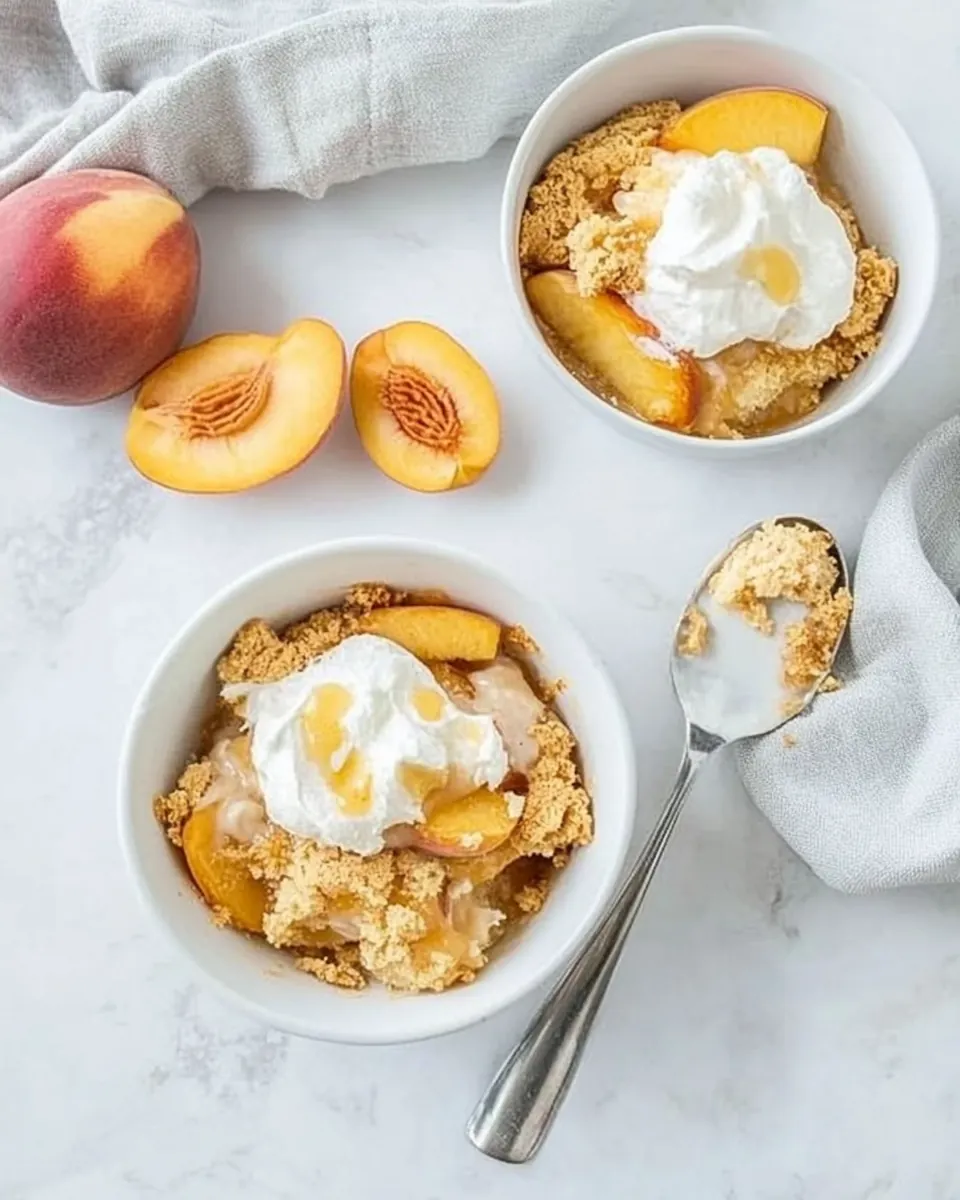
These ingredients are purposefully simple, chosen to let the peaches lead while lending structure, lift, and warmth. The filling relies on a small amount of thickener and spices to coax out the fruit’s juices, while the topping combines flours and cold butter for a tender, lightly crisp crust. Together, the players create a comforting balance of sweet, slightly tart, and warmly spiced flavors.
- 6 peaches, peeled, pitted & sliced into 1/4- to 1/2-inch slices (about 6 cups): Peel, pit, and slice to provide the primary fruit base and juicy texture for the cobbler; contributes natural sweetness and body when baked and releases flavorful juices that mingle with the topping. Use ripe, firm peaches to balance softness and structure so slices hold shape during baking. About six cups ensures ample fruit to fill a standard baking dish while producing saucy pockets beneath the crust.
- 1 tablespoon lemon juice: Add acidity to brighten the fruit flavors and prevent browning; lemon juice balances sweetness and enhances the peach aroma while helping preserve color. A tablespoon is sufficient to subtly lift the overall flavor without making the filling tart. Incorporate with the sliced peaches so the juice distributes evenly.
- 1 cup (200 g) + 1 tablespoon granulated sugar: Sweeten the peaches and create a syrupy glaze as the sugar dissolves and caramelizes during baking; most sugar goes into the fruit mixture to macerate the slices and intensify flavor. Measure one cup plus one tablespoon to achieve a balanced sweetness that pairs with tartness from lemon and buttermilk in the batter. Dissolve thoroughly with the peaches for even sweetness distribution.
- Pinch ground cinnamon: Warm and deepen the fruit flavor with a subtle aromatic note; ground cinnamon complements peaches by adding a faint spiced warmth that enhances overall complexity. Use only a pinch to avoid overpowering the delicate fruit. Sprinkle lightly over the fruit mixture so it melds into the juices during baking.
- Pinch ground nutmeg: Introduce a subtle earthy sweetness and nutty undertone to complement cinnamon and peaches; ground nutmeg offers a background complexity that elevates the filling. A pinch provides aromatic depth without dominating the profile. Combine with other spices for a balanced spice blend.
- Pinch salt: Enhance overall flavor balance by slightly suppressing sweetness and highlighting other tastes; a pinch of salt rounds out the fruit filling and intensifies natural peach flavors. Salt also helps regulate sweetness perception and supports the caramelization process. Distribute evenly among the peaches for consistent seasoning.
- 4 tablespoons instant tapioca, ground in a spice grinder: Thicken the fruit juices and stabilize the filling so it sets without becoming runny; instant tapioca absorbs liquid and creates a glossy, spoonable consistency when cooked. Grinding it into a fine powder ensures it dissolves quickly into the fruit mixture for a smooth texture. Four tablespoons yields appropriate thickening for about six cups of fruit.
- 1 cup (125 g) all-purpose flour: Provide structural framework for the cobbler topping and contribute gluten for chew and lift; all-purpose flour adds strength and browning to the batter or biscuit layer. Weighing 125 g ensures consistent results across recipes and balances with cake flour for tender yet sturdy topping. Sift or whisk with other dry ingredients to distribute evenly.
- 1 cup (125 g) cake flour: Contribute tenderness and a delicate crumb to the topping by lowering protein content; cake flour softens the texture when combined with all-purpose flour, producing a lighter, more cake-like cobbler crust. Using an equal cup measurement creates a balanced texture between airy and substantial. Combine with other dry ingredients for uniform batter.
- 2 teaspoons baking powder: Leaven the topping by producing carbon dioxide when combined with wet ingredients; baking powder adds lift to create a tender, slightly risen crust that contrasts with the fruity filling. Two teaspoons provide reliable rising power for the quantity of flour used. Ensure freshness for optimal leavening performance.
- 1/2 teaspoon baking soda: React with acidic components to produce additional lift and a finer crumb in the topping; baking soda activates in the presence of buttermilk to help neutralize acidity and enhance browning. Half a teaspoon yields controlled leavening and contributes to a balanced texture. Measure accurately to avoid off-flavors from excess soda.
- 1 teaspoon granulated sugar: Sweeten the topping slightly to harmonize with the sweetened fruit and support browning; a teaspoon of granulated sugar contributes subtle sweetness and helps the crust caramelize. Small amount ensures topping doesn't become overly sweet compared to the filling. Sprinkle into the dry mix for even distribution.
- 1/2 teaspoon salt: Enhance the topping's flavor profile by mildly intensifying sweetness perception and balancing leaveners; half a teaspoon of salt rounds out the batter and improves overall taste. Salt also strengthens gluten slightly, helping structure the topping. Dissolve into dry ingredients for consistent seasoning.
- 1/2 cup (113.5 g) unsalted butter, cold and cut into small pieces: Provide rich fat and steam for flakiness and flavor in the topping when cold butter is cut into the dry mix; unsalted butter lets you control overall salt level while delivering buttery taste and tender pockets. Cold, small pieces ensure minimal gluten development and create a light, layered texture as they melt in the oven. Use 113.5 g to supply sufficient fat for a tender crust.
- 3/4 cup (180 ml) buttermilk: Add moisture, tang, and acidity to the topping; buttermilk reacts with baking soda to create lift while imparting a slight tang that complements the sweet peaches. Three-quarters cup provides the correct hydration for the flours and yields a tender, slightly tangy batter. Stir gently to combine without overmixing for a delicate crumb.
How to Prepare Peach Cobbler
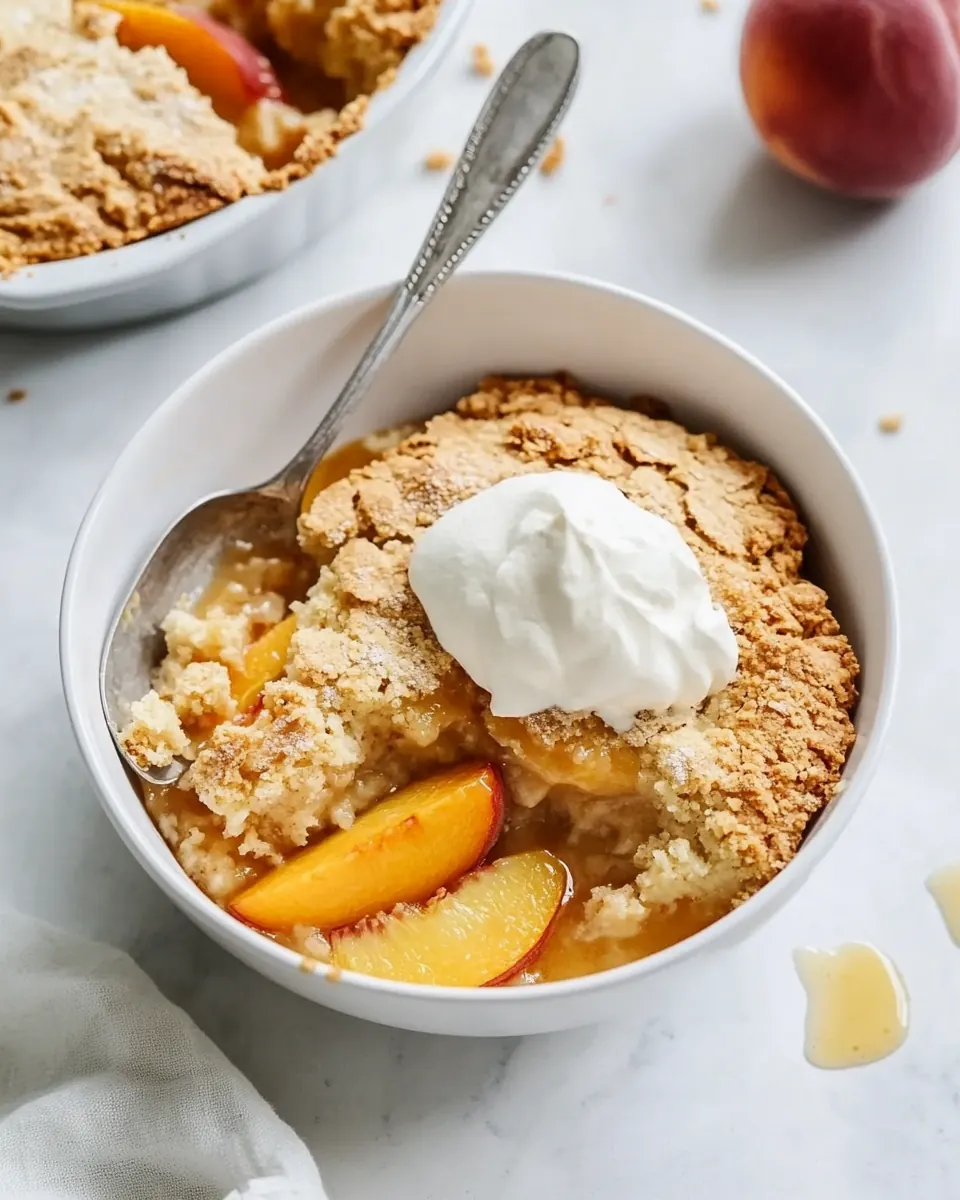
Preparing this cobbler is straightforward, but I approach it with small rituals that make the result reliably comforting. Follow the steps in order, and pay attention to texture and aroma at each stage so you know when you are on track.
- Preheat oven to 350 degrees F.: Warmth in the oven gives you a predictable bake environment and allows the topping to set as the filling begins to bubble. You should feel a steady heat from the oven when you open it, and the rack positioned in the center helps even browning. A common mistake is not preheating long enough, which can make the topping take longer to brown while the filling overcooks, so wait until the oven reaches temperature before sliding the dish in.
- Prepare the Filling: Combine the sliced peaches, lemon juice, sugar, cinnamon, nutmeg, salt and tapioca in a large bowl; set aside for 10-15 minutes.: The moment you mix the peaches with the sugar and spices, a fragrant syrup will begin to form; the air will fill with the scent of warm cinnamon and stone fruit. This resting period lets the sugar draw out juices, and the ground instant tapioca begins to absorb moisture, preventing a runny final filling. A useful cue is seeing glossy liquid pool around the slices, and the fruit should remain intact not mushy. Avoid stirring aggressively or chopping the slices too small, or the filling can turn pasty rather than saucy.
- Make the Cobbler Topping: Whisk together the flours, baking powder, baking soda, sugar and salt in another large bowl. Toss the butter pieces with your fingers, and work them into the flour mixture until it is the texture of coarse meal, with little pea-size pieces. Pour the buttermilk on top and, using a fork, mix until just combined.: As you work the cold butter into the dry mix, aim for a sandy texture with visible pea sized bits of fat; these pockets are what create a tender, layered topping. When you pour the buttermilk , the mixture should come together into a slightly sticky dough but not be overmixed. You will notice a fresh, milky tang and the dough holding together when pressed. Overworking will warm the butter and yield a tougher crust, so handle it briefly and with cool hands.
- Pour the peaches into a 9×13-inch (or other 3-quart) baking dish. Drop the cobbler topping dough by the spoonful all over the peach filling.: Spoonfuls of dough scattered over the glossy peach layer create a rustic look that bakes into pockets of golden topping. The visual cue to aim for is both covered and exposed fruit, so steam can escape and the filling can bubble. You should hear a soft plop as dollops land on the fruit, and the contrast between the shiny filling and drier dough is clear. Try not to press the dough into the filling; leaving it mounded helps create texture as it bakes.
- Bake until the fruit is bubbling and the topping is golden brown, 50 to 60 minutes. Serve warm or at room temperature with vanilla ice cream or whipped cream.: During baking you will see the filling bubble through gaps, and the topping will turn a warm golden brown with edges slightly crisp. The aroma will deepen, carrying notes of caramelized sugar and spice; listen for an occasional gentle bubbling sound as the fruit simmers. If the top browns too quickly before the filling bubbles, tent with foil to prevent burning while the center finishes. A good indicator of doneness is vigorous bubbling in the center and a uniformly golden topping.
Recipe Variations about Peach Cobbler
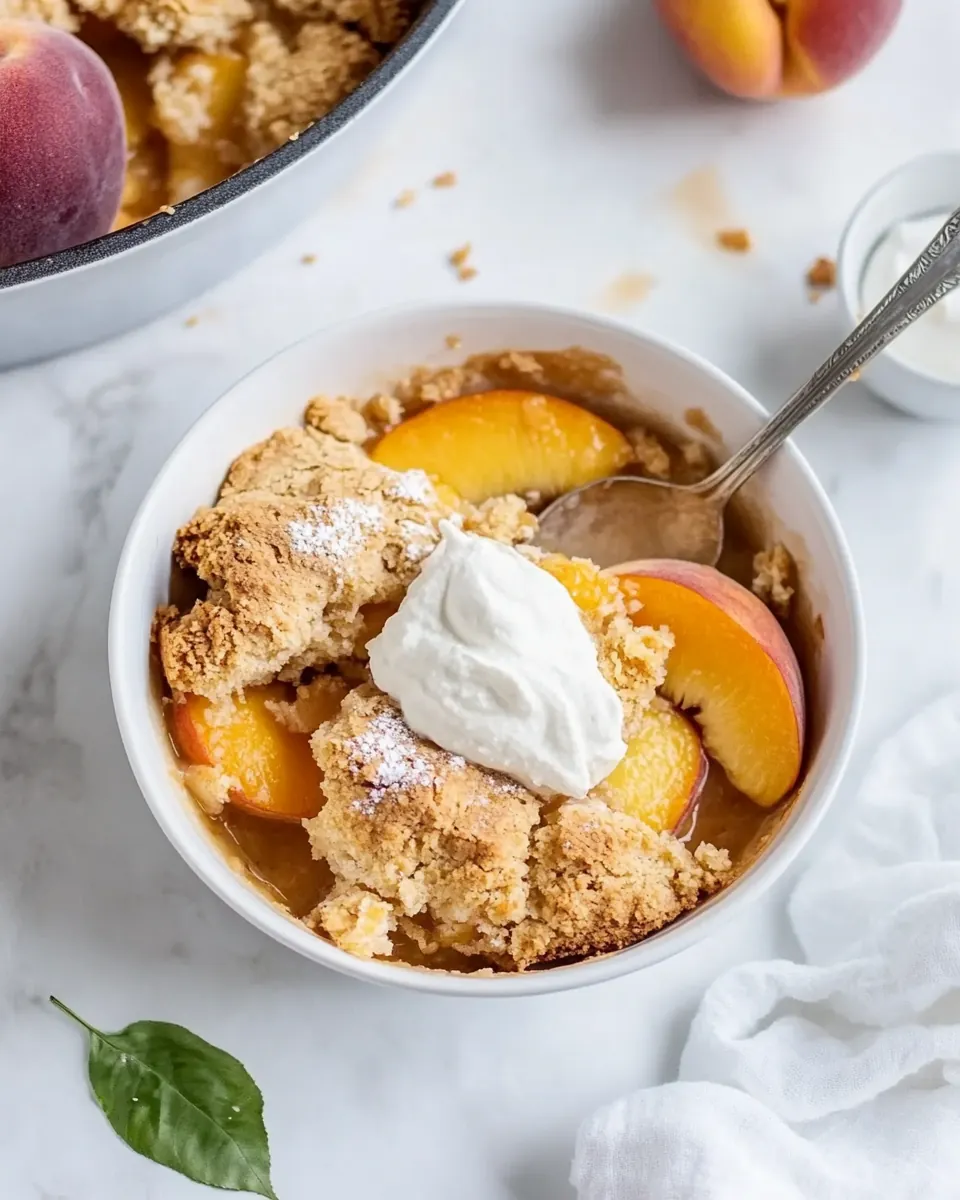
This recipe lends itself to a handful of reliable variations that let you use what you have while keeping the spirit of the dish intact. Below are practical tips and swaps that I use depending on season, convenience, and what my pantry holds.
- Using Frozen Peaches: Substitute 6 cups or approximately 32 ounces of sliced frozen peaches for fresh. Thaw and drain thoroughly before using to avoid excess liquid, and press gently with a towel if needed.
- Using Canned Peaches: Substitute 32 ounces of canned peaches. Drain well and pat dry to prevent the filling from becoming too thin, and consider reducing added sugar slightly if the canned fruit is packed in syrup.
- Substituting Other Fruit: Other stone fruit like nectarines plums or apricots work beautifully. Adjust sugar to taste based on fruit sweetness, and slice uniformly so everything cooks evenly.
- Instant Tapioca Tip: Ground instant tapioca is a superior thickener for fruit because it gives clarity and body to the sauce. If unavailable you can use cornstarch or flour but expect a slightly different texture and opacity in the filling.
- Buttermilk Substitute: If out of buttermilk, make a quick version by combining 1 tablespoon lemon juice or white vinegar with milk to measure 1 cup, let sit for 5 minutes, and use 3/4 cup for this topping, keeping the remainder for another use.
What to Pair With Peach Cobbler
Peach Cobbler is wonderfully flexible at the table, pairing well with cold and creamy additions or simple beverages. Below I outline options for serving, occasions to try it, and storage suggestions that keep the dessert at its best.
- Classic Serve: Warm slices with a scoop of vanilla ice cream so the contrast between hot and cold highlights the textures and flavors.
- Whipped Accompaniment: Lightly sweetened whipped cream offers an airy counterpoint to the dense fruit and crumb, perfect for a lighter finish.
- Occasion Ideas: Bring it to summer barbecues family dinners or holiday gatherings where a large dish that can feed a crowd is ideal.
- Seasonal Pairings: Serve during summer when peaches are at their peak for the most vibrant flavor and aroma. It also shines at late summer celebrations and potlucks.
- Storage Tips: Cover and refrigerate for up to 4 days. Reheat in a 350 degree F oven until hot about 20 minutes, covering with foil if browning too much. Microwave reheats are quicker but may soften the topping.
- Serving Style: For casual gatherings, offer the cobbler in a shallow pan with a spatula, letting guests choose ice cream or cream on top. For a plated dessert, scoop generous portions with a bit of syrupy filling.
- Make Ahead: The biscuit like dough can be made up to 2 days in advance and refrigerated, then dolloped on the filling before baking for convenience without compromising quality.
FAQ
Conclusion
Peach Cobbler shines because it puts ripe fruit center stage with a simple, tender topping that creates irresistible contrast. It is approachable to make, forgiving when you use frozen or canned fruit, and reliably crowd pleasing at gatherings. Give it a try the next time summer peaches are at their peak, and enjoy the warm memories that come with a spoonful of bubbling fruit and golden crust.
Peach Cobbler
Equipment
- Large Bowl
- Spice grinder
- 9x13-inch Baking Dish
- Fork
Ingredients
- 6 peaches, peeled, pitted & sliced into 1/4- to 1/2-inch slices (about 6 cups) Peel, pit, and slice to provide the primary fruit base and juicy texture for the cobbler; contributes natural sweetness and body when baked and releases flavorful juices that mingle with the topping. Use ripe, firm peaches to balance softness and structure so slices hold shape during baking. About six cups ensures ample fruit to fill a standard baking dish while producing saucy pockets beneath the crust.
- 1 tablespoon lemon juice Add acidity to brighten the fruit flavors and prevent browning; lemon juice balances sweetness and enhances the peach aroma while helping preserve color. A tablespoon is sufficient to subtly lift the overall flavor without making the filling tart. Incorporate with the sliced peaches so the juice distributes evenly.
- 1 cup (200 g) + 1 tablespoon granulated sugar Sweeten the peaches and create a syrupy glaze as the sugar dissolves and caramelizes during baking; most sugar goes into the fruit mixture to macerate the slices and intensify flavor. Measure one cup plus one tablespoon to achieve a balanced sweetness that pairs with tartness from lemon and buttermilk in the batter. Dissolve thoroughly with the peaches for even sweetness distribution.
- Pinch ground cinnamon Warm and deepen the fruit flavor with a subtle aromatic note; ground cinnamon complements peaches by adding a faint spiced warmth that enhances overall complexity. Use only a pinch to avoid overpowering the delicate fruit. Sprinkle lightly over the fruit mixture so it melds into the juices during baking.
- Pinch ground nutmeg Introduce a subtle earthy sweetness and nutty undertone to complement cinnamon and peaches; ground nutmeg offers a background complexity that elevates the filling. A pinch provides aromatic depth without dominating the profile. Combine with other spices for a balanced spice blend.
- Pinch salt Enhance overall flavor balance by slightly suppressing sweetness and highlighting other tastes; a pinch of salt rounds out the fruit filling and intensifies natural peach flavors. Salt also helps regulate sweetness perception and supports the caramelization process. Distribute evenly among the peaches for consistent seasoning.
- 4 tablespoons instant tapioca, ground in a spice grinder Thicken the fruit juices and stabilize the filling so it sets without becoming runny; instant tapioca absorbs liquid and creates a glossy, spoonable consistency when cooked. Grinding it into a fine powder ensures it dissolves quickly into the fruit mixture for a smooth texture. Four tablespoons yields appropriate thickening for about six cups of fruit.
- 1 cup (125 g) all-purpose flour Provide structural framework for the cobbler topping and contribute gluten for chew and lift; all-purpose flour adds strength and browning to the batter or biscuit layer. Weighing 125 g ensures consistent results across recipes and balances with cake flour for tender yet sturdy topping. Sift or whisk with other dry ingredients to distribute evenly.
- 1 cup (125 g) cake flour Contribute tenderness and a delicate crumb to the topping by lowering protein content; cake flour softens the texture when combined with all-purpose flour, producing a lighter, more cake-like cobbler crust. Using an equal cup measurement creates a balanced texture between airy and substantial. Combine with other dry ingredients for uniform batter.
- 2 teaspoons baking powder Leaven the topping by producing carbon dioxide when combined with wet ingredients; baking powder adds lift to create a tender, slightly risen crust that contrasts with the fruity filling. Two teaspoons provide reliable rising power for the quantity of flour used. Ensure freshness for optimal leavening performance.
- 1/2 teaspoon baking soda React with acidic components to produce additional lift and a finer crumb in the topping; baking soda activates in the presence of buttermilk to help neutralize acidity and enhance browning. Half a teaspoon yields controlled leavening and contributes to a balanced texture. Measure accurately to avoid off-flavors from excess soda.
- 1 teaspoon granulated sugar Sweeten the topping slightly to harmonize with the sweetened fruit and support browning; a teaspoon of granulated sugar contributes subtle sweetness and helps the crust caramelize. Small amount ensures topping doesn't become overly sweet compared to the filling. Sprinkle into the dry mix for even distribution.
- 1/2 teaspoon salt Enhance the topping's flavor profile by mildly intensifying sweetness perception and balancing leaveners; half a teaspoon of salt rounds out the batter and improves overall taste. Salt also strengthens gluten slightly, helping structure the topping. Dissolve into dry ingredients for consistent seasoning.
- 1/2 cup (113.5 g) unsalted butter, cold and cut into small pieces Provide rich fat and steam for flakiness and flavor in the topping when cold butter is cut into the dry mix; unsalted butter lets you control overall salt level while delivering buttery taste and tender pockets. Cold, small pieces ensure minimal gluten development and create a light, layered texture as they melt in the oven. Use 113.5 g to supply sufficient fat for a tender crust.
- 3/4 cup (180 ml) buttermilk Add moisture, tang, and acidity to the topping; buttermilk reacts with baking soda to create lift while imparting a slight tang that complements the sweet peaches. Three-quarters cup provides the correct hydration for the flours and yields a tender, slightly tangy batter. Stir gently to combine without overmixing for a delicate crumb.
Instructions
- Preheat oven to 350 degrees F.: Warmth in the oven gives you a predictable bake environment and allows the topping to set as the filling begins to bubble. You should feel a steady heat from the oven when you open it, and the rack positioned in the center helps even browning. A common mistake is not preheating long enough, which can make the topping take longer to brown while the filling overcooks, so wait until the oven reaches temperature before sliding the dish in.
- Prepare the Filling: Combine the sliced peaches, lemon juice, sugar, cinnamon, nutmeg, salt and tapioca in a large bowl; set aside for 10-15 minutes.: The moment you mix the peaches with the sugar and spices, a fragrant syrup will begin to form; the air will fill with the scent of warm cinnamon and stone fruit. This resting period lets the sugar draw out juices, and the ground instant tapioca begins to absorb moisture, preventing a runny final filling. A useful cue is seeing glossy liquid pool around the slices, and the fruit should remain intact not mushy. Avoid stirring aggressively or chopping the slices too small, or the filling can turn pasty rather than saucy.
- Make the Cobbler Topping: Whisk together the flours, baking powder, baking soda, sugar and salt in another large bowl. Toss the butter pieces with your fingers, and work them into the flour mixture until it is the texture of coarse meal, with little pea-size pieces. Pour the buttermilk on top and, using a fork, mix until just combined.: As you work the cold butter into the dry mix, aim for a sandy texture with visible pea sized bits of fat; these pockets are what create a tender, layered topping. When you pour the buttermilk , the mixture should come together into a slightly sticky dough but not be overmixed. You will notice a fresh, milky tang and the dough holding together when pressed. Overworking will warm the butter and yield a tougher crust, so handle it briefly and with cool hands.
- Pour the peaches into a 9×13-inch (or other 3-quart) baking dish. Drop the cobbler topping dough by the spoonful all over the peach filling.: Spoonfuls of dough scattered over the glossy peach layer create a rustic look that bakes into pockets of golden topping. The visual cue to aim for is both covered and exposed fruit, so steam can escape and the filling can bubble. You should hear a soft plop as dollops land on the fruit, and the contrast between the shiny filling and drier dough is clear. Try not to press the dough into the filling; leaving it mounded helps create texture as it bakes.
- Bake until the fruit is bubbling and the topping is golden brown, 50 to 60 minutes. Serve warm or at room temperature with vanilla ice cream or whipped cream.: During baking you will see the filling bubble through gaps, and the topping will turn a warm golden brown with edges slightly crisp. The aroma will deepen, carrying notes of caramelized sugar and spice; listen for an occasional gentle bubbling sound as the fruit simmers. If the top browns too quickly before the filling bubbles, tent with foil to prevent burning while the center finishes. A good indicator of doneness is vigorous bubbling in the center and a uniformly golden topping.
Notes
- Using Frozen Peaches: Substitute 6 cups or approximately 32 ounces of sliced frozen peaches for fresh. Thaw and drain thoroughly before using to avoid excess liquid, and press gently with a towel if needed.
- Using Canned Peaches: Substitute 32 ounces of canned peaches. Drain well and pat dry to prevent the filling from becoming too thin, and consider reducing added sugar slightly if the canned fruit is packed in syrup.
- Substituting Other Fruit: Other stone fruit like nectarines plums or apricots work beautifully. Adjust sugar to taste based on fruit sweetness, and slice uniformly so everything cooks evenly.
- Instant Tapioca Tip: Ground instant tapioca is a superior thickener for fruit because it gives clarity and body to the sauce. If unavailable you can use cornstarch or flour but expect a slightly different texture and opacity in the filling.
- Buttermilk Substitute: If out of buttermilk, make a quick version by combining 1 tablespoon lemon juice or white vinegar with milk to measure 1 cup, let sit for 5 minutes, and use 3/4 cup for this topping, keeping the remainder for another use.
