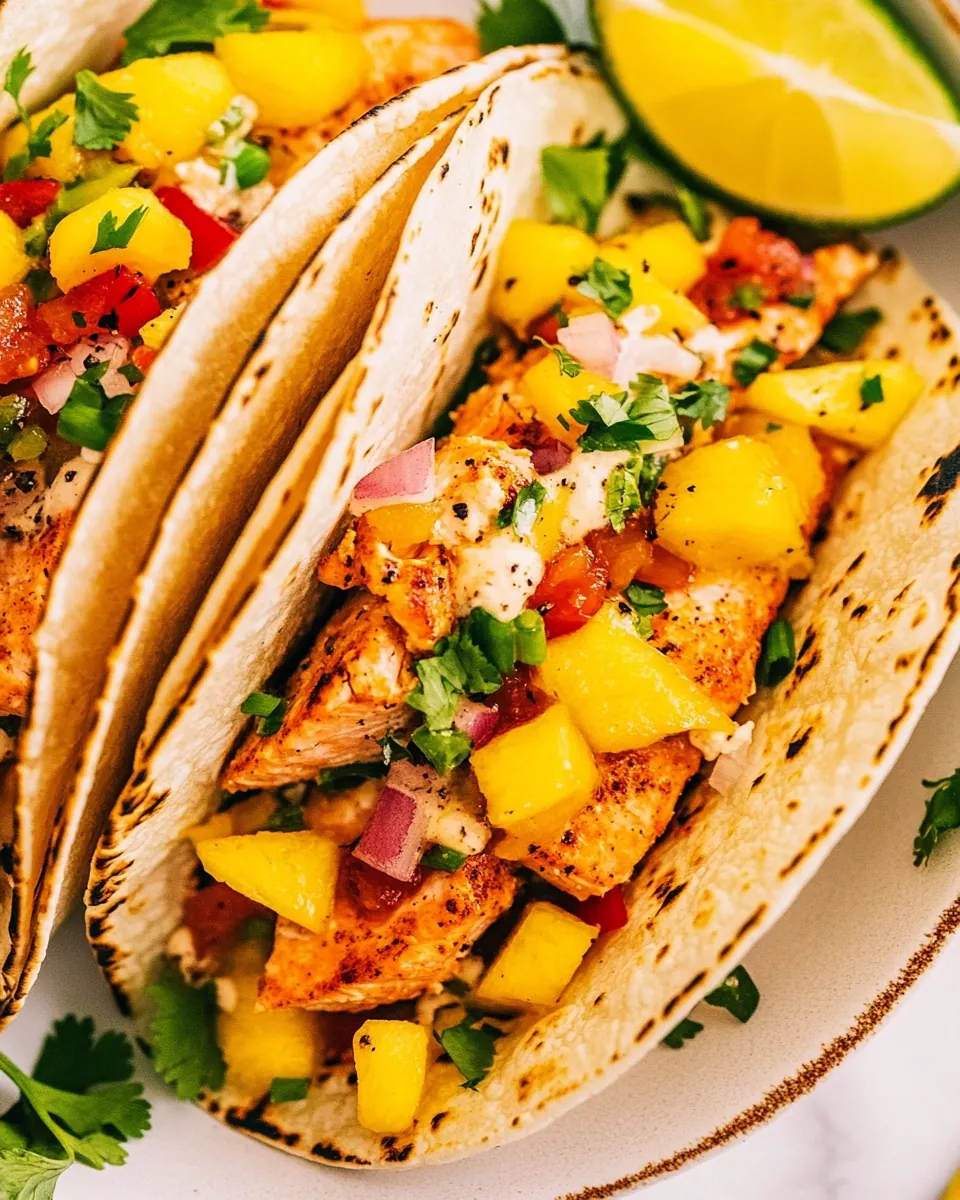
Mango Sriracha Salmon Tacos
Mango Sriracha Salmon Tacos came into my dinner rotation the summer I was determined to make tacos feel bright, saucy, and a little bit daring.
I remember standing at the counter with a pile of ripe, perfumed mango and a jar of sriracha, wondering if heat and sweetness could really coax the best from a thick fillet of salmon. I rubbed the marinade on the fish, walked outside to the grill, and kept stealing tastes of the leftover sauce, thinking how this combo would be perfect for a backyard evening when the light lingers and conversations slow. That first bite, warm tortilla folded around flaky, slightly charred salmon and a cool, tangy mango salsa, convinced me this recipe would be a keeper.
Over the years I’ve made these tacos for quick weeknight meals, impromptu gatherings, and for guests who expect something a little different. I tweak the balance of sweet and spicy depending on who I am feeding, but the heart of the dish is always the same: juicy salmon, bright mango, and a sriracha punch that makes everything sing together. If you like food that is bold but uncomplicated, these tacos will give you that satisfying moment when texture, heat, and freshness collide.
Recipe Snapshot
20 mins
10 mins
10 mins
Easy
300 kcal
Mexican
Gluten-Free, Paleo
Dinner
Blender, Grill or grill pan, Baking sheet, Mixing bowl
What You’ll Enjoy About This Mango Sriracha Salmon Tacos
Flavor Contrast That Works
I love how Mango Sriracha Salmon Tacos marry sweet, spicy, and savory in a single bite. The creamy tropical notes from the mango and the slight richness from the coconut milk in the marinade mellow the sharpness of the sriracha, creating harmony rather than competition. Each mouthful offers a layered experience, so you’ll keep discovering new flavor points as you eat.
Versatile and Weeknight Friendly
We can make these tacos on the grill or in the oven, and they still turn out impressive without a lot of fuss. The recipe moves quickly from marinade to plate, so it’s a fantastic easy weeknight dinner when you want something special without overcommitting. I often double the marinade because it keeps well for a few days.
Textural Play
The contrast between the tender, flaky salmon and the crisp, juicy mango salsa is why I come back to this dish. You’ll get lush, melt in your mouth fish against bright pops from the red sweet pepper and a subtle onion bite from the red onion or green onions. That variety keeps each taco interesting.
Bright, Seasonal Appeal
Since this recipe celebrates peak mango season and lighter flavors, it’s perfect for summer gatherings or any time you want a recipe that feels sun warmed and fresh. The lime juice and zest lift everything, making the dish taste lighter than other fish tacos, while still being filling.
Customizable and Guest Friendly
I like how simple swaps can shift the whole meal without breaking the recipe. Use corn or flour tortillas, scale the sriracha up or down, or add avocado slices for creaminess. It’s a crowd pleaser that’s easy to adapt to different palates, and that flexibility makes it one of my most-requested dishes.
Everything You Need for Mango Sriracha Salmon Tacos
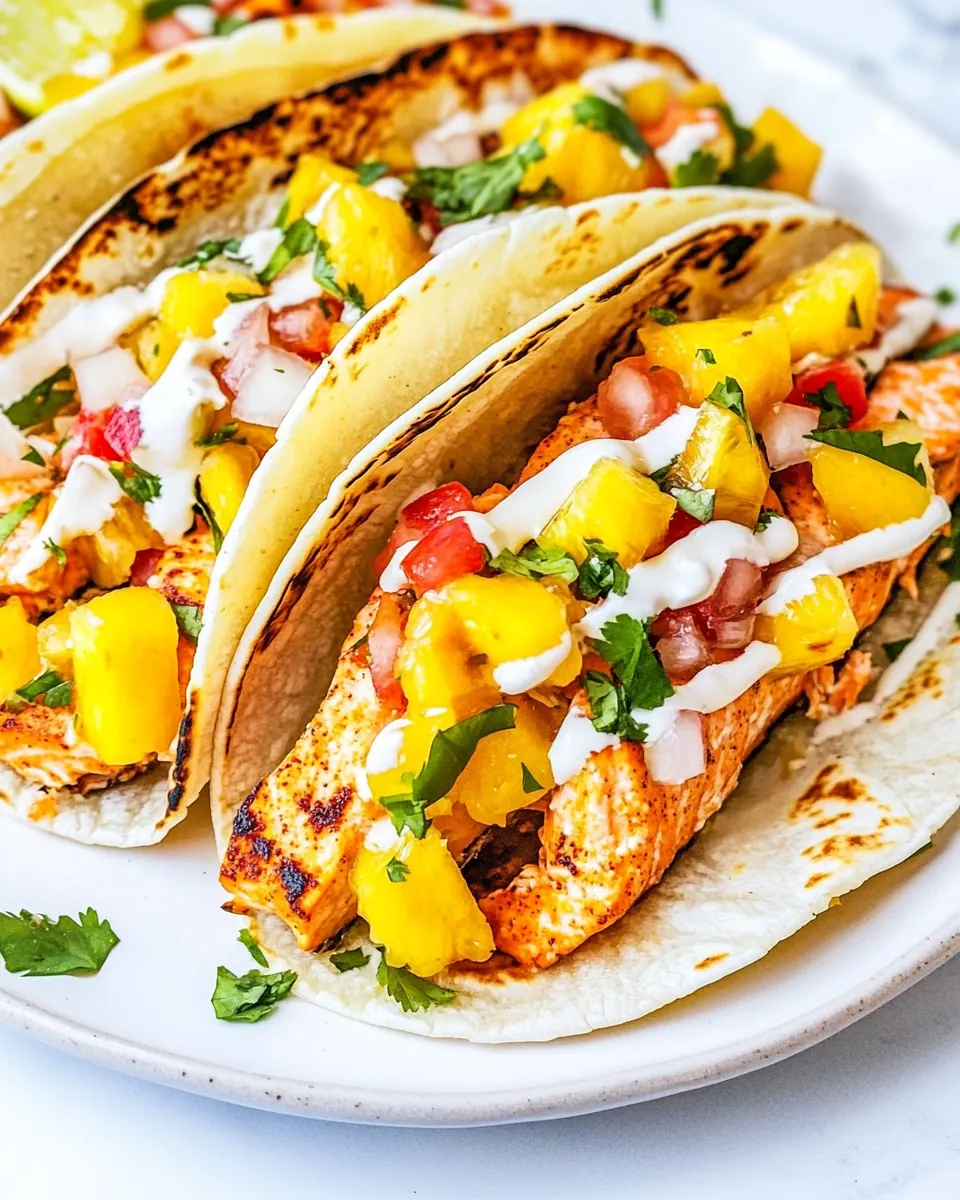
These ingredients are chosen to create a balance of lush richness, heat, and bright acidity. The key players are the salmon for its tender, flavorful flesh, the mango for sweetness and texture, and the sriracha for a steady warming note. Coconut milk and lime round out the marinade, while simple aromatics and herbs keep the salsa lively and fresh.
- 1 lb fresh wild-caught salmon: Season and cook to provide the main protein and rich, flaky texture for the tacos; wild–caught salmon brings a robust flavor and healthy omega-3 fats that stand up to bold toppings. Handle gently when cooking to preserve moistness and flake into large pieces for easy filling. Consider skin-on for cooking and remove skin before serving if preferred.
- 1 cup canned coconut milk: Add creaminess and subtle sweetness to balance heat while creating a silky sauce or marinade; canned coconut milk contributes a tropical richness that complements mango and sriracha. Shake or stir well before measuring to incorporate any separated cream, and gently simmer to avoid splitting.
- 1/2 cup chopped mango: Provide concentrated tropical sweetness and soft fruit texture to complement savory fish and spicy sauce; chopped mango adds bright, juicy bites throughout the tacos. Use ripe mango for maximum flavor and combine with acidic elements to prevent cloying sweetness.
- 1 clove garlic, minced: Infuse pungent, aromatic depth when minced and added to marinades or salsa; garlic enhances savory complexity and pairs well with citrus and chili. Lightly cook to mellow raw sharpness or add raw to salsas for a more assertive garlic note.
- 1 1/2 tbsp sriracha: Deliver concentrated heat and tang that brightens the salmon and salsa; sriracha provides both spice and a touch of vinegar complexity. Adjust quantity to control spiciness and mix into sauces or glazes for even distribution.
- Juice of half a lime: Brighten and lift flavors by adding acidity that cuts richness and enhances other ingredients; lime juice balances the sweetness of mango and richness of coconut milk. Use fresh juice for the cleanest citrus flavor and add just before serving for maximum freshness.
- 1 tbsp honey: Sweeten and glaze the salmon with sticky, caramelized notes that harmonize with spicy elements; honey adds a floral sweetness and helps sauces adhere during cooking. Warm slightly for easier mixing and balance with acidic or salty components to avoid overpowering sweetness.
- 1 tbsp olive oil: Provide a neutral cooking fat for searing and flavor development; olive oil helps achieve a golden crust on salmon and carries aromatics such as garlic. Use extra-virgin for flavor in dressings and a light, high-heat oil if searing at very high temperatures.
- Salt and pepper, to taste: Season to enhance overall flavor and balance the dish; salt and pepper bring out natural tastes and control seasoning levels. Add gradually and taste as you go, adjusting for the saltiness of other components like soy or cheese.
- 3 tbsp fresh cilantro, finely chopped: Garnish and brighten with fresh herbaceous notes while adding a burst of color; finely chopped cilantro ties together the tropical and spicy components. Fold into salsas or sprinkle on finished tacos to preserve herb freshness and aroma.
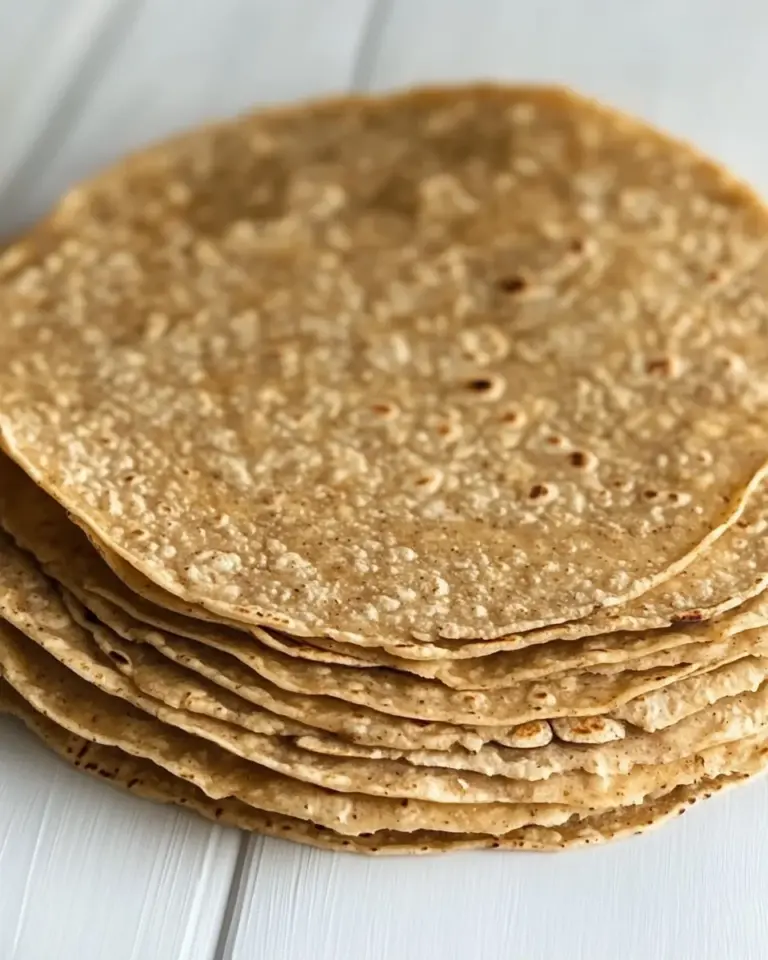
- 6 (6-inch) tortillas, flour or corn: Serve as the structural base to hold fillings and toppings while providing a neutral, slightly chewy backdrop; 6-inch flour or corn tortillas offer flexibility for folding and texture contrast. Warm before serving to increase pliability and enhance aroma.
- toppings: avocado slices, cilantro or cheese (optional): Offer extra customization and texture with creamy, herbaceous, or salty elements; optional toppings like avocado slices, cilantro, or cheese let diners tailor heat and richness. Prepare toppings ahead so guests can assemble to taste.
- 1 1/2 cups mango, chopped: Enhance salsa or topping with additional juicy mango for abundant tropical sweetness and vibrant color; chopped mango provides generous fruity chunks to complement the salmon. Use ripe mango and reserve some juice if desired for dressing.
- 1/2 cup red sweet pepper, chopped: Add crisp, sweet bell pepper crunch and vivid color to salsa or toppings; red sweet pepper lends mild sweetness and firm texture. Dice uniformly for even bites and combine with acidic elements to balance sweetness.
- 1 or 2 jalapeños, chopped: Introduce fresh heat and a bright pepper flavor with minced jalapeños; chopped jalapeños allow control over spice intensity and can be deseeded for milder heat. Handle with care and consider wearing gloves to avoid skin irritation.
- 1/4 cup red onion, chopped: Contribute sharp, savory bite and crunchy texture when chopped into salsas or slaws; red onion brings color and pungency that complements sweet mango and spicy peppers. Rinse briefly in cold water to mellow raw sharpness if desired.
- 1/4 cup sliced green onions: Provide mild onion flavor and attractive green color when thinly sliced; green onions add subtle freshness and a delicate, spring-like aroma. Scatter over finished tacos to enhance presentation and impart light allium notes.
- 3 tbsp cilantro, chopped: Enhance herbaceous brightness with chopped cilantro added to salads or salsas; cilantro brings citrusy, leafy notes that unify tropical and spicy flavors. Add near the end of preparation to preserve its vibrant aroma and color.
- 2 tbsp lime juice: Boost acidity and brightness in salsas or dressings with lime juice; two tablespoons add a pronounced citrus lift that balances sweet mango and rich coconut. Use fresh-squeezed juice for the best floral acidity and adjust to taste.
- 1/2 tsp lime zest: Concentrate lime aroma and add zesty citrus oils through a small amount of zest; lime zest intensifies lime character without adding extra liquid. Grate only the colored outer peel and avoid the bitter white pith beneath.
Step by Step Instructions for Mango Sriracha Salmon Tacos
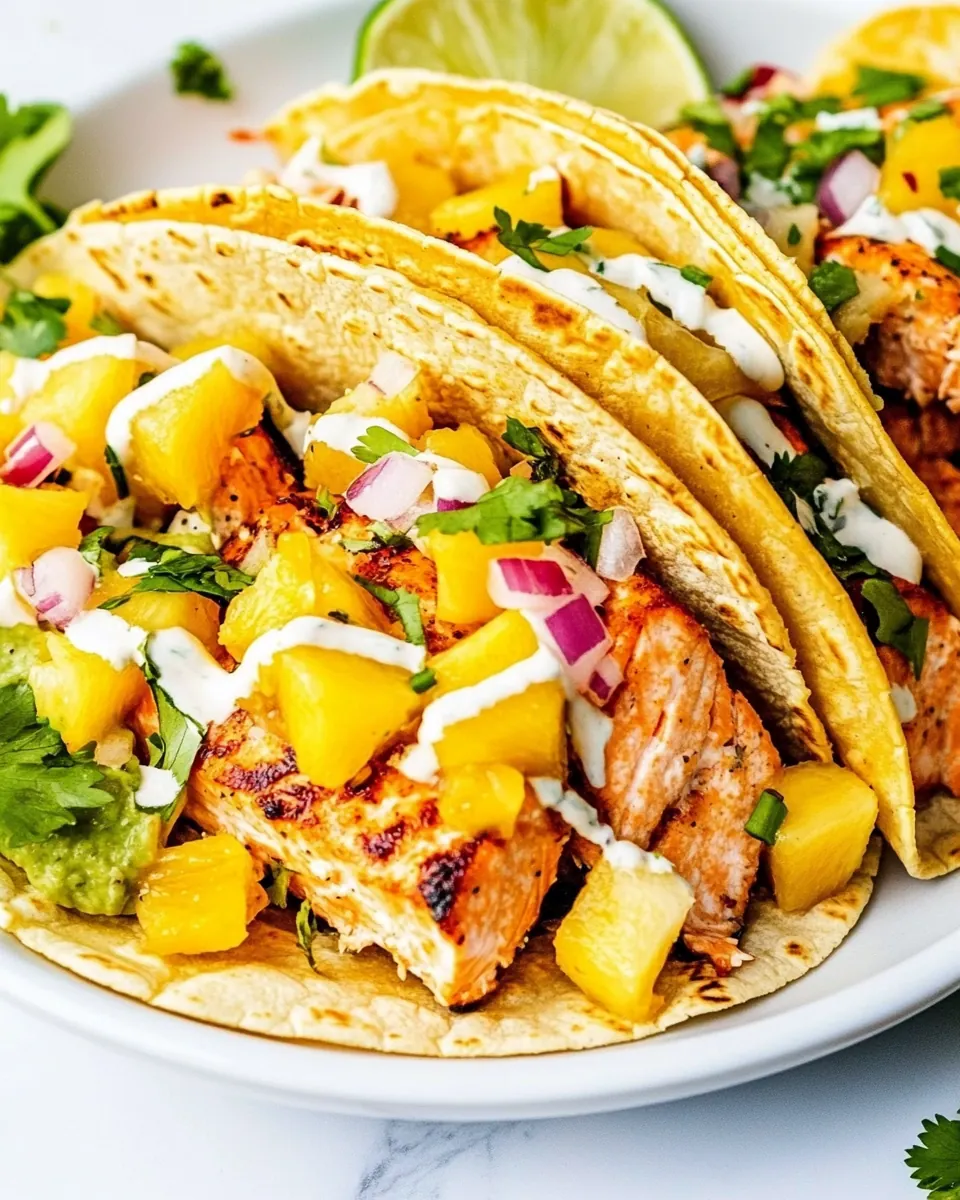
I like to walk through these steps calmly, taking small pauses to taste and check texture. The instructions below expand each direction into sensory cues and troubleshooting notes so you know what to expect at every stage.
- To make the marinade, combine coconut milk, chopped mango, garlic, sriracha, lime juice, honey, olive oil and salt/pepper in a blender and mix until smooth. Mix in cilantro and reserve about a 1/4 cup of marinade to drizzle over the salmon when serving.: You will notice the blender whirring into a glossy, fragrant sauce, with the sweet perfume of mango and the sharp, green scent of fresh cilantro rising first. The texture should be silky and pourable, not grainy, and when you tilt the blender the marinade should flow in a ribbon rather than blob. This smoothness matters because a cohesive marinade coats the salmon evenly, guaranteeing consistent flavor. Listen for the blender to shift to a steady hum, and stop to scrape down the sides once so the garlic and honey are fully incorporated. A common mistake is underblending, leaving chunks that prevent even coverage, or overblending frozen fruit which can make the mixture too icy. Reserve a small portion before adding the herbs, so you can drizzle fresh flavor and contrasting temperature onto the cooked salmon , which lifts the finished dish.
- Place the salmon in a shallow dish or bowl and pour the marinade over top, making sure to coat the salmon entirely. Cover and place the salmon in the fridge to marinate for 30 minutes or up to an hour.: As the salmon soaks, the marinade will cling like a glossy varnish, and the air around the bowl will take on sweet, citrus notes. You should see the surface of the fish become slightly paler where the acid from the lime and the oils have started to interact with the flesh indicating penetration. This step matters because brief marination lets the flavors seep into the top layers of the fish without breaking down the texture. Keep the fish chilled to prevent bacteria growth, and set a timer so you do not exceed one hour which can make the surface mushy. A typical error is marinating too long, which causes a mealy texture, or too briefly, which gives minimal flavor. If your marinade seems thin, pat the salmon dry first so it absorbs more readily.
- While the salmon marinates you can make the salsa. In a medium bowl, combine all the ingredients for the salsa, cover and keep in the fridge until ready to serve.: When you fold the diced mango , red sweet pepper , jalapeños , red onion , green onions , cilantro , lime juice and zest together you will see a colorful mosaic of jewel tones and feel a refreshing citrus scent. The textures should remain distinct so each bite offers a crisp, juicy pop against the tender fish. The salsa benefits from resting, as the flavors meld and the lime slightly softens the onion bite. Avoid chopping ingredients unevenly, which can cause an unbalanced mouthfeel, and do not overdress the salsa or it becomes runny. Taste and adjust the acid or heat before chilling for the best result.
- If you want to grill the salmon, place salmon skin side down on a grill (or grill pan) sprayed with oil and cook 5 to 6 minutes per side, until tender and flaky.: On the grill you will hear the satisfying sizzle as the marinade meets hot metal and smell caramelizing sugars turning to toasty aromas. The skin side down technique helps protect the flesh and encourages even cooking, while the timing here yields a tender interior and a slightly charred exterior. Look for the flesh to change from translucent to opaque and to easily flake when prodded with a fork. Use a fish spatula or tongs to turn gently, or you risk tearing. A common misstep is moving the salmon too soon, which causes sticking, or cooking too long, which dries it out. If flare ups occur, move the fish to a slightly cooler part of the grill to finish gently.
- If you want to bake the salmon, place skin side down on a prepared baking sheet and bake at 400 degrees F for about 8 to 10 minutes. Turn the broiler on and cook for an additional 2 to 3 minutes, until edges of salmon are crisp. Using a fork, break the salmon up into large chunks and drizzle with reserved marinade.: Baking at 400 degrees F creates even heat penetration, producing tender, flaky salmon with a tender center. The brief broil at the end encourages caramelized edges, adding texture contrast. Watch closely during the broil, as those final minutes can move from golden to charred quickly; you want crisp edges not blackout spots. After removing, the fish should yield large, moist flakes when gently broken with a fork, and the reserved marinade adds a bright, cool counterpoint that ties the flavors together. A frequent error is overbaking, which strips moisture, or skipping the broil which leaves the surface pale and less interesting.
- To assemble the tacos, divide the salmon among the tortillas, top with mango salsa and avocado slices (if desired). Enjoy!: When assembling, warm the tortillas until they are supple and slightly toasty so they fold without cracking. Layer a generous portion of flaky salmon , then spoon the vibrant salsa on top so the juices mingle with the fish, creating an immediate balance of warm and cool sensations. If using avocado , its creamy texture will round out the heat from the sriracha and the bright acid from the lime . Serve immediately while the fish is warm for the best contrast; waiting will dull the textural interplay. A common mistake is overfilling the tortillas which causes them to fall apart when picked up, so portion sensibly and present on warm plates.
Change It Up
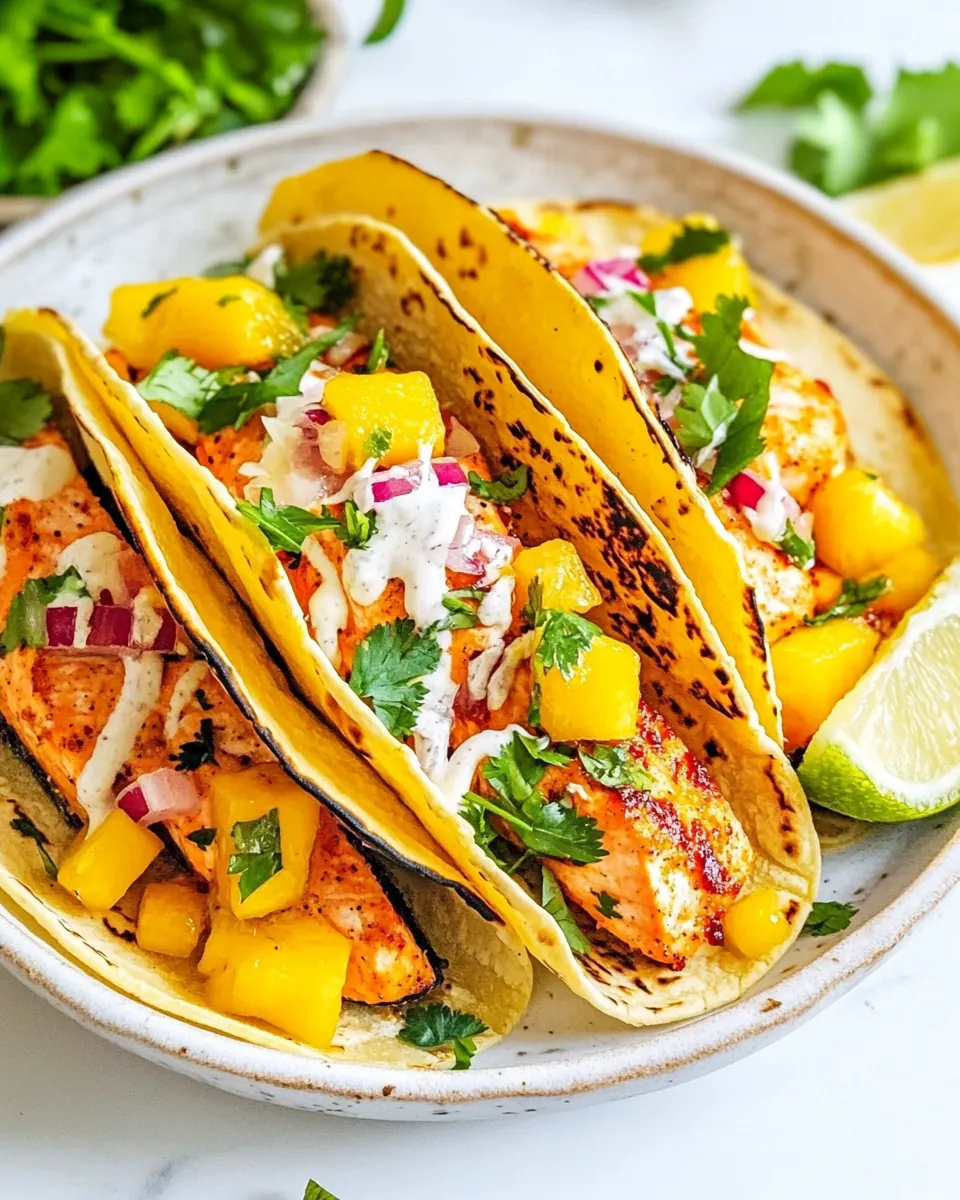
I like offering a handful of ways to switch things up so the recipe never feels stale. These tips help with texture, presentation, and small flavor adjustments that make the dish your own.
- Make it milder: Reduce the sriracha by half and seed the jalapeños to keep more of the flavor without the intense heat.
- Boost the char: Grill on high heat briefly to add smoky notes, then finish on a cooler part of the grill to avoid drying the salmon.
- Swap tortillas: Use warm corn tortillas for a traditional feel or soft flour tortillas for a more pliable shell that holds extra salsa.
- Double the salsa: Make extra mango salsa and serve on the side so guests can add more freshness and texture to each taco.
- Make ahead elements: Prepare the salsa up to a day in advance and keep chilled, the flavors will meld and the texture will stay crisp if drained of excess juice.
- Presentation trick: Spoon the reserved marinade over the fish just before serving for a glossy, vibrant finish that highlights the flavors.
What to Serve With Mango Sriracha Salmon Tacos
These tacos pair beautifully with simple, fresh accompaniments that echo the bright flavors. Choose sides that add contrast in texture and temperature, and consider the occasion when planning the rest of the plate.
- Light salad: A crisp green salad with a citrus vinaigrette complements the tacos without competing with the mango and sriracha.
- Black beans: A bowl of seasoned black beans provides earthy balance and extra protein, making the meal more filling for dinner.
- Rice side: Coconut or cilantro lime rice adds a fragrant, comforting base that pairs well with the tropical notes in the tacos.
- Chips and salsa: Serve tortilla chips with a simple pico or extra mango salsa for a playful starter or communal snack.
- Occasion serving: For summer gatherings or casual dinner parties, lay out a taco assembly station so guests can customize toppings and heat level.
- Storage tips: Keep leftover salmon and salsa in separate airtight containers for up to two days in the fridge, and reheat gently to retain moisture.
- Seasonal pairings: In summer, add grilled corn on the cob; in cooler months serve with a warm bean stew to make the meal heartier.
- Serving style: Present tacos on warmed plates, with lime wedges and extra cilantro for garnish so each diner can adjust brightness to taste.
- Family friendly: Decrease the sriracha for kid friendly versions and offer extra salsa on the side for adults who want more heat.
- Entertaining tip: Prepare the salsa ahead and finish the salmon last minute so the fish is hot and the prep stays relaxed.
FAQ
Conclusion
What makes these Mango Sriracha Salmon Tacos special is the way sweet, spicy, and savory elements come together in every bite, creating a balanced and memorable taco experience. I encourage you to try them the next time you want a meal that feels both relaxed and a little adventurous, whether for a weeknight or when guests arrive. The recipe is forgiving, adaptable, and offers vivid flavors that are easy to love, so give it a go and enjoy the bright results.
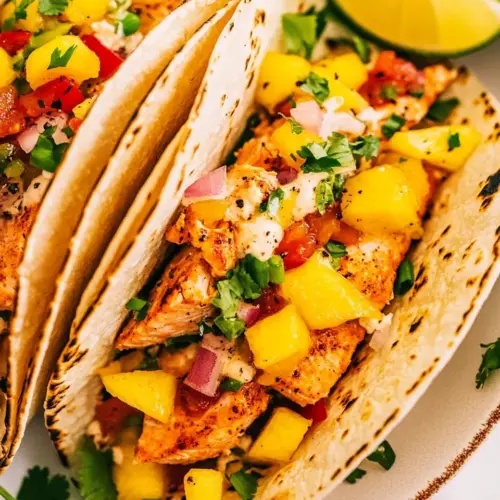
Mango Sriracha Salmon Tacos
Equipment
- Blender
- Grill or Grill Pan
- Baking Sheet
- Mixing Bowl
Ingredients
- 1 lb fresh wild-caught salmon Season and cook to provide the main protein and rich, flaky texture for the tacos; wild-caught salmon brings a robust flavor and healthy omega-3 fats that stand up to bold toppings. Handle gently when cooking to preserve moistness and flake into large pieces for easy filling. Consider skin-on for cooking and remove skin before serving if preferred.
- 1 cup canned coconut milk Add creaminess and subtle sweetness to balance heat while creating a silky sauce or marinade; canned coconut milk contributes a tropical richness that complements mango and sriracha. Shake or stir well before measuring to incorporate any separated cream, and gently simmer to avoid splitting.
- 1/2 cup chopped mango Provide concentrated tropical sweetness and soft fruit texture to complement savory fish and spicy sauce; chopped mango adds bright, juicy bites throughout the tacos. Use ripe mango for maximum flavor and combine with acidic elements to prevent cloying sweetness.
- 1 clove garlic, minced Infuse pungent, aromatic depth when minced and added to marinades or salsa; garlic enhances savory complexity and pairs well with citrus and chili. Lightly cook to mellow raw sharpness or add raw to salsas for a more assertive garlic note.
- 1 1/2 tbsp sriracha Deliver concentrated heat and tang that brightens the salmon and salsa; sriracha provides both spice and a touch of vinegar complexity. Adjust quantity to control spiciness and mix into sauces or glazes for even distribution.
- Juice of half a lime Brighten and lift flavors by adding acidity that cuts richness and enhances other ingredients; lime juice balances the sweetness of mango and richness of coconut milk. Use fresh juice for the cleanest citrus flavor and add just before serving for maximum freshness.
- 1 tbsp honey Sweeten and glaze the salmon with sticky, caramelized notes that harmonize with spicy elements; honey adds a floral sweetness and helps sauces adhere during cooking. Warm slightly for easier mixing and balance with acidic or salty components to avoid overpowering sweetness.
- 1 tbsp olive oil Provide a neutral cooking fat for searing and flavor development; olive oil helps achieve a golden crust on salmon and carries aromatics such as garlic. Use extra-virgin for flavor in dressings and a light, high-heat oil if searing at very high temperatures.
- Salt and pepper, to taste Season to enhance overall flavor and balance the dish; salt and pepper bring out natural tastes and control seasoning levels. Add gradually and taste as you go, adjusting for the saltiness of other components like soy or cheese.
- 3 tbsp fresh cilantro, finely chopped Garnish and brighten with fresh herbaceous notes while adding a burst of color; finely chopped cilantro ties together the tropical and spicy components. Fold into salsas or sprinkle on finished tacos to preserve herb freshness and aroma.
- 6 (6-inch) tortillas, flour or corn Serve as the structural base to hold fillings and toppings while providing a neutral, slightly chewy backdrop; 6-inch flour or corn tortillas offer flexibility for folding and texture contrast. Warm before serving to increase pliability and enhance aroma.
- Optional toppings: avocado slices, cilantro or cheese Offer extra customization and texture with creamy, herbaceous, or salty elements; optional toppings like avocado slices, cilantro, or cheese let diners tailor heat and richness. Prepare toppings ahead so guests can assemble to taste.
- 1 1/2 cups mango, chopped Enhance salsa or topping with additional juicy mango for abundant tropical sweetness and vibrant color; chopped mango provides generous fruity chunks to complement the salmon. Use ripe mango and reserve some juice if desired for dressing.
- 1/2 cup red sweet pepper, chopped Add crisp, sweet bell pepper crunch and vivid color to salsa or toppings; red sweet pepper lends mild sweetness and firm texture. Dice uniformly for even bites and combine with acidic elements to balance sweetness.
- 1 or 2 jalapeños, chopped Introduce fresh heat and a bright pepper flavor with minced jalapeños; chopped jalapeños allow control over spice intensity and can be deseeded for milder heat. Handle with care and consider wearing gloves to avoid skin irritation.
- 1/4 cup red onion, chopped Contribute sharp, savory bite and crunchy texture when chopped into salsas or slaws; red onion brings color and pungency that complements sweet mango and spicy peppers. Rinse briefly in cold water to mellow raw sharpness if desired.
- 1/4 cup sliced green onions Provide mild onion flavor and attractive green color when thinly sliced; green onions add subtle freshness and a delicate, spring-like aroma. Scatter over finished tacos to enhance presentation and impart light allium notes.
- 3 tbsp cilantro, chopped Enhance herbaceous brightness with chopped cilantro added to salads or salsas; cilantro brings citrusy, leafy notes that unify tropical and spicy flavors. Add near the end of preparation to preserve its vibrant aroma and color.
- 2 tbsp lime juice Boost acidity and brightness in salsas or dressings with lime juice; two tablespoons add a pronounced citrus lift that balances sweet mango and rich coconut. Use fresh-squeezed juice for the best floral acidity and adjust to taste.
- 1/2 tsp lime zest Concentrate lime aroma and add zesty citrus oils through a small amount of zest; lime zest intensifies lime character without adding extra liquid. Grate only the colored outer peel and avoid the bitter white pith beneath.
Instructions
- To make the marinade, combine coconut milk, chopped mango, garlic, sriracha, lime juice, honey, olive oil and salt/pepper in a blender and mix until smooth. Mix in cilantro and reserve about a 1/4 cup of marinade to drizzle over the salmon when serving.: You will notice the blender whirring into a glossy, fragrant sauce, with the sweet perfume of mango and the sharp, green scent of fresh cilantro rising first. The texture should be silky and pourable, not grainy, and when you tilt the blender the marinade should flow in a ribbon rather than blob. This smoothness matters because a cohesive marinade coats the salmon evenly, guaranteeing consistent flavor. Listen for the blender to shift to a steady hum, and stop to scrape down the sides once so the garlic and honey are fully incorporated. A common mistake is underblending, leaving chunks that prevent even coverage, or overblending frozen fruit which can make the mixture too icy. Reserve a small portion before adding the herbs, so you can drizzle fresh flavor and contrasting temperature onto the cooked salmon , which lifts the finished dish.
- Place the salmon in a shallow dish or bowl and pour the marinade over top, making sure to coat the salmon entirely. Cover and place the salmon in the fridge to marinate for 30 minutes or up to an hour.: As the salmon soaks, the marinade will cling like a glossy varnish, and the air around the bowl will take on sweet, citrus notes. You should see the surface of the fish become slightly paler where the acid from the lime and the oils have started to interact with the flesh indicating penetration. This step matters because brief marination lets the flavors seep into the top layers of the fish without breaking down the texture. Keep the fish chilled to prevent bacteria growth, and set a timer so you do not exceed one hour which can make the surface mushy. A typical error is marinating too long, which causes a mealy texture, or too briefly, which gives minimal flavor. If your marinade seems thin, pat the salmon dry first so it absorbs more readily.
- While the salmon marinates you can make the salsa. In a medium bowl, combine all the ingredients for the salsa, cover and keep in the fridge until ready to serve.: When you fold the diced mango , red sweet pepper , jalapeños , red onion , green onions , cilantro , lime juice and zest together you will see a colorful mosaic of jewel tones and feel a refreshing citrus scent. The textures should remain distinct so each bite offers a crisp, juicy pop against the tender fish. The salsa benefits from resting, as the flavors meld and the lime slightly softens the onion bite. Avoid chopping ingredients unevenly, which can cause an unbalanced mouthfeel, and do not overdress the salsa or it becomes runny. Taste and adjust the acid or heat before chilling for the best result.
- If you want to grill the salmon, place salmon skin side down on a grill (or grill pan) sprayed with oil and cook 5 to 6 minutes per side, until tender and flaky.: On the grill you will hear the satisfying sizzle as the marinade meets hot metal and smell caramelizing sugars turning to toasty aromas. The skin side down technique helps protect the flesh and encourages even cooking, while the timing here yields a tender interior and a slightly charred exterior. Look for the flesh to change from translucent to opaque and to easily flake when prodded with a fork. Use a fish spatula or tongs to turn gently, or you risk tearing. A common misstep is moving the salmon too soon, which causes sticking, or cooking too long, which dries it out. If flare ups occur, move the fish to a slightly cooler part of the grill to finish gently.
- If you want to bake the salmon, place skin side down on a prepared baking sheet and bake at 400 degrees F for about 8 to 10 minutes. Turn the broiler on and cook for an additional 2 to 3 minutes, until edges of salmon are crisp. Using a fork, break the salmon up into large chunks and drizzle with reserved marinade.: Baking at 400 degrees F creates even heat penetration, producing tender, flaky salmon with a tender center. The brief broil at the end encourages caramelized edges, adding texture contrast. Watch closely during the broil, as those final minutes can move from golden to charred quickly; you want crisp edges not blackout spots. After removing, the fish should yield large, moist flakes when gently broken with a fork, and the reserved marinade adds a bright, cool counterpoint that ties the flavors together. A frequent error is overbaking, which strips moisture, or skipping the broil which leaves the surface pale and less interesting.
- To assemble the tacos, divide the salmon among the tortillas, top with mango salsa and avocado slices (if desired). Enjoy!: When assembling, warm the tortillas until they are supple and slightly toasty so they fold without cracking. Layer a generous portion of flaky salmon , then spoon the vibrant salsa on top so the juices mingle with the fish, creating an immediate balance of warm and cool sensations. If using avocado , its creamy texture will round out the heat from the sriracha and the bright acid from the lime . Serve immediately while the fish is warm for the best contrast; waiting will dull the textural interplay. A common mistake is overfilling the tortillas which causes them to fall apart when picked up, so portion sensibly and present on warm plates.
Notes
- Make it milder: Reduce the sriracha by half and seed the jalapeños to keep more of the flavor without the intense heat.
- Boost the char: Grill on high heat briefly to add smoky notes, then finish on a cooler part of the grill to avoid drying the salmon.
- Swap tortillas: Use warm corn tortillas for a traditional feel or soft flour tortillas for a more pliable shell that holds extra salsa.
- Double the salsa: Make extra mango salsa and serve on the side so guests can add more freshness and texture to each taco.
- Make ahead elements: Prepare the salsa up to a day in advance and keep chilled, the flavors will meld and the texture will stay crisp if drained of excess juice.
- Presentation trick: Spoon the reserved marinade over the fish just before serving for a glossy, vibrant finish that highlights the flavors.