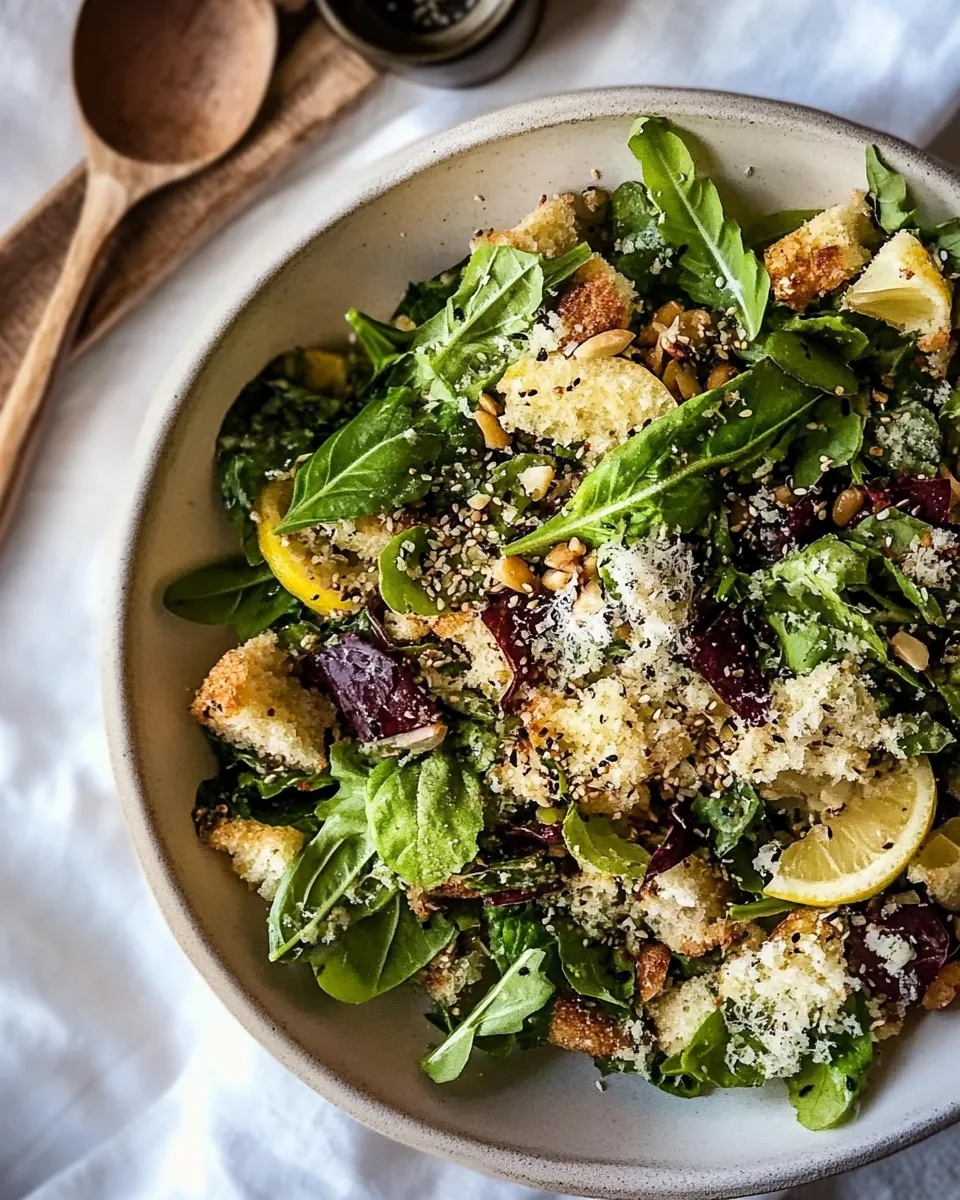
Lemon Parmesan Sesame Salad
Lemon Parmesan Sesame Salad is the kind of dish I reach for when I want something bright, crunchy, and unexpectedly comforting all at once.
I first tossed this combination together on a breezy spring afternoon after a farmers market run. I had a crusty loaf of ciabatta bread begging to be used, a handful of aromatic mixed salad greens, and a jar of toasted sesame seeds that smelled like toasted nuts. I shredded a generous mound of grated parmesan cheese and squeezed fresh citrus until my hands tingled. The result was a salad that felt both simple and sophisticated, the kind I served when friends dropped by unexpectedly.
Over time I refined the dressing to balance acidity and umami, adding a touch of dijon mustard and a whisper of honey so the vinaigrette would cling to the leaves and croutons. I learned to roast the ciabatta bread until pockets turned golden and slightly crisp, and to scatter cubed avocado on top just before serving so it stayed lush and not mashed. Every bite offers a contrast, the creamy avocado next to the crunchy sesame and toasted bread, finished with the salty nutty tang of parmesan.
Recipe Snapshot
25 mins
15 mins
10 mins
Easy
350 kcal
Mediterranean
Gluten-Free, Paleo
Salads
Oven, Baking sheet, Large salad bowl, Jar with lid
Why Try This Lemon Parmesan Sesame Salad
Fresh, bright flavor that wakes the palate
I love how Lemon Parmesan Sesame Salad hits the palate with immediate brightness from the lemon juice and a savory backbone from the grated parmesan cheese. The citrus lifts the whole bowl, making it feel light yet satisfying. When I serve this, guests often comment on how the flavors are bold without being heavy.
Textural contrast that keeps every bite interesting
The interplay between crunchy ciabatta croutons, nutty toasted sesame seeds, and creamy avocado makes this salad endlessly appealing. I appreciate that the textures evolve as you eat, with the croutons softening slightly under the dressing while still providing structure. That variety keeps people reaching back for another forkful.
Versatility for many occasions
This salad works equally well as a light lunch, a side at a casual dinner, or a springtime potluck contribution. I often double the recipe for gatherings because it travels well and presents beautifully. Its components are familiar yet elevated, so it pairs easily with roasted vegetables or grilled proteins.
Easy to make, big on flavor
I value recipes that respect time without sacrificing taste, and Lemon Parmesan Sesame Salad delivers. The vinaigrette is jar-friendly and shakes up in seconds, while the croutons roast hands free. I find this is one of those recipes that tastes like you fussed over it, even when you didn’t.
Ingredient-driven simplicity
Each component plays a clear role, from the olive oils that carry the dressing to the parmesan that adds salty depth. I rely on quality ingredients because they elevate the finished dish; a good extra virgin olive oil and fresh lemon juice make a noticeable difference. This is a recipe that rewards attention to the small details.
Ingredient List for Lemon Parmesan Sesame Salad
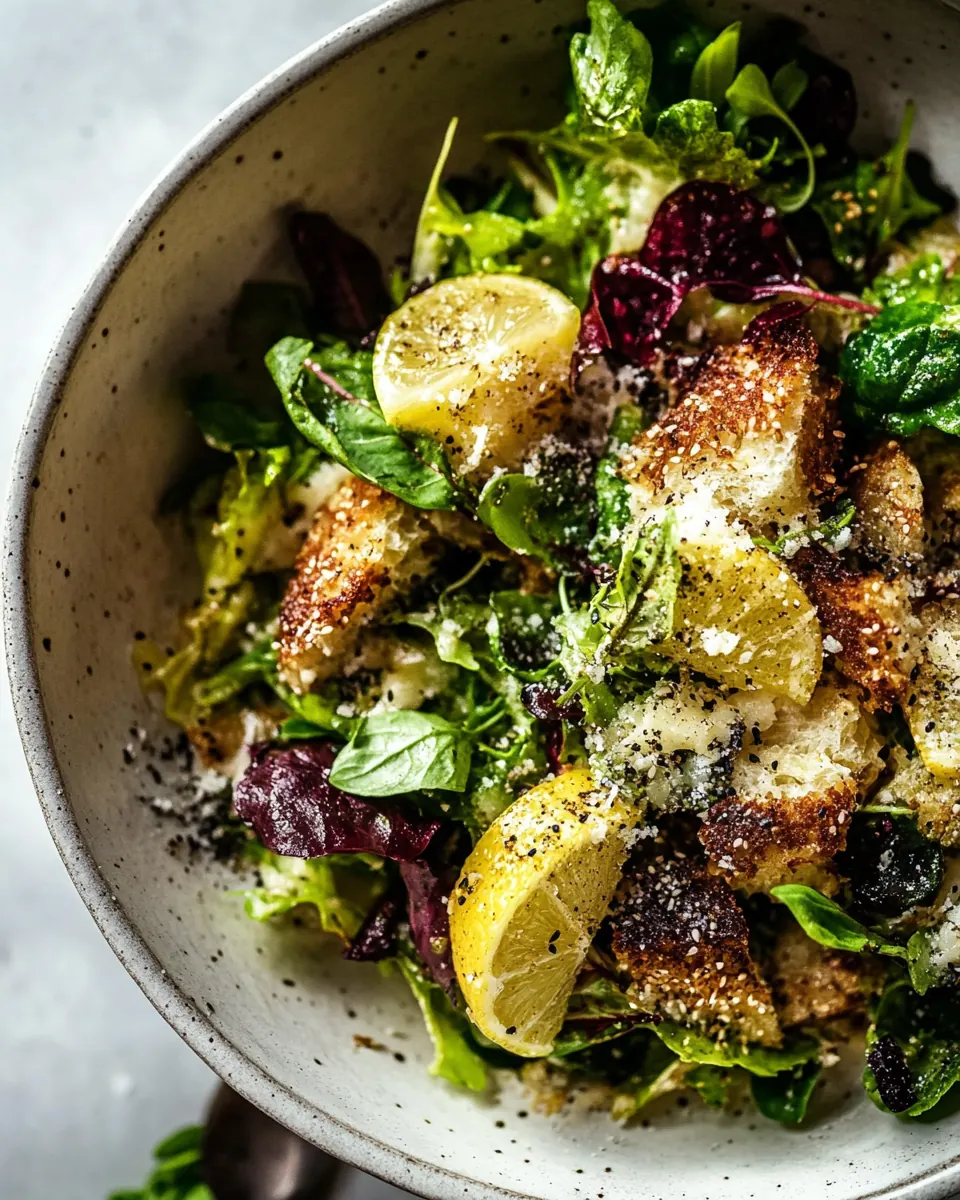
These ingredients create a bright, crunchy salad built on balance. The salad mixes crisp greens and tender herbs with crunchy croutons and seeds, while the dressing binds everything with tang and a touch of sweetness. The key players are the ciabatta bread for texture, the parmesan for savory depth, and the combination of sesame oils and olive oil for fragrant richness.
- 2 cups torn ciabatta bread: Torn into bite-sized pieces and lightly toasted to create crunchy croutons that add texture and absorb dressing, enhancing the salad’s mouthfeel. Use stale or day-old ciabatta for better crispness when tossed with garlic oil and baked or pan-toasted. Break into irregular pieces to contrast soft greens and creamy avocado throughout the salad.
- 1 clove garlic, grated: Grated finely and mixed with oil to flavor the croutons and dressing, providing aromatic sharpness that permeates the salad. Incorporate immediately into warm oil to mellow harshness and release flavor, or sprinkle lightly over greens for a fresher garlic presence. Adjust quantity to balance with other pungent elements like mustard and parmesan.
- 2 tablespoons extra virgin olive oil: Used as a base to sauté or drizzle over torn bread for croutons, lending fruity, robust flavor and healthy fats to the salad. Combine with grated garlic to coat ciabatta before toasting, ensuring even browning and an infused aroma. Reserve a portion for the dressing to tie components together with olive oil’s smooth mouthfeel.
- 6 cups mixed salad greens: Tossed as the primary bulk component to provide fresh, crisp, and leafy texture that supports the other ingredients. Choose a variety of lettuces for color and flavor contrast, and rinse and spin dry thoroughly to help dressing adhere. Layer greens gently with herbs, cheese, avocado, and croutons for balanced bites in every serving.
- 1 cup mixed fresh herbs: basil, dill, thyme: Chopped and scattered through the salad to contribute bright, herbaceous notes that lift the overall flavor profile. Combine basil, dill, and thyme for complexity—basil for sweetness, dill for anise-like freshness, and thyme for earthy depth. Use both whole leaves and finer chop to vary texture and maximize aromatic impact.
- 1 cup grated parmesan cheese: Grated finely and sprinkled over the salad to introduce savory, nutty, and slightly salty umami that complements lemon and sesame. Mix some into the crouton coating and reserve a generous handful for finishing to create cohesive flavor layers. Balance quantity to avoid overpowering delicate herbs and avocado.
- 3 tablespoons toasted sesame seeds: Toasted and sprinkled liberally to add a warm, nutty crunch and to accentuate the sesame oil’s flavor in the dressing. Toasting intensifies aroma and prevents sogginess when combined with dressing, making seeds a persistent textural element. Use both white and black sesame if desired for visual contrast.
- 1 – 2 avocados, cubed or sliced: Cubed or sliced and folded in to provide creamy richness and a silky texture that contrasts with crunchy croutons and seeds. Choose ripe but firm avocados to hold shape, and toss gently with lemon juice to prevent browning while brightening flavor. Add last to avoid over-mixing and to keep pieces visually appealing.
- 1/3 cup extra virgin olive oil: Used in the dressing and for finishing to bring a smooth, fruity oiliness that binds components and carries flavors across the salad. Combine with sesame oil, lemon juice, and vinegar for a balanced vinaigrette that coats greens without overpowering herbs. Adjust quantity to achieve preferred dressing viscosity and sheen.
- 3 tablespoons toasted sesame oil: Added to the dressing to impart deep toasted sesame aroma and an intense sesame flavor that complements parmesan and honey. Use toasted sesame oil sparingly because of its potency, blending it with neutral olive oil for balance. Whisk thoroughly with mustard and vinegars to emulsify and distribute flavor evenly.
- 3 tablespoons lemon juice: Squeezed fresh into the dressing to add bright acidity and citrusy lift that cuts through richness from avocado and parmesan. Adjust amount within the listed range to taste, ensuring the dressing remains lively but not overly tart. Combine immediately with oils to integrate flavors and help prevent avocado discoloration.
- 3 tablespoons champagne vinegar: Shaken into the vinaigrette to contribute a subtle, refined acidity that balances lemon and oil with a hint of sweetness. Use champagne vinegar for its light, delicate character so herbs and sesame remain prominent. Start with suggested amount and taste before adding more to maintain harmony.
- 2 teaspoons dijon mustard: Whisked into the dressing to act as an emulsifier and add gentle tang and depth, helping the oil and vinegar bind. Dijon’s sharpness complements honey and lemon while enhancing the overall savory profile. Use measured amounts to control assertiveness so it supports rather than dominates other flavors.
- 2 teaspoons honey: Stirred into the vinaigrette to provide a subtle floral sweetness that mellows sharp acidic notes and balances mustard. Warm the honey slightly if needed to blend smoothly into oil-based dressings, ensuring even distribution. Adjust to preference for a harmonious sweet-savory finish.
- 1 teaspoon garlic powder: Sprinkled into the dressing blend to add a mild, concentrated garlic flavor without raw bite, helping maintain consistent seasoning. Garlic powder dissolves easily and provides background savory complexity; combine with grated garlic cautiously to avoid excessive garlic intensity. Use sparingly and taste as you go.
- salt and pepper: Seasoned to taste over the salad to enhance and balance all flavors, providing crucial seasoning contrast between sweet, acidic, and savory elements. Start with a light sprinkle and adjust after tossing to avoid oversalting, especially because parmesan contributes salt. Use freshly ground pepper for aromatic heat and freshness.
- chili flakes: Added sparingly to introduce a controlled heat and subtle smokiness that livens the salad without overpowering delicate herbs. Sprinkle a pinch into the dressing or directly on top for a customizable kick, and taste as you go to maintain balance with honey and lemon. Use flakes to add visual interest as well as spice.
Recipe Directions for Lemon Parmesan Sesame Salad
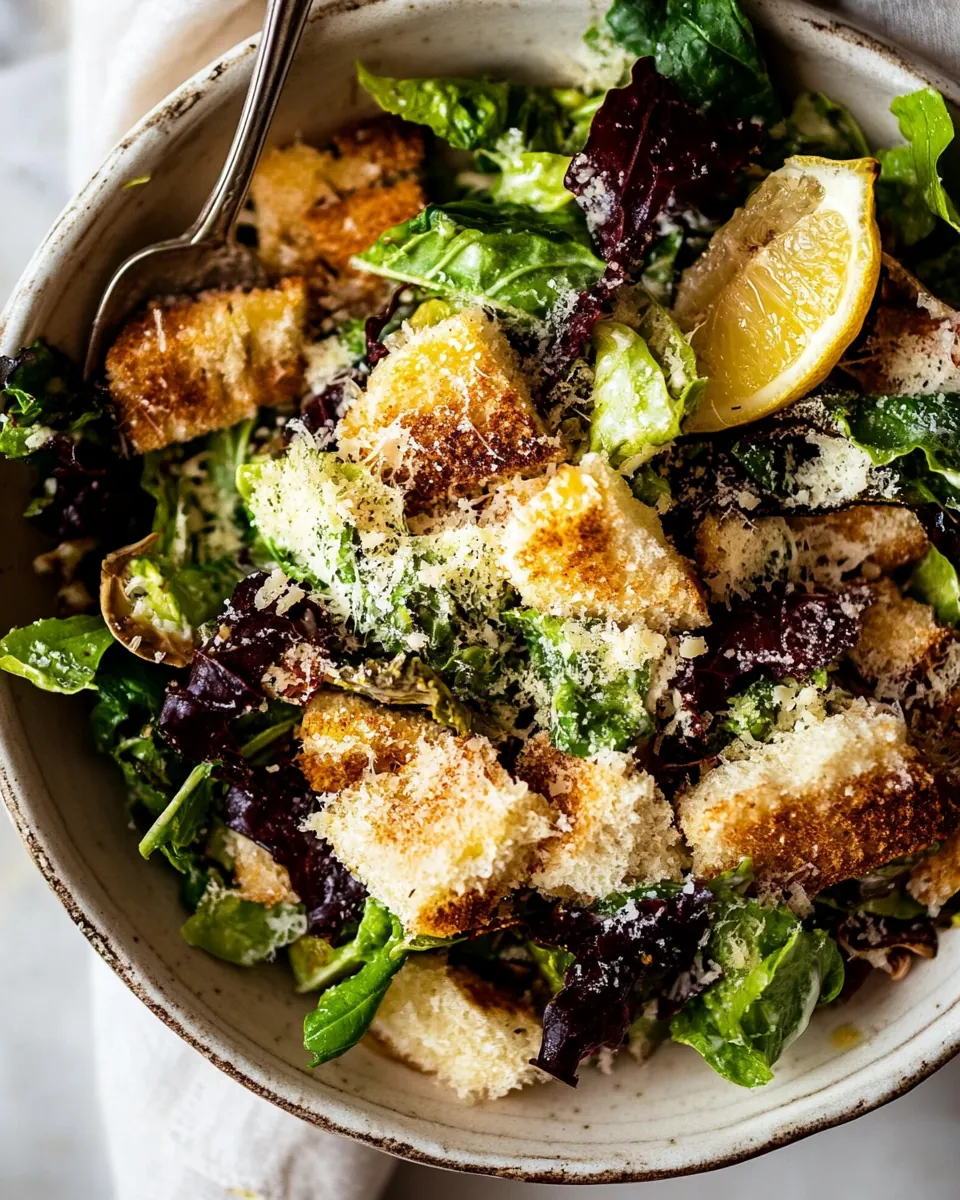
These directions lead you through roasting the croutons, assembling the salad, and making a balanced vinaigrette. I like to prepare components in stages so textures stay distinct and the dressing clings properly to every leaf.
- Preheat the oven to 425° F. Toss together the ciabatta, garlic, and a pinch of salt with olive oil. Bake for 10-12 minutes, until toasted. In a large salad bowl, mix the greens, croutons, parmesan, and sesame seeds. To make the vinaigrette, combine all ingredients in a jar with a lid and shake. Taste and adjust as needed. Pour the vinaigrette over the salad, tossing to combine. Top the salad with avocado. Eat and enjoy!: The moment you set the oven to 425° F you create the dry heat needed to crisp ciabatta bread into croutons that are golden and airy. You should hear a dry hiss as the bread first hits the oven and later see the edges become deeply golden while the centers stay slightly tender, which is perfect for textural contrast. This temperature shortens roasting time so the bread browns before the oil can burn. A common mistake is setting a lower temperature and leaving the bread in too long, which dries it out rather than crisping it properly.
- Toss together the ciabatta, garlic, and a pinch of salt with olive oil: When you combine torn ciabatta bread with grated garlic , a pinch of salt , and olive oil , you transfer aromatic oils onto the surface so each piece browns evenly and absorbs flavor. The garlic will sizzle slightly when roasted, releasing a toasty scent that perfumes the kitchen. Make sure pieces are evenly coated but not swimming in oil to avoid sogginess. Overcrowding the pan is the typical error here, which leads to steaming rather than roasting.
- Bake for 10 to 12 minutes, until toasted: Around the 10 minute mark check your croutons for a warm nutty aroma and spots of deep golden brown; these are the visual cues that caramelization has occurred. The sound will change from a faint crackle as moisture escapes to a more steady, dry crispiness. Rotate the pan midway for even color. Leaving them too long will result in hard, brittle crumbs instead of pleasant crunch.
- In a large salad bowl, mix the greens, croutons, parmesan, and sesame seeds: Toss mixed salad greens with freshly roasted croutons while they are still warm so the parmesan cheese softens slightly and clings, creating pockets of savory richness. Sprinkle toasted sesame seeds last so they remain crunchy and fragrant. Use a gentle folding motion to keep delicate leaves intact, and avoid packing the bowl which can bruise the greens and release unwanted bitterness.
- To make the vinaigrette, combine all ingredients in a jar with a lid and shake: Combining extra virgin olive oil , toasted sesame oil , lemon juice , champagne vinegar , dijon mustard , honey , garlic powder , salt , and pepper in a sealed jar and shaking vigorously emulsifies the dressing, producing a silky mouthfeel that coats the leaves. The aroma of lemon and sesame will rise as you shake, signaling a balanced vinaigrette. If the mixture looks separated after a minute, shake again; separation is normal and resolvable. A frequent misstep is adding too much oil without enough acid, which dulls the flavors.
- Taste and adjust as needed: After making the vinaigrette, taste for acidity, salt, and sweetness; adjust with extra lemon juice , honey , or salt to reach a bright, balanced profile. This moment determines how the dressing will interact with the components, so small tweaks can make a big difference. If it tastes flat, a splash more champagne vinegar or a touch more dijon mustard will lift it. Avoid overcorrecting by adding too much of one element at once.
- Pour the vinaigrette over the salad, tossing to combine: Pour the dressing gradually while gently tossing so every piece of mixed salad greens and crouton gets a light coating, ensuring consistent flavor distribution without sogginess. Listen for a rustling sound as the leaves move and watch for a glossy sheen that indicates proper coating. If you over-dress, the salad will become limp and heavy, so reserve some dressing to add later if needed.
- Top the salad with avocado: Placing cubed or sliced avocado on top at the last moment preserves its creamy texture and vibrant color. The avocado tempers the salad's acidity and adds luxurious mouthfeel. Add it too early and it may brown or become mashed during tossing, which changes the intended texture balance.
- Eat and enjoy: As you take the first bite you should notice a chorus of sensations, from the citrus brightening the palette to the nutty sesame and salty parmesan anchoring the flavor. Encourage diners to add a pinch of chili flakes if they want heat. Remember that salads are best eaten soon after assembling to preserve the contrast between crunchy and creamy elements; waiting too long will soften the croutons and dull the textures.
Expert Tips about Lemon Parmesan Sesame Salad
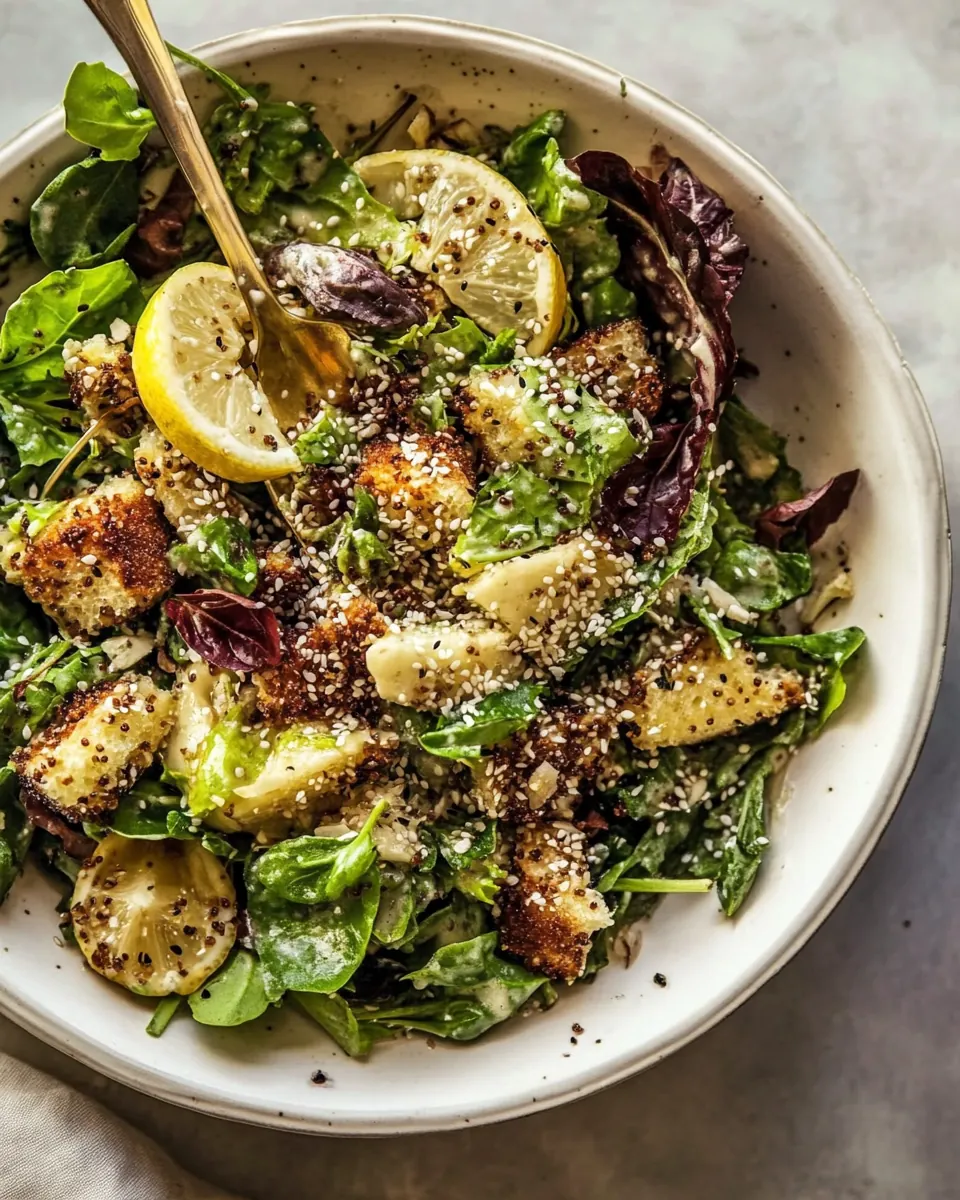
I like to share small techniques that make a big difference when assembling this salad. These tips focus on timing, texture control, and balancing flavors so your finished bowl feels layered and intentional.
- Choose day old bread for croutons because slightly drier bread crisps faster and develops a superior interior chew; fresh bread can become gummy in the oven.
- Warm croutons with parmesan so the cheese softens and clings to the pieces, creating pockets of savory richness that complement the greens.
- Light hand with toasted sesame oil as it is potent; a small amount goes a long way in imparting deep nutty aroma without overpowering the lemon.
- Reserve some dressing to add at the table, which prevents overdressing and preserves the crouton crunch for last minute freshness.
- Layer textures by adding croutons before dressing and avocado last, ensuring each bite includes crisp, creamy, and leafy elements in harmony.
Pairing Suggestions for Lemon Parmesan Sesame Salad
This salad pairs beautifully with light proteins and seasonal sides, making it ideal for spring lunches or casual dinners. Think of it as a flexible partner that enhances rather than competes, and present it on occasions when fresh, bright food is welcome.
- Serve with grilled fish such as a simply seasoned fillet, the salad‘s acidity will brighten the fish without overshadowing it.
- Offer as a side for roasted vegetables on a spring dinner menu, pairing the salad‘s freshness with earthy roasted notes for balance.
- Bring to potlucks where it will cut through heavier fare, its bright lemon and crunchy croutons make it a crowd pleaser.
- Enjoy for lunch topped with an egg or a scoop of grains if you want a heartier meal, while keeping the original textures intact.
- Storage tip keep the vinaigrette separate and the croutons in an airtight container to preserve crunch until serving.
- Seasonal pairing highlight spring herbs and tender greens that mirror market freshness for the best flavor profile.
FAQ
Conclusion
This Lemon Parmesan Sesame Salad stands out for its harmonious balance of bright citrus, nutty sesame, and savory parmesan, coupled with satisfying textures from croutons and creamy avocado. Give it a try next time you want a spring-forward salad that feels both simple and thoughtfully composed. I hope you enjoy the way the flavors come together, and that it becomes one of those go-to dishes you reach for when you want something effortless yet impressive.
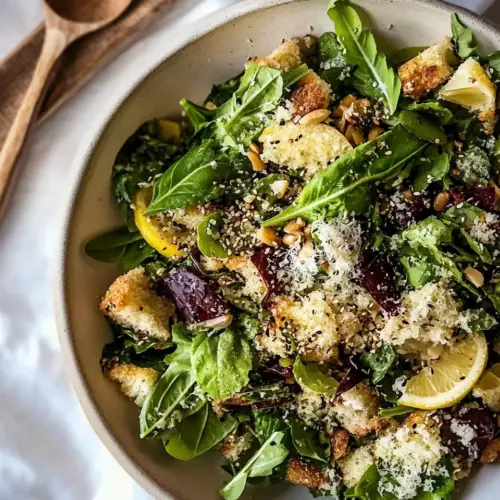
Lemon Parmesan Sesame Salad
Equipment
- Oven
- Baking Sheet
- Large salad bowl
- Jar with Lid
Ingredients
- 2 cups torn ciabatta bread Torn into bite-sized pieces and lightly toasted to create crunchy croutons that add texture and absorb dressing, enhancing the salad’s mouthfeel. Use stale or day-old ciabatta for better crispness when tossed with garlic oil and baked or pan-toasted. Break into irregular pieces to contrast soft greens and creamy avocado throughout the salad.
- 1 clove garlic, grated Grated finely and mixed with oil to flavor the croutons and dressing, providing aromatic sharpness that permeates the salad. Incorporate immediately into warm oil to mellow harshness and release flavor, or sprinkle lightly over greens for a fresher garlic presence. Adjust quantity to balance with other pungent elements like mustard and parmesan.
- 2 tablespoons extra virgin olive oil Used as a base to sauté or drizzle over torn bread for croutons, lending fruity, robust flavor and healthy fats to the salad. Combine with grated garlic to coat ciabatta before toasting, ensuring even browning and an infused aroma. Reserve a portion for the dressing to tie components together with olive oil’s smooth mouthfeel.
- 6 cups mixed salad greens Tossed as the primary bulk component to provide fresh, crisp, and leafy texture that supports the other ingredients. Choose a variety of lettuces for color and flavor contrast, and rinse and spin dry thoroughly to help dressing adhere. Layer greens gently with herbs, cheese, avocado, and croutons for balanced bites in every serving.
- 1 cup mixed fresh herbs: basil, dill, thyme Chopped and scattered through the salad to contribute bright, herbaceous notes that lift the overall flavor profile. Combine basil, dill, and thyme for complexity—basil for sweetness, dill for anise-like freshness, and thyme for earthy depth. Use both whole leaves and finer chop to vary texture and maximize aromatic impact.
- 1 cup grated parmesan cheese Grated finely and sprinkled over the salad to introduce savory, nutty, and slightly salty umami that complements lemon and sesame. Mix some into the crouton coating and reserve a generous handful for finishing to create cohesive flavor layers. Balance quantity to avoid overpowering delicate herbs and avocado.
- 3 tablespoons toasted sesame seeds Toasted and sprinkled liberally to add a warm, nutty crunch and to accentuate the sesame oil’s flavor in the dressing. Toasting intensifies aroma and prevents sogginess when combined with dressing, making seeds a persistent textural element. Use both white and black sesame if desired for visual contrast.
- 1 – 2 avocados, cubed or sliced Cubed or sliced and folded in to provide creamy richness and a silky texture that contrasts with crunchy croutons and seeds. Choose ripe but firm avocados to hold shape, and toss gently with lemon juice to prevent browning while brightening flavor. Add last to avoid over-mixing and to keep pieces visually appealing.
- 1/3 cup extra virgin olive oil Used in the dressing and for finishing to bring a smooth, fruity oiliness that binds components and carries flavors across the salad. Combine with sesame oil, lemon juice, and vinegar for a balanced vinaigrette that coats greens without overpowering herbs. Adjust quantity to achieve preferred dressing viscosity and sheen.
- 3 tablespoons toasted sesame oil Added to the dressing to impart deep toasted sesame aroma and an intense sesame flavor that complements parmesan and honey. Use toasted sesame oil sparingly because of its potency, blending it with neutral olive oil for balance. Whisk thoroughly with mustard and vinegars to emulsify and distribute flavor evenly.
- 3 tablespoons lemon juice Squeezed fresh into the dressing to add bright acidity and citrusy lift that cuts through richness from avocado and parmesan. Adjust amount within the listed range to taste, ensuring the dressing remains lively but not overly tart. Combine immediately with oils to integrate flavors and help prevent avocado discoloration.
- 3 tablespoons champagne vinegar Shaken into the vinaigrette to contribute a subtle, refined acidity that balances lemon and oil with a hint of sweetness. Use champagne vinegar for its light, delicate character so herbs and sesame remain prominent. Start with suggested amount and taste before adding more to maintain harmony.
- 2 teaspoons dijon mustard Whisked into the dressing to act as an emulsifier and add gentle tang and depth, helping the oil and vinegar bind. Dijon’s sharpness complements honey and lemon while enhancing the overall savory profile. Use measured amounts to control assertiveness so it supports rather than dominates other flavors.
- 2 teaspoons honey Stirred into the vinaigrette to provide a subtle floral sweetness that mellows sharp acidic notes and balances mustard. Warm the honey slightly if needed to blend smoothly into oil-based dressings, ensuring even distribution. Adjust to preference for a harmonious sweet-savory finish.
- 1 teaspoon garlic powder Sprinkled into the dressing blend to add a mild, concentrated garlic flavor without raw bite, helping maintain consistent seasoning. Garlic powder dissolves easily and provides background savory complexity; combine with grated garlic cautiously to avoid excessive garlic intensity. Use sparingly and taste as you go.
- salt and pepper Seasoned to taste over the salad to enhance and balance all flavors, providing crucial seasoning contrast between sweet, acidic, and savory elements. Start with a light sprinkle and adjust after tossing to avoid oversalting, especially because parmesan contributes salt. Use freshly ground pepper for aromatic heat and freshness.
- chili flakes Added sparingly to introduce a controlled heat and subtle smokiness that livens the salad without overpowering delicate herbs. Sprinkle a pinch into the dressing or directly on top for a customizable kick, and taste as you go to maintain balance with honey and lemon. Use flakes to add visual interest as well as spice.
Instructions
- Preheat the oven to 425° F. Toss together the ciabatta, garlic, and a pinch of salt with olive oil. Bake for 10-12 minutes, until toasted. In a large salad bowl, mix the greens, croutons, parmesan, and sesame seeds. To make the vinaigrette, combine all ingredients in a jar with a lid and shake. Taste and adjust as needed. Pour the vinaigrette over the salad, tossing to combine. Top the salad with avocado. Eat and enjoy!: The moment you set the oven to 425° F you create the dry heat needed to crisp ciabatta bread into croutons that are golden and airy. You should hear a dry hiss as the bread first hits the oven and later see the edges become deeply golden while the centers stay slightly tender, which is perfect for textural contrast. This temperature shortens roasting time so the bread browns before the oil can burn. A common mistake is setting a lower temperature and leaving the bread in too long, which dries it out rather than crisping it properly.
- Toss together the ciabatta, garlic, and a pinch of salt with olive oil: When you combine torn ciabatta bread with grated garlic , a pinch of salt , and olive oil , you transfer aromatic oils onto the surface so each piece browns evenly and absorbs flavor. The garlic will sizzle slightly when roasted, releasing a toasty scent that perfumes the kitchen. Make sure pieces are evenly coated but not swimming in oil to avoid sogginess. Overcrowding the pan is the typical error here, which leads to steaming rather than roasting.
- Bake for 10 to 12 minutes, until toasted: Around the 10 minute mark check your croutons for a warm nutty aroma and spots of deep golden brown; these are the visual cues that caramelization has occurred. The sound will change from a faint crackle as moisture escapes to a more steady, dry crispiness. Rotate the pan midway for even color. Leaving them too long will result in hard, brittle crumbs instead of pleasant crunch.
- In a large salad bowl, mix the greens, croutons, parmesan, and sesame seeds: Toss mixed salad greens with freshly roasted croutons while they are still warm so the parmesan cheese softens slightly and clings, creating pockets of savory richness. Sprinkle toasted sesame seeds last so they remain crunchy and fragrant. Use a gentle folding motion to keep delicate leaves intact, and avoid packing the bowl which can bruise the greens and release unwanted bitterness.
- To make the vinaigrette, combine all ingredients in a jar with a lid and shake: Combining extra virgin olive oil , toasted sesame oil , lemon juice , champagne vinegar , dijon mustard , honey , garlic powder , salt , and pepper in a sealed jar and shaking vigorously emulsifies the dressing, producing a silky mouthfeel that coats the leaves. The aroma of lemon and sesame will rise as you shake, signaling a balanced vinaigrette. If the mixture looks separated after a minute, shake again; separation is normal and resolvable. A frequent misstep is adding too much oil without enough acid, which dulls the flavors.
- Taste and adjust as needed: After making the vinaigrette, taste for acidity, salt, and sweetness; adjust with extra lemon juice , honey , or salt to reach a bright, balanced profile. This moment determines how the dressing will interact with the components, so small tweaks can make a big difference. If it tastes flat, a splash more champagne vinegar or a touch more dijon mustard will lift it. Avoid overcorrecting by adding too much of one element at once.
- Pour the vinaigrette over the salad, tossing to combine: Pour the dressing gradually while gently tossing so every piece of mixed salad greens and crouton gets a light coating, ensuring consistent flavor distribution without sogginess. Listen for a rustling sound as the leaves move and watch for a glossy sheen that indicates proper coating. If you over-dress, the salad will become limp and heavy, so reserve some dressing to add later if needed.
- Top the salad with avocado: Placing cubed or sliced avocado on top at the last moment preserves its creamy texture and vibrant color. The avocado tempers the salad's acidity and adds luxurious mouthfeel. Add it too early and it may brown or become mashed during tossing, which changes the intended texture balance.
- Eat and enjoy: As you take the first bite you should notice a chorus of sensations, from the citrus brightening the palette to the nutty sesame and salty parmesan anchoring the flavor. Encourage diners to add a pinch of chili flakes if they want heat. Remember that salads are best eaten soon after assembling to preserve the contrast between crunchy and creamy elements; waiting too long will soften the croutons and dull the textures.
Notes
- Choose day old bread for croutons because slightly drier bread crisps faster and develops a superior interior chew; fresh bread can become gummy in the oven.
- Warm croutons with parmesan so the cheese softens and clings to the pieces, creating pockets of savory richness that complement the greens.
- Light hand with toasted sesame oil as it is potent; a small amount goes a long way in imparting deep nutty aroma without overpowering the lemon.
- Reserve some dressing to add at the table, which prevents overdressing and preserves the crouton crunch for last minute freshness.
- Layer textures by adding croutons before dressing and avocado last, ensuring each bite includes crisp, creamy, and leafy elements in harmony.