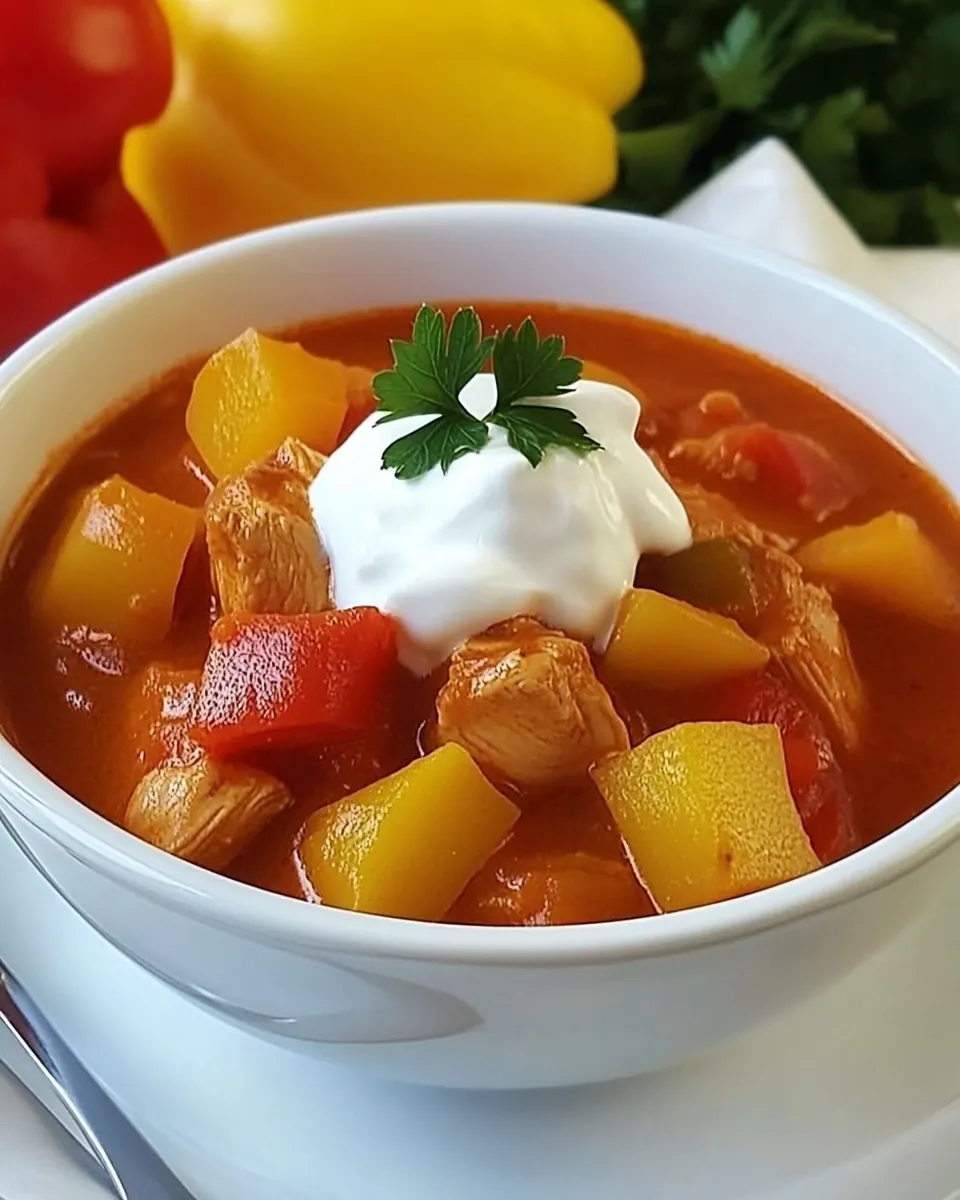
Hungarian Chicken Goulash
Hungarian Chicken Goulash has been the kind of bowl that warms up my kitchen and my memories at once. The first time I made it I was juggling a grocery run, a sleepy toddler, and a stack of unpaid bills, yet by the time the chicken was simmering in a fragrant, paprika colored broth, everything felt manageable again.
I remember standing at the stove, spoon in hand, as the scent of toasted paprika and onions filled the house, and I felt a little like I was giving myself a hug. Over the years I have tweaked little details, but the heart of the dish stays the same, a generous stew of tender chicken, soft peppers, and sweet onions that people keep coming back for. When friends come over on cold evenings, this is the recipe I turn to. It sits on the table steaming, and conversation flows more easily.
What I love most is how flexible the dish feels. Some days I make it with more peppers when they are at their peak, other times I push the flavor with an extra pinch of smoked paprika if I have it on hand. Still, no matter those little changes the comforting combination of savory chicken and fragrant spice always delivers. If you want a recipe that feels like a warm, practical embrace, this one will become a weeknight favorite.
Recipe Snapshot
1 hr 10 mins
10 mins
60 mins
Medium
450 kcal
Hungarian
Gluten-Free, Low FODMAP
Dinner
Dutch oven, Lid, Wooden spoon
Why This Hungarian Chicken Goulash Hits Different
Comforting, reliably hearty
I adore how Hungarian Chicken Goulash manages to be both rustic and refined. When I serve it, people instinctively slow down, spooning the rich broth and tender chicken into their bowls. The texture is deeply satisfying, with soft peppers and melting onions balancing the succulent chicken.
Bold paprika forward flavor
I always say the paprika is the soul of this recipe. Using a generous amount of genuine Hungarian paprika gives the stew its warm, slightly sweet, and earthy character. I like to toast it gently with the vegetables, it releases aroma that fills the kitchen and signals that dinner is going to be memorable.
Simple technique, big payoff
There is no elaborate equipment or perfect timing required. A good pot and a lid are all you need. The low and slow simmer transforms inexpensive chicken into something luxurious, so this recipe is accessible and rewarding for cooks at every level.
Room for seasonal produce
I appreciate how adaptable this goulash is to what’s in season. Fresh ripe tomatoes and crisp bell peppers brighten the stew in summer, while the warming spices are perfect for winter. I often recommend making a large batch, because the flavors meld beautifully if left to rest.
Family friendly and shareable
Finally, this dish is built for sharing. It’s easy to scale up, and the simple presentation in bowls with a dollop of sour cream makes it feel special without fuss. I always end up handing out second helpings, and I think you will see why.
What You’ll Need for Hungarian Chicken Goulash
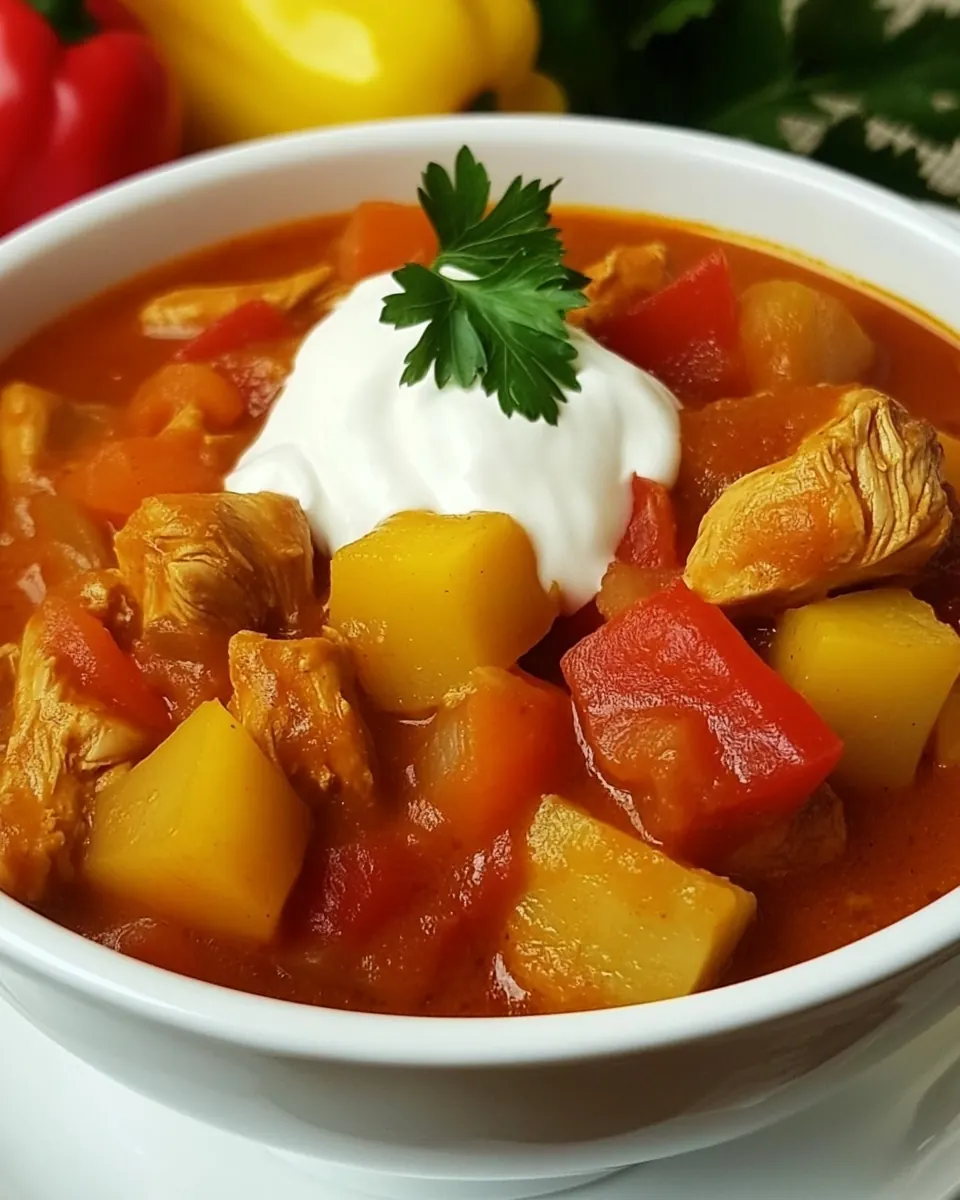
This ingredient list is all about layering flavor. The key players are the chicken, the paprika which provides the signature color and warmth, and the vegetables which lend sweetness and texture. Together they create a balanced stew that is both aromatic and comforting.
- 2 tablespoons extra virgin olive oil: Enhance flavors and provide a fruity base for sautéing; extra virgin olive oil helps gently cook onions and peppers while contributing a subtle Mediterranean richness. Use it early in the recipe to prevent sticking and to carry fat-soluble flavors like paprika. Its lower smoke point compared to some oils means moderate heat is best to preserve aroma and nutrients.
- 1 tablespoon butter: Add creaminess and richness to the pan; butter contributes savory depth and helps brown the onions for caramelized flavor development. Incorporate it with oil to raise the overall fat content and create a glossy finish. Melting butter into the aromatics also helps meld spices evenly throughout the dish.
- 2 large yellow onions, chopped: Provide sweet, aromatic foundation when chopped and softened; yellow onions add natural sugars that balance the paprika and tomatoes. Slowly caramelizing them draws out complexity and deepens the stew’s overall profile. Their texture thickens the sauce as they break down during simmering.
- 5 cloves garlic, minced: Introduce pungent, aromatic heat when minced; garlic offers a savory backbone and brightens the stew without overpowering other spices. Add it after the onions have softened to prevent bitterness from burning. Its oils disperse quickly and amplify the dish’s savory umami character.
- 6 yellow or orange bell peppers, or a combination of the two, chopped: Contribute color, sweetness, and mild vegetal crunch when chopped; yellow or orange bell peppers add a fruity, lightly smoky element that complements paprika. They soften and release juices that enrich the sauce, balancing acidity from tomatoes. Choose ripe peppers for maximum sweetness and vibrant appearance.
- 3 tomatoes, diced: Provide bright acidity and body when diced; tomatoes add tang, liquid, and umami that help create a balanced goulash base. Their natural pectin aids in thickening the sauce as it simmers with spices. Fresh tomatoes lend a fresher, less processed flavor than canned alternatives.
- 3 chicken breasts, about 1 1/2 pounds, cubed: Supply lean protein and hearty texture when cubed; chicken breasts absorb the paprika and aromatics, becoming tender in the simmering broth. Browning the pieces lightly before simmering adds Maillard flavors that deepen the stew. Ensure even sizing so the chicken cooks through uniformly.
- 1/4 cup genuine Hungarian paprika: Impart the characteristic smoky-sweet flavor and vibrant color; genuine Hungarian paprika is the defining spice that shapes the dish’s identity. Add it carefully and briefly toast with the aromatics to release its oils without burning. Quantity controls intensity—use as directed for authentic flavor.
- 1/2 teaspoons salt: Season subtly and enhance overall taste profile; a small measure of salt helps draw moisture from ingredients and intensifies other flavors. Dissolve it into the cooking liquids early to ensure even distribution. Adjust later as needed against broth and finishing salt additions.
- 1/2 teaspoon caraway seeds, crushed: Introduce warm, slightly anise-like nuance when crushed; caraway seeds add traditional Central European flavor that complements the paprika and peppers. Lightly crushing releases essential oils and integrates the seed’s aroma into the sauce. Use sparingly to avoid overpowering the stew’s balance.
- 2 bay leaves: Contribute woody, aromatic depth during long simmering; bay leaves infuse subtle herbal notes that round out the broth without dominating. Add them early and remove before serving to avoid leathery texture. Their slow-release flavor becomes more pronounced over extended cooking.
- 1 teaspoon crushed black peppercorns: Add sharp, warming spice when crushed; black peppercorns provide piquancy and complexity that lifts richer flavors in the goulash. Crushing just before use maximizes volatile oils and aroma. Disperse evenly to ensure balanced heat throughout the stew.
- 4 cups quality chicken broth: Form the primary cooking liquid and add savory backbone; quality chicken broth supplies body, saltiness, and umami to braise the chicken and vegetables. Use a good-tasting broth to avoid watering down flavors, and adjust quantity if a thicker sauce is desired. Simmering concentrates the broth and melds spice flavors.
- Salt and pepper to taste: Allow final seasoning adjustment to taste; additional salt and pepper enable personalized balance after simmering and tasting. Use sparingly at first, then increase to highlight sweetness, acidity, or heat as needed. Tasting before serving ensures the stew is well-seasoned for guests.
- Sour cream: Provide cool, tangy creaminess as a finishing component; sour cream adds silkiness and a slight acidity that tempers the paprika’s richness. Stir in off heat to prevent curdling and to create a velvety mouthfeel. Serve dolloped or mixed in for traditional Hungarian finish.
Putting Together Hungarian Chicken Goulash
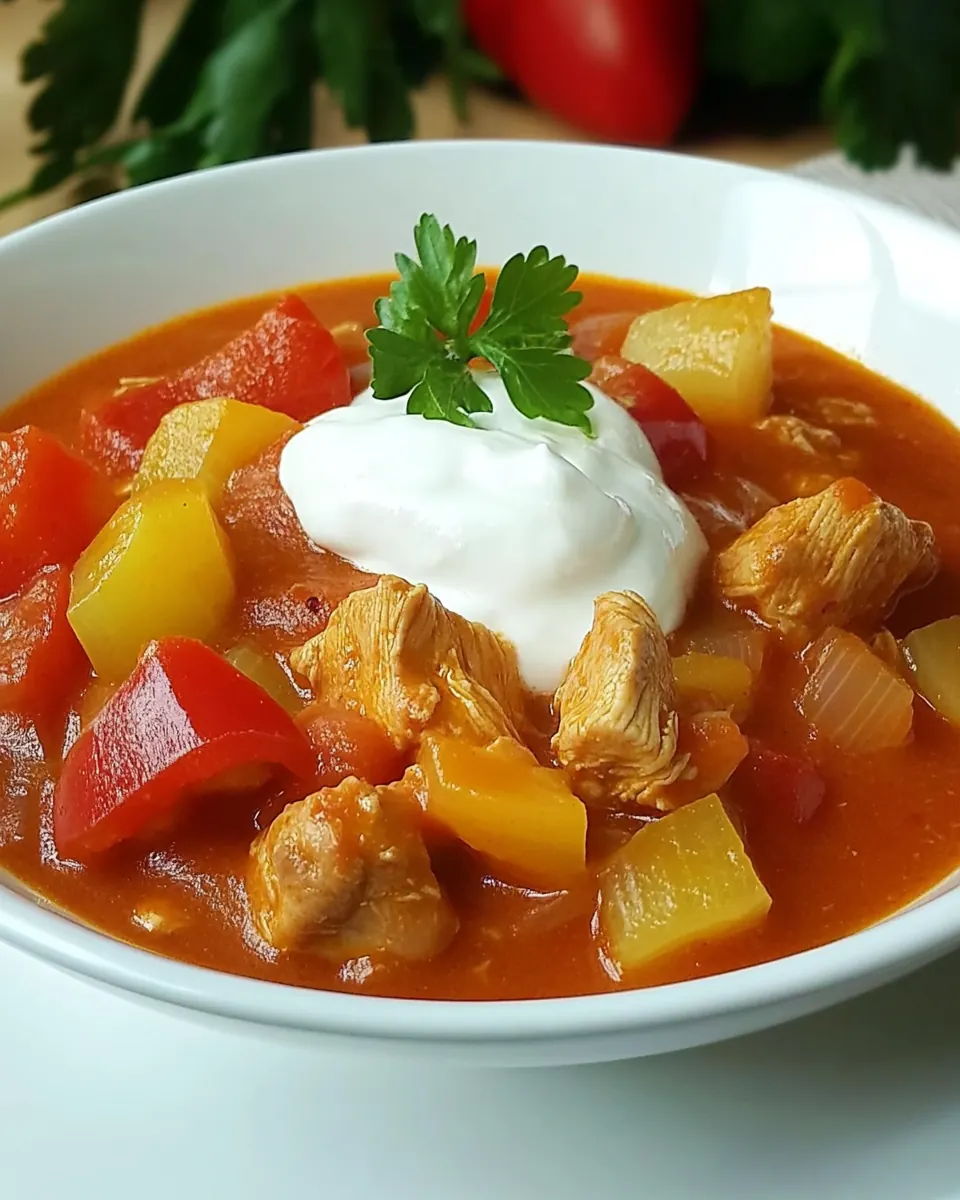
Bringing this stew together is straightforward, and the real work happens during the gentle simmer where flavors deepen. Below I expand each direction into detailed guidance so you can follow along confidently and recognize the right visual and aromatic cues.
- Heat the olive oil and butter in a large Dutch oven or heavy pot over medium high heat. Saute the onions until tender and translucent, about 5-7 minutes. Add the garlic and cook for another minute. Add the bell peppers and the paprika powder and cook for another 7-8 minutes until tender. Add the tomatoes and chicken and cook for another two minutes. Add the caraway seeds, bay leaves and cracked peppercorns. Stir to combine. Pour in enough of the chicken broth to just cover the mixture, about 4 cups. Bring the goulash to a boil, reduce the heat to low, cover and simmer for one hour. Add salt and pepper to taste.: As the pot warms you should hear a faint whisper of oil spreading and see the butter foam briefly before it calms, a good sign that the fat is hot enough to receive aromatics. This nuance matters because adding onions to properly heated fat encourages even softening rather than sticking. A common mistake is rushing this step, which can result in unevenly cooked onions later. Use a heavy bottom pot to distribute heat and prevent hot spots.
- Serve in bowls with a dollop of sour cream.: You will notice the onions losing their raw edge, turning glossy and soft as they surrender sugars to the pot. Stir occasionally to promote even browning, and listen for a gentle sizzling rather than a violent pop, that means everything is on the right track. Avoid pushing the heat too high or the onions may brown too quickly and develop bitter edges.
- Add the garlic and cook for another minute: The moment you add the minced garlic the kitchen fills with its pungent aroma, but keep the contact brief so the garlic becomes fragrant without taking on bitterness. Stir constantly and watch for tiny bubbles at the surface; that indicates the garlic is cooking. Burning the garlic is an easy misstep, so remove the pot from high heat quickly if you see browning.
- Add the bell peppers and the paprika powder and cook for another 7 to 8 minutes until tender: When the diced bell peppers hit the pot the sound softens into a gentle hiss as they release moisture. Toss the paprika in at this stage to toast it lightly with the vegetables, releasing its aroma. You should see the peppers soften and their edges take on a slight translucence. The pitfall here is adding paprika to an overly hot pan, which can make it bitter, so keep the temperature moderate and stir so the spice coats the vegetables evenly.
- Add the tomatoes and chicken and cook for another two minutes: Introducing the diced tomatoes brings a splash of acidity and liquid that loosens the pan fond, while the cubed chicken breasts should be stirred just until their exteriors start to change color. You will notice the mixture steaming and a savory scent rising as juices mingle. The reason not to overcook now is that the long simmer will finish the chicken , preserving tenderness. Overbrowning the meat at this step can make it tough.
- Add the caraway seeds, bay leaves and cracked peppercorns: These whole spices give layered background notes during simmering. When you add the crushed caraway seeds and cracked peppercorns you will catch a brief burst of aroma as their essential oils meet heat and moisture. Stir to integrate them so their flavors distribute through the pot. Forgetting to crush the caraway first is a small mistake that limits their flavor release.
- Stir to combine: As the pot settles you will see a uniform medley of colors from the peppers, tomatoes, and chicken . A few gentle stirs ensure the paprika and spices are evenly distributed, which is crucial for an even flavored stew. Listen for a gentle simmer forming as liquids mingle; if one area looks dry, scrape the bottom to reincorporate those browned bits. Failing to mix well can result in uneven seasoning pockets.
- Pour in enough of the chicken broth to just cover the mixture, about 4 cups: When the chicken broth meets the hot pot it will hiss softly and begin to collect steam. The goal is a shallow cover so the flavors concentrate but the chicken remains submerged to cook through evenly. Using too much liquid dilutes the intensity, and too little risks scorching, so measure roughly and adjust to achieve just coverage.
- Bring the goulash to a boil, reduce the heat to low, cover and simmer for one hour: You will see vigorous bubbles on the surface as it reaches a boil, then a change to gentle, steady bubbling once reduced to low. The long simmer is where connective tissues relax and flavors coalesce, producing tender chicken and a cohesive broth. Resist the urge to lift the lid frequently, or heat will escape and extend cooking time. A frequent mistake is rushing this period which leaves the chicken underdeveloped and the broth thin.
- Add salt and pepper to taste: As the stew finishes you will recognize an important shift in balance, and this is when incremental seasoning matters most. Taste a spoonful and add more salt or cracked black peppercorns if needed, small adjustments at a time. Over-salting is easy to do, so season gradually and rest for a minute between tastings to let flavors settle.
- Serve in bowls with a dollop of sour cream: When you spoon the finished goulash into bowls the aroma should be warm with paprikasweet notes and a gentle tang from the tomatoes. A scoop of sour cream on top creates a cool, creamy counterpoint that enriches the broth. If you add the sour cream too early it will break down in the hot liquid, so save it for the table. A common serving mistake is to skip the final garnish, which is what gives each bowl a glossy, balanced finish.
Tips and Tricks about Hungarian Chicken Goulash
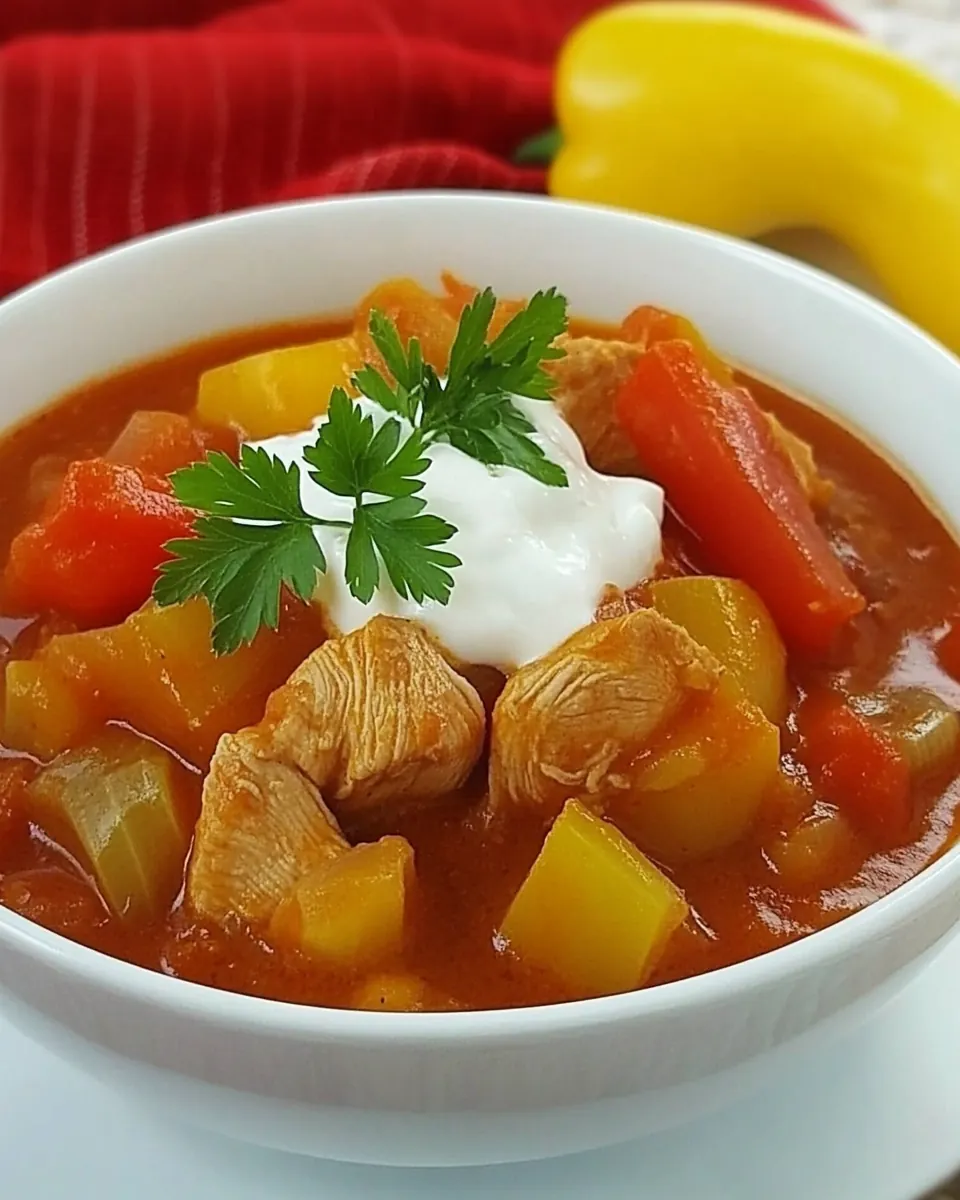
I like to keep a short list of dependable tips close by when I make this goulash. The following items cover seasoning, texture, and small timing points that make a big difference in the final dish.
- Bloom the paprika: Toast the paprika briefly with the vegetables so its oils release, but keep the heat moderate to avoid bitterness.
- Evenly sized chicken pieces: Cut the chicken breasts into consistent cubes so they cook through at the same rate and stay tender.
- Use quality chicken broth: A flavorful chicken broth boosts the base of the stew significantly, so choose a stock you enjoy sipping on its own.
- Control the simmer: Once at a boil, reduce to a gentle simmer and keep the lid on for best texture; frequent lid lifting lets heat escape and lengthens cooking time.
- Finish with sour cream at the table: Add the sour cream just before serving to maintain its creamy texture and preserve the visual contrast in each bowl.
Serving Options for Hungarian Chicken Goulash
This goulash is versatile when it comes to serving. It works beautifully for family dinners, casual weeknight meals, and cold weather gatherings. Below I outline complementary sides and serving ideas to make each meal memorable.
- Serve over noodles: Spoon the goulash atop wide egg noodles to catch the rich broth, creating a hearty, comforting plate ideal for dinner.
- With crusty bread: Offer slices of crusty bread or a sturdy roll to sop up the fragrant sauce, perfect for a casual meal where people can linger.
- Family style in bowls: Present the goulash in large communal bowls with a bowl of sour cream on the side so everyone can add what they like, great for sharing.
- Occasions: This dish is well suited for winter evenings, cozy weekend lunches, or a Ramadan iftar where warm, satisfying food is appreciated.
- Storage tips: Cool the goulash before sealing and refrigerate for up to three days, flavors often deepen overnight and it reheats beautifully on the stove over low heat.
- Make ahead: Prepare the goulash a day in advance to allow the flavors to meld, then gently rewarm and adjust seasoning before serving for best results.
FAQ
Conclusion
This Hungarian Chicken Goulash stands out for its warm paprika forward flavor and comforting, family friendly nature. It brings together simple pantry ingredients into a richly flavored stew that is both approachable and deeply satisfying. Try it on a chilly evening, and you will likely find it becomes a staple in your rotation because of its forgiving technique and crowd pleasing profile. Share it with friends or tuck into a quiet bowl at home; either way it rewards patience and offers a real sense of home.
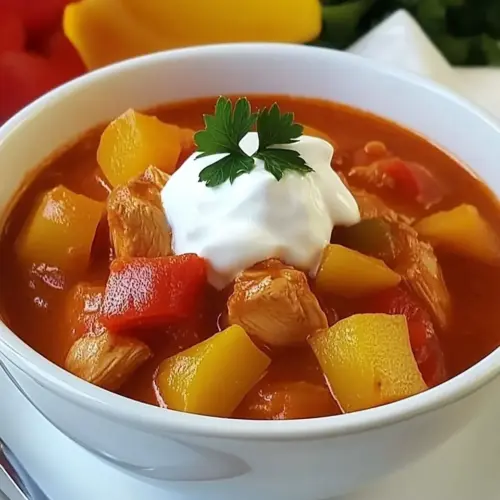
Hungarian Chicken Goulash
Equipment
- Dutch Oven
- Lid
- Wooden Spoon
Ingredients
- 2 tablespoons extra virgin olive oil Enhance flavors and provide a fruity base for sautéing; extra virgin olive oil helps gently cook onions and peppers while contributing a subtle Mediterranean richness. Use it early in the recipe to prevent sticking and to carry fat-soluble flavors like paprika. Its lower smoke point compared to some oils means moderate heat is best to preserve aroma and nutrients.
- 1 tablespoon butter Add creaminess and richness to the pan; butter contributes savory depth and helps brown the onions for caramelized flavor development. Incorporate it with oil to raise the overall fat content and create a glossy finish. Melting butter into the aromatics also helps meld spices evenly throughout the dish.
- 2 large yellow onions, chopped Provide sweet, aromatic foundation when chopped and softened; yellow onions add natural sugars that balance the paprika and tomatoes. Slowly caramelizing them draws out complexity and deepens the stew’s overall profile. Their texture thickens the sauce as they break down during simmering.
- 5 cloves garlic, minced Introduce pungent, aromatic heat when minced; garlic offers a savory backbone and brightens the stew without overpowering other spices. Add it after the onions have softened to prevent bitterness from burning. Its oils disperse quickly and amplify the dish’s savory umami character.
- 6 yellow or orange bell peppers, or a combination of the two, chopped Contribute color, sweetness, and mild vegetal crunch when chopped; yellow or orange bell peppers add a fruity, lightly smoky element that complements paprika. They soften and release juices that enrich the sauce, balancing acidity from tomatoes. Choose ripe peppers for maximum sweetness and vibrant appearance.
- 3 tomatoes, diced Provide bright acidity and body when diced; tomatoes add tang, liquid, and umami that help create a balanced goulash base. Their natural pectin aids in thickening the sauce as it simmers with spices. Fresh tomatoes lend a fresher, less processed flavor than canned alternatives.
- 3 chicken breasts, about 1 1/2 pounds, cubed Supply lean protein and hearty texture when cubed; chicken breasts absorb the paprika and aromatics, becoming tender in the simmering broth. Browning the pieces lightly before simmering adds Maillard flavors that deepen the stew. Ensure even sizing so the chicken cooks through uniformly.
- 1/4 cup genuine Hungarian paprika Impart the characteristic smoky-sweet flavor and vibrant color; genuine Hungarian paprika is the defining spice that shapes the dish’s identity. Add it carefully and briefly toast with the aromatics to release its oils without burning. Quantity controls intensity—use as directed for authentic flavor.
- 1/2 teaspoons salt Season subtly and enhance overall taste profile; a small measure of salt helps draw moisture from ingredients and intensifies other flavors. Dissolve it into the cooking liquids early to ensure even distribution. Adjust later as needed against broth and finishing salt additions.
- 1/2 teaspoon caraway seeds, crushed Introduce warm, slightly anise-like nuance when crushed; caraway seeds add traditional Central European flavor that complements the paprika and peppers. Lightly crushing releases essential oils and integrates the seed’s aroma into the sauce. Use sparingly to avoid overpowering the stew’s balance.
- 2 bay leaves Contribute woody, aromatic depth during long simmering; bay leaves infuse subtle herbal notes that round out the broth without dominating. Add them early and remove before serving to avoid leathery texture. Their slow-release flavor becomes more pronounced over extended cooking.
- 1 teaspoon crushed black peppercorns Add sharp, warming spice when crushed; black peppercorns provide piquancy and complexity that lifts richer flavors in the goulash. Crushing just before use maximizes volatile oils and aroma. Disperse evenly to ensure balanced heat throughout the stew.
- 4 cups quality chicken broth Form the primary cooking liquid and add savory backbone; quality chicken broth supplies body, saltiness, and umami to braise the chicken and vegetables. Use a good-tasting broth to avoid watering down flavors, and adjust quantity if a thicker sauce is desired. Simmering concentrates the broth and melds spice flavors.
- Salt and pepper to taste Allow final seasoning adjustment to taste; additional salt and pepper enable personalized balance after simmering and tasting. Use sparingly at first, then increase to highlight sweetness, acidity, or heat as needed. Tasting before serving ensures the stew is well-seasoned for guests.
- Sour cream Provide cool, tangy creaminess as a finishing component; sour cream adds silkiness and a slight acidity that tempers the paprika’s richness. Stir in off heat to prevent curdling and to create a velvety mouthfeel. Serve dolloped or mixed in for traditional Hungarian finish.
Instructions
- Heat the olive oil and butter in a large Dutch oven or heavy pot over medium high heat. Saute the onions until tender and translucent, about 5-7 minutes. Add the garlic and cook for another minute. Add the bell peppers and the paprika powder and cook for another 7-8 minutes until tender. Add the tomatoes and chicken and cook for another two minutes. Add the caraway seeds, bay leaves and cracked peppercorns. Stir to combine. Pour in enough of the chicken broth to just cover the mixture, about 4 cups. Bring the goulash to a boil, reduce the heat to low, cover and simmer for one hour. Add salt and pepper to taste.: As the pot warms you should hear a faint whisper of oil spreading and see the butter foam briefly before it calms, a good sign that the fat is hot enough to receive aromatics. This nuance matters because adding onions to properly heated fat encourages even softening rather than sticking. A common mistake is rushing this step, which can result in unevenly cooked onions later. Use a heavy bottom pot to distribute heat and prevent hot spots.
- Serve in bowls with a dollop of sour cream.: You will notice the onions losing their raw edge, turning glossy and soft as they surrender sugars to the pot. Stir occasionally to promote even browning, and listen for a gentle sizzling rather than a violent pop, that means everything is on the right track. Avoid pushing the heat too high or the onions may brown too quickly and develop bitter edges.
- Add the garlic and cook for another minute: The moment you add the minced garlic the kitchen fills with its pungent aroma, but keep the contact brief so the garlic becomes fragrant without taking on bitterness. Stir constantly and watch for tiny bubbles at the surface; that indicates the garlic is cooking. Burning the garlic is an easy misstep, so remove the pot from high heat quickly if you see browning.
- Add the bell peppers and the paprika powder and cook for another 7 to 8 minutes until tender: When the diced bell peppers hit the pot the sound softens into a gentle hiss as they release moisture. Toss the paprika in at this stage to toast it lightly with the vegetables, releasing its aroma. You should see the peppers soften and their edges take on a slight translucence. The pitfall here is adding paprika to an overly hot pan, which can make it bitter, so keep the temperature moderate and stir so the spice coats the vegetables evenly.
- Add the tomatoes and chicken and cook for another two minutes: Introducing the diced tomatoes brings a splash of acidity and liquid that loosens the pan fond, while the cubed chicken breasts should be stirred just until their exteriors start to change color. You will notice the mixture steaming and a savory scent rising as juices mingle. The reason not to overcook now is that the long simmer will finish the chicken , preserving tenderness. Overbrowning the meat at this step can make it tough.
- Add the caraway seeds, bay leaves and cracked peppercorns: These whole spices give layered background notes during simmering. When you add the crushed caraway seeds and cracked peppercorns you will catch a brief burst of aroma as their essential oils meet heat and moisture. Stir to integrate them so their flavors distribute through the pot. Forgetting to crush the caraway first is a small mistake that limits their flavor release.
- Stir to combine: As the pot settles you will see a uniform medley of colors from the peppers, tomatoes, and chicken . A few gentle stirs ensure the paprika and spices are evenly distributed, which is crucial for an even flavored stew. Listen for a gentle simmer forming as liquids mingle; if one area looks dry, scrape the bottom to reincorporate those browned bits. Failing to mix well can result in uneven seasoning pockets.
- Pour in enough of the chicken broth to just cover the mixture, about 4 cups: When the chicken broth meets the hot pot it will hiss softly and begin to collect steam. The goal is a shallow cover so the flavors concentrate but the chicken remains submerged to cook through evenly. Using too much liquid dilutes the intensity, and too little risks scorching, so measure roughly and adjust to achieve just coverage.
- Bring the goulash to a boil, reduce the heat to low, cover and simmer for one hour: You will see vigorous bubbles on the surface as it reaches a boil, then a change to gentle, steady bubbling once reduced to low. The long simmer is where connective tissues relax and flavors coalesce, producing tender chicken and a cohesive broth. Resist the urge to lift the lid frequently, or heat will escape and extend cooking time. A frequent mistake is rushing this period which leaves the chicken underdeveloped and the broth thin.
- Add salt and pepper to taste: As the stew finishes you will recognize an important shift in balance, and this is when incremental seasoning matters most. Taste a spoonful and add more salt or cracked black peppercorns if needed, small adjustments at a time. Over-salting is easy to do, so season gradually and rest for a minute between tastings to let flavors settle.
- Serve in bowls with a dollop of sour cream: When you spoon the finished goulash into bowls the aroma should be warm with paprikasweet notes and a gentle tang from the tomatoes. A scoop of sour cream on top creates a cool, creamy counterpoint that enriches the broth. If you add the sour cream too early it will break down in the hot liquid, so save it for the table. A common serving mistake is to skip the final garnish, which is what gives each bowl a glossy, balanced finish.
Notes
- Bloom the paprika: Toast the paprika briefly with the vegetables so its oils release, but keep the heat moderate to avoid bitterness.
- Evenly sized chicken pieces: Cut the chicken breasts into consistent cubes so they cook through at the same rate and stay tender.
- Use quality chicken broth: A flavorful chicken broth boosts the base of the stew significantly, so choose a stock you enjoy sipping on its own.
- Control the simmer: Once at a boil, reduce to a gentle simmer and keep the lid on for best texture; frequent lid lifting lets heat escape and lengthens cooking time.
- Finish with sour cream at the table: Add the sour cream just before serving to maintain its creamy texture and preserve the visual contrast in each bowl.