French Almond Cake
French Almond Cake has a way of showing up in my kitchen when I need something quietly impressive, like a friend who arrives with a warm smile and a box of secrets. The first time I baked this I was chasing a memory of a tiny Parisian patisserie, and the combination of nutty almonds and buttery crumb immediately transported me. I remember the sound the sliced almonds made as they toasted in the oven, and how the scent curled through the house, soft and comforting.
Later that week I made it again for a casual afternoon with neighbors. We sat around the table with cups of tea, breaking off wedges, and commenting on the cake’s tender crumb and subtle almond perfume. It felt like the sort of recipe you hand down because it always lands well, not showy, but memorable. I like serving it slightly warm with a smear of jam so each bite is a balance of sweet jam and nutty almonds. That contrast is part of why I keep this recipe in heavy rotation.
Recipe Snapshot
50 mins
15 mins
35 mins
Medium
320 kcal
French
Gluten-Free, Low FODMAP
Desserts
9-inch round baking pan, Mixing bowl, Wooden spoon, Wire rack, Spatula
What We Adore About This French Almond Cake
Nostalgic Comfort in Every Bite
I love that French Almond Cake captures a nostalgic feeling without fuss. The texture is tender yet slightly dense, which makes it feel like a homemade treat you can trust to comfort friends and family. When I slice into it and see the tiny air pockets, I know the crumb will be balanced, not gummy.
Simple Ingredients, Big Impact
The ingredient list is short, and that honesty is what I admire most. With pantry staples like all purpose flour and granulated white sugar, plus the obvious star, almonds, the cake achieves complexity from technique rather than an intimidating list of components. I often say good technique lets simple ingredients sing.
Versatile Serving Options
I appreciate how flexible the cake is. You can serve French Almond Cake at a casual coffee, a refined brunch, or as a late night treat. It welcomes a light dusting of powdered sugar, a smear of apricot jam, or a side of fresh fruit. I like that it transitions effortlessly from table to table.
Reliable Results for Home Bakers
One reason this recipe stands out is consistency. The method rewards attention to small details, like not overmixing the batter and letting the butter cool slightly before incorporating. Over the years I learned which cues to watch for, and that means you can bake it with confidence, even if you are juggling other dishes.
Beautiful Texture and Aroma
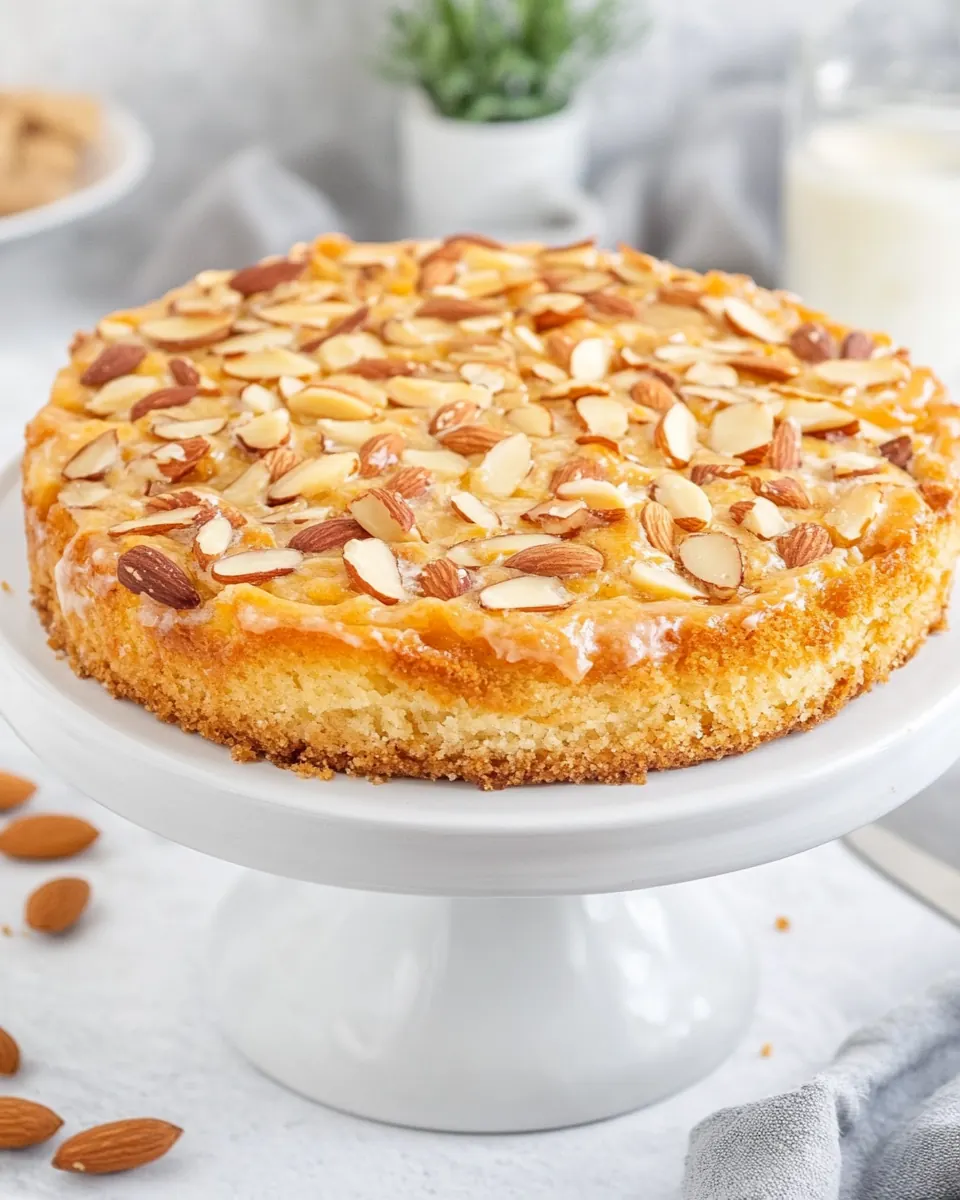
Finally, the aroma of almond extract paired with toasted sliced almonds is simply irresistible. The crunchy top contrasts the soft interior in a way that feels elegant yet unfussy. Every time the cake comes out of the oven I pause, cup my hands around the warm slice, and enjoy the simple pleasure it delivers.
Essential Ingredients for French Almond Cake
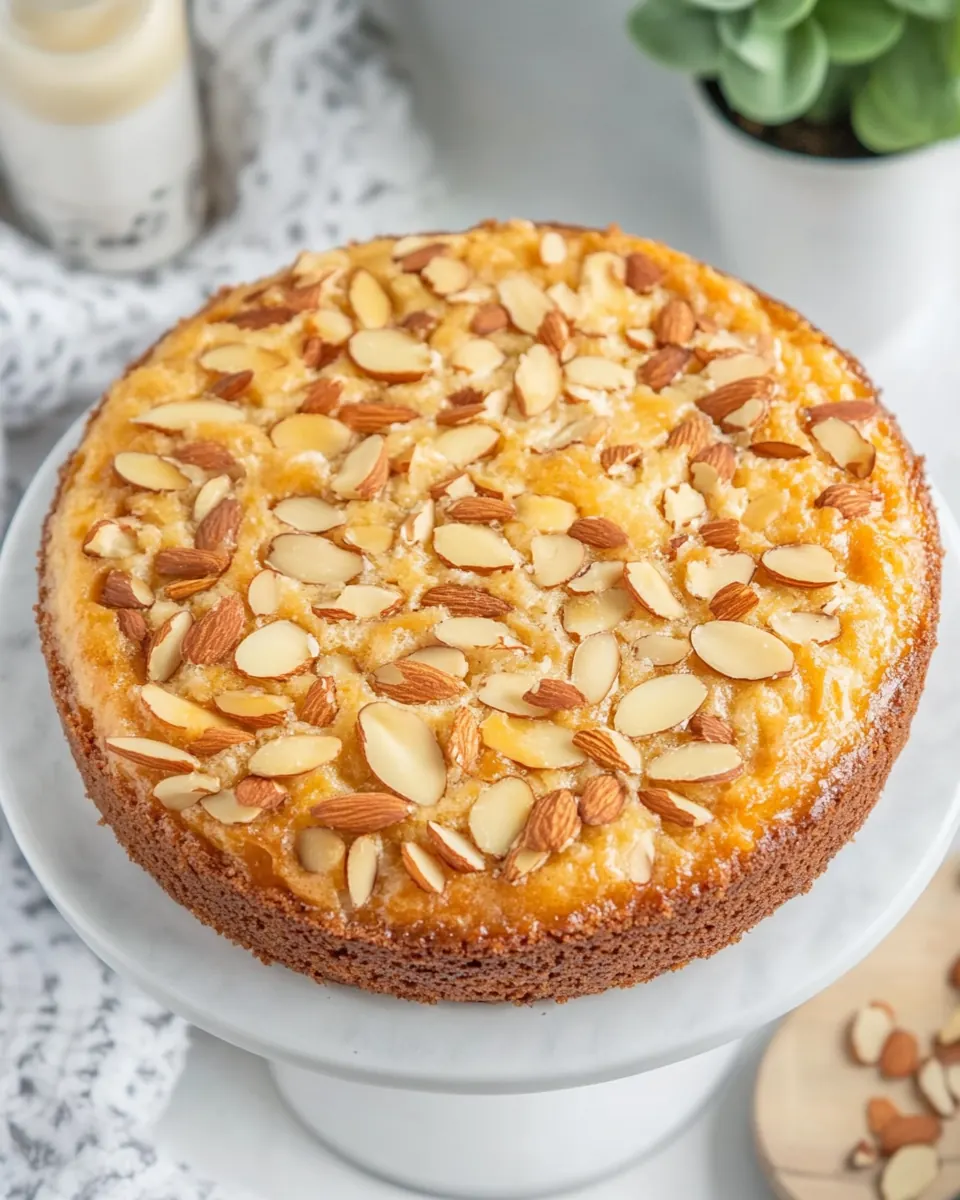
This cake is about celebrating a few key players. I believe in letting each ingredient do its job, so the sugar caramelizes just enough, the butter lends richness, and the almonds provide signature texture and flavor. Together they make a balanced, approachable cake that feels both rustic and refined.
- 11/2 cups granulated white sugar: Sweeten and tenderize the cake batter while helping to create a golden crust; granulated sugar also assists with moisture retention and browning during baking. Dissolve into the wet ingredients to ensure even sweetness and proper texture in the finished cake.
- 1/2 teaspoons salt: Enhance overall flavor balance and strengthen gluten formation slightly by moderating sweetness; a small amount of salt brightens other flavors. Dissolve into the dry or wet mixture to ensure even distribution without overpowering the almond profile.
- 2 large eggs, at room temperature: Provide structure and leavening through protein coagulation as the cake bakes, while adding richness and moisture; room–temperature eggs emulsify fats and liquids for a smooth batter. Beat evenly into the mixture to help trap air for a tender crumb and uniform rise.
- 3/4 cup unsalted butter, melted and cooled slightly: Contribute rich, creamy fat that adds moisture, tenderness, and flavor complexity; melted and slightly cooled butter blends smoothly into the batter without cooking the eggs. Incorporate carefully to maintain an even emulsion and promote a soft, fine crumb in the cake.
- 11/2 teaspoons almond extract: Impart concentrated almond aroma and flavor that defines the cake’s character; almond extract intensifies the nutty profile without adding texture. Add sparingly to avoid bitterness and mix thoroughly so the fragrance is evenly distributed throughout the batter.
- 1 teaspoon vanilla extract: Provide a complementary sweet, floral background note that rounds out the flavors and enhances overall depth; vanilla extract supports the almond flavor and balances sweetness. Stir into the wet ingredients to ensure a consistent, pleasant aroma in every bite.
- 11/2 cups all purpose flour: Build the bulk and structure of the cake while contributing to crumb texture; all purpose flour supplies starches that gelatinize and proteins that form the cake’s matrix. Sift or whisk to remove lumps and combine with other dry ingredients for an even, tender result.
- 3/4 cups sliced almonds: Add crunchy texture and pronounced toasted nut flavor that complements the almond extract; sliced almonds also provide visual appeal on top when toasted or baked. Fold or sprinkle as directed to maintain distinct almond pieces and enhance contrast with the soft crumb.
- 1/4 cup apricot jam: Offer a glossy, fruity glaze that adds sweetness, moisture, and a subtle apricot tang to the finished cake; apricot jam also helps seal in freshness and gives a shiny finish when warmed and brushed over the surface. Warm slightly before brushing for easy spreading and even coverage.
The Process for Making French Almond Cake
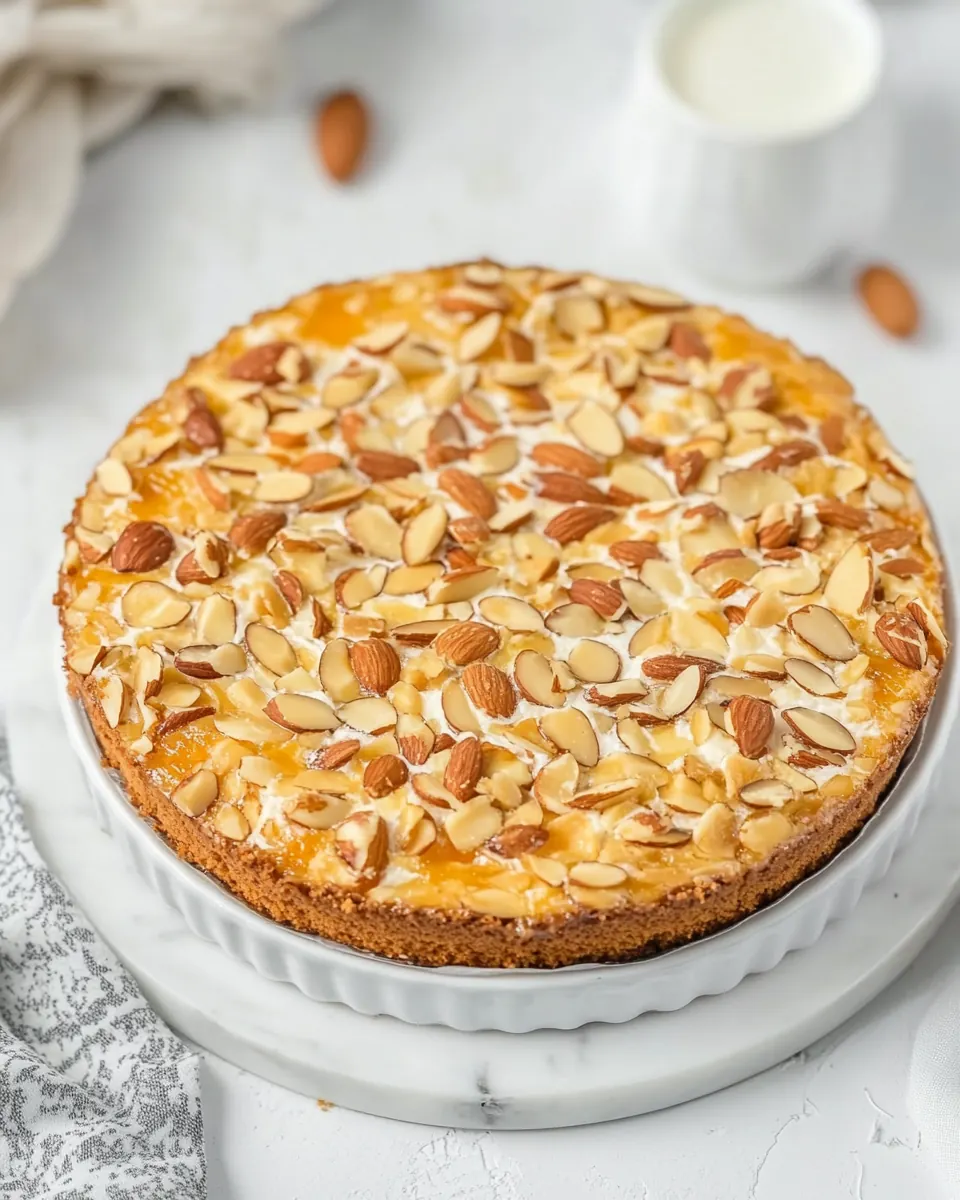
I find the method both forgiving and rewarding, and it’s ideal for bakers who enjoy tactile cues. Pay attention to texture and aroma, they tell you more than a clock does. Below I expand each directional point with sensory details, troubleshooting advice, and the reasons behind each technique.
- Preheat the oven to 350℉. Spray a 9-inch round baking pan with baking spray (nonstick spray with flour).: The moment the oven begins warming you will smell a faint metallic heat that signals the environment is getting ready to transform the batter. Preheating to 350℉ ensures the cake hits the oven at the right temperature so it rises steadily, rather than collapsing from a slow start. Preparing a 9-inch round pan with baking spray that contains flour creates a nonstick barrier and helps the exterior release cleanly; otherwise the cake can cling and tear when inverted. A common mistake is skipping preheat or placing the cake in a slightly cool oven which can cause uneven rise and a dense center. Make sure the pan is evenly coated and tap out any excess spray to avoid greasy pools.
- In a large bowl, whisk together the sugar, salt, eggs, butter, almond extract and vanilla. Add the flour, and stir with a wooden spoon until just blended.: As you whisk, notice the sugar dissolving slightly into the eggs , the mixture loosening into a glossy state that catches the light. The aroma of the almond extract will become immediate and fragrant, signaling the cake's identity. Incorporating the melted yet cooled butter at this stage adds silkiness without cooking the eggs , which keeps the batter smooth. If the mixture looks curdled or grainy, it often means the butter was too hot, so allow it to cool longer next time. Gentle whisking prevents over aeration, which could create large tunnels in the baked cake.
- Spread the batter evenly in the prepared pan. Sprinkle with almonds.: When you add the all purpose flour , fold it in gently with a wooden spoon until you see no streaks of dry flour. The batter should be cohesive and slightly thick, not runny. Overmixing develops gluten and yields a tougher crumb, while undermixing leaves pockets of dry flour. The sound here is quiet, a soft scraping as the spoon moves through the batter, and the visual cue is a smooth consistency with a few small air bubbles. If you notice a gummy texture, it is likely overmixed; stop stirring and proceed to baking quickly to avoid a dense result.
- Bake in a preheated oven for 35 to 40 minutes or until a toothpick inserted into the center comes out with a few moist crumbs attached. Let cool in the pan on a wire rack for 15 minutes. Run a knife around the edge of the pan, then invert the cake onto the rack. Spread the warm cake with apricot jam. Let cool completely.: When you transfer the batter to the pan, use a spatula to level the surface so it bakes uniformly. The batter should settle into the corners without force, and you'll see it flatten into a glossy top. Sprinkle the sliced almonds evenly; they will brown and crisp during baking, offering a crunchy contrast to the tender crumb. Pressing the almonds lightly into the batter helps them adhere, preventing them from sliding off when inverted. A common error is piling too many almonds in one spot which creates uneven browning, so distribute them with intention.
- Bake in a preheated oven for 35 to 40 minutes or until a toothpick inserted into the center comes out with a few moist crumbs attached.: The oven will give you the first sign as the top develops a light golden color and a toasty almond aroma fills the kitchen. Baking for the indicated time at 350℉ lets the cake set while staying moist inside. The toothpick test is sensory too, you want a few moist crumbs not raw batter, which indicates the center is done but still tender. If the top browns too quickly, tent with foil to prevent overbrowning while the center finishes. Taking it out too soon can mean a gooey center, and leaving it too long dries the crumb, so aim for that perfect balance.
- Let cool in the pan on a wire rack for 15 minutes.: Cooling in the pan for the first 15 minutes lets the structure firm up slightly so it does not collapse when removed. During this time steam escapes and settles, and the cake becomes easier to handle. You will notice the aroma mellows and the top feels just warm to the touch. Avoid the temptation to flip it out immediately, or you risk tearing. If the cake seems stuck after 15 minutes, run a thin knife around the edge before inverting to release any points that adhered to the pan.
- Run a knife around the edge of the pan, then invert the cake onto the rack.: Running a knife gently around the edge ensures the cake releases cleanly without ripping. When you invert it onto a wire rack, listen for the subtle sigh as the cake separates from the pan. The underside will show the pattern of the pan briefly before settling into its final appearance. If the cake resists, tap the pan lightly or warm the bottom slightly for a few seconds; forcing it can cause breakage.
- Spread the warm cake with apricot jam.: Spreading apricot jam while the cake is still warm allows the jam to meld into the surface, creating a glossy layer that seeps into the top crumbs. The aroma becomes fruitier and brighter, contrasting the nuttiness of the almonds . Use a spoon to dollop and a small offset spatula to smooth without tearing the cake. If the jam is too cool and stiff, warm it for a few seconds to loosen; if too hot, it may run off the sides.
- Let cool completely.: Allowing the cake to cool fully is crucial for clean slicing and stable texture. As it cools the crumb firms and the jam sets slightly. The residual warmth will continue to distribute moisture so the cake reaches its ideal balance. If you slice too soon, the cake may crumble or the jam may smear, so patience yields the most attractive presentation and best mouthfeel.
Expert Tips about French Almond Cake
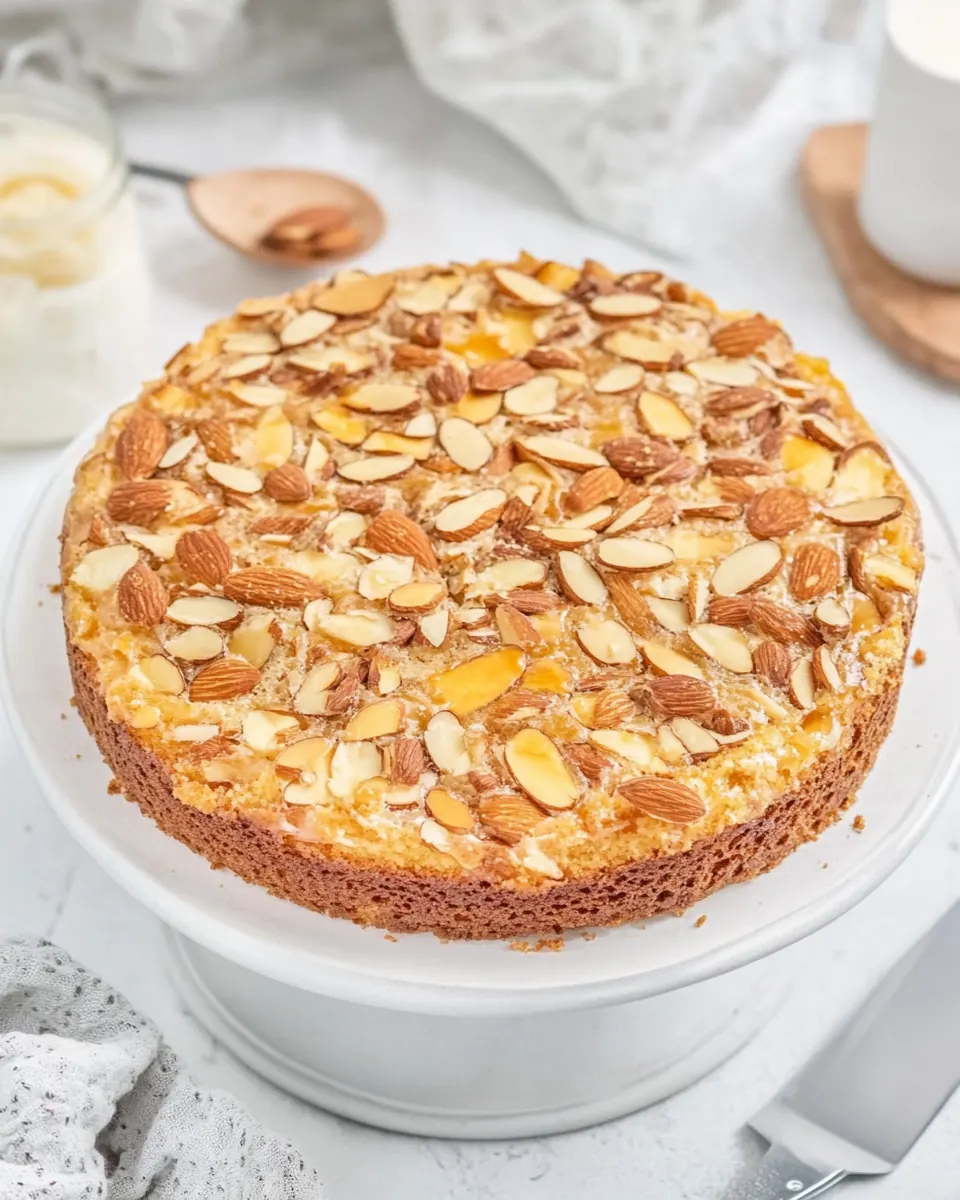
This cake benefits from small attentions that yield big rewards. Below are focused tips I rely on when I bake it, expanded into practical guidance so you can replicate consistent results every time.
- Control butter temperature Allow the melted butter to cool until it is warm but not hot before mixing with the eggs, to prevent curdling and ensure a smooth batter.
- Don’t overmix the flour Stir until just blended to keep the crumb tender; overmixing develops gluten which leads to toughness.
- Evenly scatter almonds Place the sliced almonds uniformly across the batter so each slice gets a mix of crunchy topping and soft cake without uneven browning.
- Use the toothpick test wisely Look for a few moist crumbs not raw batter, which indicates the cake is done but still tender and not dry.
- Warm jam before spreading If your apricot jam is stiff, warm it slightly so it spreads smoothly and creates a glossy finish without tearing the cake.
- Cool on a wire rack Let the cake cool in the pan briefly, then move to a rack to avoid condensation forming under the cake and making the bottom soggy.
How to Enjoy French Almond Cake
This cake is wonderfully adaptable for many occasions, from a relaxed afternoon coffee to a festive sharing plate. Below are detailed serving ideas and preservation tips to make the most of each bake.
- Simple Coffee Service Serve slices with a cup of tea or coffee for an effortless afternoon treat, letting the nutty aroma shine.
- Brunch Centerpiece Present the cake on a platter alongside fresh fruit for a light brunch offering that feels refined but approachable.
- Casual Dessert For an easy dessert, cut wedges and offer plates of jam for guests to add more if they like, giving a personalized touch.
- Special Occasion Use as a quiet centerpiece for small gatherings, pairing with delicate pastries and minimal decorations so the cake remains the focal point.
- Storage Tips Store wrapped at room temperature for up to two days, or refrigerate in an airtight container for longer freshness; bring to room temperature before serving to restore texture.
- Seasonal Pairings Pair with light citrus or stone fruits in warmer months, and richer spiced teas in cooler months, to complement the almond character.
FAQ
Conclusion
French Almond Cake stands out for its elegant simplicity, nutty aroma, and balanced texture. It invites both casual sharing and small celebrations, rewarding attention to small details like cooling and spreading warm jam. I hope you enjoy baking it as much as I do, discovering the ways a few thoughtful steps make a modest ingredient list sing. Give it a try this weekend and watch how the fragrance of almonds transforms your kitchen into a warm, welcoming spot for friends and family.
French Almond Cake
Equipment
- 9-inch round baking pan
- Mixing Bowl
- Wooden Spoon
- Wire Rack
- Spatula
Ingredients
- 11/2 cups granulated white sugar Sweeten and tenderize the cake batter while helping to create a golden crust; granulated sugar also assists with moisture retention and browning during baking. Dissolve into the wet ingredients to ensure even sweetness and proper texture in the finished cake.
- 1/2 teaspoons salt Enhance overall flavor balance and strengthen gluten formation slightly by moderating sweetness; a small amount of salt brightens other flavors. Dissolve into the dry or wet mixture to ensure even distribution without overpowering the almond profile.
- 2 large eggs, at room temperature Provide structure and leavening through protein coagulation as the cake bakes, while adding richness and moisture; room-temperature eggs emulsify fats and liquids for a smooth batter. Beat evenly into the mixture to help trap air for a tender crumb and uniform rise.
- 3/4 cup unsalted butter, melted and cooled slightly Contribute rich, creamy fat that adds moisture, tenderness, and flavor complexity; melted and slightly cooled butter blends smoothly into the batter without cooking the eggs. Incorporate carefully to maintain an even emulsion and promote a soft, fine crumb in the cake.
- 11/2 teaspoons almond extract Impart concentrated almond aroma and flavor that defines the cake’s character; almond extract intensifies the nutty profile without adding texture. Add sparingly to avoid bitterness and mix thoroughly so the fragrance is evenly distributed throughout the batter.
- 1 teaspoon vanilla extract Provide a complementary sweet, floral background note that rounds out the flavors and enhances overall depth; vanilla extract supports the almond flavor and balances sweetness. Stir into the wet ingredients to ensure a consistent, pleasant aroma in every bite.
- 11/2 cups all purpose flour Build the bulk and structure of the cake while contributing to crumb texture; all purpose flour supplies starches that gelatinize and proteins that form the cake’s matrix. Sift or whisk to remove lumps and combine with other dry ingredients for an even, tender result.
- 3/4 cups sliced almonds Add crunchy texture and pronounced toasted nut flavor that complements the almond extract; sliced almonds also provide visual appeal on top when toasted or baked. Fold or sprinkle as directed to maintain distinct almond pieces and enhance contrast with the soft crumb.
- 1/4 cup apricot jam Offer a glossy, fruity glaze that adds sweetness, moisture, and a subtle apricot tang to the finished cake; apricot jam also helps seal in freshness and gives a shiny finish when warmed and brushed over the surface. Warm slightly before brushing for easy spreading and even coverage.
Instructions
- Preheat the oven to 350℉. Spray a 9-inch round baking pan with baking spray (nonstick spray with flour).: The moment the oven begins warming you will smell a faint metallic heat that signals the environment is getting ready to transform the batter. Preheating to 350℉ ensures the cake hits the oven at the right temperature so it rises steadily, rather than collapsing from a slow start. Preparing a 9-inch round pan with baking spray that contains flour creates a nonstick barrier and helps the exterior release cleanly; otherwise the cake can cling and tear when inverted. A common mistake is skipping preheat or placing the cake in a slightly cool oven which can cause uneven rise and a dense center. Make sure the pan is evenly coated and tap out any excess spray to avoid greasy pools.
- In a large bowl, whisk together the sugar, salt, eggs, butter, almond extract and vanilla. Add the flour, and stir with a wooden spoon until just blended.: As you whisk, notice the sugar dissolving slightly into the eggs , the mixture loosening into a glossy state that catches the light. The aroma of the almond extract will become immediate and fragrant, signaling the cake's identity. Incorporating the melted yet cooled butter at this stage adds silkiness without cooking the eggs , which keeps the batter smooth. If the mixture looks curdled or grainy, it often means the butter was too hot, so allow it to cool longer next time. Gentle whisking prevents over aeration, which could create large tunnels in the baked cake.
- Spread the batter evenly in the prepared pan. Sprinkle with almonds.: When you add the all purpose flour , fold it in gently with a wooden spoon until you see no streaks of dry flour. The batter should be cohesive and slightly thick, not runny. Overmixing develops gluten and yields a tougher crumb, while undermixing leaves pockets of dry flour. The sound here is quiet, a soft scraping as the spoon moves through the batter, and the visual cue is a smooth consistency with a few small air bubbles. If you notice a gummy texture, it is likely overmixed; stop stirring and proceed to baking quickly to avoid a dense result.
- Bake in a preheated oven for 35 to 40 minutes or until a toothpick inserted into the center comes out with a few moist crumbs attached. Let cool in the pan on a wire rack for 15 minutes. Run a knife around the edge of the pan, then invert the cake onto the rack. Spread the warm cake with apricot jam. Let cool completely.: When you transfer the batter to the pan, use a spatula to level the surface so it bakes uniformly. The batter should settle into the corners without force, and you'll see it flatten into a glossy top. Sprinkle the sliced almonds evenly; they will brown and crisp during baking, offering a crunchy contrast to the tender crumb. Pressing the almonds lightly into the batter helps them adhere, preventing them from sliding off when inverted. A common error is piling too many almonds in one spot which creates uneven browning, so distribute them with intention.
- Bake in a preheated oven for 35 to 40 minutes or until a toothpick inserted into the center comes out with a few moist crumbs attached.: The oven will give you the first sign as the top develops a light golden color and a toasty almond aroma fills the kitchen. Baking for the indicated time at 350℉ lets the cake set while staying moist inside. The toothpick test is sensory too, you want a few moist crumbs not raw batter, which indicates the center is done but still tender. If the top browns too quickly, tent with foil to prevent overbrowning while the center finishes. Taking it out too soon can mean a gooey center, and leaving it too long dries the crumb, so aim for that perfect balance.
- Let cool in the pan on a wire rack for 15 minutes.: Cooling in the pan for the first 15 minutes lets the structure firm up slightly so it does not collapse when removed. During this time steam escapes and settles, and the cake becomes easier to handle. You will notice the aroma mellows and the top feels just warm to the touch. Avoid the temptation to flip it out immediately, or you risk tearing. If the cake seems stuck after 15 minutes, run a thin knife around the edge before inverting to release any points that adhered to the pan.
- Run a knife around the edge of the pan, then invert the cake onto the rack.: Running a knife gently around the edge ensures the cake releases cleanly without ripping. When you invert it onto a wire rack, listen for the subtle sigh as the cake separates from the pan. The underside will show the pattern of the pan briefly before settling into its final appearance. If the cake resists, tap the pan lightly or warm the bottom slightly for a few seconds; forcing it can cause breakage.
- Spread the warm cake with apricot jam.: Spreading apricot jam while the cake is still warm allows the jam to meld into the surface, creating a glossy layer that seeps into the top crumbs. The aroma becomes fruitier and brighter, contrasting the nuttiness of the almonds . Use a spoon to dollop and a small offset spatula to smooth without tearing the cake. If the jam is too cool and stiff, warm it for a few seconds to loosen; if too hot, it may run off the sides.
- Let cool completely.: Allowing the cake to cool fully is crucial for clean slicing and stable texture. As it cools the crumb firms and the jam sets slightly. The residual warmth will continue to distribute moisture so the cake reaches its ideal balance. If you slice too soon, the cake may crumble or the jam may smear, so patience yields the most attractive presentation and best mouthfeel.
Notes
- Control butter temperature Allow the melted butter to cool until it is warm but not hot before mixing with the eggs, to prevent curdling and ensure a smooth batter.
- Don’t overmix the flour Stir until just blended to keep the crumb tender; overmixing develops gluten which leads to toughness.
- Evenly scatter almonds Place the sliced almonds uniformly across the batter so each slice gets a mix of crunchy topping and soft cake without uneven browning.
- Use the toothpick test wisely Look for a few moist crumbs not raw batter, which indicates the cake is done but still tender and not dry.
- Warm jam before spreading If your apricot jam is stiff, warm it slightly so it spreads smoothly and creates a glossy finish without tearing the cake.
- Cool on a wire rack Let the cake cool in the pan briefly, then move to a rack to avoid condensation forming under the cake and making the bottom soggy.