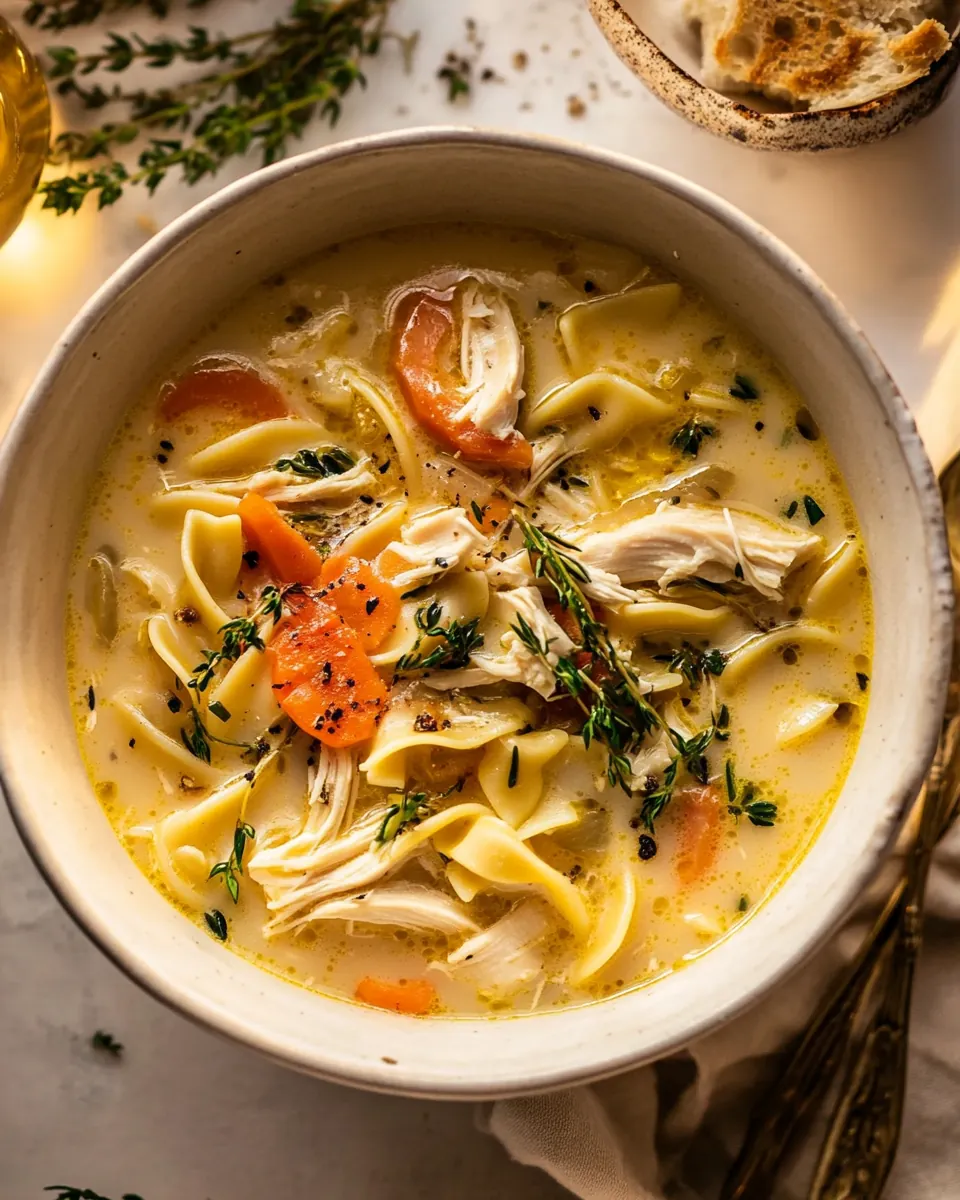
Creamy Homestyle Chicken Noodle Soup
Creamy Homestyle Chicken Noodle Soup is the kind of dish I reach for when the house feels cold and my memories want warming up. The first time I made this soup it was late afternoon, rain tapping the windows, and the kitchen smelled like butter and toasted flour. I remember standing over the pot with a mug in hand, listening to the gentle simmer, and feeling oddly comforted by how simple ingredients could create such a soulful bowl.
Over the years I learned small habits that change everything, like stirring the roux until it smells nutty and waiting for the broth to whisper a rolling simmer before adding the noodles. These little rituals make the end result feel like a homemade hug. I love that this recipe is forgiving, you can make it on a weeknight or let it simmer all day and return to an even deeper flavor. It has become my go to for chilly evenings when I want to serve something familiar, nourishing, and quietly impressive.
Recipe Snapshot
60 mins
20 mins
40 mins
Medium
350 kcal
American
Gluten-Free, Low FODMAP
Soups
Large Dutch oven, Ladle, Tongs
Why We Love This Creamy Homestyle Chicken Noodle Soup
Comfort in a Bowl
I love how Creamy Homestyle Chicken Noodle Soup wraps you up without fuss. The broth is rich but not heavy, and the texture of the noodles against tender chicken feels like nostalgia served warm. When I need something reliable, this recipe nails that homey feeling every time.
Layered Flavor from Simple Moves
We build flavor with fundamental steps, like browning the aromatics in butter and cooking the flour just long enough to lose the raw edge. Those small techniques create a broth with body, so you get depth without complicated ingredients. I often tell friends that patience at these early moments pays dividends in the final bowl.
Flexible and Forgiving
This soup is wonderfully adaptable. You can simmer it gently for hours or make it from start to finish in under an hour, and it still tastes like a slow cooked version. I appreciate recipes that let life happen around them, and this one does exactly that while staying consistent in flavor and texture.
Ingredients That Work Together
There is a harmony between the creamy element, the savory chicken, the aromatic herbs, and the bite of egg noodles. Each player enhances the others: the dairy softens and rounds the broth, herbs add lift, and the noodles soak up the warmth. I find this balance makes it a go to for family dinners and recuperative meals alike.
Guaranteed Crowd Pleaser
I make this when friends drop by unannounced because it feeds a crowd and still feels intimate. The familiarity of Creamy Homestyle Chicken Noodle Soup tends to bring people together, and that warmth is exactly why it has earned a permanent spot in my rotation.
Ingredients Overview for Creamy Homestyle Chicken Noodle Soup
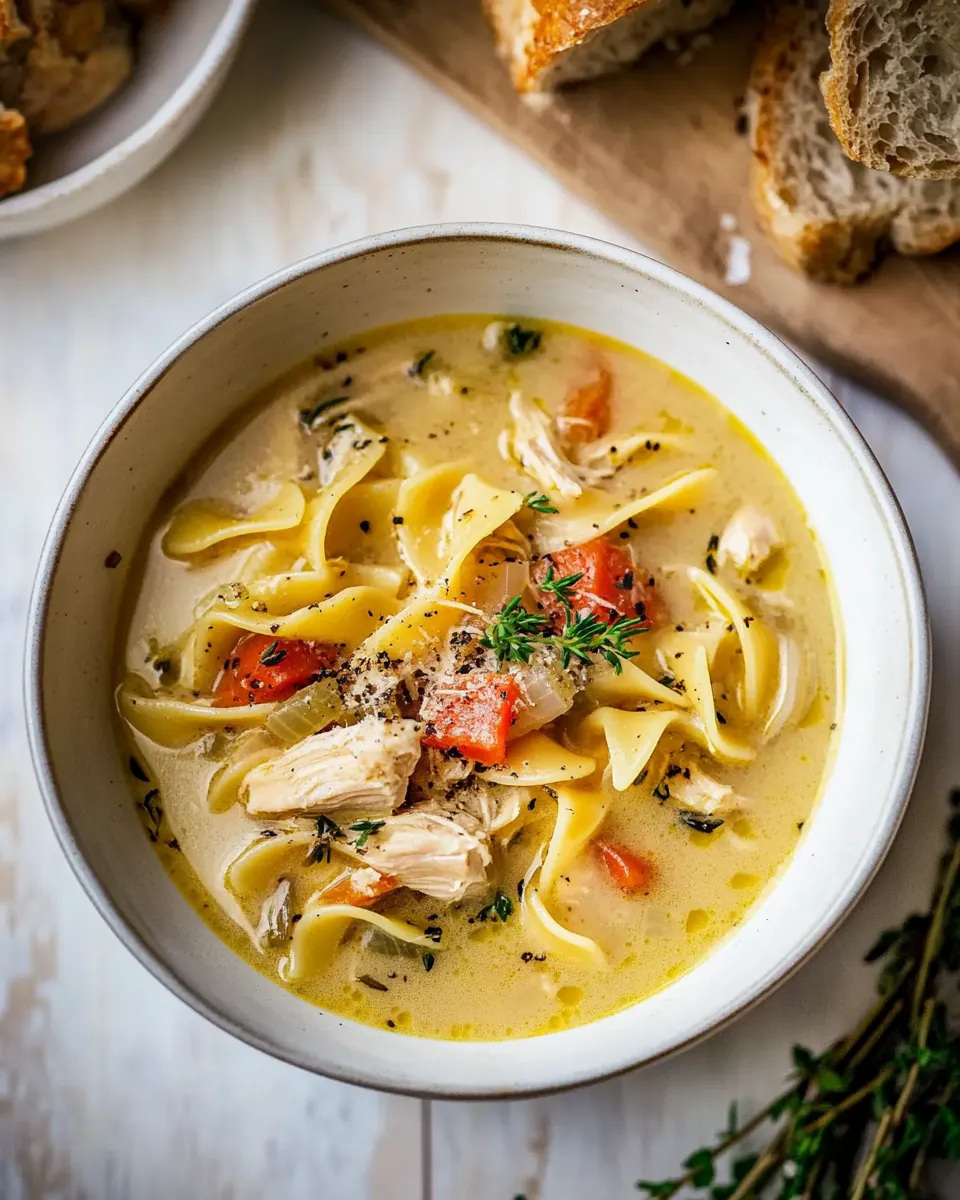
These ingredients are built for harmony and comfort. The base starts with rich butter and aromatic vegetables, which form the backbone. A little flour creates body, while herbs such as thyme and sage bring an earthy brightness. The combination of broth, milk or cream, and parmesan yields a creamy, savory finish that complements the tender chicken and hearty egg noodles.
- 6 tablespoons salted butter: Melted and rich, provides a silky base for sautéing aromatics and develops a golden flavor foundation in the soup; helps carry fat-soluble flavors and contributes a smooth mouthfeel to the broth.
- 1 yellow onion, chopped: Aromatic and sweet, adds savory depth and a mild pungency when softened; builds foundational flavor layers and complements the other vegetables in the mirepoix.
- 6 cloves garlic, chopped: Fragrant and pungent, offers bright, aromatic notes and a slight bite when sautéed until softened; enhances overall savory complexity and balances richness.
- 1 cup chopped celery: Crisp and vegetal, contributes subtle peppery notes and textural contrast when gently cooked; forms part of the classic vegetable base that supports the broth.
- 1 cup chopped carrots: Sweet and earthy, adds color, natural sweetness, and tender texture after simmering; balances savory elements and enriches the soup’s flavor profile.
- 1/3 cup flour: Thickening and toasty, creates a roux when combined with butter to slightly thicken and enrich the broth; also lends a mild nutty flavor when cooked briefly.
- 2 tablespoons fresh thyme leaves: Herbaceous and citrusy, imparts bright, savory notes that lift the soup and pair well with poultry; releases aromatic oils when bruised or cooked, enhancing depth.
- 2 tablespoons chopped fresh sage: Earthy and savory, brings warm, slightly peppery depth and pairs nicely with thyme for a classic poultry seasoning; adds complexity when sautéed or simmered.
- 1 bay leaf: Aromatic and floral, infuses a subtle bay-like savoriness into the simmering broth and rounds out herbal flavors; removed before serving to avoid texture issues.
- 8 cups broth: Savory and hydrating, provides the liquid backbone for the soup and carries dissolved flavors from aromatics and herbs; determines overall saltiness depending on type used.
- 1 pound boneless chicken breasts or thighs: Tender and protein-rich, yields succulent pieces of chicken that flavor the broth and provide substantial body to the soup; can be poached whole or cut before cooking.
- 2 3 cups egg noodles: Comforting and starchy, delivers satisfying bite and absorbs savory broth flavors while adding heartiness; cook until tender to avoid becoming mushy.
- 1 cup whole milk or cream: Creamy and rich, enriches the broth with a smooth, velvety texture and a touch of dairy sweetness; adds silkiness without overpowering other flavors.
- 1/3 cup shaved parmesan cheese: Savory and umami, contributes a salty, nutty finishing note and a hint of tang when sprinkled into the soup; melts into the broth for added depth.
- 1/4 cup chopped parsley: Fresh and bright, provides a final herbaceous lift and color contrast when stirred in at the end; enhances overall freshness and aroma of the finished dish.
Creamy Homestyle Chicken Noodle Soup Instructions
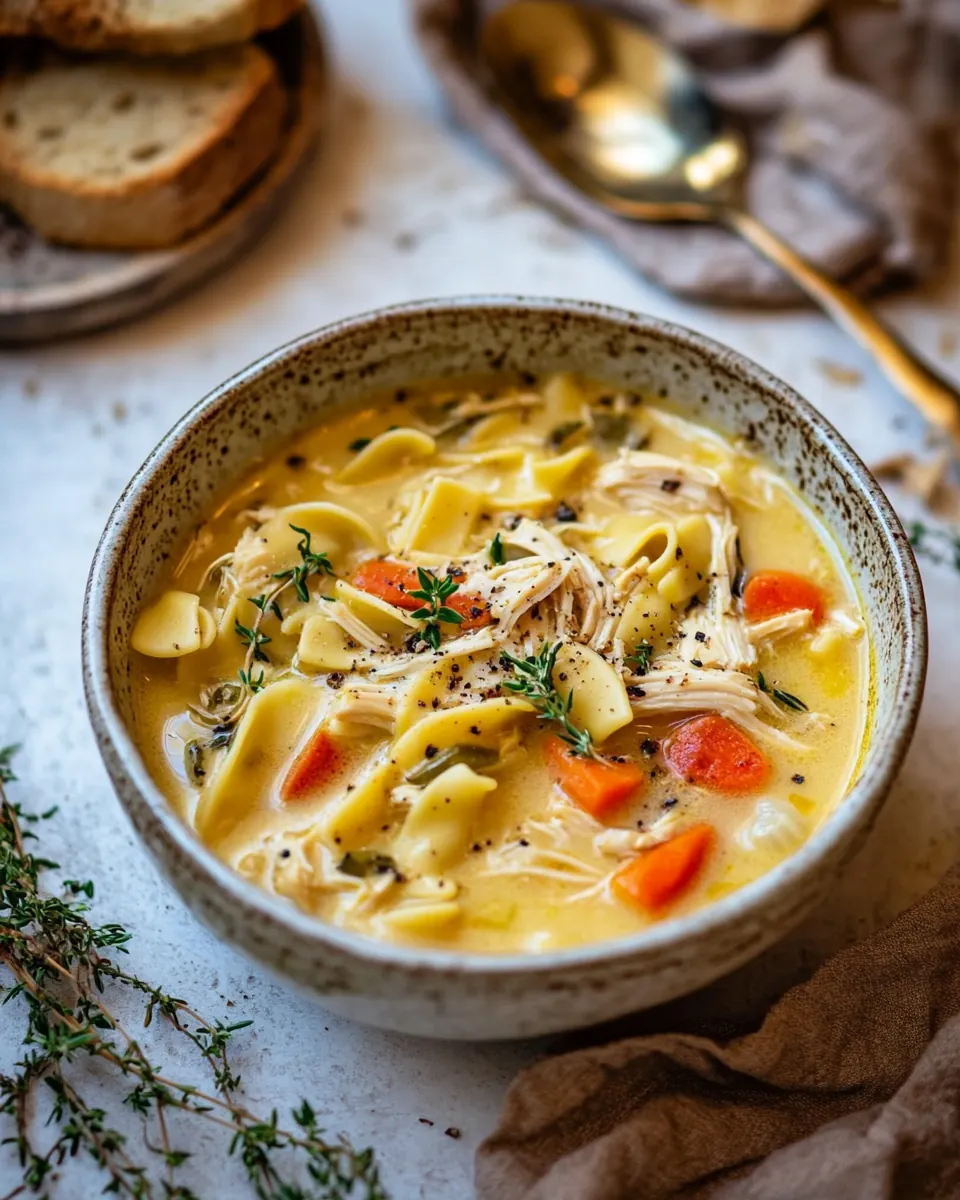
This set of directions walks you through the process in an approachable, step by step way while I share the little cues that make this soup sing. Follow the order as written, trust your senses, and remember that a gentle simmer is often your friend. Keep an eye on texture and seasoning as you go, and you will end up with a bowl that feels both restorative and celebratory.
- Melt the butter in a large Dutch oven over medium heat. Add the onions, garlic, celery, and carrots. Season with salt and pepper. Cook for 5 minutes. Stir in the flour, thyme, and sage. Cook another 5 minutes. Pour in the broth and bring to a boil over high heat. Stir in the chicken, bay leaf, and if you have one – a parmesan rind. Cover and cook for 20 minutes, until the chicken is cooked through. At this point, the soup can also simmer on low for up to 4-6 hours. Shred the chicken, remove the bay leaf, taste, and season with salt and pepper. Bring the soup back to a boil, then add the noodles and cook for 6-8 minutes, until soft. Stir in the milk, parmesan, and parsley. Serve the soup topped with additional parmesan, if desired.: The moment the butter melts it should foam slightly and smell rich, not browned. You should hear a soft sizzle when the butter is ready for the vegetables, and the surface will become glossy. This fat is essential for coating the aromatics so flavor develops evenly. If the butter smokes or turns dark quickly, your pan is too hot, so lower the heat to avoid burnt notes that will ruin the base.
- Add the onions, garlic, celery, and carrots: As the vegetables hit the pot you will hear a gentle hiss and see them glisten with fat. Cook until the onion is translucent and the carrots and celery begin to soften, stirring occasionally. The aroma will shift from raw to sweet and mellow. Stir frequently to avoid sticking, and if any piece starts to brown too fast, reduce the heat since burnt bits will add bitterness.
- Season with salt and pepper: Seasoning early helps the vegetables release moisture and build a layered seasoning profile. Sprinkle a moderate pinch and taste as you go, because too much salt early can be hard to correct later. A common pitfall is under seasoning now, which results in a flat tasting broth at the end.
- Cook for 5 minutes: During this time the vegetables will soften and the aromas will deepen, giving you a sweet, savory base. You should notice the mixture becoming more compact and glossy, and stirring will feel smoother as the vegetables release juices. Avoid overcooking to the point of mush, because texture matters for the final mouthfeel.
- Stir in the flour, thyme, and sage: Once the vegetables are tender, the flour joins to create a roux that thickens the soup. Stir constantly so the flour cooks through and loses its raw taste while the herbs toast slightly and become fragrant. The smell will turn warm and earthy. If you rush this step or add flour to a wildly hot pan, it can clump, so sprinkle it slowly and whisk well.
- Cook another 5 minutes: This allows the roux to take on a golden tint and for the herbs to infuse their oils. You should sense a nuttier aroma as the raw flour flavor fades. Keep stirring to prevent the roux from sticking or forming lumps which will create an uneven texture in the finished soup.
- Pour in the broth and bring to a boil over high heat: When the broth hits the pot it loudens the pot and you will see steam rise as the liquid integrates with the roux. Bring it up to a brisk boil so the starches activate, then reduce as needed. Boiling briefly helps the soup start to thicken. If the boil is too aggressive for too long, it can toughen the chicken later, so adjust to a steady simmer after this initial rise.
- Stir in the chicken, bay leaf, and if you have one – a parmesan rind: Adding the chicken now infuses the broth with savory richness as it cooks. The sight of the meat turning opaque signals it is cooking through. A parmesan rind, when used, melts down into the stock and adds concentrated umami. Don’t forget to tuck in the bay leaf for subtle background aroma. A mistake is overcrowding the pot which prevents even cooking; add the meat in a single layer if possible.
- Cover and cook for 20 minutes, until the chicken is cooked through: As the pot simmers gently, you will hear an even, quiet bubbling and smell the broth deepen. The chicken should reach a fully opaque center and shred easily with tongs or forks. This period lets the flavors marry. If you rush this and cut into the meat early, you risk undercooking, so gently test the thickest piece before proceeding.
- At this point, the soup can also simmer on low for up to 4 to 6 hours: If you choose a long slow simmer the broth will develop additional depth and the vegetables will soften even further. The aroma in your kitchen will become fuller and more concentrated. For long simmers, keep the heat low to avoid over reducing the liquid. Watch for evaporation and add a splash of water or broth if the level drops too much, as concentrated salt can overwhelm the balance.
- Shred the chicken, remove the bay leaf, taste, and season with salt and pepper: After removing the meat you will feel the texture of the shreds in your hands and see how they fall into strands, which is the sign of tender cooked chicken . Discard the bay leaf, then sample the broth to correct seasoning. Seasoning after shredding ensures salt levels are balanced. Over salting is a frequent mistake, so add in small increments and taste between additions.
- Bring the soup back to a boil, then add the noodles and cook for 6 to 8 minutes, until soft: The moment the soup returns to a lively boil you will see bubbles racing across the surface; that is the time to add the egg noodles . Cook until they are tender but still have slight tooth, stirring occasionally so they do not clump. Noodles will continue to absorb liquid after plating, so avoid overcooking them in the pot unless you like them very soft.
- Stir in the milk, parmesan, and parsley: Finish by incorporating the milk or cream , grated parmesan , and bright parsley , which will melt into the hot soup and soften the broth to a silky texture. Heat gently so the dairy warms through without curdling; you will see the soup gloss over as it blends. Avoid boiling after adding milk to prevent separation.
- Serve the soup topped with additional parmesan, if desired: Ladle the soup into warmed bowls and finish with a little extra parmesan for salty brightness and a sprinkle of parsley for color. The aroma at this point should be inviting and rounded, with the herbs and dairy clearly present. A common serving mistake is plating straight from a very hot pot without tasting one last time for seasoning adjustments.
How to Switch It Up
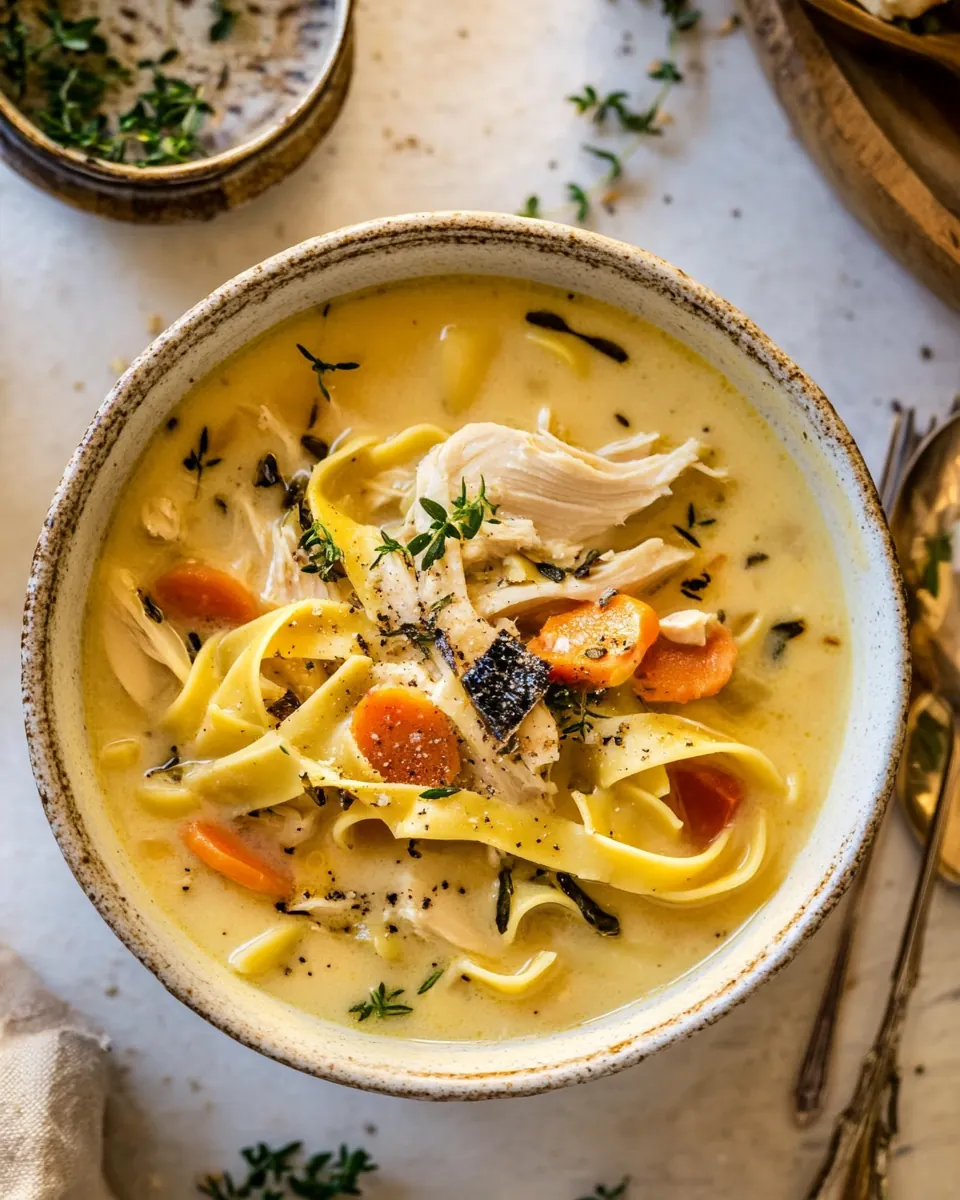
I like offering variations so this soup can feel new on repeat nights. These tips keep the character of Creamy Homestyle Chicken Noodle Soup while letting you tailor richness, texture, and timing. Each suggestion is actionable and simple to try.
- Use thighs for richer flavor If you want a deeper, more unctuous broth choose boneless chicken thighs instead of breasts; the extra fat and connective tissue release gelatin for mouthfeel.
- Make it lighter with whole milk Substitute cream with whole milk to reduce richness while keeping a creamy mouthfeel, heat gently to avoid curdling.
- Try different pasta shapes Swap the egg noodles for small shapes like shells or orzo to change texture; adjust cooking times so they remain al dente.
- Add a parmesan rind early Tuck a rind into the simmering pot to boost umami and richness, removing it before serving so the texture remains smooth.
- Finish with fresh herbs Add chopped parsley or additional thyme right before serving to refresh the flavor and provide a bright contrast to the creamy base.
Accompaniments for Creamy Homestyle Chicken Noodle Soup
This soup pairs with comforting sides and occasions that emphasize warmth and sharing. Whether it is a casual weeknight or a family gathering during colder months, the right accompaniments elevate the experience. Below are ideas that cover texture contrasts, seasonal context, and practical storage advice.
- Crusty bread A warm loaf or sliced baguette is perfect for sopping up the creamy broth, adding a crunchy contrast to the soft noodles and shredded chicken.
- Green salad A simple salad with a bright vinaigrette provides a refreshing counterpoint to the rich soup, balancing the meal with crispness and acidity.
- Roasted vegetables Serve roasted root vegetables on the side for a heartier winter meal, their caramelized edges complementing the soup’s savory depth.
- Family dinner occasions This recipe is ideal for cozy dinners, sick day recovery, or hosting people who need comfort food; it scales well for groups and keeps everyone satisfied.
- Storage tips Cool quickly and refrigerate for up to 3 to 4 days; reheat gently on the stove and add a splash of broth if noodles have absorbed too much liquid.
- Seasonal pairing In winter serve with heavier, warming sides; in cooler shoulder seasons keep sides lighter and crisp to balance the creamy bowl.
- Meal prep note Store the soup without the noodles for longer fridge life, and add fresh cooked noodles when reheating to preserve texture.
FAQ
Conclusion
What makes this recipe special is its perfect balance of creamy texture, savory herbs, and tender chicken that come together in a way that feels both nostalgic and satisfying. Give it a try on a chilly evening when you want something that warms and comforts with minimal fuss. I hope this bowl becomes a comforting staple for you, bringing the same easy warmth it has brought to my table time and again.
Creamy Homestyle Chicken Noodle Soup
Equipment
- Large Dutch oven
- Ladle
- Tongs
Ingredients
- 6 tablespoons salted butter Melted and rich, provides a silky base for sautéing aromatics and develops a golden flavor foundation in the soup; helps carry fat-soluble flavors and contributes a smooth mouthfeel to the broth.
- 1 yellow onion, chopped Aromatic and sweet, adds savory depth and a mild pungency when softened; builds foundational flavor layers and complements the other vegetables in the mirepoix.
- 6 cloves garlic, chopped Fragrant and pungent, offers bright, aromatic notes and a slight bite when sautéed until softened; enhances overall savory complexity and balances richness.
- 1 cup chopped celery Crisp and vegetal, contributes subtle peppery notes and textural contrast when gently cooked; forms part of the classic vegetable base that supports the broth.
- 1 cup chopped carrots Sweet and earthy, adds color, natural sweetness, and tender texture after simmering; balances savory elements and enriches the soup’s flavor profile.
- 1/3 cup flour Thickening and toasty, creates a roux when combined with butter to slightly thicken and enrich the broth; also lends a mild nutty flavor when cooked briefly.
- 2 tablespoons fresh thyme leaves Herbaceous and citrusy, imparts bright, savory notes that lift the soup and pair well with poultry; releases aromatic oils when bruised or cooked, enhancing depth.
- 2 tablespoons chopped fresh sage Earthy and savory, brings warm, slightly peppery depth and pairs nicely with thyme for a classic poultry seasoning; adds complexity when sautéed or simmered.
- 1 bay leaf Aromatic and floral, infuses a subtle bay-like savoriness into the simmering broth and rounds out herbal flavors; removed before serving to avoid texture issues.
- 8 cups broth Savory and hydrating, provides the liquid backbone for the soup and carries dissolved flavors from aromatics and herbs; determines overall saltiness depending on type used.
- 1 pound boneless chicken breasts or thighs Tender and protein-rich, yields succulent pieces of chicken that flavor the broth and provide substantial body to the soup; can be poached whole or cut before cooking.
- 2 -3 cups egg noodles Comforting and starchy, delivers satisfying bite and absorbs savory broth flavors while adding heartiness; cook until tender to avoid becoming mushy.
- 1 cup whole milk or cream Creamy and rich, enriches the broth with a smooth, velvety texture and a touch of dairy sweetness; adds silkiness without overpowering other flavors.
- 1/3 cup shaved parmesan cheese Savory and umami, contributes a salty, nutty finishing note and a hint of tang when sprinkled into the soup; melts into the broth for added depth.
- 1/4 cup chopped parsley Fresh and bright, provides a final herbaceous lift and color contrast when stirred in at the end; enhances overall freshness and aroma of the finished dish.
Instructions
- Melt the butter in a large Dutch oven over medium heat. Add the onions, garlic, celery, and carrots. Season with salt and pepper. Cook for 5 minutes. Stir in the flour, thyme, and sage. Cook another 5 minutes. Pour in the broth and bring to a boil over high heat. Stir in the chicken, bay leaf, and if you have one – a parmesan rind. Cover and cook for 20 minutes, until the chicken is cooked through. At this point, the soup can also simmer on low for up to 4-6 hours. Shred the chicken, remove the bay leaf, taste, and season with salt and pepper. Bring the soup back to a boil, then add the noodles and cook for 6-8 minutes, until soft. Stir in the milk, parmesan, and parsley. Serve the soup topped with additional parmesan, if desired.: The moment the butter melts it should foam slightly and smell rich, not browned. You should hear a soft sizzle when the butter is ready for the vegetables, and the surface will become glossy. This fat is essential for coating the aromatics so flavor develops evenly. If the butter smokes or turns dark quickly, your pan is too hot, so lower the heat to avoid burnt notes that will ruin the base.
- Add the onions, garlic, celery, and carrots: As the vegetables hit the pot you will hear a gentle hiss and see them glisten with fat. Cook until the onion is translucent and the carrots and celery begin to soften, stirring occasionally. The aroma will shift from raw to sweet and mellow. Stir frequently to avoid sticking, and if any piece starts to brown too fast, reduce the heat since burnt bits will add bitterness.
- Season with salt and pepper: Seasoning early helps the vegetables release moisture and build a layered seasoning profile. Sprinkle a moderate pinch and taste as you go, because too much salt early can be hard to correct later. A common pitfall is under seasoning now, which results in a flat tasting broth at the end.
- Cook for 5 minutes: During this time the vegetables will soften and the aromas will deepen, giving you a sweet, savory base. You should notice the mixture becoming more compact and glossy, and stirring will feel smoother as the vegetables release juices. Avoid overcooking to the point of mush, because texture matters for the final mouthfeel.
- Stir in the flour, thyme, and sage: Once the vegetables are tender, the flour joins to create a roux that thickens the soup. Stir constantly so the flour cooks through and loses its raw taste while the herbs toast slightly and become fragrant. The smell will turn warm and earthy. If you rush this step or add flour to a wildly hot pan, it can clump, so sprinkle it slowly and whisk well.
- Cook another 5 minutes: This allows the roux to take on a golden tint and for the herbs to infuse their oils. You should sense a nuttier aroma as the raw flour flavor fades. Keep stirring to prevent the roux from sticking or forming lumps which will create an uneven texture in the finished soup.
- Pour in the broth and bring to a boil over high heat: When the broth hits the pot it loudens the pot and you will see steam rise as the liquid integrates with the roux. Bring it up to a brisk boil so the starches activate, then reduce as needed. Boiling briefly helps the soup start to thicken. If the boil is too aggressive for too long, it can toughen the chicken later, so adjust to a steady simmer after this initial rise.
- Stir in the chicken, bay leaf, and if you have one – a parmesan rind: Adding the chicken now infuses the broth with savory richness as it cooks. The sight of the meat turning opaque signals it is cooking through. A parmesan rind, when used, melts down into the stock and adds concentrated umami. Don’t forget to tuck in the bay leaf for subtle background aroma. A mistake is overcrowding the pot which prevents even cooking; add the meat in a single layer if possible.
- Cover and cook for 20 minutes, until the chicken is cooked through: As the pot simmers gently, you will hear an even, quiet bubbling and smell the broth deepen. The chicken should reach a fully opaque center and shred easily with tongs or forks. This period lets the flavors marry. If you rush this and cut into the meat early, you risk undercooking, so gently test the thickest piece before proceeding.
- At this point, the soup can also simmer on low for up to 4 to 6 hours: If you choose a long slow simmer the broth will develop additional depth and the vegetables will soften even further. The aroma in your kitchen will become fuller and more concentrated. For long simmers, keep the heat low to avoid over reducing the liquid. Watch for evaporation and add a splash of water or broth if the level drops too much, as concentrated salt can overwhelm the balance.
- Shred the chicken, remove the bay leaf, taste, and season with salt and pepper: After removing the meat you will feel the texture of the shreds in your hands and see how they fall into strands, which is the sign of tender cooked chicken . Discard the bay leaf, then sample the broth to correct seasoning. Seasoning after shredding ensures salt levels are balanced. Over salting is a frequent mistake, so add in small increments and taste between additions.
- Bring the soup back to a boil, then add the noodles and cook for 6 to 8 minutes, until soft: The moment the soup returns to a lively boil you will see bubbles racing across the surface; that is the time to add the egg noodles . Cook until they are tender but still have slight tooth, stirring occasionally so they do not clump. Noodles will continue to absorb liquid after plating, so avoid overcooking them in the pot unless you like them very soft.
- Stir in the milk, parmesan, and parsley: Finish by incorporating the milk or cream , grated parmesan , and bright parsley , which will melt into the hot soup and soften the broth to a silky texture. Heat gently so the dairy warms through without curdling; you will see the soup gloss over as it blends. Avoid boiling after adding milk to prevent separation.
- Serve the soup topped with additional parmesan, if desired: Ladle the soup into warmed bowls and finish with a little extra parmesan for salty brightness and a sprinkle of parsley for color. The aroma at this point should be inviting and rounded, with the herbs and dairy clearly present. A common serving mistake is plating straight from a very hot pot without tasting one last time for seasoning adjustments.
Notes
- Use thighs for richer flavor If you want a deeper, more unctuous broth choose boneless chicken thighs instead of breasts; the extra fat and connective tissue release gelatin for mouthfeel.
- Make it lighter with whole milk Substitute cream with whole milk to reduce richness while keeping a creamy mouthfeel, heat gently to avoid curdling.
- Try different pasta shapes Swap the egg noodles for small shapes like shells or orzo to change texture; adjust cooking times so they remain al dente.
- Add a parmesan rind early Tuck a rind into the simmering pot to boost umami and richness, removing it before serving so the texture remains smooth.
- Finish with fresh herbs Add chopped parsley or additional thyme right before serving to refresh the flavor and provide a bright contrast to the creamy base.