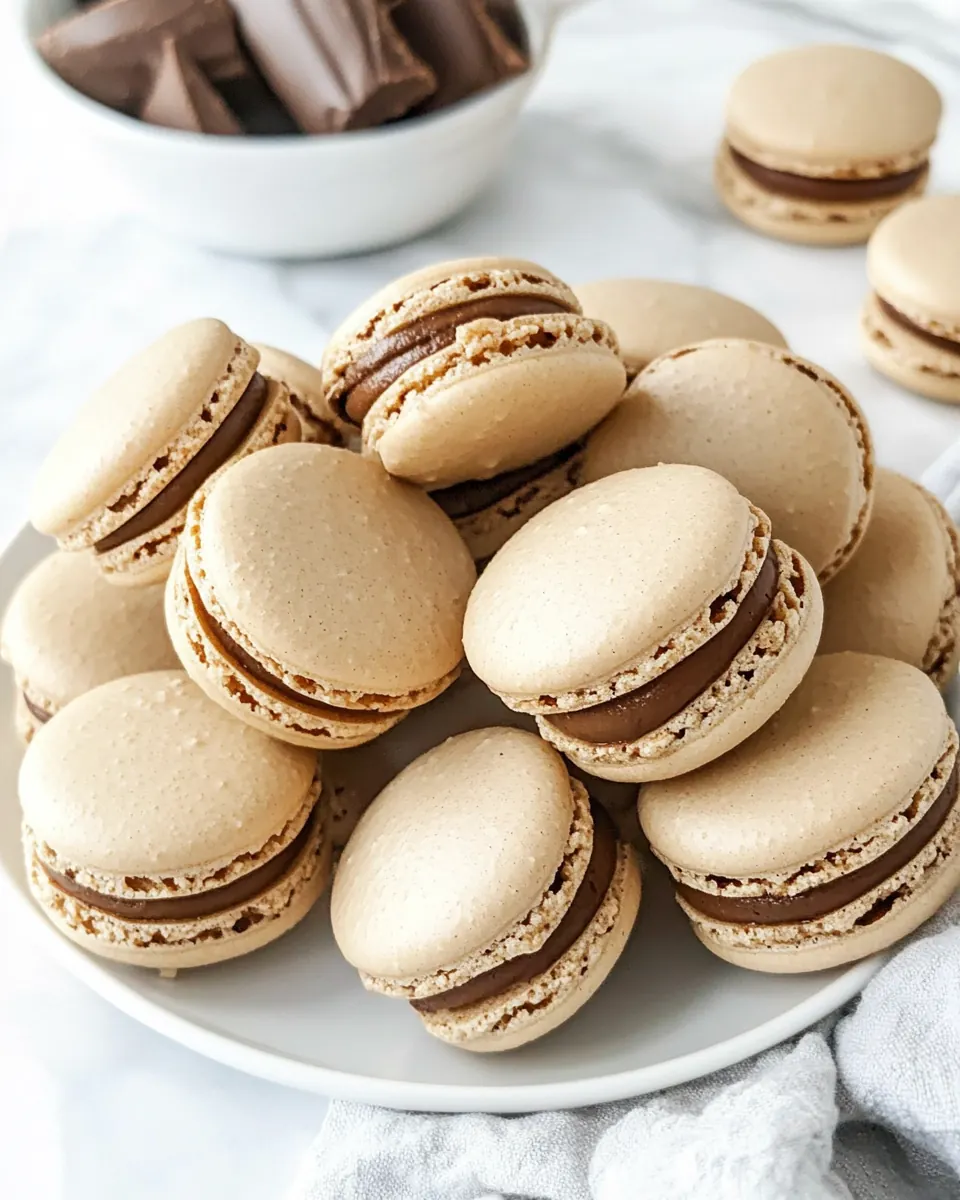
Chocolate Macarons
Chocolate Macarons have been one of my most persistent kitchen crushes, a recipe I return to whenever I want to feel precise, playful, and rewarded. I remember the first time I coaxed those delicate rounds out of the oven, the batter shimmering and then forming those telltale feet, and I felt a quiet pride that only baking can deliver. That nervous excitement as I folded the almond mixture into the whipped egg whites was offset by the cozy scent of cocoa filling my small kitchen, and I instantly understood why these treats charm professional bakers and weekend experimenters alike.
Years later I still reach for this formula when I want a special gift or a mindful afternoon project. I like to put on a playlist, set out my bowls and spatulas, and let the measured rhythm of whisking and folding center me. There is something meditative about tapping the piped shells on the counter to release trapped air, then waiting as a smooth matte surface sets. My kids call them my tiny chocolate sandwiches, and friends always ask for tips on getting the shells perfectly smooth and the feet pronounced. I find that patience and attention to texture make all the difference.
Recipe Snapshot
47 mins
25 mins
22 mins
Medium
220 kcal
American
Gluten-Free, Low FODMAP
Desserts
Stand mixer or hand mixer, Piping bag with round tip, Baking sheets, Parchment paper or silicone liners, Spatula
The Beauty of This Chocolate Macarons
Precision yields perfection
I love that Chocolate Macarons demand exactness. The simple list of egg whites, ground almond flour, and sugar rewards careful measuring with consistent shells. That challenge is part of the thrill for me, each successful batch reinforcing small techniques that make a big difference.
Textural contrast
One of the main reasons I keep making these is the delicate interplay between the crisp shell and the soft buttercream center. When you bite in, the gentle snap followed by a creamy burst of butter based filling is irresistible. It feels like craftsmanship and comfort in every mouthful.
Flexible flavor canvas
While these are classically chocolate, the recipe adapts well to small flavor shifts. I often tweak the cocoa level in the shells or adjust the filling sweetness, and the structure holds up. That adaptability is a big reason I recommend them for celebrations, gifts, or a quiet treat with tea.
Visually impressive with little fuss
I appreciate how polished these look, even when you are a home baker. With a simple piping bag and a steady hand, you can pipe neat rounds that look boutique level. Presentation-wise, they elevate any table, and that makes me proud to bring them to gatherings.
Rewarding learning curve
Finally, I love that making Chocolate Macarons teaches technique. You learn to judge meringue by feel, to fold until the batter ribbons, and to judge when shells have properly formed. It’s cooking education that results in delicious outcomes, which keeps me coming back.
Ingredients Overview for Chocolate Macarons
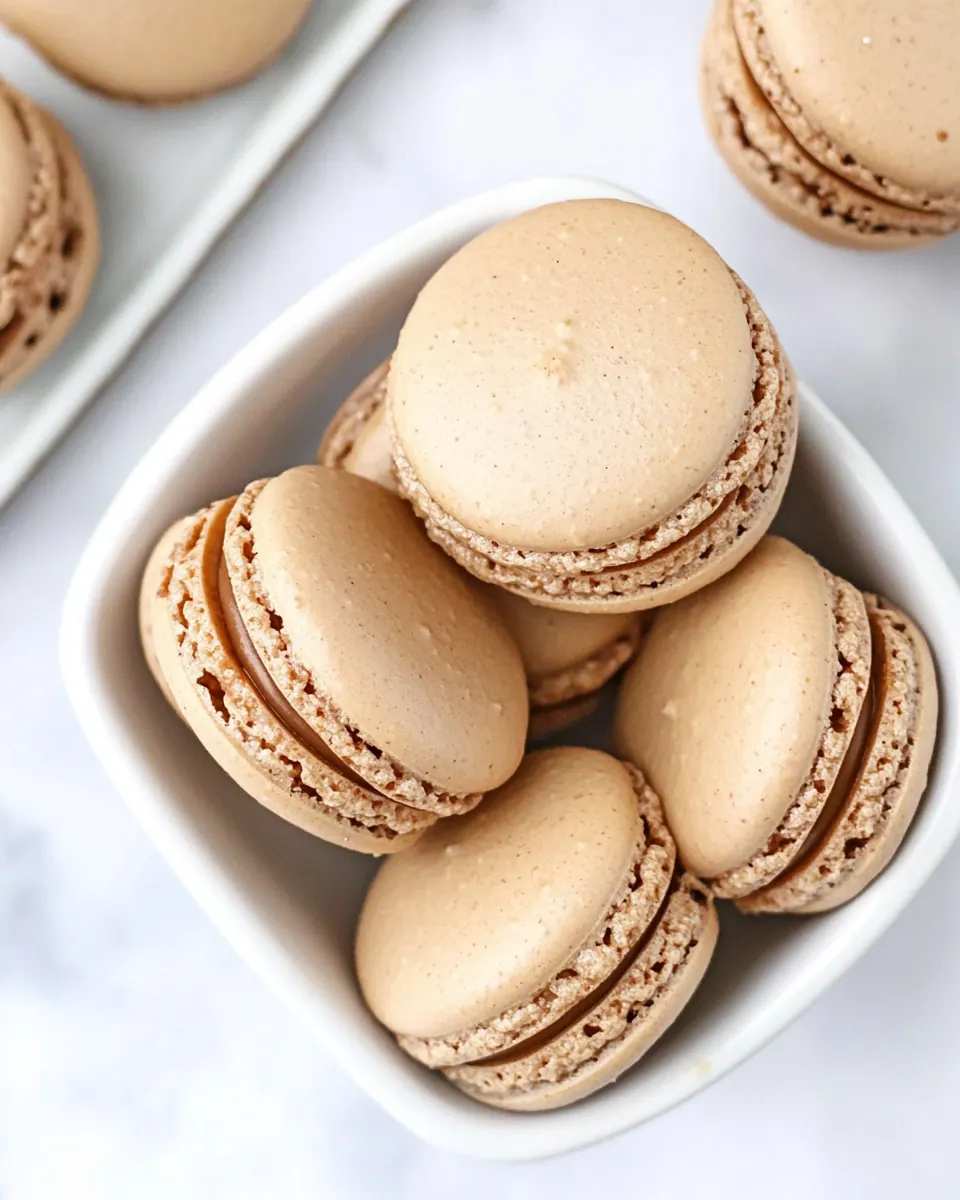
These components are deliberately minimal so the structure and flavor of the shells shine through. The key players are the whipped egg whites to provide lift and the fine almond flour and sifted powdered sugar that give the shells their tender, crisp texture. The cocoa brings chocolate character without weighing the batter down, while the buttercream filling adds richness and moisture.
- 146 grams fresh egg whites at room temperature: Whisk to incorporate air and provide structure and lift to the macaron shells; room temperature fresh egg whites whip more easily into stable peaks, yielding a smooth, glossy meringue base when combined with sugar and almond flour. Handle gently to avoid overbeating, and measure precisely to ensure proper macaronage and shell formation.
- 1 teaspoon vanilla extract: Add for aromatic depth and subtle sweetness that complements the chocolate flavors; vanilla extract enhances overall complexity and balances bitterness from cocoa. Stir in at the meringue or buttercream stage to distribute flavor evenly without affecting texture.
- 74 grams sugar: Dissolve into whipped egg whites to create a stable meringue and provide sweetness; granulated sugar helps develop glossy, stiff peaks and structure during whipping. Add gradually while beating to ensure sugar fully integrates and prevents weeping or graininess.
- 114 grams ground almond flour sifted: Fold gently to provide the primary nutty texture and chew of the shells; finely ground almond flour contributes fat and body, creating the characteristic tender interior and smooth exterior. Sift beforehand to remove lumps and ensure uniform batter consistency for even piping.
- 230 grams powdered sugar sifted: Sift and combine with almond flour to sweeten and stabilize the batter; powdered sugar adds fine texture and helps achieve a smooth macaron surface. Use a fine sieve to prevent clumps and to ensure the batter flows correctly during macaronage.
- 15 grams cocoa powder: Blend into the dry mix to introduce cocoa flavor, color, and slight bitterness that contrasts the sweetness; cocoa powder also affects batter viscosity and final shell color. Sift with powdered sugar to distribute evenly and avoid streaks in the batter.
- 4 tablespoons butter softened: Soften and beat into filling to create a creamy, spreadable ganache or buttercream; butter contributes richness, mouthfeel, and structure to the filling, helping it set between shells. Keep at a soft but cool temperature to prevent melting when assembling the macarons.
- 1 cup powdered sugar: Sweeten and thicken fillings or dust decorations with a fine texture; powdered sugar provides smooth sweetness and helps stabilize buttercream or ganache consistency. Sift before use to remove lumps and achieve an even, silky filling.
- 2 tablespoons cocoa powder: Mix into filling to deepen chocolate flavor and add slight dryness that balances sweetness; cocoa powder intensifies chocolate notes and can adjust filling color and bitterness. Sift into the powdered sugar or butter to prevent clumping and ensure smooth texture.
- 1 2 tablespoons milk or half and half: Adjust consistency of the filling to spreadable texture and provide creaminess without thinning the buttercream too much; milk or half and half hydrate powdered sugar and help achieve desired mouthfeel. Add gradually to avoid an overly loose filling and chill if necessary to firm up.
How to Cook Chocolate Macarons
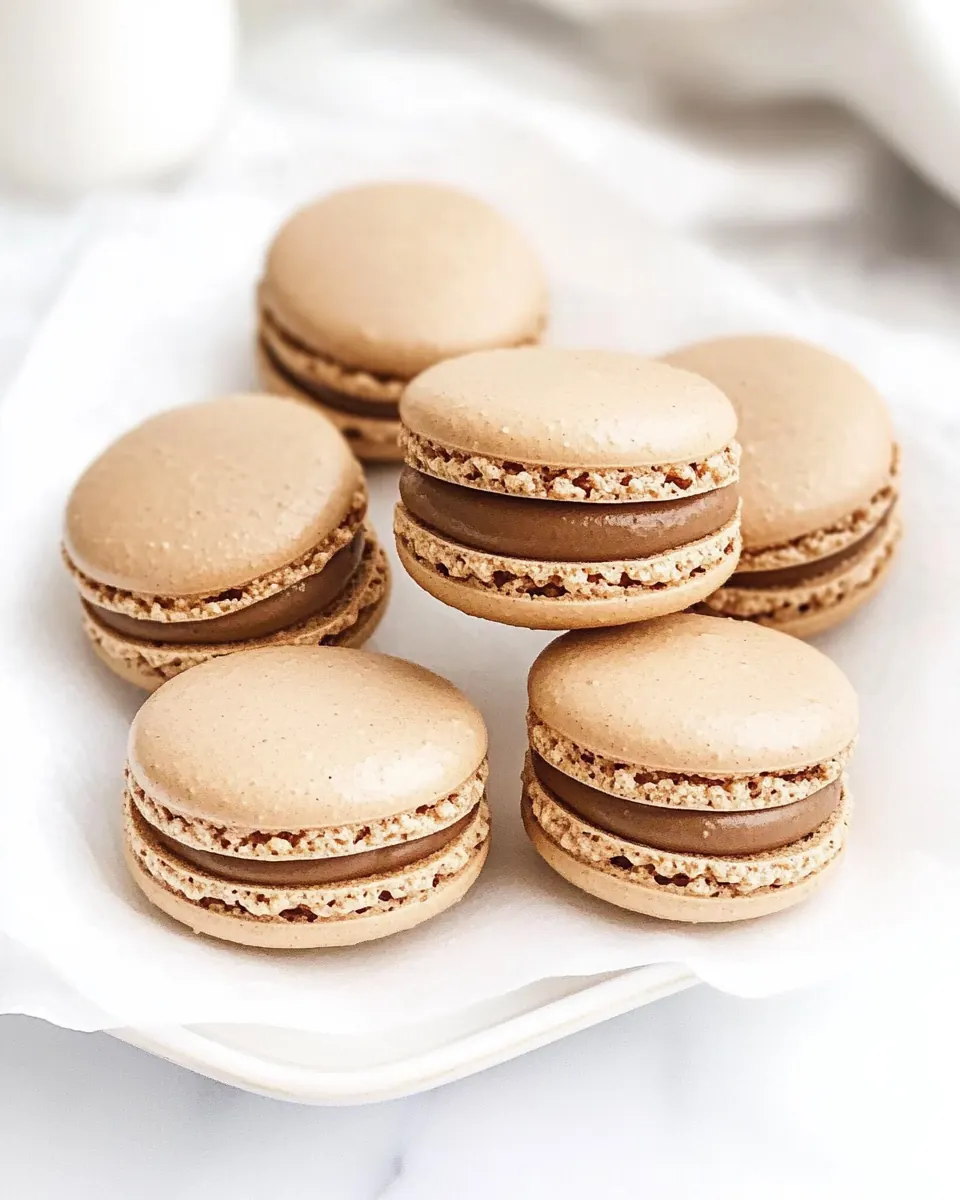
These instructions will walk you from lined baking sheets to perfectly sandwiched cookies. I want you to move deliberately, paying attention to texture and timing, because small adjustments here make a big difference later. Keep your tools clean and dry, and trust what your senses tell you about peak meringue and batter flow.
- Line two baking sheets with parchment or silicone liners and set aside. Prepare a large piping bag with a round tip and set aside.: The quiet thud of parchment sliding across the counter is the first sign of a calm start. The liners create an even heat surface so shells bake smoothly, preventing sticking and promoting even feet development. A common mistake is reusing stained liners, which can retain grease and ruin meringue; always start with clean, dry liners. When you press the parchment it should be flat and smooth, because wrinkles will transfer to your piped rounds.
- Add the egg whites, vanilla, and sugar to a large clean bowl or the bowl of a stand mixer. Beat on low speed for two minutes. Increase the speed to medium and beat for an additional two minutes, until light and foamy. Increase the speed to high and beat for an additional two minutes, or until stiff peaks form.: Feeling the cool plastic in your hands while setting up helps you stay organized. A round tip gives consistent circles and predictable spread, so choose a tip size that produces about one and a half inch rounds. One trap is skipping the test pipe; always pipe a few test discs to refine pressure and spacing because inconsistent pressure leads to uneven shells.
- Add the almond flour, powdered sugar, and cocoa powder to the egg white mixture. Fold in gently with a spatula, scraping the sides as you go, until the batter is smooth and falls from the spatula in a ribbon. Be careful not to over mix.: The initial low speed will sound gentle, like a whisper, while it begins to incorporate air. Cleanliness matters, any trace of fat or yolk will prevent the whites from foaming properly; check bowls for residue before you start. If the foam looks foamy but flat after a few minutes, inspect for grease contamination, that is the typical culprit.
- Scoop the batter into the prepared piping bag, then pipe it onto the prepared baking sheets, making 1 1/2 inch circles. Tap the baking sheets on the counter gently several times to release air bubbles, and use a toothpick to smooth any bubbles out.: When the mixer moves from low to medium you will notice the texture change from small bubbles to larger, glossy ones. At high speed the meringue should hold a peak that stands tall. The sound shifts from airy to a steady hum. Overwhipping leads to dry, grainy meringue that collapses when folded, so stop as soon as peaks are stiff but still glossy.
- Let the macarons rest for 20-60 minutes, until they are no longer shiny on top and don’t stick to your finger when touched lightly. While the macarons are resting, preheat the oven to 285.: The dry mix will look like a pale chocolate snow as you sprinkle it in. The contrast between airy meringue and the dense dry mix is obvious, and the aroma of almond flour and cocoa powder will bloom. If you dump everything in at once you may create lumps, so add gradually to maintain a smooth fold.
- After the macarons have rested, bake for 21-22 minutes in the preheated oven. Let them cool completely before removing from the baking sheet.: As you fold, notice the batter becoming glossy and flowing in a continuous ribbon. The proper stage looks like a thick lava, not runny and not stiff. Overmixing will flatten the matted peaks and produce flat shells without feet, while undermixing leaves the batter too stiff causing lumpy tops.
- To make the buttercream, beat the butter until light and fluffy. Add the powdered sugar, cocoa powder, and 1 tablespoon milk, and mix until smooth. Add additional milk if needed to reach a smooth consistency. Beat on high until light and fluffy. Scoop the buttercream into a piping bag, and snip off the end. Pipe onto half of the macarons, then top with another macaron to make a sandwich.: The tactile resistance as you squeeze the bag should be steady, not jerky. Pipe with even pressure and space the circles so they have room to spread. A frequent mistake is piping too close together which causes shells to merge and lose their defined edges.
- Tap the baking sheets on the counter gently several times to release air bubbles and use a toothpick to smooth any bubbles out: The sound of the tap is a small percussion that reveals trapped bubbles rising to the surface. Smoothing with a toothpick helps ensure a pristine top that will form a clean foot. Ignoring bubbles often results in cracked shells, so take this moment to inspect each disc carefully.
- Let the macarons rest for 20 to 60 minutes until they are no longer shiny on top and don’t stick to your finger when touched lightly While the macarons are resting preheat the oven to 285: Resting forms a delicate skin; run your fingertip lightly and it should feel matte and dry. This stage helps feet develop as the internal steam pushes outward in the oven. Rushing to bake before the surface dries often causes cracks and underdeveloped feet.
- After the macarons have rested bake for 21 to 22 minutes in the preheated oven Let them cool completely before removing from the baking sheet: During baking the shells will rise and develop their characteristic feet, and you may notice a subtle toasty chocolate scent. Letting them cool ensures they firm up and release cleanly, which preserves their shape. Peeling them too soon risks tearing the delicate shell, so patience is key here.
- To make the buttercream beat the butter until light and fluffy Add the powdered sugar cocoa powder and 1 tablespoon milk and mix until smooth: As you whip the butter it becomes pale and aerated, creating a fluffy base. Slowly incorporating the powdered sugar prevents a gritty texture. If the mixture seems grainy, continue beating; underbeaten buttercream can feel heavy and will not pipe with the same elegance.
- Add additional milk if needed to reach a smooth consistency Beat on high until light and fluffy Scoop the buttercream into a piping bag and snip off the end: Small additions of milk soften the buttercream to a piping friendly texture. The high speed whipping introduces air, making the filling light and stable. Adding too much liquid will make the cream runny, so add slowly and test the hold by piping a small dollop.
- Pipe onto half of the macarons then top with another macaron to make a sandwich: The final assembly is satisfyingly tactile as the creamy filling meets the crisp shell. Aim for even amounts so each bite balances texture and flavor. Overfilling makes sandwiches messy and can bruise the shells, so pipe a modest amount and press gently to join.
Helpful Notes about Chocolate Macarons
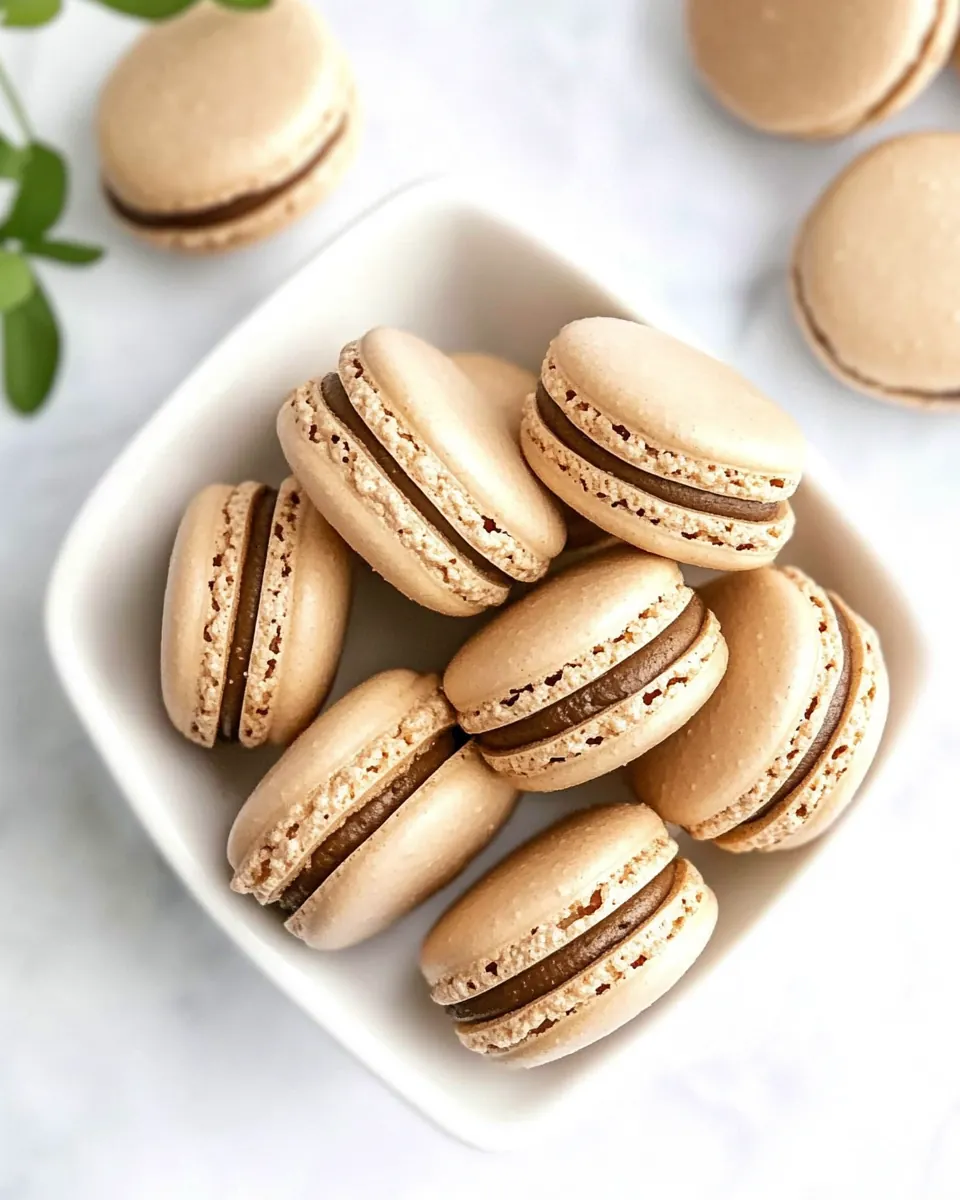
These notes will help you troubleshoot and refine your technique as you gain confidence. I wrote these from repeated batches and the little corrections that made the biggest differences for me.
- Check bowl cleanliness before whipping, because any trace of grease or yolk can prevent whites from reaching stiff peaks.
- Sift twice the almond flour and powdered sugar together to ensure a superfine dry mix, which yields smooth tops without tearing.
- Control humidity on humid days by resting longer or using air conditioning, since moisture slows skin formation and can lead to cracked shells.
- Monitor oven temperature with an oven thermometer, because even small temperature differences change foot development and browning.
- Pipe with consistent pressure and rotate your wrist rather than squeeze harder, this keeps rounds uniform and prevents uneven edges.
What to Pair With Chocolate Macarons
These little sandwiches are versatile for many occasions. They match well with warm beverages and light fruity accompaniments, and they shine on dessert platters for celebrations. Below are ideas for serving, storage, and occasions that highlight their strengths.
- Tea time pairing Serve a selection of Chocolate Macarons with delicate teas during afternoon gatherings, because the crisp shell and buttery filling complement floral and herbal notes.
- Coffee match Present them alongside espresso or a mild roast for contrast, the bitter coffee cuts the sweetness and highlights the chocolate complexity.
- Gift box idea Arrange in a tidy box with parchment, because their compact size and polished appearance make them excellent edible presents for birthdays and celebrations.
- Party platter Mix with other small confections for an elegant dessert table, allowing guests to sample different textures and flavors without heavy portions.
- Storage tip Refrigerate in an airtight container for up to three days to preserve freshness, and bring to room temperature before serving so the buttercream softens pleasingly.
- Seasonal occasions These are great for All Year celebrations, from a cozy winter tea to a springtime bridal shower, because they feel both festive and refined.
FAQ
Conclusion
These Chocolate Macarons stand out for their elegant appearance and the delightful tension between a crisp shell and a silky chocolate buttercream center. Give them a try when you want a rewarding baking project that teaches useful techniques and yields bakery quality treats. With a bit of patience and attention to texture, you can produce beautiful sandwiches that impress guests and reward your care with truly memorable bites.
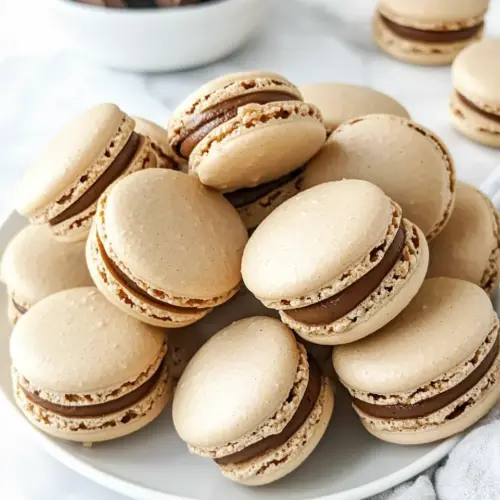
Chocolate Macarons
Equipment
- Stand mixer or hand mixer
- Piping bag with round tip
- Baking Sheets
- Parchment paper or silicone liners
- Spatula
Ingredients
- 146 grams fresh egg whites at room temperature Whisk to incorporate air and provide structure and lift to the macaron shells; room temperature fresh egg whites whip more easily into stable peaks, yielding a smooth, glossy meringue base when combined with sugar and almond flour. Handle gently to avoid overbeating, and measure precisely to ensure proper macaronage and shell formation.
- 1 teaspoon vanilla extract Add for aromatic depth and subtle sweetness that complements the chocolate flavors; vanilla extract enhances overall complexity and balances bitterness from cocoa. Stir in at the meringue or buttercream stage to distribute flavor evenly without affecting texture.
- 74 grams sugar Dissolve into whipped egg whites to create a stable meringue and provide sweetness; granulated sugar helps develop glossy, stiff peaks and structure during whipping. Add gradually while beating to ensure sugar fully integrates and prevents weeping or graininess.
- 114 grams ground almond flour sifted Fold gently to provide the primary nutty texture and chew of the shells; finely ground almond flour contributes fat and body, creating the characteristic tender interior and smooth exterior. Sift beforehand to remove lumps and ensure uniform batter consistency for even piping.
- 230 grams powdered sugar sifted Sift and combine with almond flour to sweeten and stabilize the batter; powdered sugar adds fine texture and helps achieve a smooth macaron surface. Use a fine sieve to prevent clumps and to ensure the batter flows correctly during macaronage.
- 15 grams cocoa powder Blend into the dry mix to introduce cocoa flavor, color, and slight bitterness that contrasts the sweetness; cocoa powder also affects batter viscosity and final shell color. Sift with powdered sugar to distribute evenly and avoid streaks in the batter.
- 4 tablespoons butter softened Soften and beat into filling to create a creamy, spreadable ganache or buttercream; butter contributes richness, mouthfeel, and structure to the filling, helping it set between shells. Keep at a soft but cool temperature to prevent melting when assembling the macarons.
- 1 cup powdered sugar Sweeten and thicken fillings or dust decorations with a fine texture; powdered sugar provides smooth sweetness and helps stabilize buttercream or ganache consistency. Sift before use to remove lumps and achieve an even, silky filling.
- 2 tablespoons cocoa powder Mix into filling to deepen chocolate flavor and add slight dryness that balances sweetness; cocoa powder intensifies chocolate notes and can adjust filling color and bitterness. Sift into the powdered sugar or butter to prevent clumping and ensure smooth texture.
- 1 -2 tablespoons milk or half and half Adjust consistency of the filling to spreadable texture and provide creaminess without thinning the buttercream too much; milk or half and half hydrate powdered sugar and help achieve desired mouthfeel. Add gradually to avoid an overly loose filling and chill if necessary to firm up.
Instructions
- Line two baking sheets with parchment or silicone liners and set aside. Prepare a large piping bag with a round tip and set aside.: The quiet thud of parchment sliding across the counter is the first sign of a calm start. The liners create an even heat surface so shells bake smoothly, preventing sticking and promoting even feet development. A common mistake is reusing stained liners, which can retain grease and ruin meringue; always start with clean, dry liners. When you press the parchment it should be flat and smooth, because wrinkles will transfer to your piped rounds.
- Add the egg whites, vanilla, and sugar to a large clean bowl or the bowl of a stand mixer. Beat on low speed for two minutes. Increase the speed to medium and beat for an additional two minutes, until light and foamy. Increase the speed to high and beat for an additional two minutes, or until stiff peaks form.: Feeling the cool plastic in your hands while setting up helps you stay organized. A round tip gives consistent circles and predictable spread, so choose a tip size that produces about one and a half inch rounds. One trap is skipping the test pipe; always pipe a few test discs to refine pressure and spacing because inconsistent pressure leads to uneven shells.
- Add the almond flour, powdered sugar, and cocoa powder to the egg white mixture. Fold in gently with a spatula, scraping the sides as you go, until the batter is smooth and falls from the spatula in a ribbon. Be careful not to over mix.: The initial low speed will sound gentle, like a whisper, while it begins to incorporate air. Cleanliness matters, any trace of fat or yolk will prevent the whites from foaming properly; check bowls for residue before you start. If the foam looks foamy but flat after a few minutes, inspect for grease contamination, that is the typical culprit.
- Scoop the batter into the prepared piping bag, then pipe it onto the prepared baking sheets, making 1 1/2 inch circles. Tap the baking sheets on the counter gently several times to release air bubbles, and use a toothpick to smooth any bubbles out.: When the mixer moves from low to medium you will notice the texture change from small bubbles to larger, glossy ones. At high speed the meringue should hold a peak that stands tall. The sound shifts from airy to a steady hum. Overwhipping leads to dry, grainy meringue that collapses when folded, so stop as soon as peaks are stiff but still glossy.
- Let the macarons rest for 20-60 minutes, until they are no longer shiny on top and don’t stick to your finger when touched lightly. While the macarons are resting, preheat the oven to 285.: The dry mix will look like a pale chocolate snow as you sprinkle it in. The contrast between airy meringue and the dense dry mix is obvious, and the aroma of almond flour and cocoa powder will bloom. If you dump everything in at once you may create lumps, so add gradually to maintain a smooth fold.
- After the macarons have rested, bake for 21-22 minutes in the preheated oven. Let them cool completely before removing from the baking sheet.: As you fold, notice the batter becoming glossy and flowing in a continuous ribbon. The proper stage looks like a thick lava, not runny and not stiff. Overmixing will flatten the matted peaks and produce flat shells without feet, while undermixing leaves the batter too stiff causing lumpy tops.
- To make the buttercream, beat the butter until light and fluffy. Add the powdered sugar, cocoa powder, and 1 tablespoon milk, and mix until smooth. Add additional milk if needed to reach a smooth consistency. Beat on high until light and fluffy. Scoop the buttercream into a piping bag, and snip off the end. Pipe onto half of the macarons, then top with another macaron to make a sandwich.: The tactile resistance as you squeeze the bag should be steady, not jerky. Pipe with even pressure and space the circles so they have room to spread. A frequent mistake is piping too close together which causes shells to merge and lose their defined edges.
- Tap the baking sheets on the counter gently several times to release air bubbles and use a toothpick to smooth any bubbles out: The sound of the tap is a small percussion that reveals trapped bubbles rising to the surface. Smoothing with a toothpick helps ensure a pristine top that will form a clean foot. Ignoring bubbles often results in cracked shells, so take this moment to inspect each disc carefully.
- Let the macarons rest for 20 to 60 minutes until they are no longer shiny on top and don’t stick to your finger when touched lightly While the macarons are resting preheat the oven to 285: Resting forms a delicate skin; run your fingertip lightly and it should feel matte and dry. This stage helps feet develop as the internal steam pushes outward in the oven. Rushing to bake before the surface dries often causes cracks and underdeveloped feet.
- After the macarons have rested bake for 21 to 22 minutes in the preheated oven Let them cool completely before removing from the baking sheet: During baking the shells will rise and develop their characteristic feet, and you may notice a subtle toasty chocolate scent. Letting them cool ensures they firm up and release cleanly, which preserves their shape. Peeling them too soon risks tearing the delicate shell, so patience is key here.
- To make the buttercream beat the butter until light and fluffy Add the powdered sugar cocoa powder and 1 tablespoon milk and mix until smooth: As you whip the butter it becomes pale and aerated, creating a fluffy base. Slowly incorporating the powdered sugar prevents a gritty texture. If the mixture seems grainy, continue beating; underbeaten buttercream can feel heavy and will not pipe with the same elegance.
- Add additional milk if needed to reach a smooth consistency Beat on high until light and fluffy Scoop the buttercream into a piping bag and snip off the end: Small additions of milk soften the buttercream to a piping friendly texture. The high speed whipping introduces air, making the filling light and stable. Adding too much liquid will make the cream runny, so add slowly and test the hold by piping a small dollop.
- Pipe onto half of the macarons then top with another macaron to make a sandwich: The final assembly is satisfyingly tactile as the creamy filling meets the crisp shell. Aim for even amounts so each bite balances texture and flavor. Overfilling makes sandwiches messy and can bruise the shells, so pipe a modest amount and press gently to join.
Notes
- Check bowl cleanliness before whipping, because any trace of grease or yolk can prevent whites from reaching stiff peaks.
- Sift twice the almond flour and powdered sugar together to ensure a superfine dry mix, which yields smooth tops without tearing.
- Control humidity on humid days by resting longer or using air conditioning, since moisture slows skin formation and can lead to cracked shells.
- Monitor oven temperature with an oven thermometer, because even small temperature differences change foot development and browning.
- Pipe with consistent pressure and rotate your wrist rather than squeeze harder, this keeps rounds uniform and prevents uneven edges.