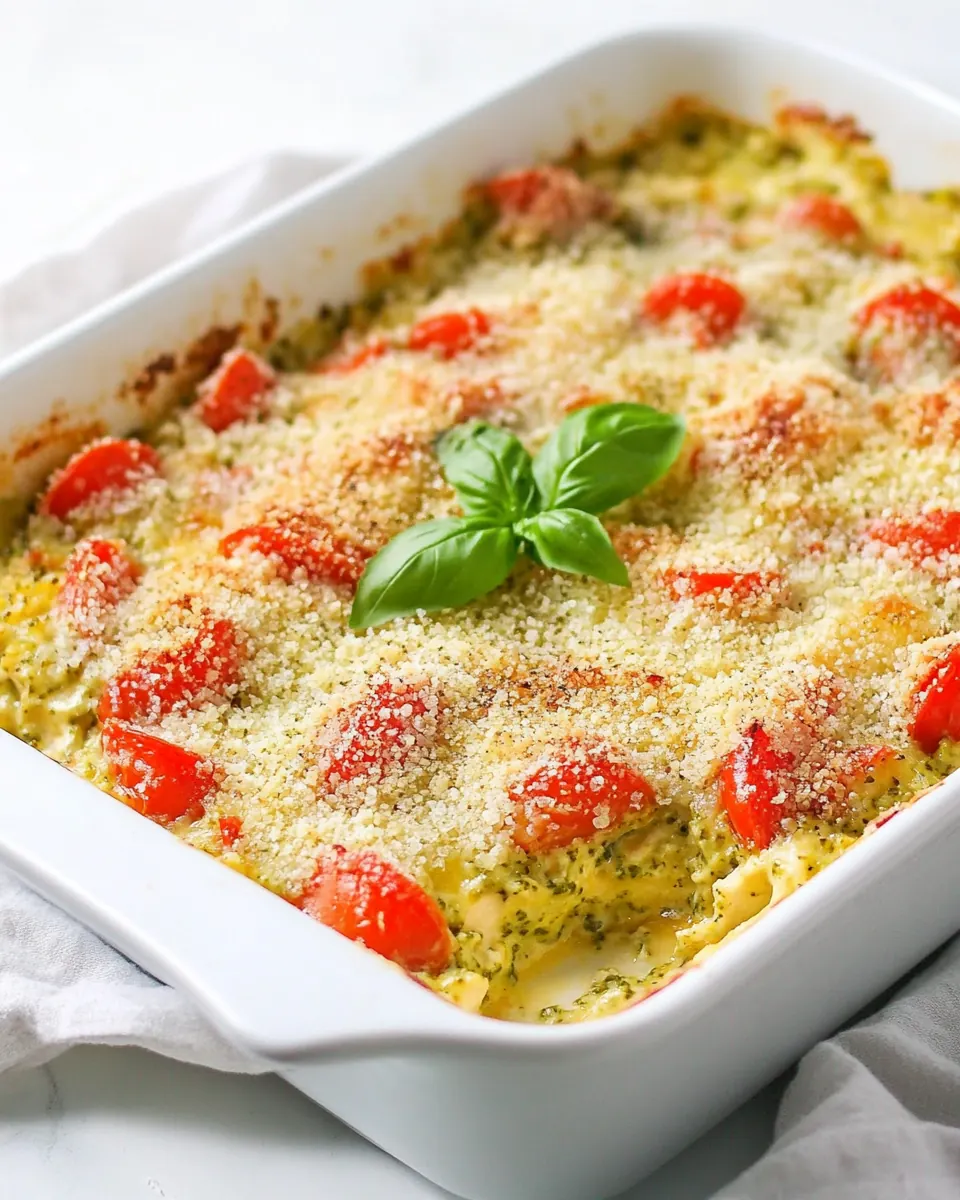
Bruschetta Pesto Chicken Casserole
Bruschetta Pesto Chicken Casserole is one of those recipes I reach for when I want bright, familiar flavors with minimal fuss.
I first made Bruschetta Pesto Chicken Casserole on a rainy weeknight when I had a craving for something comforting yet fresh. I remember pulling ripe grape tomatoes from the fridge and thinking how their sweet pop would play against fragrant basil, and how the pesto would carry everything together. The first bite felt like summer even though the weather outside was gray. That balance between light tomato brightness and rich, savory chicken made the dish feel like a small celebration at our table.
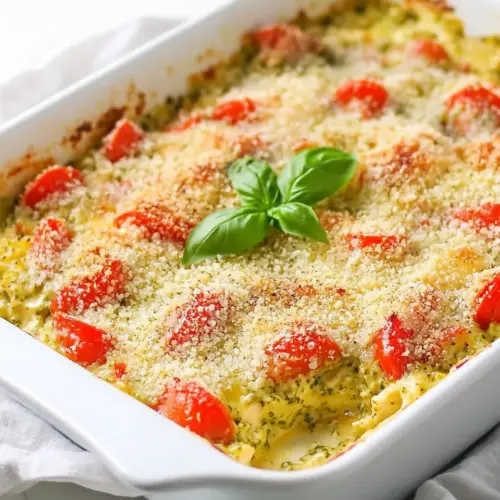
Over time I learned small tricks that make the casserole sing, like marinating the tomato mixture so the flavors bloom and keeping excess liquid off the chicken so the casserole does not become soggy. I love how the crunchy panko top becomes golden and toasty while the melted mozzarella cheese underneath stays luscious. This combination gives you multiple textures in one dish, which always impresses guests and makes weeknight dinners feel special.
Every time I make Bruschetta Pesto Chicken Casserole it sparks a little nostalgia, partly because it is simple and partly because it tastes like something you would order at a cozy bistro. I tend to serve it with something green on the side and a crisp salad for contrast. It has become a go to when I want something that is both unfussy and memorable.
Recipe Snapshot
40 mins
10 mins
30 mins
Medium
400 kcal
Italian
Keto, Gluten-Free
Dinner
9 x 13 baking dish, Mixing bowl, Small bowl, Instant read thermometer
Why This Bruschetta Pesto Chicken Casserole Is So Good
1. Bright fresh flavor with minimal effort
I love that Bruschetta Pesto Chicken Casserole delivers vibrant tomato and basil notes without an elaborate prep. The marinated grape tomatoes soak up vinegar and garlic, creating bursts of acidity that cut through the richness of the pesto and mozzarella cheese. You get a layered taste profile that feels sophisticated but is actually very approachable.
2. Textural contrast that delights
One of the reasons I keep making this dish is the contrast between the bubbling, cheesy interior and the crunchy panko topping. The toasted crumbs, kissed with olive oil, give you that satisfying crispness, while the chicken stays tender. That interplay keeps every forkful interesting.
3. Family friendly and adaptable
We often need dinners that please kids and adults, and this casserole does exactly that. The familiar flavors of mozzarella cheese and pesto are crowd pleasers, and you can scale it up for company. I appreciate a recipe I can tweak slightly depending on what is on hand and still get excellent results.
4. Great make ahead qualities
I like preparing the tomato mixture earlier in the day so the flavors have time to marry. When guests arrive I just assemble and bake. The dish also reheats well, making it a reliable choice for leftovers or packed lunches. That convenience wins me over on busy weeks.
5. Familiar ingredients, impressive outcome
There is something reassuring about using staples like garlic, olive oil, and mozzarella cheese, but the final dish feels elevated. I find the combination of pantry friendly items and fresh produce makes this casserole both accessible and impressive on the table.
What to Gather for Bruschetta Pesto Chicken Casserole
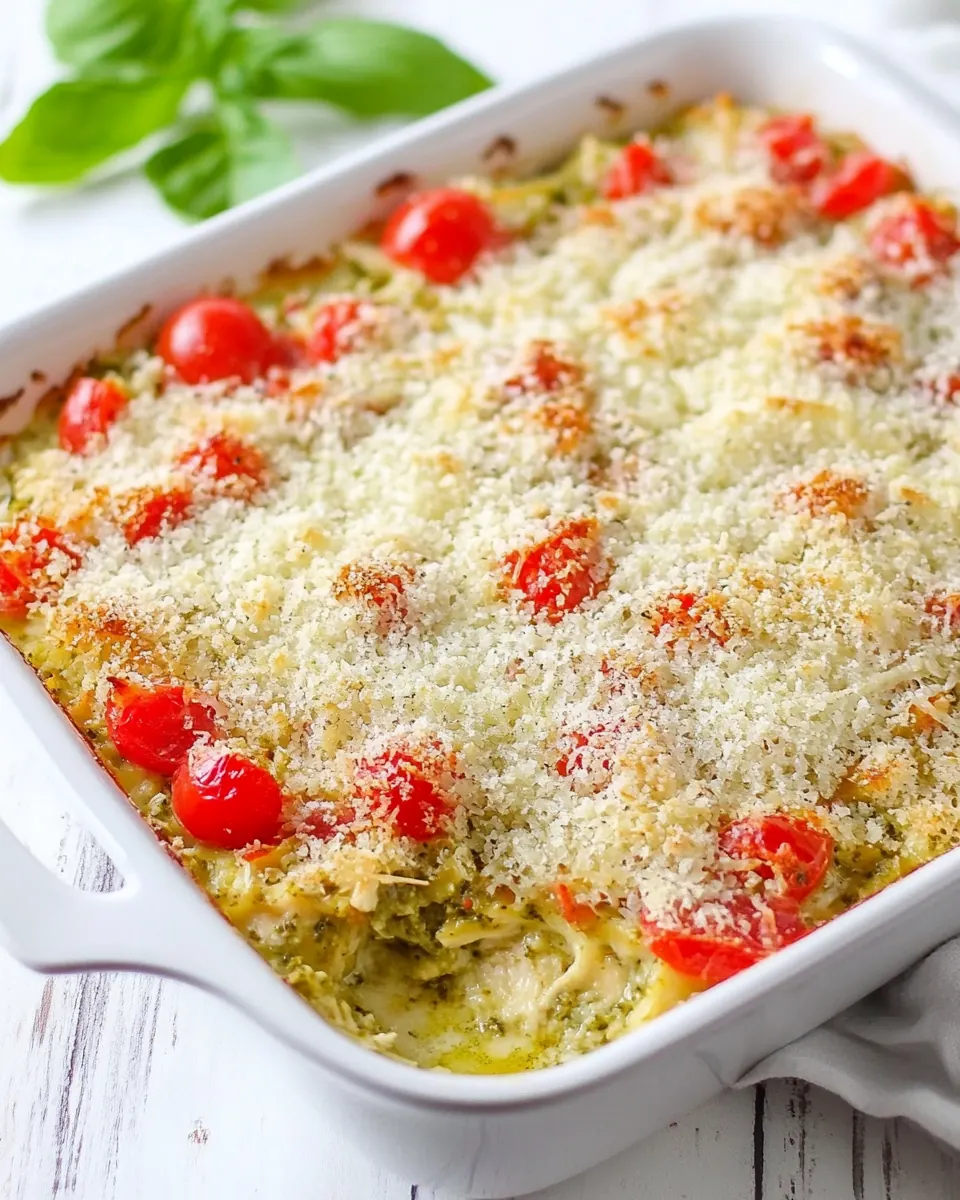
The ingredient list here is all about harmony. Bright grape tomatoes and tangy balsamic vinegar bring acidity, while pesto and mozzarella cheese lend richness. The panko crumbs and olive oil form a crunchy top that contrasts the tender chicken. Each player is simple but purposeful, combining to create a balanced, comforting casserole.
- 1 pint (2 cups) grape tomatoes, quartered: Brightly quartered to add bursts of fresh, juicy acidity and color to the casserole; they provide a light contrast to the rich cheese and pesto and release savory juices while baking to meld flavors.
- 1/4 cup finely chopped red onion: Finely chopped to lend a sharp, slightly sweet bite that balances the tomatoes and pesto; the small pieces distribute evenly for consistent flavor without overpowering the dish.
- 2 garlic cloves, minced: Minced to infuse a pungent, aromatic depth throughout the casserole; when sautéed or mixed with the other ingredients, it adds savory complexity and enhances overall savory notes.
- 2 tablespoons balsamic vinegar: Used to bring a tangy, slightly sweet acidity that brightens tomato flavors and balances the richness of pesto and cheese; it also helps deglaze and bind ingredients when mixed.
- 4 boneless skinless chicken breasts, about 2 pounds, cubed: Cubed to provide the hearty protein base of the casserole; cooking the chicken through and combining it with the tomatoes and pesto creates a substantial, satisfying main component.
- 1/2 cup basil pesto: Added to impart concentrated basil flavor, herbaceous brightness, and a creamy texture; it ties together tomatoes, chicken, and cheese while contributing savory, nutty undertones.
- 2 cups shredded mozzarella cheese: Shredded and layered to create melty, creamy pockets of richness that brown slightly on top; the cheese helps bind ingredients and delivers a familiar, comforting texture.
- 1 cup seasoned panko crumbs: Sprinkled on top to provide a crisp, golden crust and a toasty, savory crunch that contrasts the creamy interior; the seasoned crumbs add extra flavor and a pleasant mouthfeel.
- 2 tablespoons olive oil: Used to sauté or toss ingredients so they brown evenly and develop flavor; it also helps the panko crisp in the oven and prevents sticking during assembly.
How to Assemble Bruschetta Pesto Chicken Casserole
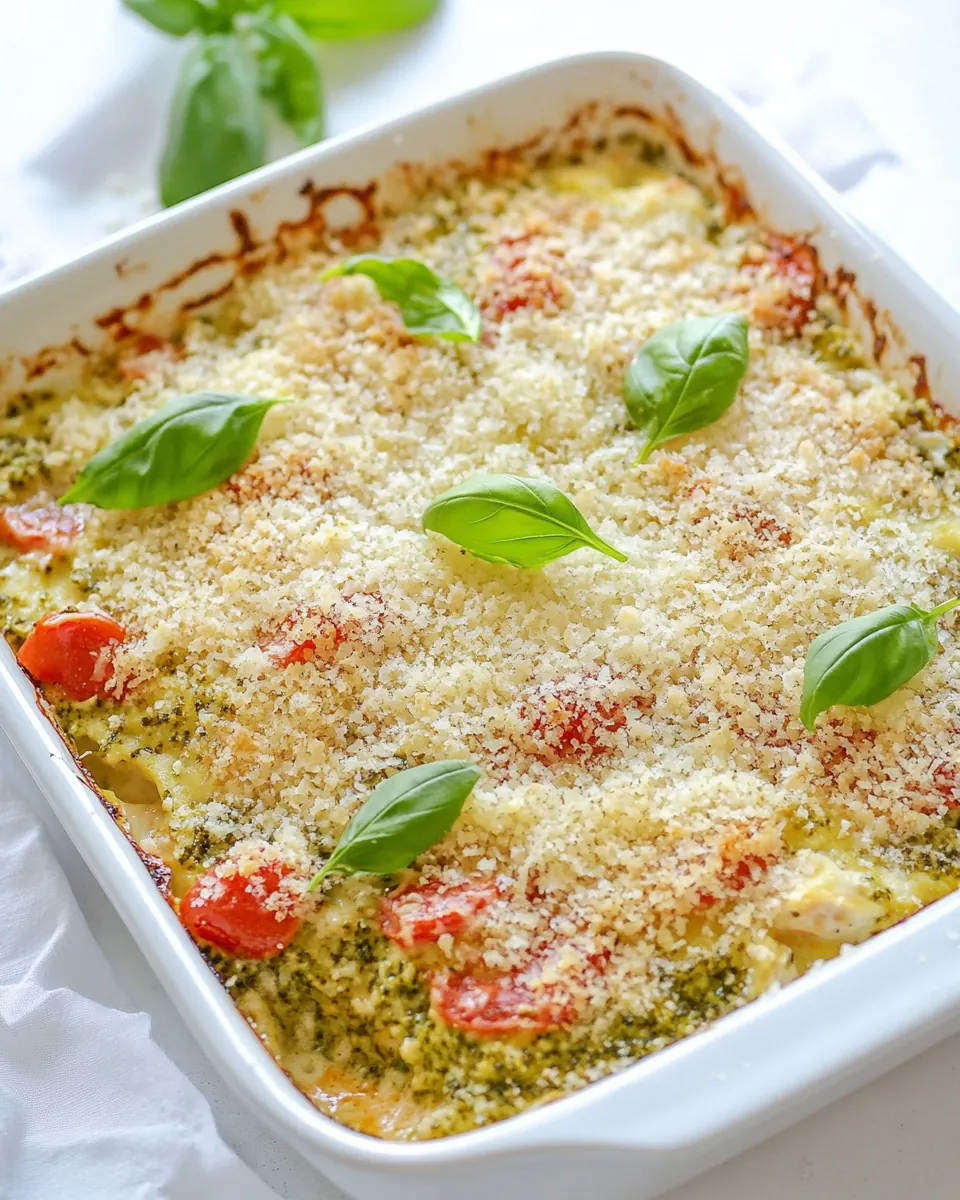
This casserole comes together in straightforward stages, and the sensory clues will tell you when each part is right. Assemble everything in layers, watching for the vivid tomato aroma and a golden, crunchy topping. Below I expand each direction into detailed, practical guidance that will help you nail the texture and flavor.
- Preheat oven to 375 degrees.: Warmth in the kitchen signals the start, and you should smell a faint dry heat as the oven stabilizes. Preheating ensures the casserole begins cooking immediately and the top can brown properly without overcooking the center. A common mistake is putting the dish in a cold oven, which leads to longer cook time and uneven browning. If your oven runs hot or cool, use an oven thermometer to confirm the temperature.
- In a small bowl, combine the tomatoes, red onion, garlic, and vinegar. Marinate in the fridge until ready to use.: The tomato mixture should smell bright, with the sharpness of red onion softened and the garlic fragrant but not overpowering. Chilling concentrates the flavors and allows the balsamic vinegar to mellow the onion and draw juices from the tomatoes. Avoid letting the mixture sit too long uncovered, or the tomatoes can become too soft. If the mix releases a lot of liquid, spoon carefully and leave most of the free liquid behind when assembling.
- In a 9 x 13 baking dish toss the pesto and chicken together and place in a single layer.: You should feel the slick, herbaceous coating of pesto on each piece of cubed chicken , which smells of basil and olive oil. Spreading the pieces in a single layer helps them cook evenly and prevents steaming. If pieces are piled, the center can stay underdone while edges overcook. Uniformly sized cubes and an even layer minimize this risk.
- Scoop the tomato mixture on top, disregarding any excess balsamic vinegar liquid leftover. Try to not put any of the liquid on the chicken.: Visually, the vibrant red tomatoes will form a jewel like layer that contrasts with green flecks of pesto . Leaving behind the excess liquid is critical, because too much moisture will lead to a watery casserole instead of a cohesive, baked texture. A common issue is scooping the marinade with the tomatoes, which can dilute the casserole. Use a slotted spoon if needed.
- Sprinkle the cheese on top.: As you scatter the shredded mozzarella cheese , you will notice the milky aroma and the way the cheese forms a soft blanket over the tomatoes. Even distribution ensures each scoop has melty cheese. Overcrowding one area leaves others cheese sparse, resulting in uneven melt and texture.
- Mix the panko crumbs and olive oil together and sprinkle on top of the cheese.: After tossing the panko crumbs with olive oil , you should see a glossy, slightly clumped crumb texture that will toast into a golden crust. The oil promotes uniform browning and prevents the crumbs from drying out. If the crumbs are dry, they can scorch quickly; if too oily, they will stay soggy. Aim for a light, even coating.
- Bake for 25-30 minutes or until chicken is done. Cover with a foil tent if crumbs begin browning too much.: During baking you will hear a gentle bubbling and smell the herbal pesto mingled with toasty crumbs. The top should turn golden and the cheese should be melted and slightly bubbling around the edges. Use an instant read thermometer to ensure chicken reaches a safe internal temperature, avoiding undercooking. If the panko darkens too quickly, tent with foil to allow the center to finish without burning the crust.
Customization Ideas
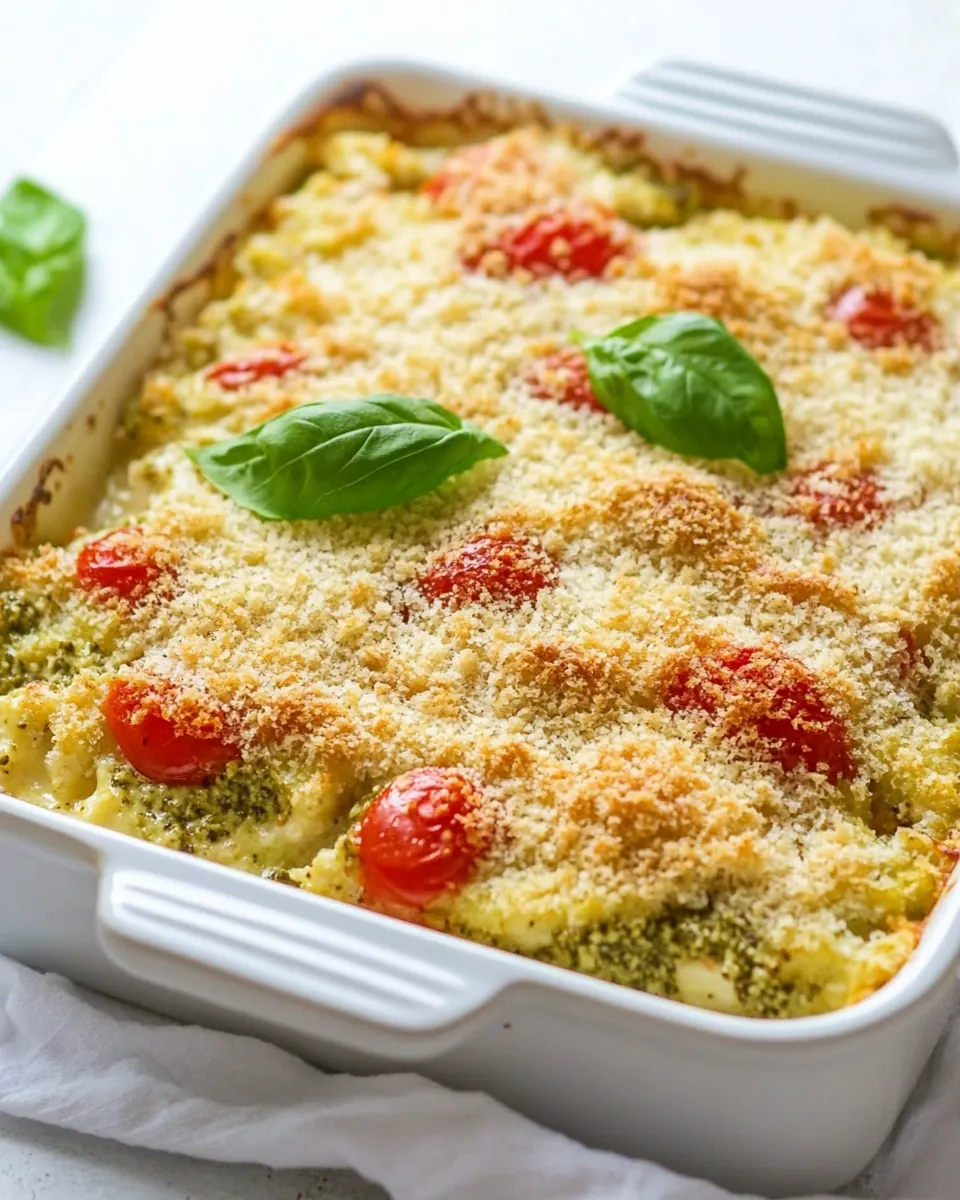
This dish is friendly to tweaks while keeping its core character. Below are ideas to customize texture, intensity of flavor, and presentation for different occasions. Each tip focuses on one change you can make to personalize the casserole.
- Swap the cheese: Try a blend of shredded mozzarella cheese and a bit of milder melting cheese for creamier texture, keeping the overall melt while introducing subtle nuance.
- Pesto variation: If you want a brighter herb punch, stir in a tablespoon more pesto before baking, which intensifies basil flavors without altering the assembly.
- To make it while shorter on time: Use pre cubed rotisserie style chicken if you have it, tossing with pesto and proceeding to assembly, saving prep time while maintaining flavor.
- Crispier topping: Toast the panko crumbs lightly in a skillet with olive oil before sprinkling to ensure maximum crunch after baking.
- Make ahead: Combine the tomato mixture and the pesto coated chicken separately, refrigerate, then assemble and bake when ready to serve for convenience.
Side Dish Ideas for Bruschetta Pesto Chicken Casserole
This casserole pairs well with simple sides that add freshness and balance the rich, herby profile. Below you will find serving suggestions suitable for weeknight dinners, casual gatherings, or special meals, plus storage notes and seasonal pairings.
- Simple green salad: A mix of crisp lettuces with a light vinaigrette adds bright acidity and a cool textural contrast to the warm casserole.
- Steamed green beans: Lightly steamed and tossed with a drizzle of olive oil provide a tender crunch and a clean flavor that keeps the meal balanced.
- Garlic infused couscous: Fluffy couscous absorbs any casserole juices and rounds out the plate for a heartier meal, perfect for family dinners.
- Crusty bread: A warm slice is handy for mopping up remnants, and its chewy texture pairs nicely with the crunchy topping.
- Occasion pairing: Serve this casserole for casual Sunday lunches or weeknight dinners, and it also works well for Ramadan if served after Iftar, since it is nourishing and easy to share.
- Storage tips: Cool fully before refrigerating, store in an airtight container for up to three days, and reheat in a moderate oven to revive the topping.
- Seasonal notes: This recipe shines in summer when tomatoes are at their best, but it works well year round thanks to pantry friendly pesto and reliable mozzarella cheese.
FAQ
Conclusion
Bruschetta Pesto Chicken Casserole shines because it pairs bright, marinated tomatoes with herbaceous pesto and tender chicken for a comforting yet lively meal. Give it a try when you want a dish that feels special without complicated steps, and invite friends or family to enjoy the layered textures and familiar flavors. It is a dependable recipe that proves simple ingredients, assembled thoughtfully, can produce a satisfying, memorable dinner.
Bruschetta Pesto Chicken Casserole
Equipment
- 9 X 13 baking dish
- Mixing Bowl
- Small Bowl
- Instant read thermometer
Ingredients
- 1 pint (2 cups) grape tomatoes, quartered Brightly quartered to add bursts of fresh, juicy acidity and color to the casserole; they provide a light contrast to the rich cheese and pesto and release savory juices while baking to meld flavors.
- 1/4 cup finely chopped red onion Finely chopped to lend a sharp, slightly sweet bite that balances the tomatoes and pesto; the small pieces distribute evenly for consistent flavor without overpowering the dish.
- 2 garlic cloves, minced Minced to infuse a pungent, aromatic depth throughout the casserole; when sautéed or mixed with the other ingredients, it adds savory complexity and enhances overall savory notes.
- 2 tablespoons balsamic vinegar Used to bring a tangy, slightly sweet acidity that brightens tomato flavors and balances the richness of pesto and cheese; it also helps deglaze and bind ingredients when mixed.
- 4 boneless skinless chicken breasts, about 2 pounds, cubed Cubed to provide the hearty protein base of the casserole; cooking the chicken through and combining it with the tomatoes and pesto creates a substantial, satisfying main component.
- 1/2 cup basil pesto Added to impart concentrated basil flavor, herbaceous brightness, and a creamy texture; it ties together tomatoes, chicken, and cheese while contributing savory, nutty undertones.
- 2 cups shredded mozzarella cheese Shredded and layered to create melty, creamy pockets of richness that brown slightly on top; the cheese helps bind ingredients and delivers a familiar, comforting texture.
- 1 cup seasoned panko crumbs Sprinkled on top to provide a crisp, golden crust and a toasty, savory crunch that contrasts the creamy interior; the seasoned crumbs add extra flavor and a pleasant mouthfeel.
- 2 tablespoons olive oil Used to sauté or toss ingredients so they brown evenly and develop flavor; it also helps the panko crisp in the oven and prevents sticking during assembly.
Instructions
- Preheat oven to 375 degrees.: Warmth in the kitchen signals the start, and you should smell a faint dry heat as the oven stabilizes. Preheating ensures the casserole begins cooking immediately and the top can brown properly without overcooking the center. A common mistake is putting the dish in a cold oven, which leads to longer cook time and uneven browning. If your oven runs hot or cool, use an oven thermometer to confirm the temperature.
- In a small bowl, combine the tomatoes, red onion, garlic, and vinegar. Marinate in the fridge until ready to use.: The tomato mixture should smell bright, with the sharpness of red onion softened and the garlic fragrant but not overpowering. Chilling concentrates the flavors and allows the balsamic vinegar to mellow the onion and draw juices from the tomatoes. Avoid letting the mixture sit too long uncovered, or the tomatoes can become too soft. If the mix releases a lot of liquid, spoon carefully and leave most of the free liquid behind when assembling.
- In a 9 x 13 baking dish toss the pesto and chicken together and place in a single layer.: You should feel the slick, herbaceous coating of pesto on each piece of cubed chicken , which smells of basil and olive oil. Spreading the pieces in a single layer helps them cook evenly and prevents steaming. If pieces are piled, the center can stay underdone while edges overcook. Uniformly sized cubes and an even layer minimize this risk.
- Scoop the tomato mixture on top, disregarding any excess balsamic vinegar liquid leftover. Try to not put any of the liquid on the chicken.: Visually, the vibrant red tomatoes will form a jewel like layer that contrasts with green flecks of pesto . Leaving behind the excess liquid is critical, because too much moisture will lead to a watery casserole instead of a cohesive, baked texture. A common issue is scooping the marinade with the tomatoes, which can dilute the casserole. Use a slotted spoon if needed.
- Sprinkle the cheese on top.: As you scatter the shredded mozzarella cheese , you will notice the milky aroma and the way the cheese forms a soft blanket over the tomatoes. Even distribution ensures each scoop has melty cheese. Overcrowding one area leaves others cheese sparse, resulting in uneven melt and texture.
- Mix the panko crumbs and olive oil together and sprinkle on top of the cheese.: After tossing the panko crumbs with olive oil , you should see a glossy, slightly clumped crumb texture that will toast into a golden crust. The oil promotes uniform browning and prevents the crumbs from drying out. If the crumbs are dry, they can scorch quickly; if too oily, they will stay soggy. Aim for a light, even coating.
- Bake for 25-30 minutes or until chicken is done. Cover with a foil tent if crumbs begin browning too much.: During baking you will hear a gentle bubbling and smell the herbal pesto mingled with toasty crumbs. The top should turn golden and the cheese should be melted and slightly bubbling around the edges. Use an instant read thermometer to ensure chicken reaches a safe internal temperature, avoiding undercooking. If the panko darkens too quickly, tent with foil to allow the center to finish without burning the crust.
Notes
- Swap the cheese: Try a blend of shredded mozzarella cheese and a bit of milder melting cheese for creamier texture, keeping the overall melt while introducing subtle nuance.
- Pesto variation: If you want a brighter herb punch, stir in a tablespoon more pesto before baking, which intensifies basil flavors without altering the assembly.
- To make it while shorter on time: Use pre cubed rotisserie style chicken if you have it, tossing with pesto and proceeding to assembly, saving prep time while maintaining flavor.
- Crispier topping: Toast the panko crumbs lightly in a skillet with olive oil before sprinkling to ensure maximum crunch after baking.
- Make ahead: Combine the tomato mixture and the pesto coated chicken separately, refrigerate, then assemble and bake when ready to serve for convenience.
