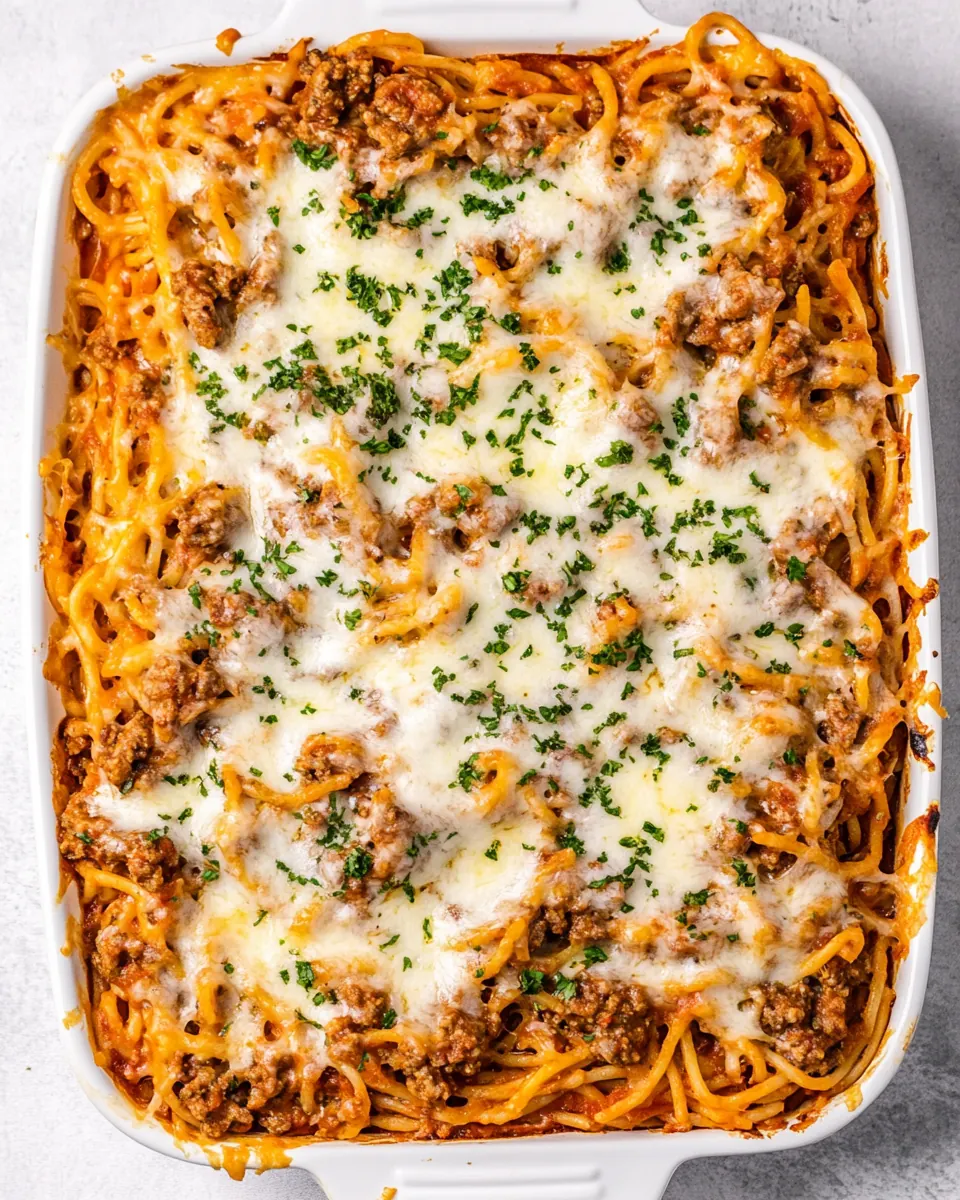
Beef Spaghetti Casserole
Beef Spaghetti Casserole is the kind of dish I turn to when the week has been long and everyone needs something warm, honest, and filling. The first time I made this recipe I was trying to clear out the pantry and soothe a chilly evening. I remember the kitchen filling with the scent of browned beef and sautéed onion, and how the house felt instantly cozier. This meal became a shortcut to comfort, one I rely on when I want dinner that hugs the table.
Over the years I have tweaked the balance so the textures sing together. The creamy pockets from softened cream cheese and sour cream contrast with strands of al dente spaghetti, while melted Mozzarella cheese and grated Parmesan cheese brown and pull into glorious strings when you dish it up. It is casual enough for a weeknight, yet hearty enough to take to a potluck where people will ask for the recipe again. Each bite is nostalgic and practical at once, a reminder that simple pantry staples can become something special.
This recipe has saved more than one dinner for me, especially on winter nights when a warm casserole is exactly what everyone wants. I like how it travels well, too, which makes it a favorite for bringing to friends with a new baby or to family gatherings. The finishing touch of fresh chopped parsley brightens the dish and makes it feel homey and complete. I hope when you make Beef Spaghetti Casserole it becomes one of those go to recipes for your household, the one you think of when you want dependable comfort food that still tastes homemade.
Recipe Snapshot
50 mins
10 mins
40 mins
Medium
600 kcal
Italian
Gluten-Free, Keto
Dinner
9×13 inch casserole dish, Large pot, 5 quart pot or large deep skillet, Wooden spoon
What’s Great About This Beef Spaghetti Casserole
Hearty crowd pleaser
I love that Beef Spaghetti Casserole feeds a crowd without drama. When guests arrive hungry, this casserole delivers generous portions and deep satisfaction. The combination of cooked spaghetti with savory beef and melted Mozzarella cheese creates a dish everyone recognizes and can’t help but go back for seconds. I often find it becomes the centerpiece on busy nights, because you can plate it quickly and it stays warm for serving.
Comfort with creamy depth
What sets this casserole apart for me is the creamy backbone. The inclusion of room temperature cream cheese and cool sour cream enriches the sauce so it clings luxuriously to the spaghetti. It turns a simple tomato and meat combination into something silky, which makes each forkful more satisfying. I find that texture is what keeps people coming back, because it feels indulgent without being heavy.
Simple, pantry friendly ingredients
I appreciate recipes that rely on ingredients you likely already have. The pantry staples like jarred marinara sauce, dried Italian seasoning, and a box of spaghetti make this casserole an approachable weeknight solution. That accessibility means I can throw it together on short notice, and guests rarely question the homemade result. For busy cooks, this balance of simplicity and flavor is a major win.
Versatile and forgiving
This casserole is remarkably forgiving, which is why I recommend it to new cooks. You can tweak seasonings to preference, and the bake time is flexible enough to tolerate different ovens. If the top browns faster, a quick broil will give you a bubbly, golden finish. I’ve learned to trust the visual cues, like bubbling edges and melted, slightly browned cheese, more than the clock. That adaptability makes it a reliable go to.
Comfort food that travels
I also value how well it travels for potlucks and family gatherings. You can prepare it ahead, refrigerate, and then bake before serving, which reduces last minute stress. The flavors meld overnight, improving the next day, so leftovers are often even better. Bringing a hot, cheesy dish like this to share is a simple way to make people feel cared for.
What to Gather for Beef Spaghetti Casserole
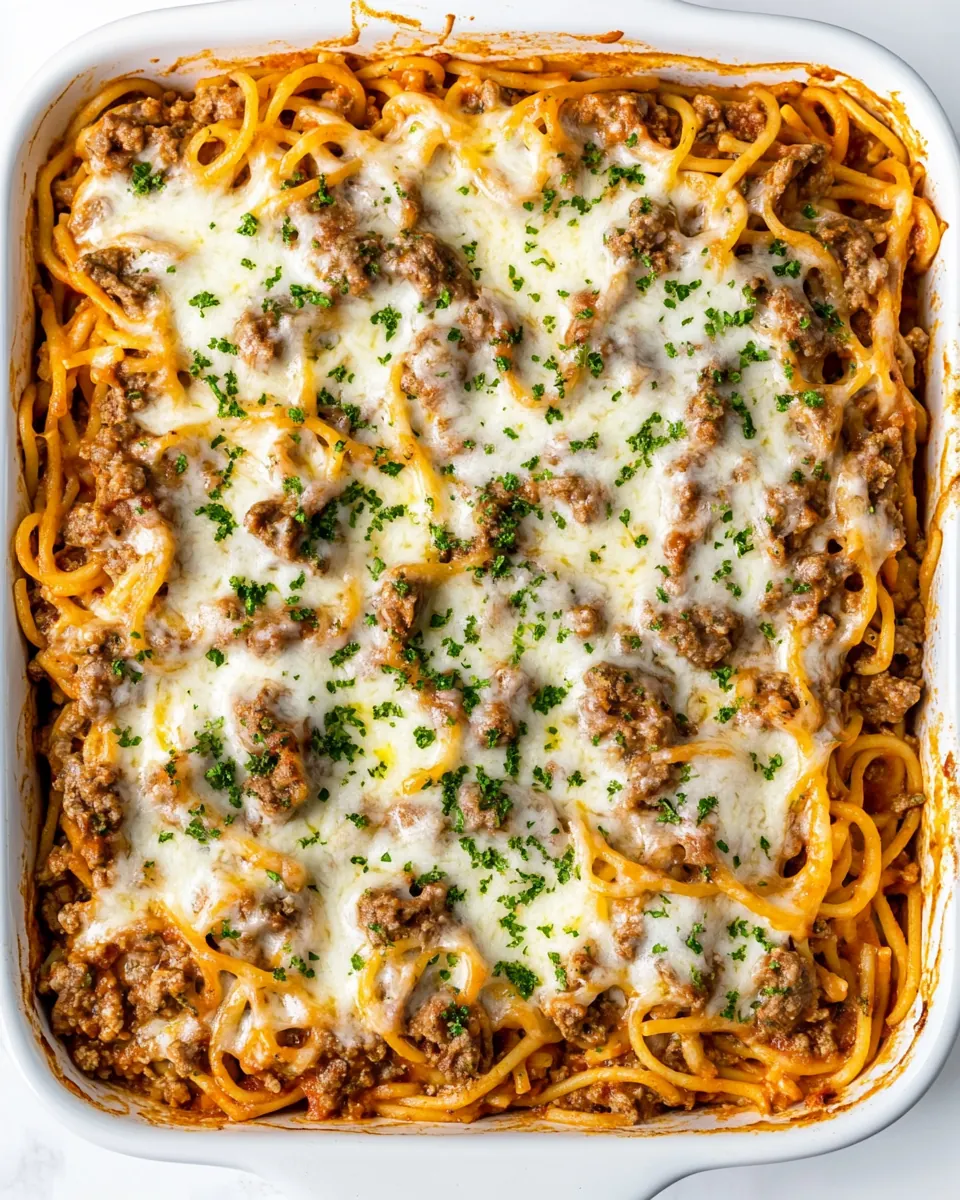
These ingredients are deliberately straightforward, chosen to balance texture, flavor, and ease. The key players are the protein rich beef, strands of spaghetti to carry the sauce, and the creamy cheeses that bind everything together. Together they create a layered casserole that is both filling and familiar.
- 1 pounds spaghetti: Cooked in boiling salted water until al dente, provides the starchy base that absorbs sauce and binds the casserole together. Serves as the primary carbohydrate and offers texture contrast to the meaty filling. Break into manageable lengths if desired for easier serving.
- 2 pounds 90% lean ground beef: Browned in a skillet to develop savory flavor and provide the protein-packed heart of the casserole. Drains excess fat if needed to prevent the dish from becoming greasy and helps create a meaty texture that complements the pasta. Season during cooking to build depth.
- 1 large onion, diced: Sautéed until softened to contribute sweet and aromatic undertones that enhance the overall savory profile. Adds subtle texture and moisture to the meat mixture while balancing stronger flavors. Dice uniformly for even cooking throughout the casserole.
- 6 medium garlic cloves, minced: Minced and cooked briefly to release pungent, aromatic oils that boost flavor complexity. Provides a warm, garlicky backbone that complements beef and tomato-based sauces. Add toward the end of sautéing to avoid burning and bitterness.
- 8 ounces cream cheese, at room temperature: Softened at room temperature and stirred into the hot sauce to create a smooth, creamy consistency and add richness. Helps bind the sauce to the pasta for a luscious mouthfeel and mellow tang. Ensure it is fully incorporated for even texture.
- 4 cups marinara sauce: Simmered with the beef and aromatics to supply acidity, sweetness, and tomato flavor that define the dish. Acts as the saucy component that coats the pasta and melds other ingredients together. Choose a robust marinara for best results.
- 1/2 cup sour cream: Folded into the warm sauce mixture to lend a tangy creaminess that lightens the texture and adds a subtle dairy tang. Balances the richness of cream cheese and cheese toppings while enhancing spreadability. Stir thoroughly to avoid curdling.
- 2 teaspoons dried Italian seasoning: Sprinkled into the sauce to introduce a blend of Mediterranean herbs that brighten and unify flavors. Adds an herby, aromatic dimension without needing fresh herbs, and complements tomato and beef notes. Use as listed for consistent seasoning.
- 1 1/2 teaspoons granulated white sugar: Stirred into the sauce to cut acidity and subtly sweeten the tomato base for a more rounded flavor. Helps balance tomatoes and bring out savory elements without making the dish noticeably sweet. Dissolve fully for even distribution.
- 1 teaspoon salt: Added during seasoning to heighten all flavors and ensure the dish is properly salted. Enhances savory notes and controls overall taste balance; adjust to personal preference. Distribute evenly throughout the meat and sauce.
- 1/2 teaspoon freshly ground black pepper: Ground and adjusted into the mixture to add mild heat and a peppery finish that enhances savory components. Complements the other seasonings without overpowering, and can be increased slightly to taste. Freshly ground provides best aroma.
- 2 cups shredded Mozzarella cheese, divided: Layered on top and mixed into the casserole to provide gooey, melty coverage and a mild, creamy flavor. Uses half for internal mixing and half for topping to achieve a golden, stretchy finish when baked. Shreds evenly for consistent melting.
- 1 cup grated Parmesan cheese, divided: Sprinkled into the mixture and atop the casserole to impart a sharp, salty, umami-rich finish that complements mozzarella and beef. Dividing across layers ensures flavor throughout and a gratin-like crust when broiled. Finely grate for easy melting and distribution.
- 1 tablespoon chopped fresh parsley: Garnished over the finished casserole to add a fresh, slightly peppery herb note and visual brightness. Chopped finely and sprinkled just before serving to preserve color and flavor. Adds a subtle contrast to the rich, cheesy casserole.
Preparation Steps for Beef Spaghetti Casserole
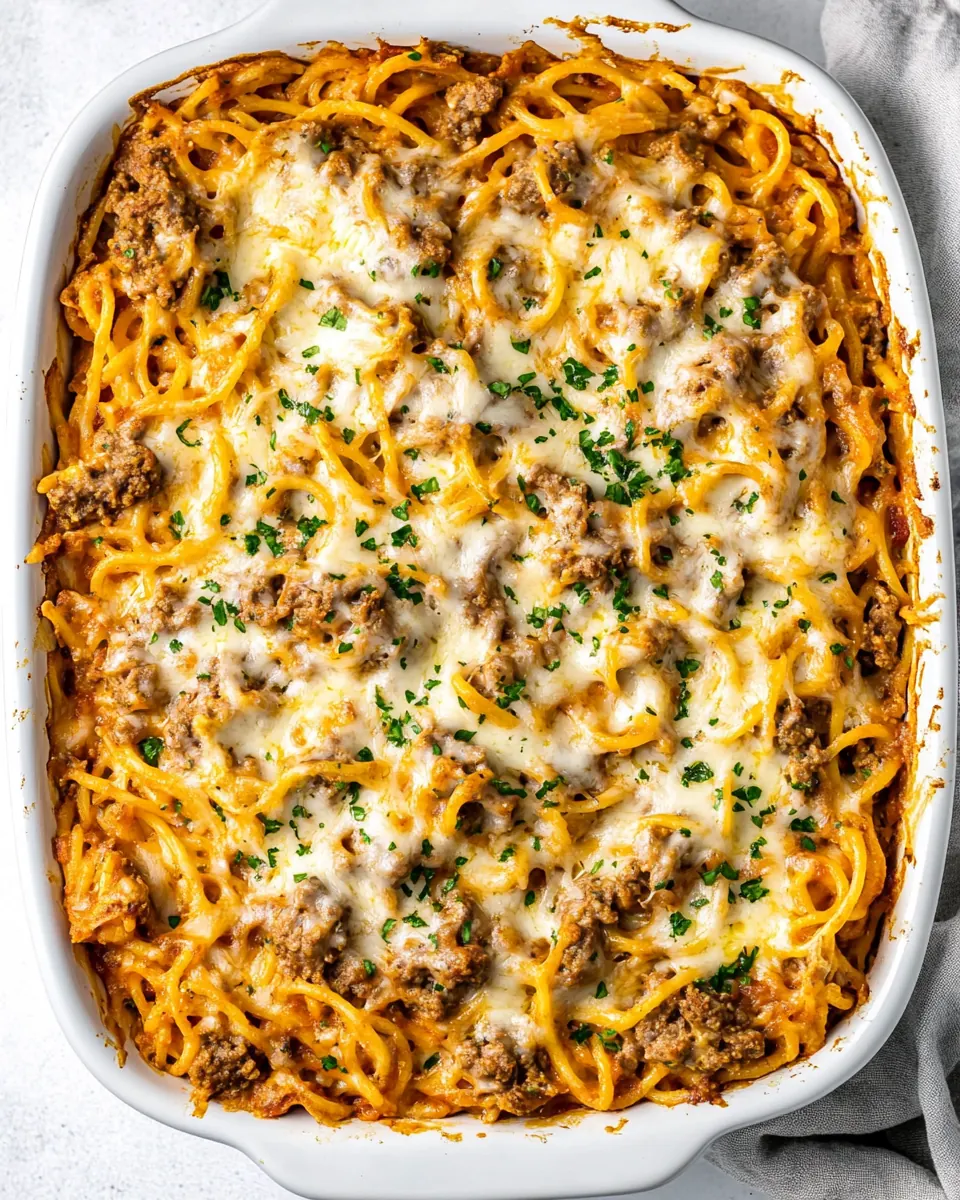
I like to move through these steps with a clear rhythm, starting with prepping the oven and pasta, then building flavors on the stove, and finally assembling to bake. Follow the sensory cues and you will know when each stage is ready.
- Preheat the oven to 375℉. Spray the inside of a 9×13-inch casserole dish with nonstick spray.: As the oven warms to 375℉ , you will feel the kitchen slowly get warmer and humidity shift, which helps the casserole bake evenly once assembled. Preheating ensures the cheese melts consistently and the edges bubble rather than the center overcooking while the exterior goes cold. A common mistake is placing the dish in a not fully heated oven, which can lengthen baking time and yield uneven melt. If your oven runs hot or cool, use an oven thermometer to confirm accurate temperature and avoid browning too quickly.
- Cook the spaghetti noodles to al dente according to the package directions. Rinse, drain, and set aside.: When you drop the spaghetti into rolling salted water, listen for the gentle boil and watch the strands soften and separate; they should be tender yet slightly firm in the center. Al dente spaghetti will hold its shape and texture during baking, preventing a mushy casserole. A typical trap is overcooking the pasta to softness, which will absorb too much sauce later. Drain and rinse briefly to stop the cooking process and prevent sticking, then set aside so it is ready to fold into the sauce.
- Heat a 5-quart pot (or a large, very deep skillet) over medium-high heat. Add the beef, onion, and garlic, and cook until the meat is browned and the onion is softened, about 8 minutes. Stir occasionally with a wooden spoon to break up the meat.: Heating the pan until it is hot but not smoking creates an environment where the beef can brown properly, releasing savory fond. As you add the beef , you should hear energetic sizzling; that sound means moisture is evaporating and browning reactions are developing flavor. Cook with the onion and garlic until the beef is browned and the onion is softened, stirring occasionally. Avoid crowding the pan, which causes steaming instead of browning; if the beef releases too much liquid, drain some fat to maintain a concentrated, flavorful base.
- Turn the heat down to medium. Add the cream cheese and stir until it’s fully combined. Turn off the heat.: Reducing the heat prevents the dairy from scorching while you incorporate the softened cream cheese . As you stir, notice the mixture become silkier and slightly glossy, signaling the cheese emulsifying with the juices. This step thickens the sauce and makes it cling to the spaghetti . If the heat is too high, the cream cheese can separate and become grainy, so take your time stirring until fully combined and smooth.
- Stir in the marinara sauce, sour cream, Italian herb seasoning, sugar, salt, and black pepper.: Adding the jarred marinara sauce and sour cream brings acidity and tang, while the dried seasoning, sugar, salt, and black pepper round out the profile. You will see the sauce become thicker and glossier, and the aroma will shift to a warm, herby tomato scent. Taste and adjust gently, because the cheeses and sauce contribute saltiness; a common error is oversalting at this point. Simmer briefly off heat so flavors have a chance to marry without breaking the dairy.
- Add the cooked spaghetti noodles, 1 cup shredded mozzarella, and 1/2 cup grated parmesan, and stir to combine.: As you fold the al dente spaghetti into the sauce, use a gentle but thorough motion so every strand is coated in the creamy tomato mixture. The added portion of Mozzarella cheese and Parmesan cheese inside helps bind and create creamy pockets, making the final texture cohesive. You want the pasta evenly distributed and not clumped, so separate strands carefully. If clumping occurs, a brief gentle toss with a splash of sauce helps; avoid vigorous stirring which can break the pasta.
- Transfer the mixture to the prepared casserole dish. Sprinkle on the remaining 1 cup mozzarella and 1/2 cup grated parmesan.: Moving the sauced spaghetti into the greased 9 by 13 inch dish, spread it evenly so the top is a consistent thickness. The remaining 1 cup of Mozzarella cheese and 1/2 cup of Parmesan cheese on top will melt and form a golden crust, providing visual appeal and welcoming aroma. Pat the surface gently to flatten peaks so the cheese browns uniformly. A common misstep is overfilling the dish, which can cause bubbling over; leave a little headspace for safe baking.
- Bake uncovered until the cheese is melted and the casserole is warm throughout, about 20 minutes. If you want to brown the top, briefly broil the casserole after baking.: During baking you will notice the edges bubbling vigorously and the top transforming into a glossy, oozy layer of cheese. The interior should be heated through, with steam rising when you peek. If you want a browned top, finish with a brief broil for a minute or two, watching closely to prevent burning. Avoid skipping the check, because ovens vary and the top can go from perfectly browned to charred quickly under broil.
- Sprinkle on the parsley and serve.: The final sprinkle of fresh chopped parsley adds a bright herbaceous note and a pleasant color contrast against the golden cheese. The dish should smell rich and savory, with hints of herb and tomato, and the first forkful will offer a creamy, meaty mouthfeel. Serve warm so the cheeses stretch delightfully. A frequent error is letting the casserole sit too long before serving, which makes reheating necessary and changes texture; serve within a short window for the best experience.
Recipe Notes about Beef Spaghetti Casserole
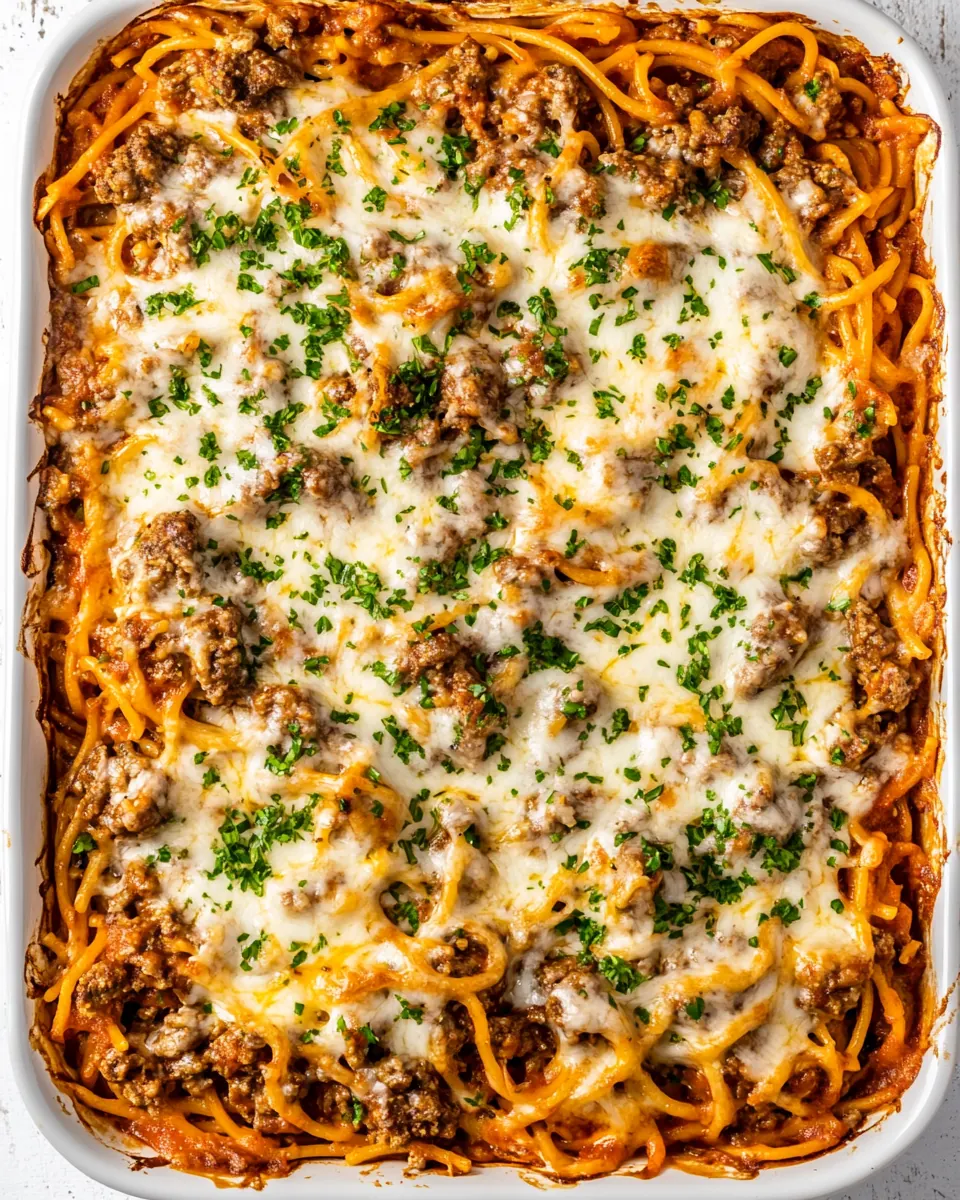
I often jot down tips while cooking so the next time I make a dish it is even better. Below are practical notes and expansions on the recipe that I use to streamline prep, control texture, and maximize flavor.
- Room temperature cream cheese: Let the cream cheese sit out for about 30 minutes so it blends smoothly into the sauce, preventing lumps and ensuring a silky texture.
- Al dente pasta timing: Cook the spaghetti slightly under the package recommended time because it will finish cooking in the oven and you want it to remain firm rather than mushy.
- Drain excess fat: If the pan releases a lot of grease while browning the beef, drain some to keep the sauce from becoming oily and to let the tomato flavors shine.
- Even cheese distribution: Reserve half of the Mozzarella cheese and Parmesan cheese for the top so the interior binds while the top gets a golden, bubbly finish for a pleasing contrast.
- Make ahead advantage: Assemble the casserole and refrigerate for a few hours or overnight, then bake when ready; flavors meld and the dish reheats well for easy serving.
How to Serve Beef Spaghetti Casserole
This casserole is an adaptable main that works well for casual dinners and family gatherings. I like to serve it hot from the oven with simple accompaniments to round out the meal and provide contrast in texture and temperature.
- Family dinner: Serve the casserole straight from the baking dish alongside a simple green salad dressed lightly to cut through the richness, and offer crusty bread for sopping up sauce.
- Potluck or gathering: Bring the casserole in a covered dish and reheat briefly if needed; it travels well and the cheesy top is always a hit at communal meals.
- Occasions: Great for winter dinners when you want warming comfort, and suitable for casual holiday meals where easy feeding is required.
- Storage: Refrigerate leftovers in an airtight container for up to three days; reheat covered in a 350 degree oven until warmed through, adding a splash of water if it seems dry.
- Make ahead: Assemble the casserole up to a day in advance, cover, and bake when ready to serve; flavors deepen after resting, making reheated portions especially satisfying.
- Serving style: Scoop generous portions so each plate has pasta strands, meat, and a bit of the cheesy top, finishing with a sprinkle of fresh parsley for color and brightness.
FAQ
Conclusion
This Beef Spaghetti Casserole stands out because it combines comforting, familiar flavors with a creamy, cheesy texture that feeds a crowd easily. Give it a try on a busy weeknight or for a casual gathering when you want something warm and satisfying that still tastes homemade. I hope it becomes one of your reliable recipes to turn to when you need food that comforts and satisfies with minimal fuss.
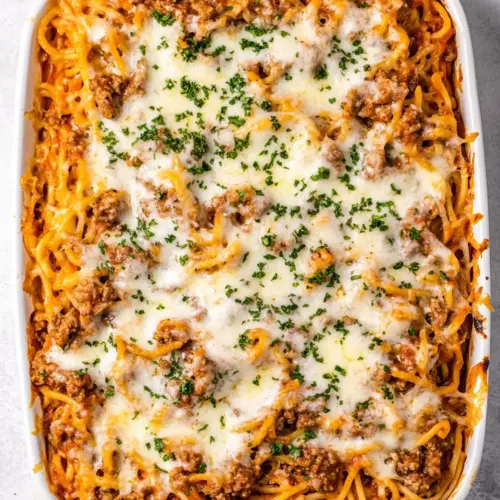
Beef Spaghetti Casserole
Equipment
- 9x13-inch Casserole Dish
- Large Pot
- 5 quart pot or large deep skillet
- Wooden Spoon
Ingredients
- 1 pounds spaghetti Cooked in boiling salted water until al dente, provides the starchy base that absorbs sauce and binds the casserole together. Serves as the primary carbohydrate and offers texture contrast to the meaty filling. Break into manageable lengths if desired for easier serving.
- 2 pounds 90% lean ground beef Browned in a skillet to develop savory flavor and provide the protein-packed heart of the casserole. Drains excess fat if needed to prevent the dish from becoming greasy and helps create a meaty texture that complements the pasta. Season during cooking to build depth.
- 1 large onion, diced Sautéed until softened to contribute sweet and aromatic undertones that enhance the overall savory profile. Adds subtle texture and moisture to the meat mixture while balancing stronger flavors. Dice uniformly for even cooking throughout the casserole.
- 6 medium garlic cloves, minced Minced and cooked briefly to release pungent, aromatic oils that boost flavor complexity. Provides a warm, garlicky backbone that complements beef and tomato-based sauces. Add toward the end of sautéing to avoid burning and bitterness.
- 8 ounces cream cheese, at room temperature Softened at room temperature and stirred into the hot sauce to create a smooth, creamy consistency and add richness. Helps bind the sauce to the pasta for a luscious mouthfeel and mellow tang. Ensure it is fully incorporated for even texture.
- 4 cups marinara sauce Simmered with the beef and aromatics to supply acidity, sweetness, and tomato flavor that define the dish. Acts as the saucy component that coats the pasta and melds other ingredients together. Choose a robust marinara for best results.
- 1/2 cup sour cream Folded into the warm sauce mixture to lend a tangy creaminess that lightens the texture and adds a subtle dairy tang. Balances the richness of cream cheese and cheese toppings while enhancing spreadability. Stir thoroughly to avoid curdling.
- 2 teaspoons dried Italian seasoning Sprinkled into the sauce to introduce a blend of Mediterranean herbs that brighten and unify flavors. Adds an herby, aromatic dimension without needing fresh herbs, and complements tomato and beef notes. Use as listed for consistent seasoning.
- 1 1/2 teaspoons granulated white sugar Stirred into the sauce to cut acidity and subtly sweeten the tomato base for a more rounded flavor. Helps balance tomatoes and bring out savory elements without making the dish noticeably sweet. Dissolve fully for even distribution.
- 1 teaspoon salt Added during seasoning to heighten all flavors and ensure the dish is properly salted. Enhances savory notes and controls overall taste balance; adjust to personal preference. Distribute evenly throughout the meat and sauce.
- 1/2 teaspoon freshly ground black pepper Ground and adjusted into the mixture to add mild heat and a peppery finish that enhances savory components. Complements the other seasonings without overpowering, and can be increased slightly to taste. Freshly ground provides best aroma.
- 2 cups shredded Mozzarella cheese, divided Layered on top and mixed into the casserole to provide gooey, melty coverage and a mild, creamy flavor. Uses half for internal mixing and half for topping to achieve a golden, stretchy finish when baked. Shreds evenly for consistent melting.
- 1 cup grated Parmesan cheese, divided Sprinkled into the mixture and atop the casserole to impart a sharp, salty, umami-rich finish that complements mozzarella and beef. Dividing across layers ensures flavor throughout and a gratin-like crust when broiled. Finely grate for easy melting and distribution.
- 1 tablespoon chopped fresh parsley Garnished over the finished casserole to add a fresh, slightly peppery herb note and visual brightness. Chopped finely and sprinkled just before serving to preserve color and flavor. Adds a subtle contrast to the rich, cheesy casserole.
Instructions
- Preheat the oven to 375℉. Spray the inside of a 9×13-inch casserole dish with nonstick spray.: As the oven warms to 375℉ , you will feel the kitchen slowly get warmer and humidity shift, which helps the casserole bake evenly once assembled. Preheating ensures the cheese melts consistently and the edges bubble rather than the center overcooking while the exterior goes cold. A common mistake is placing the dish in a not fully heated oven, which can lengthen baking time and yield uneven melt. If your oven runs hot or cool, use an oven thermometer to confirm accurate temperature and avoid browning too quickly.
- Cook the spaghetti noodles to al dente according to the package directions. Rinse, drain, and set aside.: When you drop the spaghetti into rolling salted water, listen for the gentle boil and watch the strands soften and separate; they should be tender yet slightly firm in the center. Al dente spaghetti will hold its shape and texture during baking, preventing a mushy casserole. A typical trap is overcooking the pasta to softness, which will absorb too much sauce later. Drain and rinse briefly to stop the cooking process and prevent sticking, then set aside so it is ready to fold into the sauce.
- Heat a 5-quart pot (or a large, very deep skillet) over medium-high heat. Add the beef, onion, and garlic, and cook until the meat is browned and the onion is softened, about 8 minutes. Stir occasionally with a wooden spoon to break up the meat.: Heating the pan until it is hot but not smoking creates an environment where the beef can brown properly, releasing savory fond. As you add the beef , you should hear energetic sizzling; that sound means moisture is evaporating and browning reactions are developing flavor. Cook with the onion and garlic until the beef is browned and the onion is softened, stirring occasionally. Avoid crowding the pan, which causes steaming instead of browning; if the beef releases too much liquid, drain some fat to maintain a concentrated, flavorful base.
- Turn the heat down to medium. Add the cream cheese and stir until it’s fully combined. Turn off the heat.: Reducing the heat prevents the dairy from scorching while you incorporate the softened cream cheese . As you stir, notice the mixture become silkier and slightly glossy, signaling the cheese emulsifying with the juices. This step thickens the sauce and makes it cling to the spaghetti . If the heat is too high, the cream cheese can separate and become grainy, so take your time stirring until fully combined and smooth.
- Stir in the marinara sauce, sour cream, Italian herb seasoning, sugar, salt, and black pepper.: Adding the jarred marinara sauce and sour cream brings acidity and tang, while the dried seasoning, sugar, salt, and black pepper round out the profile. You will see the sauce become thicker and glossier, and the aroma will shift to a warm, herby tomato scent. Taste and adjust gently, because the cheeses and sauce contribute saltiness; a common error is oversalting at this point. Simmer briefly off heat so flavors have a chance to marry without breaking the dairy.
- Add the cooked spaghetti noodles, 1 cup shredded mozzarella, and 1/2 cup grated parmesan, and stir to combine.: As you fold the al dente spaghetti into the sauce, use a gentle but thorough motion so every strand is coated in the creamy tomato mixture. The added portion of Mozzarella cheese and Parmesan cheese inside helps bind and create creamy pockets, making the final texture cohesive. You want the pasta evenly distributed and not clumped, so separate strands carefully. If clumping occurs, a brief gentle toss with a splash of sauce helps; avoid vigorous stirring which can break the pasta.
- Transfer the mixture to the prepared casserole dish. Sprinkle on the remaining 1 cup mozzarella and 1/2 cup grated parmesan.: Moving the sauced spaghetti into the greased 9 by 13 inch dish, spread it evenly so the top is a consistent thickness. The remaining 1 cup of Mozzarella cheese and 1/2 cup of Parmesan cheese on top will melt and form a golden crust, providing visual appeal and welcoming aroma. Pat the surface gently to flatten peaks so the cheese browns uniformly. A common misstep is overfilling the dish, which can cause bubbling over; leave a little headspace for safe baking.
- Bake uncovered until the cheese is melted and the casserole is warm throughout, about 20 minutes. If you want to brown the top, briefly broil the casserole after baking.: During baking you will notice the edges bubbling vigorously and the top transforming into a glossy, oozy layer of cheese. The interior should be heated through, with steam rising when you peek. If you want a browned top, finish with a brief broil for a minute or two, watching closely to prevent burning. Avoid skipping the check, because ovens vary and the top can go from perfectly browned to charred quickly under broil.
- Sprinkle on the parsley and serve.: The final sprinkle of fresh chopped parsley adds a bright herbaceous note and a pleasant color contrast against the golden cheese. The dish should smell rich and savory, with hints of herb and tomato, and the first forkful will offer a creamy, meaty mouthfeel. Serve warm so the cheeses stretch delightfully. A frequent error is letting the casserole sit too long before serving, which makes reheating necessary and changes texture; serve within a short window for the best experience.
Notes
- Room temperature cream cheese: Let the cream cheese sit out for about 30 minutes so it blends smoothly into the sauce, preventing lumps and ensuring a silky texture.
- Al dente pasta timing: Cook the spaghetti slightly under the package recommended time because it will finish cooking in the oven and you want it to remain firm rather than mushy.
- Drain excess fat: If the pan releases a lot of grease while browning the beef, drain some to keep the sauce from becoming oily and to let the tomato flavors shine.
- Even cheese distribution: Reserve half of the Mozzarella cheese and Parmesan cheese for the top so the interior binds while the top gets a golden, bubbly finish for a pleasing contrast.
- Make ahead advantage: Assemble the casserole and refrigerate for a few hours or overnight, then bake when ready; flavors meld and the dish reheats well for easy serving.
