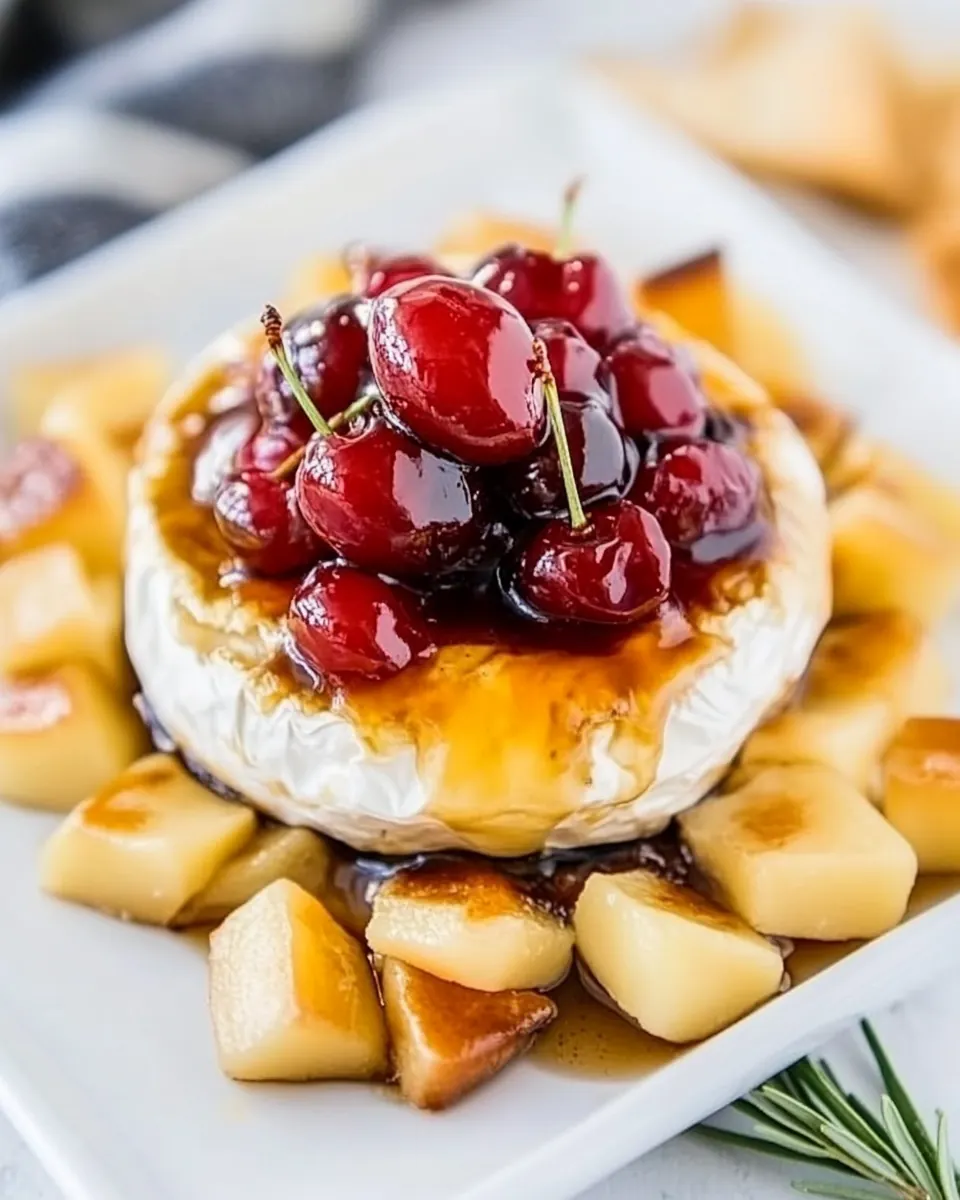
Baked Brie with Balsamic Cherries
Baked Brie with Balsamic Cherries is one of those simple yet showstopping recipes I turn to whenever friends drop by or I want a cozy night in with something special. I first made this when a neighbor brought over a jar of intense cherry preserves from her orchard run, and the moment the warm cheese met the glossy cherries I felt like I had discovered a new holiday ritual. That first evening we nibbled slowly, talked loudly, and kept returning to the platter, each bite richer than the last.
When I make Baked Brie with Balsamic Cherries now, I usually start with a quiet playlist and a clean board, because there is a small bit of carving and gentle assembly involved. I like how the tartness of the cherries plays off the creamy brie, and how the tiny hit of balsamic vinegar lifts everything so it never feels too sweet. Serving is casual, and I often have a few different crackers or slices of toasted bread nearby so guests can build bites to their liking.
There is also something comforting about the ritual: the slicing of the rind, the spooning of jam, the brief oven time where aromas start to swirl through the kitchen. Over time I learned a few little tricks that prevent boil over and help the top slide back on neatly. Those small moves keep the focus on the rich interior, the glossy cherries, and the joyful sharing. I hope this version becomes one of your party favorites.
Recipe Snapshot
15 mins
5 mins
10 mins
Medium
200 kcal
American
Paleo, Gluten-Free
Appetizers
Oven, Baking sheet, Spatula, Small bowl, Sharp knife
Why You Need This Baked Brie with Balsamic Cherries
Melting Magic
I love how Baked Brie with Balsamic Cherries transforms a humble wheel of brie into a gooey centerpiece. The moment the cheese softens and the aroma of warm dairy fills the room, guests immediately gather. That melted texture creates a rich, silky mouthfeel that makes simple crackers feel elevated, and I always notice people lingering just to scrape the platter clean.
Sweet And Tangy Balance
The combination of cherry jam and a splash of balsamic vinegar provides a brilliant contrast to the creamy brie. I appreciate how the vinegar brightens the preserve so it never becomes cloying. When they mingle in the oven the sugars caramelize a touch, producing a glossy, slightly jammy topping that pairs perfectly with savory carriers like toasted bread.
Effortless Elegance
This recipe is deceptively simple, which is one reason I turn to Baked Brie with Balsamic Cherries for last minute gatherings. A few minutes of prep and a short bake deliver something that looks thoughtful and tastes complex, with minimal hands on time. It’s a great way to impress without stress, and it frees me to focus on conversation rather than the stove.
Customizable And Crowd Friendly
You can scale this up or down, and the concept works with different preserves if you want to experiment. I like keeping the ingredient list small because each element gets to shine. The recipe is also friendly to a variety of palates, which makes it perfect for mixed groups where someone may prefer crackers and another leans toward more substantial bread.
Comfort With A Twist
For me, Baked Brie with Balsamic Cherries sits at the crossroads of cozy and celebratory. It feels like comfort food, but it also reads like a festive starter. That duality is what keeps me making it year after year, especially on chilly evenings when everyone appreciates something warm, sticky, and shareable.
Ingredient List for Baked Brie with Balsamic Cherries
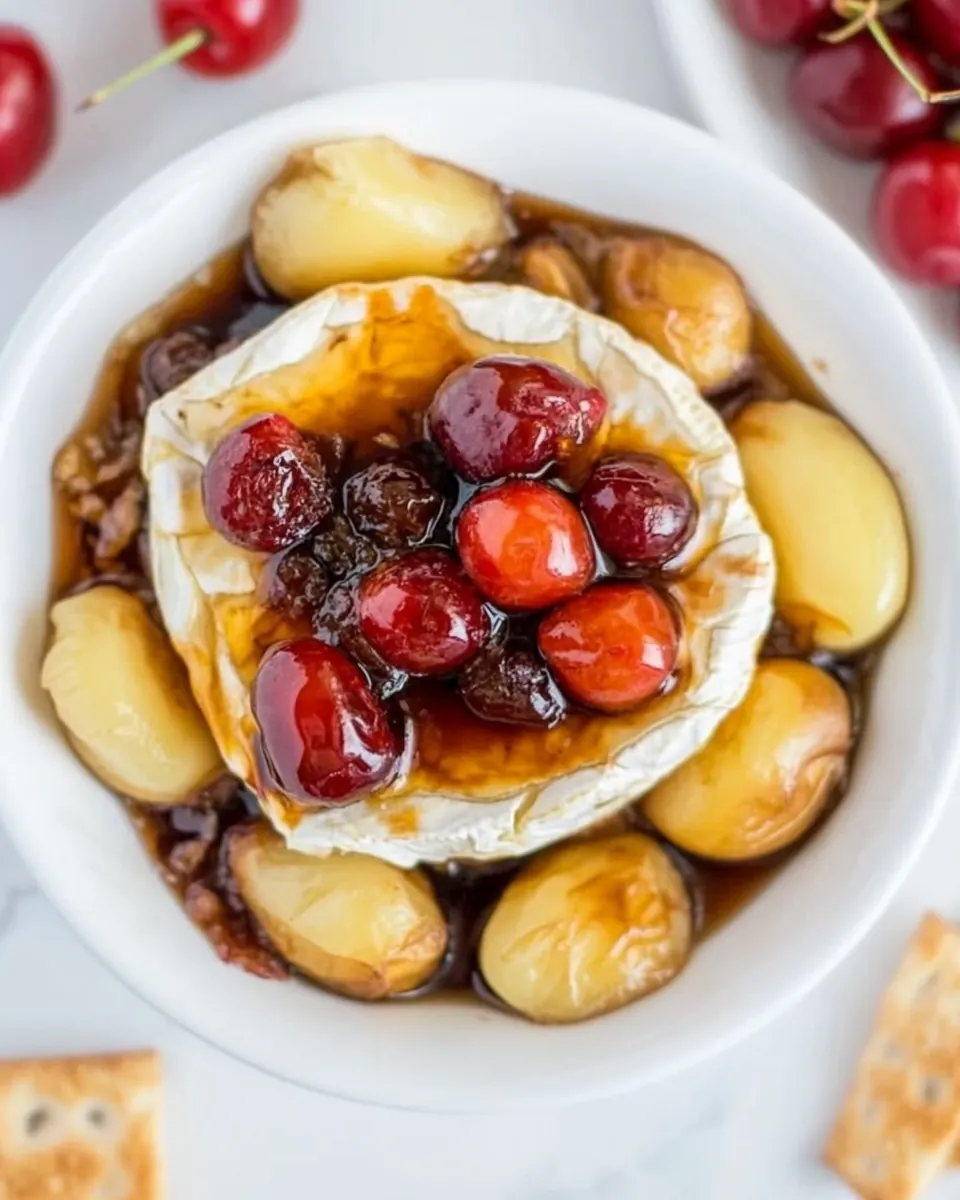
These ingredients are intentionally few, because the goal is to let each component shine. The key players are a creamy wheel of brie, a flavorful jar of cherry jam, a touch of balsamic vinegar to cut the sweetness, and a vehicle like bread or crackers for serving. Together they create a balance of texture and flavor where the cheese provides luxurious mouthfeel, the fruit adds sweet tang, and the crunchy or chewy carriers complete the bite.
- one 8-ounce wheel of brie: Soften to a spreadable consistency and provide the rich, creamy centerpiece for the baked dish; melt gently in the oven to create a gooey interior that pairs with sweet-tart toppings and crunchy dippers.
- about 1/3 heaping cup cherry jam or preserves: Add glossy sweetness and fruity depth, creating a compote-like layer that melds with the warm cheese; spoon over the top before or after baking to provide sticky, flavorful contrast.
- 1 tablespoon balsamic vinegar: Brighten the jam with tangy acidity and enhance overall flavor complexity; whisk briefly into the cherry preserves to balance sweetness and add a subtle, savory note.
- bread, crackers, mini toasts, chips, etc. for serving: Supply contrasting texture and a vessel for scooping, offering crunchy or chewy bites to accompany the warm cheese; arrange an assortment to suit different tastes and presentations.
The Method for Baked Brie with Balsamic Cherries
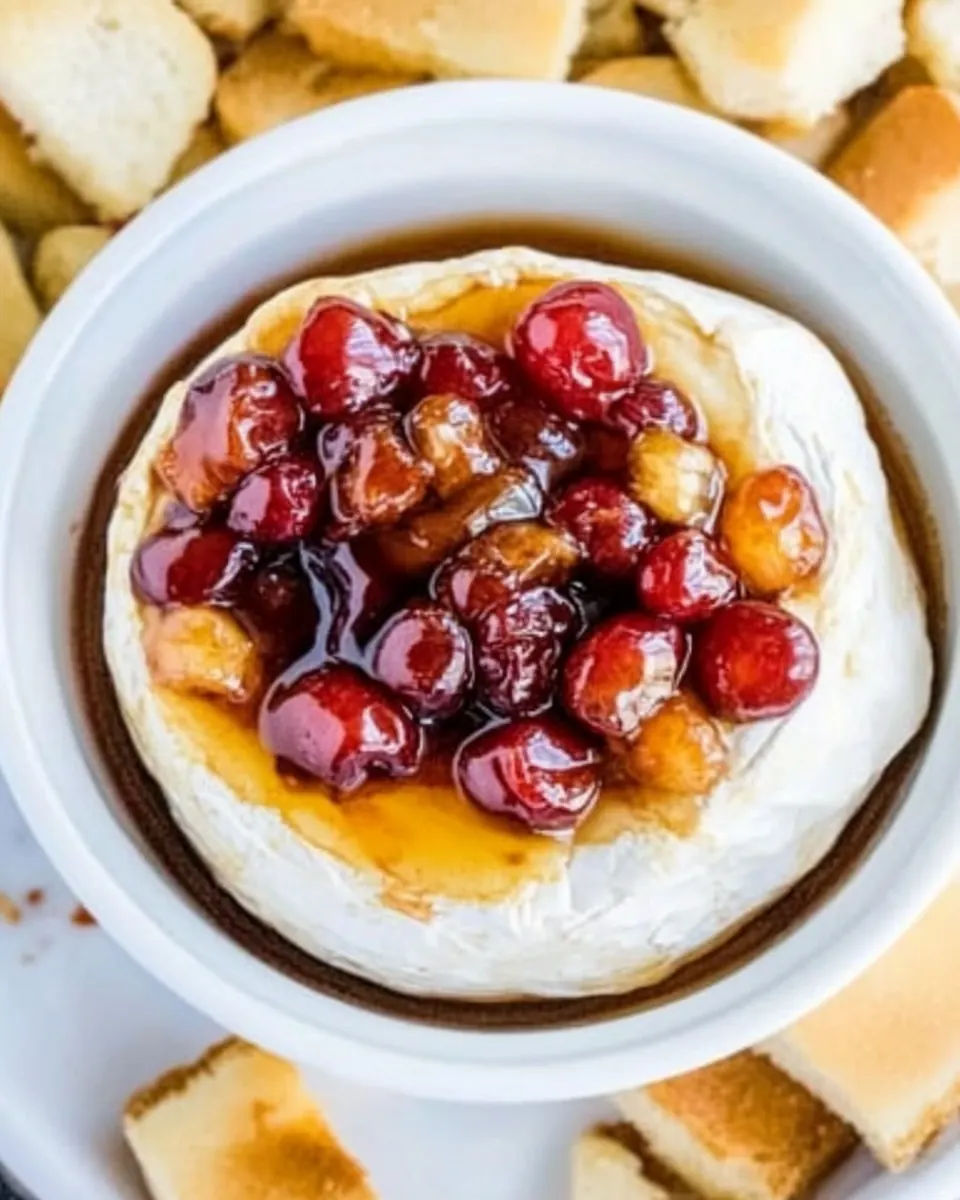
This method is short and approachable, yet each step matters to get the right texture and presentation. Work with care when slicing the rind and keep a watchful eye while baking so the jam does not scorch. Ready your serving platter ahead so you can move the wheel while it is still luscious and warm.
- Preheat oven to 400 F. Line a baking sheet with a Silpat or spray with cooking spray; set aside.: As you slide the rack into the oven you will hear the faint hum of the element warming and feel the kitchen air shift to a warmer, anticipation-filled tone. This temperature allows the brie to soften quickly so the center becomes luxuriously oozy while the rind keeps enough structure to hold the jam. If your oven runs hot, the exterior could brown too quickly, so consider shortening the time by a minute or positioning the rack one notch higher. A common mistake is not preheating fully which leads to uneven melting and a firmer center than desired.
- Place brie on a cutting board and slice off one end of it so that the ‘top’ is about 1/8-inch thick. Cutting through the rind takes a bit of elbow grease. Use a sharp knife, take your time, and be careful.: The sound of the Silpat smoothing onto the pan is quietly satisfying and it prevents any jam runoff from sticking and burning. Using a nonstick surface means you can keep the melted jam from forming a hard, burnt edge that would taste bitter. Take care to center the wheel so any spillover can pool harmlessly, and avoid placing it too close to the sheet's edge. Many cooks forget this and end up with jam stuck to the pan that is hard to transfer, so this step protects your presentation.
- Place base of brie in the center of prepared baking sheet with the top nearby; set aside.: The tactile resistance as the knife meets the rind tells you it is doing its job. Slicing an even, thin top gives you a neat cover that will sit back on the wheel after baking. The rind is edible and helps keep the jam contained during baking, but cutting can be firmer than you expect, so use a sharp knife and steady pressure. A typical misstep is cutting too deep into the cheese which leads to a thin interior layer being removed; go slowly and follow the rind's curve.
- In a small bowl, stir to combine the jam and balsamic vinegar. Taste and make sure you like the balance of flavors; adjust if necessary.: When you set the base down you should notice the wheel's gentle weight and the slight give of the rind. Positioning matters because you want space around the cheese for any jam that bubbles and escapes. Leaving the top nearby makes the reassembly quick after baking and preserves the appearance of a wheel. People sometimes forget to leave that space and then find their jam spilling over and sticking to the pan edge, which complicates plating.
- Spoon jam mixture over the center of brie and keep a bare 1-inch margin around the perimeter to help prevent runoff while baking.: As you stir the glossy cherry jam with the dark balsamic vinegar you will notice a fragrant lift, and the jam will loosen slightly into a spreadable texture. Taste the mixture to ensure the acidity balances the sweetness; adjust carefully since the vinegar is potent. This mixing step controls the final flavor profile, and skipping the taste test is a common error that can leave the topping too sweet or too sharp.
- Loosely place the brie ‘top’ over the jam mixture.: Spoon with a gentle hand so the jam pools in the center and does not slide over the edge. The 1-inch margin gives the cheese room to expand and reduces the chance of sticky runoff on the baking sheet. Visually, the contrast between the creamy rim and the glossy center is attractive, and the margin helps maintain that look. A common mistake is overfilling the center which leads to burning where jam contacts the sheet.
- Bake for 10 minutes, or until cheese has melted. In the final moments, jam may runoff which is okay, but keep a watchful eye to make sure it’s not burning if it’s touching the baking sheet.: Settling the thin rind top back creates a finished wheel look and holds the jam in place just enough to keep its shape while baking. The top should rest lightly, not be pressed tight, so steam can escape and the cheese can flow slightly under the lid. Putting the top on too tightly traps steam and can lead to sudden overflow when you open the oven, so allow a small gap.
- Using two large spatulas or whatever method is easiest, transfer brie to serving platter. Serve immediately with your favorite bread, crackers, etc.: During baking you'll smell warm dairy and a hint of fruit sweetness as the jam loosens and the brie softens. Watch closely in the final moments because jam may start to bubble or run slightly. The right cue is a pillowy, softened center with just a little wobble when nudged; if the rind develops dark brown spots you may have baked too long. Many people step away and return too late, resulting in overcooked cheese that has lost its creamy texture.
- In the final moments, jam may runoff which is okay, but keep a watchful eye to make sure it’s not burning if it’s touching the baking sheet: If you see small runoff, the glossy edges can caramelize pleasantly, offering deeper flavor. However burnt jam turns bitter quickly, so if it nears dark browning use a spatula to tuck it or move the wheel to a cooler rack. The sensory cue to watch is aroma; a sharp, acrid smell signals burning. A mistake here is ignoring the pan, which leads to bitter burnt spots and harder cleanup.
- Using two large spatulas or whatever method is easiest, transfer brie to serving platter: As you lift the warm wheel you will feel its gentle weight and the soft give of the center. Transfer smoothly to avoid sloshing jam; two spatulas help support the base while another hand steadies the top. Serve immediately with your choice of bread or crackers so guests can enjoy the cheese while it is warm and molten. Delaying this transfer can let the cheese firm up again, losing some of the luscious texture that makes this dish special.
- Serve immediately with your favorite bread, crackers, etc: The best moment is right after plating, when steam still rises and the jam glistens. Encourage guests to scoop or slice into the wheel, pairing warm brie with crisp carriers for contrast. If you wait too long the center firms, and the experience becomes less indulgent. A common pitfall is prepping accompaniments late, so set them out ahead to keep the moment carefree.
Helpful Notes about Baked Brie with Balsamic Cherries
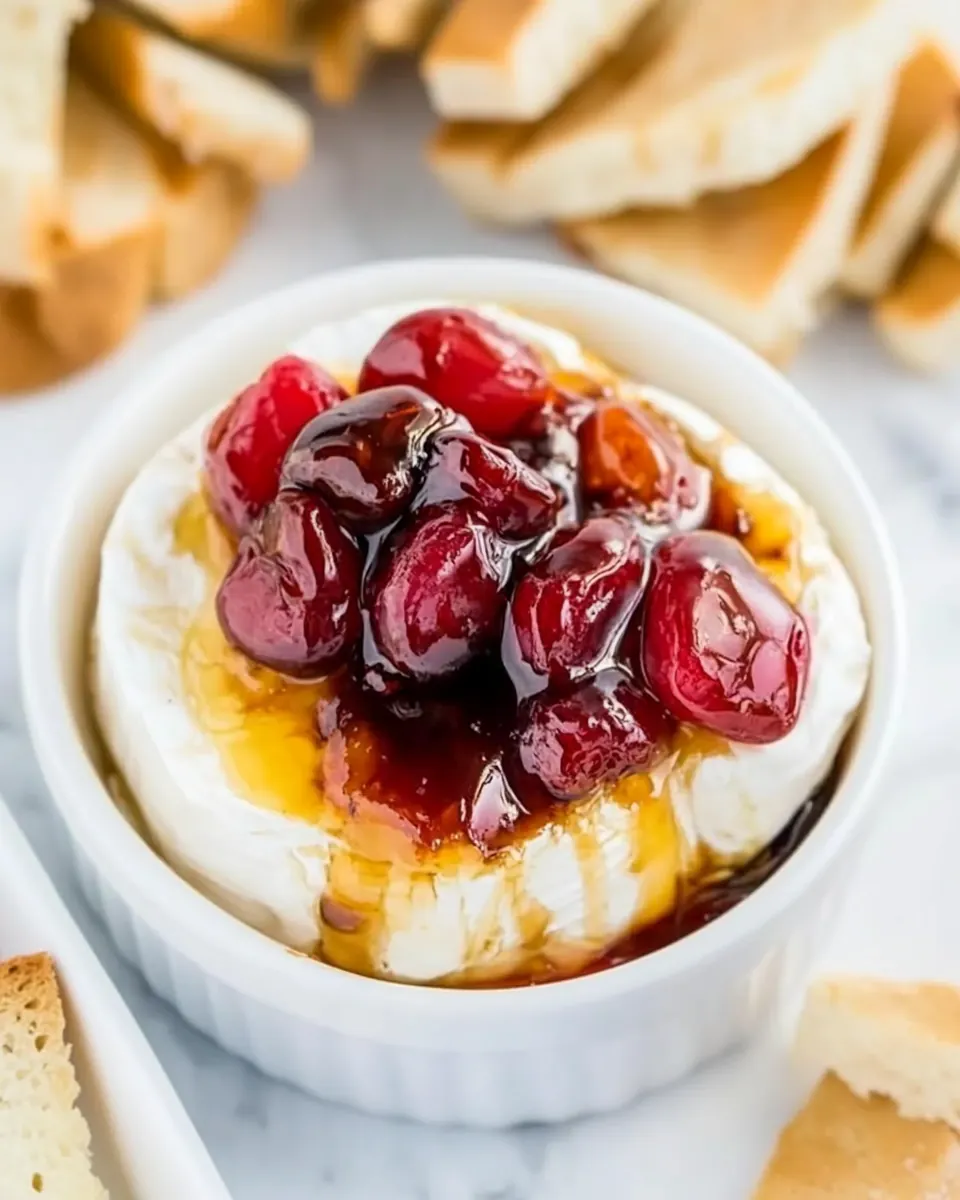
This small set of notes will help you get the most from your Baked Brie with Balsamic Cherries. Read them before assembly so you can move confidently through prepping, baking, and serving.
- Choose quality brie, an 8 ounce wheel with a supple interior will melt to a silky consistency without collapsing the rind, making serving much easier.
- Pick the right jam, a cherry preserve with visible fruit pieces holds up better in the oven and adds texture to each bite.
- Measure the vinegar, a single tablespoon of balsamic vinegar brightens the topping, but adding more can overpower the jam so taste before adjusting.
- Prepare carriers beforehand, have sliced bread or crackers on hand so you can serve the wheel while it is still warm and gooey for the best experience.
- Watch the oven closely, the final minute or two determine whether the cheese is perfectly melty or overdone, so stay nearby and check visually.
What to Serve Alongside Baked Brie with Balsamic Cherries
This section outlines pairing ideas and serving suggestions to make the most of your Baked Brie with Balsamic Cherries. Think about textures and temperature contrasts, and choose carriers that can handle warm cheese without falling apart. Serving is flexible, so pick a few options to accommodate different guest preferences.
- Toasted sliced bread — Thin slices of toasted bread add chew and structure, perfect for scooping warm brie and jam without sogginess.
- Assorted crackers — Provide a mix of sturdy and delicate crackers so guests can choose crisp or lighter bites depending on preference.
- Fresh fruit — Slices of apples or pears pair well with the sweet cherry topping and creamy brie, offering a refreshing contrast.
- Mixed nuts — Offer a small bowl of nuts for crunch; they complement the soft cheese and can be scattered around the platter for texture variety.
- Occasion suggestions — Serve this at casual get togethers, dinner parties, or as a festive starter for holiday evenings in the fall when seasonal preserves are abundant.
- Storage tips — Leftovers should be refrigerated in an airtight container up to one week, though the texture will firm up; gently rewarm before serving to restore creaminess.
- Seasonal pairing — This recipe shines in autumn when dark fruit preserves appear at markets, making it a cozy option for cooler evenings and celebratory gatherings.
FAQ
Conclusion
This recipe stands out for turning a single wheel of cheese into a communal, elegant moment that is both simple and indulgent. The interplay of warm, creamy brie and glossy cherry jam brightened by balsamic vinegar makes each bite memorable. Give it a try at your next gathering, because it requires minimal effort and delivers maximum reward. I love how it invites conversation and sharing, so set out a few carriers and enjoy the easy pleasure of warm, sticky bites with company.
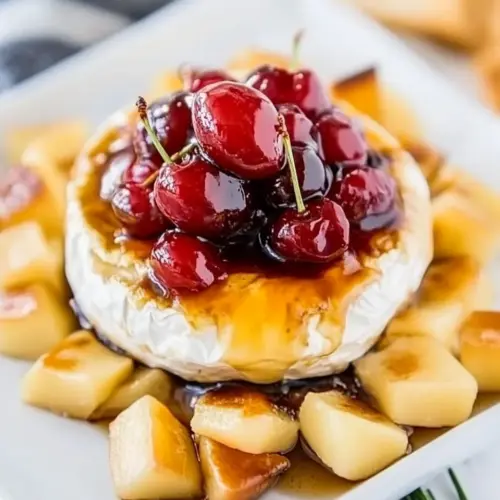
Baked Brie with Balsamic Cherries
Equipment
- Oven
- Baking Sheet
- Spatula
- Small Bowl
- Sharp Knife
Ingredients
- one 8-ounce wheel of brie Soften to a spreadable consistency and provide the rich, creamy centerpiece for the baked dish; melt gently in the oven to create a gooey interior that pairs with sweet-tart toppings and crunchy dippers.
- about 1/3 heaping cup cherry jam or preserves Add glossy sweetness and fruity depth, creating a compote-like layer that melds with the warm cheese; spoon over the top before or after baking to provide sticky, flavorful contrast.
- 1 tablespoon balsamic vinegar Brighten the jam with tangy acidity and enhance overall flavor complexity; whisk briefly into the cherry preserves to balance sweetness and add a subtle, savory note.
- bread, crackers, mini toasts, chips, etc. for serving Supply contrasting texture and a vessel for scooping, offering crunchy or chewy bites to accompany the warm cheese; arrange an assortment to suit different tastes and presentations.
Instructions
- Preheat oven to 400 F. Line a baking sheet with a Silpat or spray with cooking spray; set aside.: As you slide the rack into the oven you will hear the faint hum of the element warming and feel the kitchen air shift to a warmer, anticipation-filled tone. This temperature allows the brie to soften quickly so the center becomes luxuriously oozy while the rind keeps enough structure to hold the jam. If your oven runs hot, the exterior could brown too quickly, so consider shortening the time by a minute or positioning the rack one notch higher. A common mistake is not preheating fully which leads to uneven melting and a firmer center than desired.
- Place brie on a cutting board and slice off one end of it so that the ‘top’ is about 1/8-inch thick. Cutting through the rind takes a bit of elbow grease. Use a sharp knife, take your time, and be careful.: The sound of the Silpat smoothing onto the pan is quietly satisfying and it prevents any jam runoff from sticking and burning. Using a nonstick surface means you can keep the melted jam from forming a hard, burnt edge that would taste bitter. Take care to center the wheel so any spillover can pool harmlessly, and avoid placing it too close to the sheet's edge. Many cooks forget this and end up with jam stuck to the pan that is hard to transfer, so this step protects your presentation.
- Place base of brie in the center of prepared baking sheet with the top nearby; set aside.: The tactile resistance as the knife meets the rind tells you it is doing its job. Slicing an even, thin top gives you a neat cover that will sit back on the wheel after baking. The rind is edible and helps keep the jam contained during baking, but cutting can be firmer than you expect, so use a sharp knife and steady pressure. A typical misstep is cutting too deep into the cheese which leads to a thin interior layer being removed; go slowly and follow the rind's curve.
- In a small bowl, stir to combine the jam and balsamic vinegar. Taste and make sure you like the balance of flavors; adjust if necessary.: When you set the base down you should notice the wheel's gentle weight and the slight give of the rind. Positioning matters because you want space around the cheese for any jam that bubbles and escapes. Leaving the top nearby makes the reassembly quick after baking and preserves the appearance of a wheel. People sometimes forget to leave that space and then find their jam spilling over and sticking to the pan edge, which complicates plating.
- Spoon jam mixture over the center of brie and keep a bare 1-inch margin around the perimeter to help prevent runoff while baking.: As you stir the glossy cherry jam with the dark balsamic vinegar you will notice a fragrant lift, and the jam will loosen slightly into a spreadable texture. Taste the mixture to ensure the acidity balances the sweetness; adjust carefully since the vinegar is potent. This mixing step controls the final flavor profile, and skipping the taste test is a common error that can leave the topping too sweet or too sharp.
- Loosely place the brie ‘top’ over the jam mixture.: Spoon with a gentle hand so the jam pools in the center and does not slide over the edge. The 1-inch margin gives the cheese room to expand and reduces the chance of sticky runoff on the baking sheet. Visually, the contrast between the creamy rim and the glossy center is attractive, and the margin helps maintain that look. A common mistake is overfilling the center which leads to burning where jam contacts the sheet.
- Bake for 10 minutes, or until cheese has melted. In the final moments, jam may runoff which is okay, but keep a watchful eye to make sure it’s not burning if it’s touching the baking sheet.: Settling the thin rind top back creates a finished wheel look and holds the jam in place just enough to keep its shape while baking. The top should rest lightly, not be pressed tight, so steam can escape and the cheese can flow slightly under the lid. Putting the top on too tightly traps steam and can lead to sudden overflow when you open the oven, so allow a small gap.
- Using two large spatulas or whatever method is easiest, transfer brie to serving platter. Serve immediately with your favorite bread, crackers, etc.: During baking you'll smell warm dairy and a hint of fruit sweetness as the jam loosens and the brie softens. Watch closely in the final moments because jam may start to bubble or run slightly. The right cue is a pillowy, softened center with just a little wobble when nudged; if the rind develops dark brown spots you may have baked too long. Many people step away and return too late, resulting in overcooked cheese that has lost its creamy texture.
- In the final moments, jam may runoff which is okay, but keep a watchful eye to make sure it’s not burning if it’s touching the baking sheet: If you see small runoff, the glossy edges can caramelize pleasantly, offering deeper flavor. However burnt jam turns bitter quickly, so if it nears dark browning use a spatula to tuck it or move the wheel to a cooler rack. The sensory cue to watch is aroma; a sharp, acrid smell signals burning. A mistake here is ignoring the pan, which leads to bitter burnt spots and harder cleanup.
- Using two large spatulas or whatever method is easiest, transfer brie to serving platter: As you lift the warm wheel you will feel its gentle weight and the soft give of the center. Transfer smoothly to avoid sloshing jam; two spatulas help support the base while another hand steadies the top. Serve immediately with your choice of bread or crackers so guests can enjoy the cheese while it is warm and molten. Delaying this transfer can let the cheese firm up again, losing some of the luscious texture that makes this dish special.
- Serve immediately with your favorite bread, crackers, etc: The best moment is right after plating, when steam still rises and the jam glistens. Encourage guests to scoop or slice into the wheel, pairing warm brie with crisp carriers for contrast. If you wait too long the center firms, and the experience becomes less indulgent. A common pitfall is prepping accompaniments late, so set them out ahead to keep the moment carefree.
Notes
- Choose quality brie, an 8 ounce wheel with a supple interior will melt to a silky consistency without collapsing the rind, making serving much easier.
- Pick the right jam, a cherry preserve with visible fruit pieces holds up better in the oven and adds texture to each bite.
- Measure the vinegar, a single tablespoon of balsamic vinegar brightens the topping, but adding more can overpower the jam so taste before adjusting.
- Prepare carriers beforehand, have sliced bread or crackers on hand so you can serve the wheel while it is still warm and gooey for the best experience.
- Watch the oven closely, the final minute or two determine whether the cheese is perfectly melty or overdone, so stay nearby and check visually.