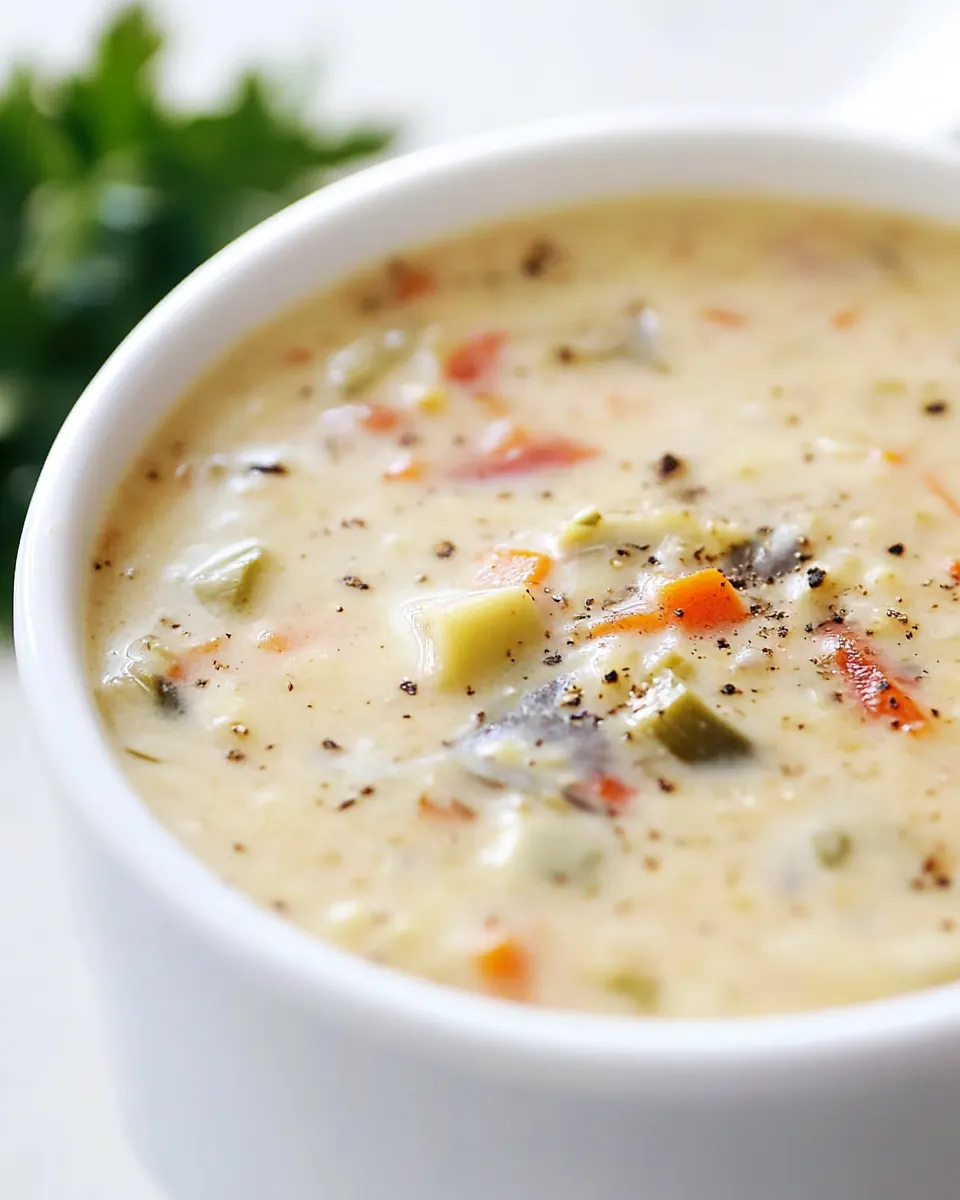
Artichoke Soup
Artichoke Soup has always been the kind of bowl I turn to when I want comfort without heaviness, a soup that feels thoughtful yet unfussy. The first time I made this, I was chasing a weekday dinner that could warm a chilly night and still pair beautifully with a simple salad and crusty bread. The aroma that filled my kitchen that evening, a gentle mix of sautéed onion and garlic with savory artichokes and earthy mushrooms, convinced me that this recipe belonged in regular rotation.
I remember stirring the pot and thinking about how good savory food can be when you take a bit of time up front. The balance of creamy milk and heavy cream with a golden roux made from butter and flour gives the soup body without feeling cloying. I love serving it with warm, buttered bread so each spoonful gets a little soak of soft crumb, and sometimes a sprig of fresh thyme brightens the bowl at the end.
Over the years I tweaked the vegetables and seasonings, learning which textures I wanted to keep chunky and which I preferred silky. The finished soup is approachable enough for a weeknight, but it also feels special when guests come over. I like that it stores well, so it doubles as both dinner and next day lunch. Every time I revisit the recipe, it brings that same sense of calm and satisfaction, and I hope it becomes one of your reliable cold night go to meals as well.
Recipe Snapshot
50 mins
30 mins
20 mins
Medium
300 kcal
American
Gluten-Free, Keto
Soups
Dutch oven or large pot, Medium pot
The Charm of This Artichoke Soup
Comforting Creaminess without Being Heavy
I adore how Artichoke Soup manages to be luxuriously creamy while staying balanced. The combination of a butter and flour roux with whole milk and heavy cream creates a velvety mouthfeel, but the texture never becomes cloying because the vegetables and artichokes provide structure and subtle bite. I find this contrast makes each spoonful satisfying and keeps the soup from feeling one note.
Layered Aromatics Build Real Flavor
What makes this recipe stand out is the time spent gently sautéing onion, carrot, celery, and mushrooms. I personally believe this step is the foundation of a memorable soup. The slow caramelization teases out natural sweetness, while the garlic and dried herbs add depth. When you taste the finished bowl, those early moments will be unmistakable.
Versatile and Pantry Friendly
I love that many of the ingredients are pantry or fridge staples. You can riff on the recipe depending on what you have: switch the type of mushrooms, use different stocks, or adjust dairy levels. It adapts well to a weeknight timeline yet remains elegant for casual dinner company.
Textures That Comfort
Artichoke Soup balances tender vegetable pieces with creamy broth, giving a pleasant bite in every spoonful. The chopped artichokes keep the bowl interesting, and finishing with a crushed herb or warm bread makes the meal feel carefully composed without fuss.
Easy to Make Ahead
One thing I always appreciate is that this soup stores beautifully. I often make a big pot ahead of time, and the flavors meld even more after a day in the fridge. Reheating is simple, and a small splash of milk or broth revives the texture, making it an excellent choice for meal prep or a comforting leftover lunch.
Main Ingredients for Artichoke Soup
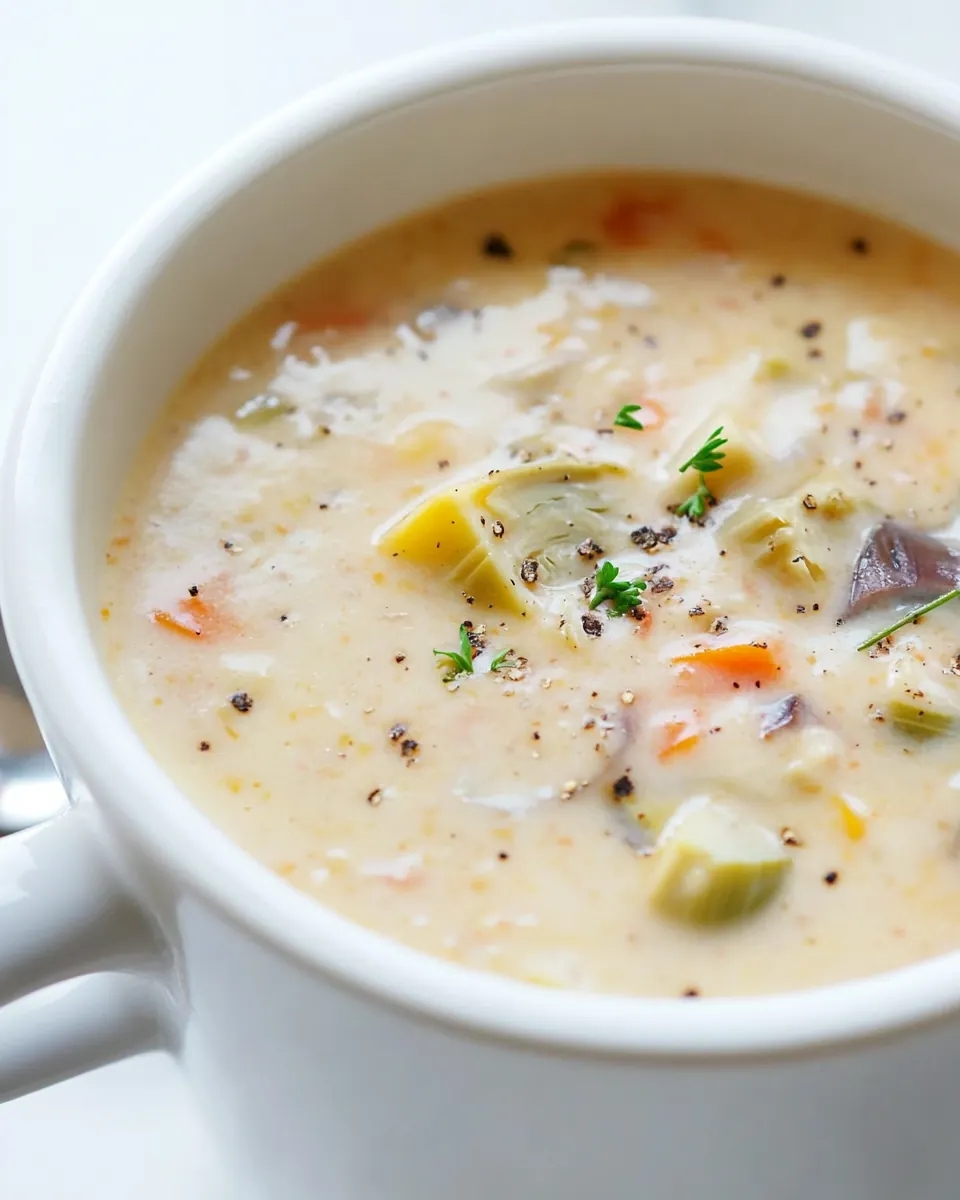
These ingredients form a harmony of savory, aromatic, and creamy notes. The vegetables build the flavor base, the artichokes add character and texture, and the dairy components create the soup body. Together, they produce a soup that is warming, substantial, and layered, with each component playing a clear role.
- 2 tablespoons olive oil: Heat oil in a pot to sauté vegetables and aromatics, contributing a fruity, slightly peppery base that helps carry flavors throughout the soup. Use early in cooking to gently soften onions, carrots, and celery without browning too quickly. Choose a good-quality extra-virgin olive oil for better aroma and mouthfeel. Avoid overheating to prevent bitterness and preserve its delicate notes.
- 8 tablespoons unsalted butter divided: Melt butter to create a rich, velvety base that adds depth and silkiness to the soup's texture. Reserve some for finishing if you want a glossy, luxurious surface and enhanced mouthfeel. Use the divided portions to control browning and to balance richness without overpowering lighter ingredients. Clarify slightly if a cleaner butter flavor is preferred.
- 2 cups finely diced yellow onion 2 onions: Finely dice yellow onion to provide sweetness and savory backbone as it softens and breaks down during sautéing. Cook until translucent to develop natural sugars that round out the soup's flavor profile. Use a consistent small dice so pieces cook evenly and integrate smoothly into the final puree. Adjust cooking time to avoid caramelization if a cleaner onion presence is desired.
- 2 cups diced carrot peeled; 4 to 5 carrots: Dice peeled carrots to add natural sweetness, color, and body to the soup while contributing nutrients and subtle earthiness. Simmer until tender so they can be pureed into the broth for a smooth, cohesive texture. Choose fresh carrots for brighter flavor and firm texture that hold up during cooking. Finely diced pieces also help the soup thicken mildly when blended.
- 2 cups finely diced celery 4 to 5 stalks: Finely dice celery to bring an aromatic, slightly bitter counterpoint that enhances overall flavor complexity. Sweat the celery with onions and carrots to build a classic mirepoix base for a balanced savory profile. Cook until softened to release its fragrant compounds without becoming fibrous. Consistent dicing ensures even softening and integration in the final puree.
- 1 (8-ounce) package mushrooms sliced 1/4-inch thick, I love baby bella: Slice mushrooms to introduce an umami-rich, earthy element that deepens the soup's savory character and adds subtle meatiness. Sauté until they release moisture and begin to brown to concentrate their flavor before adding liquid. Choose baby bella for a robust taste and firm texture that stands up to simmering. Drain or reserve any excess mushroom liquids if you want to control soup consistency.
- 1 tablespoon minced garlic: Minced garlic provides a bright, pungent aromatic that lifts and enhances other flavors when softened in the fat. Add toward the end of the initial sauté to avoid burning and developing bitterness. Use a fine mince so it disperses evenly and melds into the soup without large raw pieces. Adjust quantity to taste, keeping in mind garlic intensifies with cooking.
- Salt and pepper: Season with salt and pepper to balance and enhance natural flavors while tailoring the soup to personal preference. Add incrementally during cooking and taste frequently to avoid over-salting, especially with broth. Use freshly ground black pepper for a brighter, sharper finish. Finish with a final seasoning adjustment after blending to ensure balanced seasoning.
- 1/2 teaspoon Italian seasoning: Sprinkle Italian seasoning to introduce a blend of Mediterranean herbs that complement the artichoke's slightly floral notes. Stir in during simmering so the dried herbs rehydrate and meld into the broth. Use sparingly to avoid overwhelming subtler ingredients like milk and cream. Adjust amount based on desired herbal intensity.
- 1/2 teaspoon dried thyme: Add dried thyme to impart earthy, slightly minty undertones that pair well with artichokes and creamy bases. Incorporate early so the herb infuses the liquid and softens its flavor. Use dried thyme sparingly because it can become dominant if overused. Consider finishing with fresh thyme for brighter herbal aroma if desired.
- 1/2 teaspoon dried oregano: Include dried oregano to contribute savory, slightly bitter herbal tones that reinforce the soup's Mediterranean character. Allow it to simmer with the broth to mellow its sharpness and blend with other seasonings. Use in measured amounts to avoid a pungent or medicinal edge. Complement with fresh herbs at serving to add brightness if liked.
- 1 bay leaf (optional): Optional bay leaf adds a subtle layer of depth with slight floral and herbal complexity when simmered in the broth. Remove before blending or serving to avoid an unpleasant leathery texture and intense bitterness. Use one leaf to gently enhance background flavor without becoming noticeable on its own. Discard after cooking unless using labeled as edible in small pieces.
- 1 (32-ounce) container chicken broth 4 cups: Simmer chicken broth to form the liquid foundation that carries and concentrates all aromatics and vegetables into the soup base. Use a flavorful low-sodium broth to better control overall salt levels while providing savory depth. Bring to a gentle simmer to extract flavors from mirepoix and herbs without clouding the liquid excessively. Substitute with vegetable broth for a vegetarian version if desired.
- 13 to 14 ounces artichokes drained and coarsely chopped: Drain and coarsely chop artichokes to supply the signature vegetal, slightly nutty flavor and tender texture central to the soup. Fold them in during simmering so they soften further and release characteristic taste into the broth. Use canned or jarred artichokes for convenience, ensuring excess liquid is drained to maintain soup consistency. Pulse some in the blender for visible artichoke texture while keeping a silky soup.
- 1/2 cup flour: Whisk in flour to create a roux or slurry that thickens the soup, giving it body and a smooth, cohesive texture. Cook the flour briefly in fat to remove raw starch taste before adding liquid, ensuring a pleasant finished flavor. Use measured amounts to avoid an overly pasty consistency; adjust with more liquid if needed. Blend thoroughly to prevent lumps and achieve uniform thickness.
- 1 1/2 cups whole milk: Stir in whole milk to add creaminess, subtle sweetness, and body while keeping the soup lighter than using only cream. Heat gently to avoid scalding and separating, allowing milk to meld with the roux for a silky texture. Use whole milk for optimal mouthfeel and to carry fat-soluble flavors. Balance with cream if a richer finish is desired.
- 1/2 cup heavy cream: Fold in heavy cream to enrich the soup with luxurious thickness and a smooth, velvety finish. Add near the end of cooking over gentle heat to prevent curdling and preserve a creamy texture. Use measured amounts to enhance richness without overpowering delicate artichoke flavors. Stir to integrate fully for a cohesive, indulgent mouthfeel.
- Fresh thyme , for serving (optional): Garnish with fresh thyme for a bright, herbaceous finish that complements the soup's savory and floral notes. Sprinkle leaves just before serving to retain aromatic lift and visual appeal. Use small sprigs or pick leaves to distribute evenly without overpowering the bowl. Combine with other garnishes like cracked pepper for added contrast.
- Hearty buttered bread , for serving (optional): Serve with hearty buttered bread to provide a satisfying, textural contrast and a vessel for sopping up the creamy soup. Toast and butter the bread to add a crunchy, savory element that balances the smoothness of the soup. Choose a rustic loaf to stand up to dipping and enhance the dining experience. Offer alongside bowls for a comforting, complete meal.
Artichoke Soup Instructions

This recipe unfolds in stages so flavor builds gradually and textures remain distinct. I like to move deliberately through the sautéing, simmering, and thickening steps so each component gets the attention it deserves. Follow the sequence and pay attention to the sensory cues to know when each stage is done.
- In a large pot, heat oil and 2 tablespoons butter over medium-high heat. Once butter melts, add onions, carrots, celery, mushrooms, and garlic. Season to taste (I add 1 teaspoon each salt and pepper). Cook 8–10 minutes, stirring frequently, until vegetables soften and onions become translucent.: The aroma will be the first sign that you are starting on the right path, with the olive oil and butter giving a warm, slightly nutty scent as they meld. Listen for a gentle shimmer and very light sizzle when the onion hits the pan, which signals proper temperature. Visually, the butter should foam then settle, not brown aggressively. Why this matters, I have found, is because a properly heated fat prevents sticking and promotes even caramelization of the vegetables, building depth of flavor. A common mistake is overheating, which leads to burnt butter and bitter notes; if you see dark specks, lower the heat immediately and wipe the pan if necessary.
- Mix in Italian seasoning, dried thyme, and oregano. Stir constantly for 30 seconds.: As these hit the warm fat, the pan will start to exhale a comforting, layered scent as the vegetables release moisture. You will notice the onion soften and turn translucent, the carrot and celery losing their raw crunch, and the mushrooms releasing savory juices that mingle with the aromatics. Stirring frequently encourages even browning and helps the sugars in the vegetables to develop without burning. This step creates the aromatic backbone of the soup, and skipping or rushing it will yield a flatter final flavor. A typical pitfall is crowding the pan which causes steaming rather than sautéing, so use a large pot and keep things moving.
- Add bay leaf, broth, and artichokes. Bring mixture to a boil, then reduce heat to maintain a gentle simmer (slightly, not rapidly bubbling). Leave uncovered 15 minutes. Stir occasionally.: Here you will sense the flavors snap into sharper relief, with the salt coaxing out natural sweetness and the pepper adding a warm bite. Seasoning early and then adjusting later is important because the broth and dairy will concentrate flavors during simmering. If you add too much salt at once, the soup can become overly salty; to avoid this, add incrementally and taste after the soup has reduced slightly.
- Meanwhile, in a medium pot, melt remaining 6 tablespoons butter over medium heat. Sprinkle flour on top and whisk until smooth. Cook 1 minute, whisking constantly. Gradually add 1/2 cup milk, whisking until smooth. Continue to add remaining milk and then cream, whisking constantly. Cook until mixture thickens enough to leave a clear tract on a wooden spoon. Remove from heat.: The sound will shift from an energetic sizzle to a softer, steadier murmur as moisture releases and the vegetables give up their structure. Look for the onion to be glossy and no longer opaque, and for the carrot to yield to a knife when tested. This timeframe allows the vegetables to concentrate their flavors without breaking down completely, which keeps the soup texturally interesting. A common error is undercooking, leaving raw vegetal notes, or overcooking, which can make the texture mushy; aim for tender but intact pieces.
- Pour creamy milk mixture into the large pot and stir. Cook until soup slightly thickens. Taste and adjust seasonings as needed. If soup is too thick, add a bit more milk to reach your desired consistency. Serve hot. Optionally serve with fresh herbs and hearty buttered bread!: When you add the dried herbs, a fragrant, savory lift occurs immediately; they will toast slightly in the residual heat and release oils that perfume the pot. Stirring for about 30 seconds helps integrate them without allowing them to char. This layering deepens the herbal profile, balancing the creamy finish. Adding herbs too early on high heat risks burning them and introducing bitterness, so keep the heat moderate.
- Stir constantly for 30 seconds: During this short period you will notice the scent of the herbs become more pronounced and harmonious with the vegetables. The motion also ensures even distribution so no single bite is overwhelmed by concentrated seasoning. The purpose is to bloom the herbs and marry them into the savory base. A common oversight is walking away and letting the herbs stick to the pan, which can create smoky or off flavors.
- Add bay leaf, broth, and artichokes: Pouring in the chicken broth will deglaze the pot, lifting the caramelized bits stuck to the bottom and infusing the liquid with concentrated flavor. The artichokes join the mix and offer a briny, tender counterpoint to the softened vegetables. Visually, you will see the pot go from thick and glossy to a more fluid, aromatic stew. The bay leaf adds subtle background notes that emerge during simmering. Forgetting to deglaze leaves flavor on the pan, so scrape up those bits as you add the broth.
- Bring mixture to a boil, then reduce heat to maintain a gentle simmer slightly not rapidly bubbling: Watch for bubbles to rise steadily but not aggressively, that controlled simmer helps reduce the broth slightly while letting flavors concentrate without over evaporating liquids. The steam should rise gently, and occasional small bubbles will break the surface. A vigorous boil can toughen vegetables and cloud the broth, so lowering the heat is key to preserving texture and clarity.
- Leave uncovered 15 minutes: During this uncovered simmer, aromatic compounds meld and the artichokes soften further. You will notice the scent deepen and the broth take on a richer tone. Stir occasionally to keep ingredients moving and prevent sticking. This period allows flavors to integrate fully; skipping it shortchanges development and results in a soup that tastes assembled rather than harmonious.
- Stir occasionally: Gentle stirring distributes heat evenly and keeps ingredients suspended in the broth. When you stir, watch how the vegetables move and how the liquid clings to a wooden spoon; these cues tell you the soup is approaching the right consistency. Over stirring can break up vegetables too much, while too little stirring risks hotspots that stick or burn.
- Meanwhile in a medium pot melt remaining 6 tablespoons butter over medium heat: The smell of melted butter entering the air signals the start of the creamy component. It should foam and then calm, indicating water content has reduced. This step matters because the quality of your roux impacts the smoothness of the final soup. If the butter browns quickly, the heat is too high and the roux can develop a nutty but unintended flavor; lower the heat to maintain control.
- Sprinkle flour on top and whisk until smooth: As you add the flour , the mixture will thicken and become paste like; whisk vigorously to remove lumps and cook the raw flavor out. Visually it will transition from glossy to slightly matte. A smooth roux ensures a lump free final texture, and undercooked flour will taste pasty. A pitfall is adding milk too quickly which causes clumping; keep whisking and add liquids gradually.
- Cook 1 minute whisking constantly: Cooking the roux briefly removes the raw starchy edge while still keeping it light and able to thicken. You will see the aroma change to a toasted, bready note which is desirable. Over cooking can darken the roux and alter the flavor profile, so time this carefully.
- Gradually add 1/2 cup milk whisking until smooth: Adding a small amount of milk first tempers the roux and creates a smooth slurry. The sound becomes softer, and the mixture will thin into a creamier sauce. This step reduces the risk of lumps and ensures even incorporation. Rushing this step often results in grainy texture, so take your time and whisk continuously.
- Continue to add remaining milk and then cream whisking constantly: As you pour the rest of the milk and then the heavy cream , the mixture will become silkier and take on a glossy sheen. The consistency should become pourable but still coat the back of a spoon. This gradual approach controls texture and avoids separation. A common mistake is overheating dairy which can cause curdling; keep the temperature moderate.
- Cook until mixture thickens enough to leave a clear tract on a wooden spoon: You will see a visible line drawn through the sauce when it is ready, which is the classic sign of a properly thickened béchamel style mixture. The scent will be rich and creamy, without floury notes. If it does not leave a track, continue to cook gently; if it becomes too thick, whisk in a splash of milk to loosen it.
- Remove from heat: Taking the pot off the heat prevents over thickening and protects the dairy from overheating. The warmth will carry the cooking a bit further, so removing at the right moment ensures the sauce remains silky. Leaving it on residual heat can concentrate and possibly scorch the mixture.
- Pour creamy milk mixture into the large pot and stir: When you combine the creamy roux with the vegetable and artichoke base, you will hear a soft simmer and see the soup gain body almost immediately. The aroma becomes fuller and rounder, and the textures begin to harmonize. Stirring ensures even distribution so each spoonful has both tender pieces and creamy broth. If you add the cream too quickly when the base is very hot, it can break, so temper by stirring continuously.
- Cook until soup slightly thickens: As the combined soup heats, it will reduce just enough that the broth clings to a spoon and the flavors concentrate. The steam will carry a balanced bouquet of herbs, vegetables, and dairy. This short final simmer melds everything, and cutting it short will leave flavors underdeveloped while over reducing can make it too thick.
- Taste and adjust seasonings as needed: Now is the time to fine tune with additional salt or pepper . Taste for balance, considering that the broth and dairy will have changed since the initial seasoning. A common mistake is to over salt at the start and not reassess after reduction, so add in small increments and taste between additions.
- If soup is too thick add a bit more milk to reach your desired consistency: Adjusting the texture at this point is simple, just stir in a splash of milk until the mouthfeel is to your liking. This keeps the soup velvety and prevents it from feeling dense. Avoid adding cold liquid directly in large amounts; bring the milk closer to room temperature or warm it slightly to preserve smoothness.
- Serve hot: Ladle into bowls while steaming and garnish if desired with fresh thyme . The steam will carry the aroma and invite immediate serving. Serve alongside warm, buttered bread for an ideal pairing. Serving too late means the texture cools and firms, so enjoy promptly for the best experience.
- Optionally serve with fresh herbs and hearty buttered bread: A final sprig of fresh thyme adds brightness and a contrast of texture, while a slice of warm, buttered bread creates a satisfying bite. These finishing touches elevate the dish without overpowering it. The main mistake here is to over garnish which masks the soup's delicate balance, so use sparingly.
How to Switch It Up

I like small tweaks that honor the original while offering variety for different occasions. The tips below are practical changes, each explained so you can choose with confidence based on what you have or who you are cooking for.
- Boost mushroom variety Swap baby bella for a mix of cremini and shiitake to add a deeper, more complex umami profile that complements the artichokes.
- Make it lighter Reduce the heavy cream by half and add extra milk to keep the texture creamy but lower the richness for a lighter bowl.
- Herb forward Finish with a handful of chopped fresh thyme or parsley to add brightness and a fresh contrast to the creamy base.
- Broth swap Use a low sodium or homemade chicken broth so you control the final salt level and can season more precisely at the end.
- Texture variation Reserve some sautéed vegetables before blending to stir back in at the end, giving a mix of silky and chunky textures in each serving.
Serving Options for Artichoke Soup
This soup is versatile across settings, from a cozy family dinner to a light luncheon. Below are thoughtful serving ideas, pairings, and storage advice to help you plan occasions and make the most of leftovers.
- Casual weeknight dinner Serve bowls of Artichoke Soup with slices of warm, hearty buttered bread for an easy, comforting meal that feels satisfying without fuss.
- Elegant starter for guests Spoon the soup into small bowls or cups and top with a sprig of fresh thyme for a refined first course before a main meal.
- Lunch pairing Offer the soup alongside a crisp green salad dressed simply, creating a balanced midday meal that highlights both freshness and comfort.
- Seasonal occasions This is perfect for cold weather gatherings in winter, when its warming, creamy nature is most appreciated; it also stores well for holiday meal prep.
- Storage tips Cool the soup to room temperature, then refrigerate in airtight containers for three to five days. For longer storage, freeze in portioned containers for up to two to three months and thaw overnight before reheating.
- Reheating advice Reheat gently on the stove over low heat, stirring and adding a splash of milk or broth if the soup thickens, to restore a silky texture and even temperature throughout.
- Presentation idea For a rustic touch, serve in warmed bowls and add a drizzle of melted butter or a few grinds of pepper to finish, keeping the presentation simple and inviting.
FAQ
Conclusion
This Artichoke Soup shines because of its layered sautéed vegetables, tender artichokes, and a silky dairy base that together create a comforting yet balanced bowl. I encourage you to give it a try, savoring the aromatic moment when the vegetables hit the pan, and enjoy how simple techniques transform humble ingredients into something special. It is an adaptable soup that stores well and suits weeknight dinners as easily as small gatherings, so make a pot and see how it becomes a favorite in your rotation.

Artichoke Soup
Equipment
- Dutch oven or large pot
- Medium Pot
Ingredients
- 2 tablespoons olive oil Heat oil in a pot to sauté vegetables and aromatics, contributing a fruity, slightly peppery base that helps carry flavors throughout the soup. Use early in cooking to gently soften onions, carrots, and celery without browning too quickly. Choose a good-quality extra-virgin olive oil for better aroma and mouthfeel. Avoid overheating to prevent bitterness and preserve its delicate notes.
- 8 tablespoons unsalted butter divided Melt butter to create a rich, velvety base that adds depth and silkiness to the soup's texture. Reserve some for finishing if you want a glossy, luxurious surface and enhanced mouthfeel. Use the divided portions to control browning and to balance richness without overpowering lighter ingredients. Clarify slightly if a cleaner butter flavor is preferred.
- 2 cups finely diced yellow onion 2 onions Finely dice yellow onion to provide sweetness and savory backbone as it softens and breaks down during sautéing. Cook until translucent to develop natural sugars that round out the soup's flavor profile. Use a consistent small dice so pieces cook evenly and integrate smoothly into the final puree. Adjust cooking time to avoid caramelization if a cleaner onion presence is desired.
- 2 cups diced carrot peeled; 4 to 5 carrots Dice peeled carrots to add natural sweetness, color, and body to the soup while contributing nutrients and subtle earthiness. Simmer until tender so they can be pureed into the broth for a smooth, cohesive texture. Choose fresh carrots for brighter flavor and firm texture that hold up during cooking. Finely diced pieces also help the soup thicken mildly when blended.
- 2 cups finely diced celery 4 to 5 stalks Finely dice celery to bring an aromatic, slightly bitter counterpoint that enhances overall flavor complexity. Sweat the celery with onions and carrots to build a classic mirepoix base for a balanced savory profile. Cook until softened to release its fragrant compounds without becoming fibrous. Consistent dicing ensures even softening and integration in the final puree.
- 1 (8-ounce) package mushrooms sliced 1/4-inch thick, I love baby bella Slice mushrooms to introduce an umami-rich, earthy element that deepens the soup's savory character and adds subtle meatiness. Sauté until they release moisture and begin to brown to concentrate their flavor before adding liquid. Choose baby bella for a robust taste and firm texture that stands up to simmering. Drain or reserve any excess mushroom liquids if you want to control soup consistency.
- 1 tablespoon minced garlic Minced garlic provides a bright, pungent aromatic that lifts and enhances other flavors when softened in the fat. Add toward the end of the initial sauté to avoid burning and developing bitterness. Use a fine mince so it disperses evenly and melds into the soup without large raw pieces. Adjust quantity to taste, keeping in mind garlic intensifies with cooking.
- Salt and pepper Season with salt and pepper to balance and enhance natural flavors while tailoring the soup to personal preference. Add incrementally during cooking and taste frequently to avoid over-salting, especially with broth. Use freshly ground black pepper for a brighter, sharper finish. Finish with a final seasoning adjustment after blending to ensure balanced seasoning.
- 1/2 teaspoon Italian seasoning Sprinkle Italian seasoning to introduce a blend of Mediterranean herbs that complement the artichoke's slightly floral notes. Stir in during simmering so the dried herbs rehydrate and meld into the broth. Use sparingly to avoid overwhelming subtler ingredients like milk and cream. Adjust amount based on desired herbal intensity.
- 1/2 teaspoon dried thyme Add dried thyme to impart earthy, slightly minty undertones that pair well with artichokes and creamy bases. Incorporate early so the herb infuses the liquid and softens its flavor. Use dried thyme sparingly because it can become dominant if overused. Consider finishing with fresh thyme for brighter herbal aroma if desired.
- 1/2 teaspoon dried oregano Include dried oregano to contribute savory, slightly bitter herbal tones that reinforce the soup's Mediterranean character. Allow it to simmer with the broth to mellow its sharpness and blend with other seasonings. Use in measured amounts to avoid a pungent or medicinal edge. Complement with fresh herbs at serving to add brightness if liked.
- 1 bay leaf optional Optional bay leaf adds a subtle layer of depth with slight floral and herbal complexity when simmered in the broth. Remove before blending or serving to avoid an unpleasant leathery texture and intense bitterness. Use one leaf to gently enhance background flavor without becoming noticeable on its own. Discard after cooking unless using labeled as edible in small pieces.
- 1 (32-ounce) container chicken broth 4 cups Simmer chicken broth to form the liquid foundation that carries and concentrates all aromatics and vegetables into the soup base. Use a flavorful low-sodium broth to better control overall salt levels while providing savory depth. Bring to a gentle simmer to extract flavors from mirepoix and herbs without clouding the liquid excessively. Substitute with vegetable broth for a vegetarian version if desired.
- 13 to 14 ounces artichokes drained and coarsely chopped Drain and coarsely chop artichokes to supply the signature vegetal, slightly nutty flavor and tender texture central to the soup. Fold them in during simmering so they soften further and release characteristic taste into the broth. Use canned or jarred artichokes for convenience, ensuring excess liquid is drained to maintain soup consistency. Pulse some in the blender for visible artichoke texture while keeping a silky soup.
- 1/2 cup flour Whisk in flour to create a roux or slurry that thickens the soup, giving it body and a smooth, cohesive texture. Cook the flour briefly in fat to remove raw starch taste before adding liquid, ensuring a pleasant finished flavor. Use measured amounts to avoid an overly pasty consistency; adjust with more liquid if needed. Blend thoroughly to prevent lumps and achieve uniform thickness.
- 1 -1/2 cups whole milk Stir in whole milk to add creaminess, subtle sweetness, and body while keeping the soup lighter than using only cream. Heat gently to avoid scalding and separating, allowing milk to meld with the roux for a silky texture. Use whole milk for optimal mouthfeel and to carry fat-soluble flavors. Balance with cream if a richer finish is desired.
- 1/2 cup heavy cream Fold in heavy cream to enrich the soup with luxurious thickness and a smooth, velvety finish. Add near the end of cooking over gentle heat to prevent curdling and preserve a creamy texture. Use measured amounts to enhance richness without overpowering delicate artichoke flavors. Stir to integrate fully for a cohesive, indulgent mouthfeel.
- Fresh thyme optional, for serving Garnish with fresh thyme for a bright, herbaceous finish that complements the soup's savory and floral notes. Sprinkle leaves just before serving to retain aromatic lift and visual appeal. Use small sprigs or pick leaves to distribute evenly without overpowering the bowl. Combine with other garnishes like cracked pepper for added contrast.
- Hearty buttered bread optional, for serving Serve with hearty buttered bread to provide a satisfying, textural contrast and a vessel for sopping up the creamy soup. Toast and butter the bread to add a crunchy, savory element that balances the smoothness of the soup. Choose a rustic loaf to stand up to dipping and enhance the dining experience. Offer alongside bowls for a comforting, complete meal.
Instructions
- In a large pot, heat oil and 2 tablespoons butter over medium-high heat. Once butter melts, add onions, carrots, celery, mushrooms, and garlic. Season to taste (I add 1 teaspoon each salt and pepper). Cook 8–10 minutes, stirring frequently, until vegetables soften and onions become translucent.: The aroma will be the first sign that you are starting on the right path, with the olive oil and butter giving a warm, slightly nutty scent as they meld. Listen for a gentle shimmer and very light sizzle when the onion hits the pan, which signals proper temperature. Visually, the butter should foam then settle, not brown aggressively. Why this matters, I have found, is because a properly heated fat prevents sticking and promotes even caramelization of the vegetables, building depth of flavor. A common mistake is overheating, which leads to burnt butter and bitter notes; if you see dark specks, lower the heat immediately and wipe the pan if necessary.
- Mix in Italian seasoning, dried thyme, and oregano. Stir constantly for 30 seconds.: As these hit the warm fat, the pan will start to exhale a comforting, layered scent as the vegetables release moisture. You will notice the onion soften and turn translucent, the carrot and celery losing their raw crunch, and the mushrooms releasing savory juices that mingle with the aromatics. Stirring frequently encourages even browning and helps the sugars in the vegetables to develop without burning. This step creates the aromatic backbone of the soup, and skipping or rushing it will yield a flatter final flavor. A typical pitfall is crowding the pan which causes steaming rather than sautéing, so use a large pot and keep things moving.
- Add bay leaf, broth, and artichokes. Bring mixture to a boil, then reduce heat to maintain a gentle simmer (slightly, not rapidly bubbling). Leave uncovered 15 minutes. Stir occasionally.: Here you will sense the flavors snap into sharper relief, with the salt coaxing out natural sweetness and the pepper adding a warm bite. Seasoning early and then adjusting later is important because the broth and dairy will concentrate flavors during simmering. If you add too much salt at once, the soup can become overly salty; to avoid this, add incrementally and taste after the soup has reduced slightly.
- Meanwhile, in a medium pot, melt remaining 6 tablespoons butter over medium heat. Sprinkle flour on top and whisk until smooth. Cook 1 minute, whisking constantly. Gradually add 1/2 cup milk, whisking until smooth. Continue to add remaining milk and then cream, whisking constantly. Cook until mixture thickens enough to leave a clear tract on a wooden spoon. Remove from heat.: The sound will shift from an energetic sizzle to a softer, steadier murmur as moisture releases and the vegetables give up their structure. Look for the onion to be glossy and no longer opaque, and for the carrot to yield to a knife when tested. This timeframe allows the vegetables to concentrate their flavors without breaking down completely, which keeps the soup texturally interesting. A common error is undercooking, leaving raw vegetal notes, or overcooking, which can make the texture mushy; aim for tender but intact pieces.
- Pour creamy milk mixture into the large pot and stir. Cook until soup slightly thickens. Taste and adjust seasonings as needed. If soup is too thick, add a bit more milk to reach your desired consistency. Serve hot. Optionally serve with fresh herbs and hearty buttered bread!: When you add the dried herbs, a fragrant, savory lift occurs immediately; they will toast slightly in the residual heat and release oils that perfume the pot. Stirring for about 30 seconds helps integrate them without allowing them to char. This layering deepens the herbal profile, balancing the creamy finish. Adding herbs too early on high heat risks burning them and introducing bitterness, so keep the heat moderate.
- Stir constantly for 30 seconds: During this short period you will notice the scent of the herbs become more pronounced and harmonious with the vegetables. The motion also ensures even distribution so no single bite is overwhelmed by concentrated seasoning. The purpose is to bloom the herbs and marry them into the savory base. A common oversight is walking away and letting the herbs stick to the pan, which can create smoky or off flavors.
- Add bay leaf, broth, and artichokes: Pouring in the chicken broth will deglaze the pot, lifting the caramelized bits stuck to the bottom and infusing the liquid with concentrated flavor. The artichokes join the mix and offer a briny, tender counterpoint to the softened vegetables. Visually, you will see the pot go from thick and glossy to a more fluid, aromatic stew. The bay leaf adds subtle background notes that emerge during simmering. Forgetting to deglaze leaves flavor on the pan, so scrape up those bits as you add the broth.
- Bring mixture to a boil, then reduce heat to maintain a gentle simmer slightly not rapidly bubbling: Watch for bubbles to rise steadily but not aggressively, that controlled simmer helps reduce the broth slightly while letting flavors concentrate without over evaporating liquids. The steam should rise gently, and occasional small bubbles will break the surface. A vigorous boil can toughen vegetables and cloud the broth, so lowering the heat is key to preserving texture and clarity.
- Leave uncovered 15 minutes: During this uncovered simmer, aromatic compounds meld and the artichokes soften further. You will notice the scent deepen and the broth take on a richer tone. Stir occasionally to keep ingredients moving and prevent sticking. This period allows flavors to integrate fully; skipping it shortchanges development and results in a soup that tastes assembled rather than harmonious.
- Stir occasionally: Gentle stirring distributes heat evenly and keeps ingredients suspended in the broth. When you stir, watch how the vegetables move and how the liquid clings to a wooden spoon; these cues tell you the soup is approaching the right consistency. Over stirring can break up vegetables too much, while too little stirring risks hotspots that stick or burn.
- Meanwhile in a medium pot melt remaining 6 tablespoons butter over medium heat: The smell of melted butter entering the air signals the start of the creamy component. It should foam and then calm, indicating water content has reduced. This step matters because the quality of your roux impacts the smoothness of the final soup. If the butter browns quickly, the heat is too high and the roux can develop a nutty but unintended flavor; lower the heat to maintain control.
- Sprinkle flour on top and whisk until smooth: As you add the flour , the mixture will thicken and become paste like; whisk vigorously to remove lumps and cook the raw flavor out. Visually it will transition from glossy to slightly matte. A smooth roux ensures a lump free final texture, and undercooked flour will taste pasty. A pitfall is adding milk too quickly which causes clumping; keep whisking and add liquids gradually.
- Cook 1 minute whisking constantly: Cooking the roux briefly removes the raw starchy edge while still keeping it light and able to thicken. You will see the aroma change to a toasted, bready note which is desirable. Over cooking can darken the roux and alter the flavor profile, so time this carefully.
- Gradually add 1/2 cup milk whisking until smooth: Adding a small amount of milk first tempers the roux and creates a smooth slurry. The sound becomes softer, and the mixture will thin into a creamier sauce. This step reduces the risk of lumps and ensures even incorporation. Rushing this step often results in grainy texture, so take your time and whisk continuously.
- Continue to add remaining milk and then cream whisking constantly: As you pour the rest of the milk and then the heavy cream , the mixture will become silkier and take on a glossy sheen. The consistency should become pourable but still coat the back of a spoon. This gradual approach controls texture and avoids separation. A common mistake is overheating dairy which can cause curdling; keep the temperature moderate.
- Cook until mixture thickens enough to leave a clear tract on a wooden spoon: You will see a visible line drawn through the sauce when it is ready, which is the classic sign of a properly thickened béchamel style mixture. The scent will be rich and creamy, without floury notes. If it does not leave a track, continue to cook gently; if it becomes too thick, whisk in a splash of milk to loosen it.
- Remove from heat: Taking the pot off the heat prevents over thickening and protects the dairy from overheating. The warmth will carry the cooking a bit further, so removing at the right moment ensures the sauce remains silky. Leaving it on residual heat can concentrate and possibly scorch the mixture.
- Pour creamy milk mixture into the large pot and stir: When you combine the creamy roux with the vegetable and artichoke base, you will hear a soft simmer and see the soup gain body almost immediately. The aroma becomes fuller and rounder, and the textures begin to harmonize. Stirring ensures even distribution so each spoonful has both tender pieces and creamy broth. If you add the cream too quickly when the base is very hot, it can break, so temper by stirring continuously.
- Cook until soup slightly thickens: As the combined soup heats, it will reduce just enough that the broth clings to a spoon and the flavors concentrate. The steam will carry a balanced bouquet of herbs, vegetables, and dairy. This short final simmer melds everything, and cutting it short will leave flavors underdeveloped while over reducing can make it too thick.
- Taste and adjust seasonings as needed: Now is the time to fine tune with additional salt or pepper . Taste for balance, considering that the broth and dairy will have changed since the initial seasoning. A common mistake is to over salt at the start and not reassess after reduction, so add in small increments and taste between additions.
- If soup is too thick add a bit more milk to reach your desired consistency: Adjusting the texture at this point is simple, just stir in a splash of milk until the mouthfeel is to your liking. This keeps the soup velvety and prevents it from feeling dense. Avoid adding cold liquid directly in large amounts; bring the milk closer to room temperature or warm it slightly to preserve smoothness.
- Serve hot: Ladle into bowls while steaming and garnish if desired with fresh thyme . The steam will carry the aroma and invite immediate serving. Serve alongside warm, buttered bread for an ideal pairing. Serving too late means the texture cools and firms, so enjoy promptly for the best experience.
- Optionally serve with fresh herbs and hearty buttered bread: A final sprig of fresh thyme adds brightness and a contrast of texture, while a slice of warm, buttered bread creates a satisfying bite. These finishing touches elevate the dish without overpowering it. The main mistake here is to over garnish which masks the soup's delicate balance, so use sparingly.
Notes
- Boost mushroom variety Swap baby bella for a mix of cremini and shiitake to add a deeper, more complex umami profile that complements the artichokes.
- Make it lighter Reduce the heavy cream by half and add extra milk to keep the texture creamy but lower the richness for a lighter bowl.
- Herb forward Finish with a handful of chopped fresh thyme or parsley to add brightness and a fresh contrast to the creamy base.
- Broth swap Use a low sodium or homemade chicken broth so you control the final salt level and can season more precisely at the end.
- Texture variation Reserve some sautéed vegetables before blending to stir back in at the end, giving a mix of silky and chunky textures in each serving.