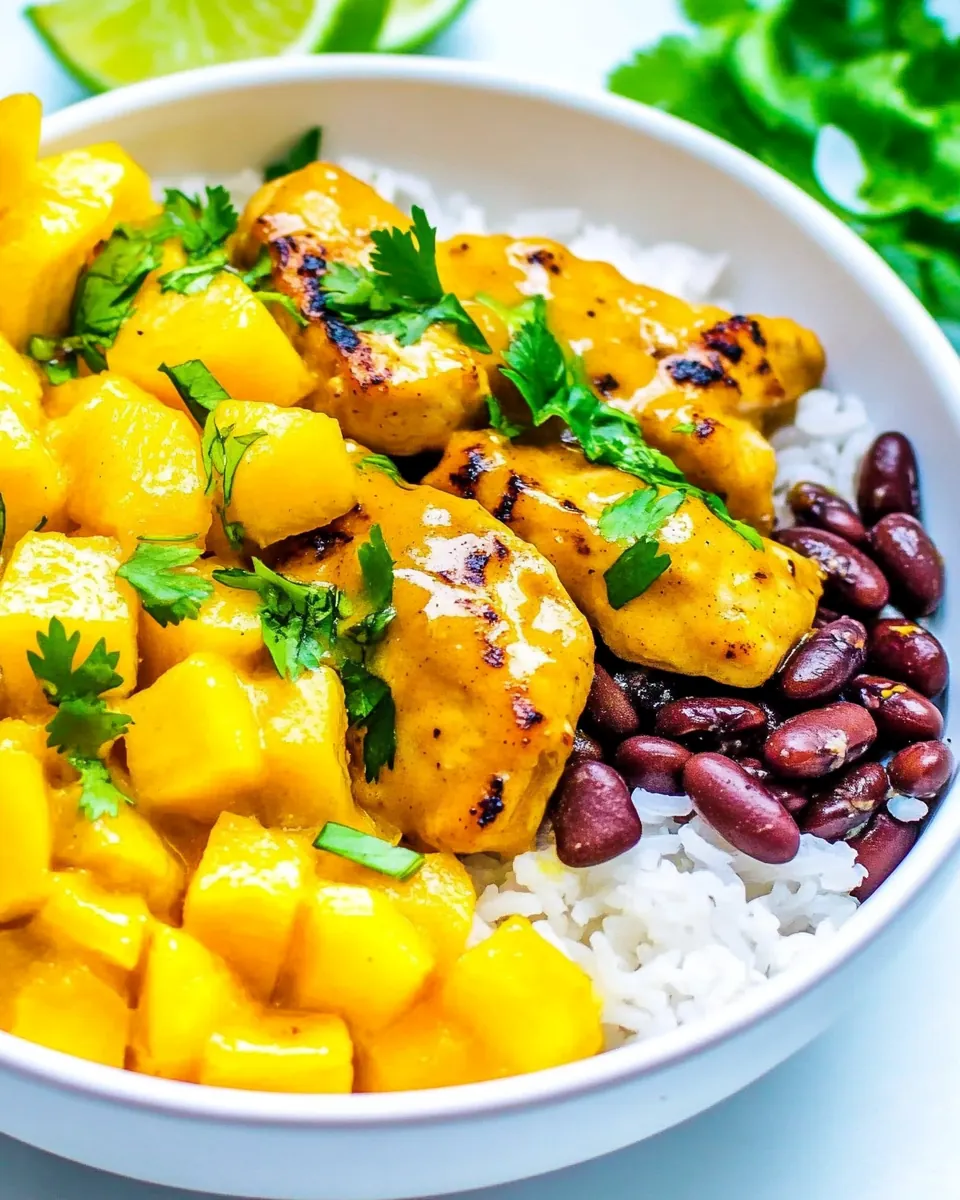
15 Minute Mango Lime Chicken with Rice and Beans
15 Minute Mango Lime Chicken with Rice and Beans came into my weeknight rotation the minute I needed something bright and fast that still felt like a proper meal. I remember one evening, tired from a long day, staring at the fridge and a single ripe mango. I wanted comfort without fuss, and this combination of juicy mango, zippy lime juice, and tender chicken felt like sunshine on a plate. It turned out to be exactly what we needed, an easy lift for ordinary evenings.
That first batch filled the kitchen with a sweet citrus scent that promised more than takeout, and the whole family agreed it was keeper worthy. I like how the sauce is versatile, doubling as a marinade, a pan glaze, or a finishing drizzle for extra flair. It is the kind of recipe I make when I want bold flavors without spending ages at the stove, and it reliably earns second helpings.
Recipe Snapshot
15 mins
5 mins
10 mins
Easy
400 kcal
Mexican
Gluten-Free, Low FODMAP
Dinner
Large skillet, Food processor or high speed blender
The Best Thing About This 15 Minute Mango Lime Chicken with Rice and Beans
Bright, layered flavor that feels gourmet
I love how the 15 Minute Mango Lime Chicken with Rice and Beans balances sweet and tangy, without anything tasting masked or muddled. The mango puree creates a silky, fruit forward sauce that clings to each bite of chicken. When I spoon it over the rice and beans, the textures and temperatures play off one another, making every forkful interesting.
Speed without sacrificing technique
We all have evenings where time is short. This recipe is built to be quick, because the sauce comes together in the blender while you get the chicken on the skillet. I appreciate recipes that respect seconds, they let me savor a real meal instead of scrambling through dinner prep.
Flexible and forgiving
I often tweak how much lime juice or brown sugar I add depending on the mango sweetness. The recipe invites small adjustments, so you can nudge it toward tangier or sweeter without breaking anything. That forgiving nature makes it perfect for cooks of all levels, and I always feel comfortable bringing it to a casual weeknight gathering.
Minimal equipment and easy pantry ingredients
You do not need a long list of tools or pantry items to get a delicious dinner. The sauce is mostly mango, a touch of olive oil, and seasoning. The rest relies on simple, comforting staples like pre cooked rice and canned black beans, so it’s also a low stress, low waste dinner option.
Great make ahead potential
I like making extra sauce and storing it for lunches or to spoon over roasted vegetables another day. The flavors deepen slightly overnight, and having a jar of that vibrant sauce in the fridge feels like a tiny culinary win that makes busy days taste better.
Ingredients Overview for 15 Minute Mango Lime Chicken with Rice and Beans
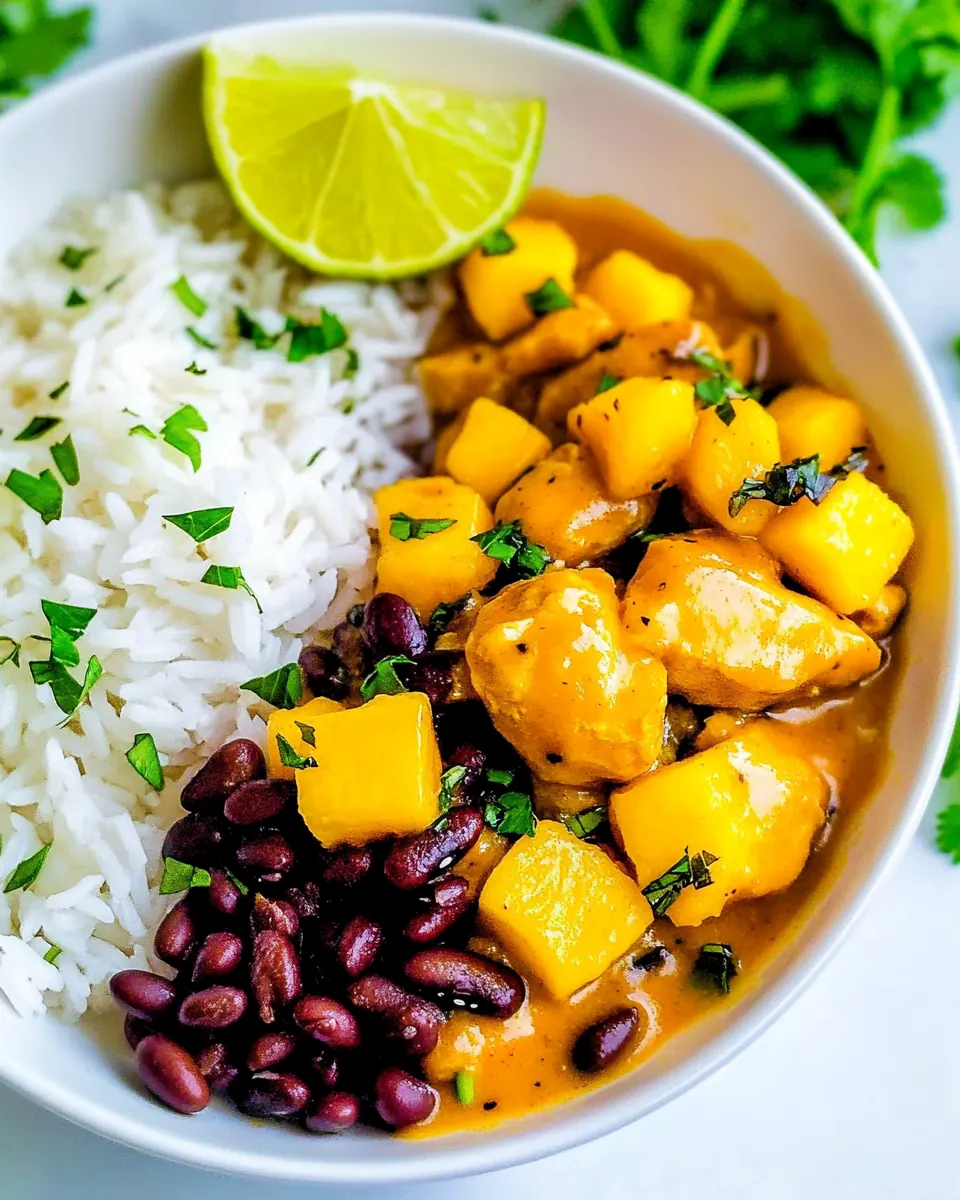
This ingredient list is all about contrast and balance. The mango brings sweetness and body to the sauce, while the lime juice cuts through with bright acidity. The chicken provides a neutral, hearty canvas, and the precooked rice and canned black beans turn this into a complete, satisfying bowl. The olive oil helps emulsify the sauce and carry flavors, and small seasonings like garlic, salt, and black pepper round everything out.
- one large or extra-large fresh mango, peeled and diced into chunks or about 1 cup frozen mango, thawed and drained: Peeled and diced into chunks to provide sweet, tropical fruitiness and a bright, juicy contrast that balances savory chicken and tangy lime; can be fresh or thawed frozen for convenience. Adds texture and natural sweetness to the sauce or salsa, softening when lightly mashed or blended. Complements spicy and acidic elements while contributing vibrant color to the finished dish.
- about 6 tablespoons olive oil, divided or as needed: Used divided to both lightly dress the mango mixture and to cook and sear the chicken, supplying a neutral, fruity base that helps carry flavors and prevents sticking. Adds mouthfeel and richness without overpowering other ingredients. Choose quality olive oil for better aroma and smoother finish.
- 2 to 3 tablespoons lime juice: Squeezed for bright acidity to brighten the mango and chicken, cutting through richness and balancing sweetness from the mango and brown sugar. Enhances overall flavor and helps tenderize chicken slightly when combined with oil and seasonings. Adjust amount to taste for a fresher, zestier profile.
- 1 tablespoon light brown sugar, packed: Packed to provide a touch of caramelized sweetness that rounds out the mango and lime interplay while amplifying flavor complexity. Helps counterbalance acidity and heat, producing a more rounded sauce or glaze. Dissolves easily when whisked into liquids for even distribution.
- 1 or 2 cloves garlic, peeled: Minced or crushed to impart savory aromatics and depth, elevating the overall savory profile of the dish with a pungent, garlicky note. Works well blended into the mango–lime dressing or briefly sautéed with the chicken for integrated flavor. Use fresh cloves for the most pronounced garlic character.
- 1 teaspoon kosher salt, or to taste: Dissolved to season the mango mixture and the chicken, enhancing all flavors and making sweet, acidic, and spicy elements pop. Use kosher salt to control seasoning levels and to help proteins retain moisture during cooking. Adjust to personal taste preferences.
- 1/2 teaspoon freshly ground black pepper, or to taste: Ground to provide mild warmth and aromatic backbone, balancing sweetness and acidity while enhancing savory notes in both the mango salsa and chicken. Sprinkle according to taste to avoid overpowering delicate fruit flavors. Freshly ground black pepper yields brighter, more complex heat.
- pinch cayenne pepper, and to taste (optional): Sprinkled as an optional heat element to add a sharp, spicy kick that contrasts the sweet mango and citrusy lime. Use a pinch to taste to avoid overwhelming the dish; cayenne intensifies without altering other flavors. Works well in both the dressing and during chicken seasoning.
- 1 to 1.25 pounds boneless skinless chicken breast, diced into bite sized pieces: Diced into bite–sized pieces to cook quickly and absorb the mango–lime flavors, forming the primary protein component of the meal. Boneless skinless chicken breast cooks rapidly when cubed, making it ideal for a 15-minute recipe. Season and sear promptly to lock in juices and achieve tender bites.
- salt and pepper for seasoning chicken: Used to season the chicken before cooking to ensure even savory flavor throughout and to create a lightly seasoned crust when seared. Simple salt and pepper enhance natural chicken taste and set a balanced base for the mango–lime sauce. Adjust quantities to personal seasoning preference.
- one 8.8-ounce package precooked rice: Heated as a quick, convenient carbohydrate base to serve alongside the mango chicken, providing neutral, fluffy grains that soak up sauces. Precooked rice shortens total cooking time while offering satisfying texture and bulk to the meal. Reheat gently to avoid dryness and fluff before serving.
- one 15-ounce can black beans, drained and rinsed (I used low-salt): Drained and rinsed to supply protein, fiber, and a savory, earthy counterpart to the sweet mango and citrusy dressing. Low-sodium beans help control overall saltiness while contributing creamy texture and visual contrast. Stir into warmed rice or spoon alongside the chicken for a complete plate.
- fresh cilantro, for garnishing: Chopped and sprinkled as a fresh herb garnish to finish the dish with aromatic brightness and green color contrast that complements lime and mango. Adds a clean, herbaceous lift and subtle citrusy notes that enhance overall freshness. Use stems sparingly and add just before serving for best flavor.
15 Minute Mango Lime Chicken with Rice and Beans Instructions
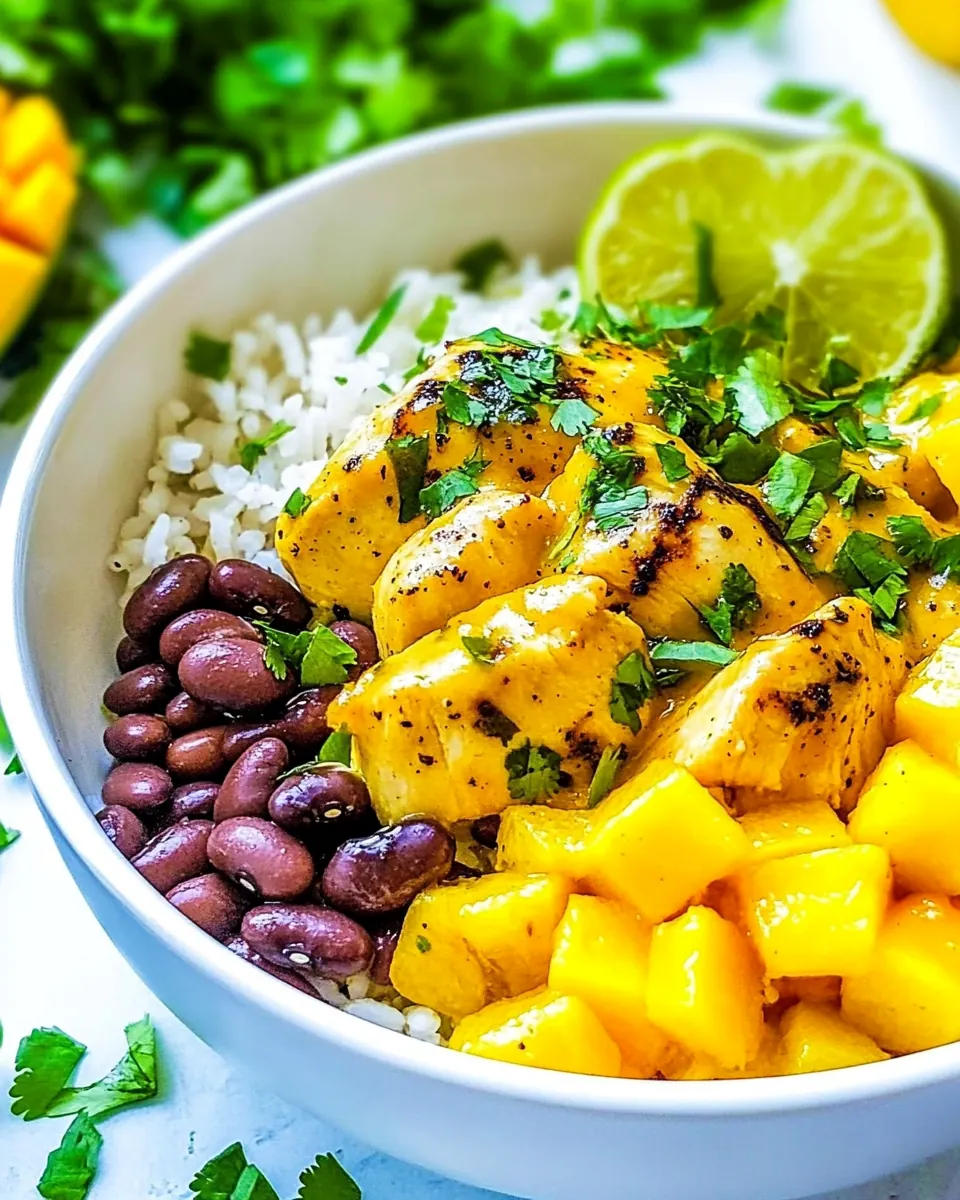
This recipe moves quickly, so I like to have everything at the ready before heating the pan. While the mango becomes a glossy sauce in the blender, the chicken cooks in the skillet. Keep tasting as you go, and remember that small seasoning tweaks make a big difference.
- To the canister of a food processor fitted with the S-blade or high speed blender add the mango, about 4 tablespoons olive oil, lime juice, brown sugar, garlic, salt, pepper, optional cayenne pepper, and mix on high speed until smooth and emulsified. If necessary, add additional oil to get things moving in the food processor and until sauce comes together in a thick but pourable consistency. Taste and make any necessary seasoning adjustments if desired; set sauce aside.: The bowl should fill with a fragrant, tropical perfume and the motor will turn the mango into a thick creamy nectar that glistens under the light. You will hear the steady hum of the blender and see the sauce change from chunky to velvet smooth, signaling it is emulsified properly. This texture matters because it makes the sauce cling to each piece of chicken rather than sliding off, preserving flavor in every bite. If the blades struggle or the mixture sticks, add a splash more of the reserved olive oil to help it move, and avoid running the blender too long which can warm the sauce excessively. A common mistake is under blending, which leaves fibrous bits that make the sauce less silky; blend until no lumps remain.
- To a large skillet, add 2 tablespoons olive oil, chicken, season evenly with salt and pepper, and cook over medium-high heat for about 4 to 5 minutes, or until chicken is cooked through. Stir and flip intermittently to ensure even cooking.: As the chicken hits the hot oil you will hear a lively sizzle and smell a toasty note from searing proteins. The surface will turn a light golden tan, creating savory browned bits that contribute deep flavor, and you should flip intermittently so the pieces develop even color. Cooking over medium high heat sears the exterior quickly while keeping the interior juicy, which matters because small, bite sized pieces can dry out fast if overcooked. Watch closely and check a thicker piece by slicing to confirm there is no pink inside. A common trap is overcrowding the pan, which steams the chicken and prevents browning; give each piece some room so air circulates and crisping occurs.
- After chicken is cooked through, reduce the heat to medium-low, and evenly drizzle as much mango sauce as desired over the chicken (you may have extra that you can save for another use or discard or reserve for drizzling over food when serving), stir to coat evenly, and simmer gently for about 1 to 2 minutes.: Lowering the heat prevents the sugars in the sauce from burning, and the gentle simmer lets the mango sauce meld into the browned edges of the chicken , releasing a sweet aromatic steam. You will see the sauce become glossy and slightly thinner as it warms, while the scent of lime and garlic lifts. This brief simmer is important because it cooks the raw garlic flavor slightly and helps the sauce adhere, creating a cohesive flavor coating. Stir gently so you do not break apart the pieces, and avoid boiling, which can separate the emulsion and make the sauce oily. A common error is adding all the sauce and immediately turning up the heat too high, which can scorch the sugars and turn the flavor bitter.
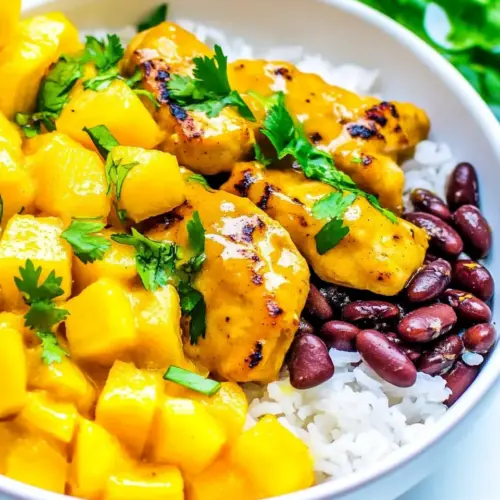
- Remove the chicken from the skillet and evenly divide the chicken, rice, and beans between the serving bowls.: When assembling, pay attention to temperature and texture contrast, placing warm pre cooked rice down first and then spooning the sauced chicken beside the tender black beans . The visual cue of golden sauced chicken against dark beans and pale rice signals a balanced bowl. Portioning equally helps each diner get a mix of components, and I like to nestle the ingredients so every scoop includes sauce, grain, and legume. A mistake to avoid is serving everything cold straight from the fridge; gently warm the rice and beans so the bowl is inviting rather than tepid.
- Add additional mango sauce over the rice and beans or chicken, if desired. Garnish with cilantro and serve immediately. Recipe is best fresh but will keep airtight in the fridge for up to 5 days.: A final drizzle enhances both appearance and flavor, creating bright pockets of mango that burst with sweet acidity. I usually taste one bowl first to decide how much extra sauce to add, because the right amount should complement, not drown, the chicken . The sauce also cools slightly when it hits the warm rice, releasing aroma without being overpowering. Avoid dousing the entire bowl blindly, as too much sauce can make textures soggy, especially with precooked rice .
- Adapted from 20-Minute Cilantro Chicken with Rice and Beans: Freshly chopped cilantro sprinkled on top introduces an herbal brightness and a clean green contrast that lifts the bowl visually and on the palate. The garnish is also tactile, offering a leafy snap that complements the soft textures below. Serve right away while the chicken is warm and the sauce is glossy, as the dish is best enjoyed fresh. A frequent oversight is letting the bowl sit too long before serving, which diminishes textural contrast and cools the sauce.
- Recipe is best fresh but will keep airtight in the fridge for up to 5 days: Stored properly, the flavors remain pleasant and the sauce can be used to revive leftovers, but note that the texture of thawed mango sauce may be slightly softer and the rice can firm up. Reheat gently to retain moisture, and stir to reincorporate any separated sauce components. Avoid reheating at very high heat which can toughen the chicken and change the sauce consistency. The common mistake is reheating too quickly in a microwave without adding a splash of water or oil, which can dry the grains and make the protein chewy.
- Adapted from 20 Minute Cilantro Chicken with Rice and Beans: This lineage explains the bowl style and flavor profile, showing why the method leans on a quick pan sear and a vibrant finishing sauce. Knowing the adaptation helps you understand the recipe choices, like using pre cooked rice for speed and a fruit based sauce for contrast. If you want to trace differences, note the shortened times and the swap to a mango lime glaze, which changes the aromatic direction and brightens the final dish. A pitfall is assuming all adaptations are identical in timing; taste and visual cues remain the most reliable gauges.
Tips for Success
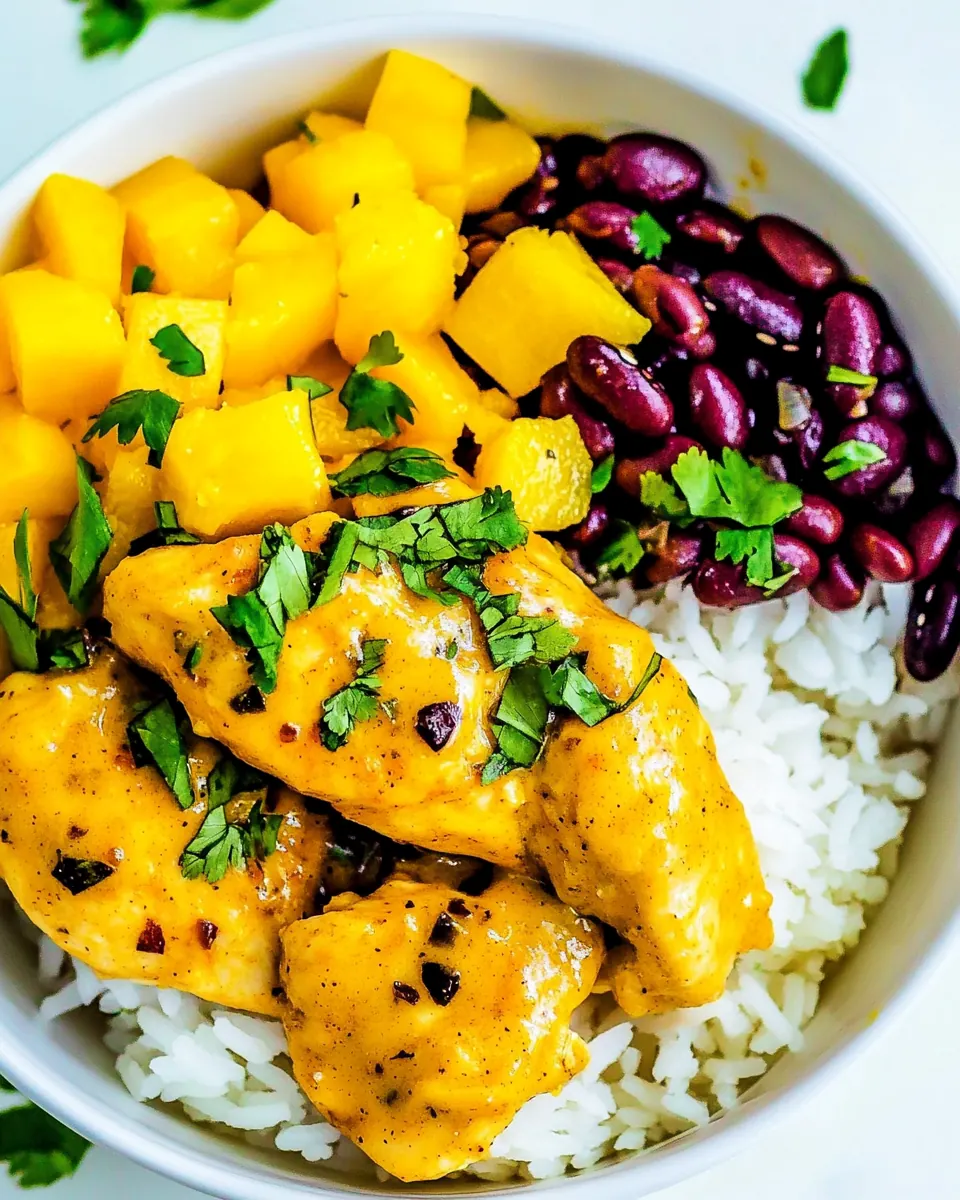
Small choices add up with this bowl, so a few focused tips make the difference between good and great. Below are practical, cook friendly reminders I use every time I make this dish.
- Prep ingredients first, dice the mango and the chicken before turning on the heat so the process flows smoothly and nothing overcooks while you chop.
- Control the heat, start the skillet hot enough to sear then lower to medium low when adding the sauce to prevent burning the sugars in the mango.
- Taste the sauce, adjust salt and lime juice after blending because freshness and mango sweetness vary and a tiny tweak brightens everything.
- Reserve extra sauce, store any leftover in a jar for lunches or a quick drizzle over salads and roasted vegetables the next day.
- Warm the rice, reheat precooked rice gently with a splash of water to keep it fluffy instead of dry when assembling bowls.
What Goes Well With This 15 Minute Mango Lime Chicken with Rice and Beans
This bowl plays well with simple sides and is versatile across meals and occasions. Below are ways I like to serve it, plus storage and pairing notes that make it practical for weeknight dinners and casual gatherings.
- Simple green salad for contrast, a crisp salad with a light vinaigrette adds a crunchy, bitter counterpoint to the sweet sauce and makes the meal feel balanced for dinner.
- Extra cilantro and lime wedges, offering additional fresh garnishes at the table lets dinner guests customize brightness and herbaceousness to taste for lunches or casual dinners.
- Warm tortillas, if you want a handheld option, warm corn or flour tortillas let you build informal tacos with the sauced chicken, rice, and beans for a playful serving style.
- Occasions, this recipe suits weeknight dinners, casual weekend lunches, and potluck spreads where fast assembly matters; it also works well for seasons when mango is in abundance, especially summer.
- Storage tips, keep components separated if possible; store the sauce in an airtight jar and refrigerate for up to five days, and reheat gently to preserve texture and flavor.
- Seasonal pairings, serve it in warmer months when fresh mango is at its peak, or rely on thawed frozen mango in colder seasons to maintain that bright fruity note.
FAQ
Conclusion
What makes this recipe special is how quickly it transforms a few pantry staples and a mango into a bright, balanced dinner that feels far more elaborate than it is. The combination of sweet mango, zesty lime, and savory chicken served with rice and beans delivers satisfying textures and a fresh aromatic profile. I encourage you to give it a try on a night when you want flavor without fuss; it’s fast, forgiving, and reliably delicious. Enjoy the lift it brings to any ordinary evening, and don’t be surprised if it becomes a regular go to in your rotation.
15 Minute Mango Lime Chicken with Rice and Beans
Equipment
- Large Skillet
- Food processor or high speed blender
Ingredients
- one large or extra-large fresh mango, peeled and diced into chunks or about 1 cup frozen mango, thawed and drained Peeled and diced into chunks to provide sweet, tropical fruitiness and a bright, juicy contrast that balances savory chicken and tangy lime; can be fresh or thawed frozen for convenience. Adds texture and natural sweetness to the sauce or salsa, softening when lightly mashed or blended. Complements spicy and acidic elements while contributing vibrant color to the finished dish.
- about 6 tablespoons olive oil, divided or as needed Used divided to both lightly dress the mango mixture and to cook and sear the chicken, supplying a neutral, fruity base that helps carry flavors and prevents sticking. Adds mouthfeel and richness without overpowering other ingredients. Choose quality olive oil for better aroma and smoother finish.
- 2 to 3 tablespoons lime juice Squeezed for bright acidity to brighten the mango and chicken, cutting through richness and balancing sweetness from the mango and brown sugar. Enhances overall flavor and helps tenderize chicken slightly when combined with oil and seasonings. Adjust amount to taste for a fresher, zestier profile.
- 1 tablespoon light brown sugar, packed Packed to provide a touch of caramelized sweetness that rounds out the mango and lime interplay while amplifying flavor complexity. Helps counterbalance acidity and heat, producing a more rounded sauce or glaze. Dissolves easily when whisked into liquids for even distribution.
- 1 or 2 cloves garlic, peeled Minced or crushed to impart savory aromatics and depth, elevating the overall savory profile of the dish with a pungent, garlicky note. Works well blended into the mango-lime dressing or briefly sautéed with the chicken for integrated flavor. Use fresh cloves for the most pronounced garlic character.
- 1 teaspoon kosher salt, or to taste Dissolved to season the mango mixture and the chicken, enhancing all flavors and making sweet, acidic, and spicy elements pop. Use kosher salt to control seasoning levels and to help proteins retain moisture during cooking. Adjust to personal taste preferences.
- 1/2 teaspoon freshly ground black pepper, or to taste Ground to provide mild warmth and aromatic backbone, balancing sweetness and acidity while enhancing savory notes in both the mango salsa and chicken. Sprinkle according to taste to avoid overpowering delicate fruit flavors. Freshly ground black pepper yields brighter, more complex heat.
- pinch cayenne pepper, optional and to taste Sprinkled as an optional heat element to add a sharp, spicy kick that contrasts the sweet mango and citrusy lime. Use a pinch to taste to avoid overwhelming the dish; cayenne intensifies without altering other flavors. Works well in both the dressing and during chicken seasoning.
- 1 to 1.25 pounds boneless skinless chicken breast, diced into bite sized pieces Diced into bite-sized pieces to cook quickly and absorb the mango-lime flavors, forming the primary protein component of the meal. Boneless skinless chicken breast cooks rapidly when cubed, making it ideal for a 15-minute recipe. Season and sear promptly to lock in juices and achieve tender bites.
- salt and pepper for seasoning chicken Used to season the chicken before cooking to ensure even savory flavor throughout and to create a lightly seasoned crust when seared. Simple salt and pepper enhance natural chicken taste and set a balanced base for the mango-lime sauce. Adjust quantities to personal seasoning preference.
- one 8.8-ounce package precooked rice Heated as a quick, convenient carbohydrate base to serve alongside the mango chicken, providing neutral, fluffy grains that soak up sauces. Precooked rice shortens total cooking time while offering satisfying texture and bulk to the meal. Reheat gently to avoid dryness and fluff before serving.
- one 15-ounce can black beans, drained and rinsed (I used low-salt) Drained and rinsed to supply protein, fiber, and a savory, earthy counterpart to the sweet mango and citrusy dressing. Low-sodium beans help control overall saltiness while contributing creamy texture and visual contrast. Stir into warmed rice or spoon alongside the chicken for a complete plate.
- fresh cilantro, for garnishing Chopped and sprinkled as a fresh herb garnish to finish the dish with aromatic brightness and green color contrast that complements lime and mango. Adds a clean, herbaceous lift and subtle citrusy notes that enhance overall freshness. Use stems sparingly and add just before serving for best flavor.
Instructions
- To the canister of a food processor fitted with the S-blade or high speed blender add the mango, about 4 tablespoons olive oil, lime juice, brown sugar, garlic, salt, pepper, optional cayenne pepper, and mix on high speed until smooth and emulsified. If necessary, add additional oil to get things moving in the food processor and until sauce comes together in a thick but pourable consistency. Taste and make any necessary seasoning adjustments if desired; set sauce aside.: The bowl should fill with a fragrant, tropical perfume and the motor will turn the mango into a thick creamy nectar that glistens under the light. You will hear the steady hum of the blender and see the sauce change from chunky to velvet smooth, signaling it is emulsified properly. This texture matters because it makes the sauce cling to each piece of chicken rather than sliding off, preserving flavor in every bite. If the blades struggle or the mixture sticks, add a splash more of the reserved olive oil to help it move, and avoid running the blender too long which can warm the sauce excessively. A common mistake is under blending, which leaves fibrous bits that make the sauce less silky; blend until no lumps remain.
- To a large skillet, add 2 tablespoons olive oil, chicken, season evenly with salt and pepper, and cook over medium-high heat for about 4 to 5 minutes, or until chicken is cooked through. Stir and flip intermittently to ensure even cooking.: As the chicken hits the hot oil you will hear a lively sizzle and smell a toasty note from searing proteins. The surface will turn a light golden tan, creating savory browned bits that contribute deep flavor, and you should flip intermittently so the pieces develop even color. Cooking over medium high heat sears the exterior quickly while keeping the interior juicy, which matters because small, bite sized pieces can dry out fast if overcooked. Watch closely and check a thicker piece by slicing to confirm there is no pink inside. A common trap is overcrowding the pan, which steams the chicken and prevents browning; give each piece some room so air circulates and crisping occurs.
- After chicken is cooked through, reduce the heat to medium-low, and evenly drizzle as much mango sauce as desired over the chicken (you may have extra that you can save for another use or discard or reserve for drizzling over food when serving), stir to coat evenly, and simmer gently for about 1 to 2 minutes.: Lowering the heat prevents the sugars in the sauce from burning, and the gentle simmer lets the mango sauce meld into the browned edges of the chicken , releasing a sweet aromatic steam. You will see the sauce become glossy and slightly thinner as it warms, while the scent of lime and garlic lifts. This brief simmer is important because it cooks the raw garlic flavor slightly and helps the sauce adhere, creating a cohesive flavor coating. Stir gently so you do not break apart the pieces, and avoid boiling, which can separate the emulsion and make the sauce oily. A common error is adding all the sauce and immediately turning up the heat too high, which can scorch the sugars and turn the flavor bitter.
- Remove the chicken from the skillet and evenly divide the chicken, rice, and beans between the serving bowls.: When assembling, pay attention to temperature and texture contrast, placing warm pre cooked rice down first and then spooning the sauced chicken beside the tender black beans . The visual cue of golden sauced chicken against dark beans and pale rice signals a balanced bowl. Portioning equally helps each diner get a mix of components, and I like to nestle the ingredients so every scoop includes sauce, grain, and legume. A mistake to avoid is serving everything cold straight from the fridge; gently warm the rice and beans so the bowl is inviting rather than tepid.
- Add additional mango sauce over the rice and beans or chicken, if desired. Garnish with cilantro and serve immediately. Recipe is best fresh but will keep airtight in the fridge for up to 5 days.: A final drizzle enhances both appearance and flavor, creating bright pockets of mango that burst with sweet acidity. I usually taste one bowl first to decide how much extra sauce to add, because the right amount should complement, not drown, the chicken . The sauce also cools slightly when it hits the warm rice, releasing aroma without being overpowering. Avoid dousing the entire bowl blindly, as too much sauce can make textures soggy, especially with precooked rice .
- Adapted from 20-Minute Cilantro Chicken with Rice and Beans: Freshly chopped cilantro sprinkled on top introduces an herbal brightness and a clean green contrast that lifts the bowl visually and on the palate. The garnish is also tactile, offering a leafy snap that complements the soft textures below. Serve right away while the chicken is warm and the sauce is glossy, as the dish is best enjoyed fresh. A frequent oversight is letting the bowl sit too long before serving, which diminishes textural contrast and cools the sauce.
- Recipe is best fresh but will keep airtight in the fridge for up to 5 days: Stored properly, the flavors remain pleasant and the sauce can be used to revive leftovers, but note that the texture of thawed mango sauce may be slightly softer and the rice can firm up. Reheat gently to retain moisture, and stir to reincorporate any separated sauce components. Avoid reheating at very high heat which can toughen the chicken and change the sauce consistency. The common mistake is reheating too quickly in a microwave without adding a splash of water or oil, which can dry the grains and make the protein chewy.
- Adapted from 20 Minute Cilantro Chicken with Rice and Beans: This lineage explains the bowl style and flavor profile, showing why the method leans on a quick pan sear and a vibrant finishing sauce. Knowing the adaptation helps you understand the recipe choices, like using pre cooked rice for speed and a fruit based sauce for contrast. If you want to trace differences, note the shortened times and the swap to a mango lime glaze, which changes the aromatic direction and brightens the final dish. A pitfall is assuming all adaptations are identical in timing; taste and visual cues remain the most reliable gauges.
Notes
- Prep ingredients first, dice the mango and the chicken before turning on the heat so the process flows smoothly and nothing overcooks while you chop.
- Control the heat, start the skillet hot enough to sear then lower to medium low when adding the sauce to prevent burning the sugars in the mango.
- Taste the sauce, adjust salt and lime juice after blending because freshness and mango sweetness vary and a tiny tweak brightens everything.
- Reserve extra sauce, store any leftover in a jar for lunches or a quick drizzle over salads and roasted vegetables the next day.
- Warm the rice, reheat precooked rice gently with a splash of water to keep it fluffy instead of dry when assembling bowls.
