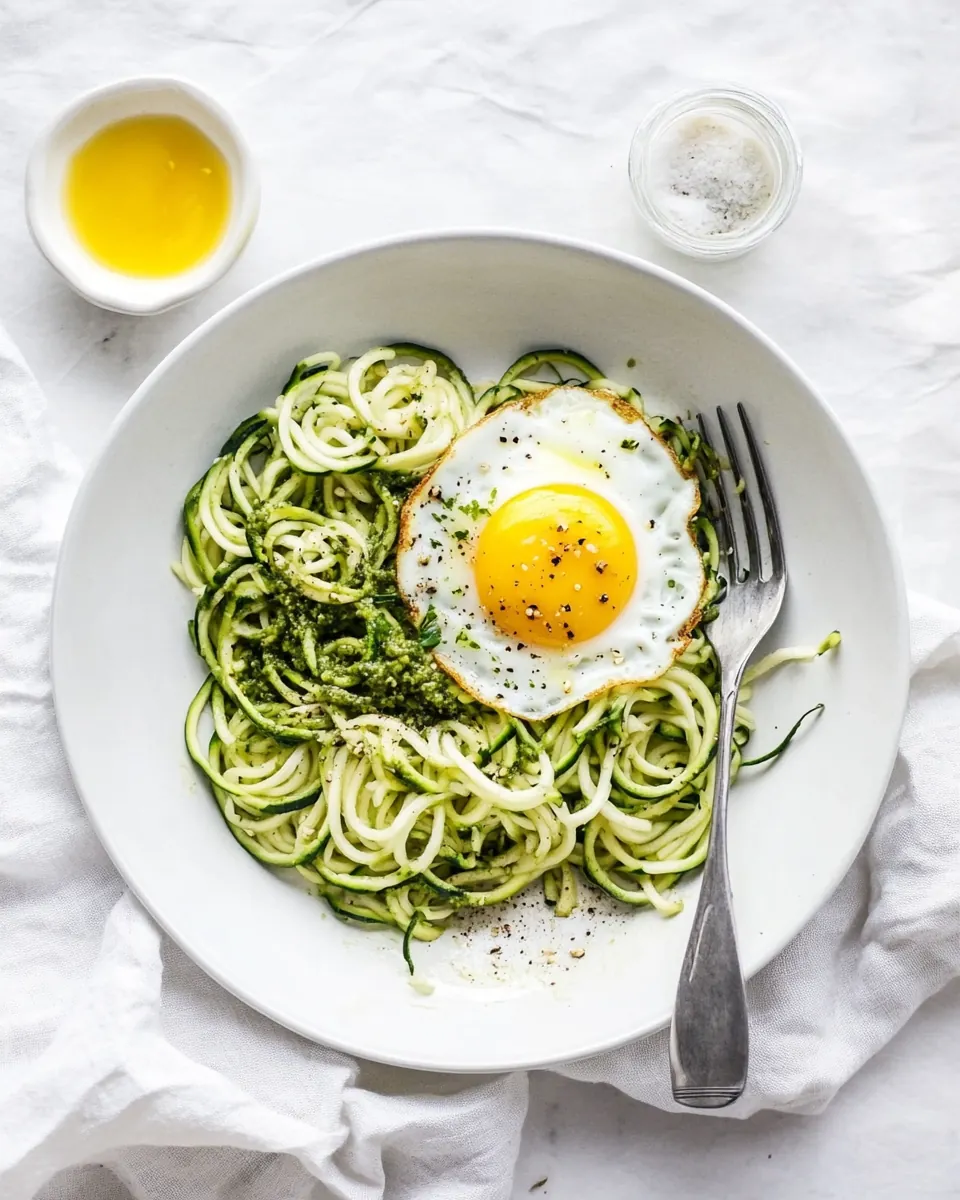
Zucchini Noodles With Pesto Fried Eggs
Zucchini Noodles With Pesto Fried Eggs arrived in my life on a humid summer evening when I had a bounty of zucchini from a neighbor’s garden and very little patience for anything fussy.
I remember standing at my counter, knife in hand, thinking I wanted something bright and herbal that would still feel like a proper meal. The idea of silky, ribbonlike zucchini tossed with a punchy, herbaceous pesto felt right, and finishing the dish with a fried egg made it comfortingly indulgent without being heavy. As I prepped the herbs and toasted the nuts, the kitchen filled with that sharp, green fragrance that tells you the meal is already halfway there.
What followed was pure, simple cooking that rewarded small, careful choices. Tossing the zucchini briefly in a hot skillet kept it lively and slightly crisp, which contrasted wonderfully with the creamy yolk when I pierced that fried egg at the table. Each bite had textural interplay and bright, citrusy notes from a squeeze of lime. I kept thinking how this would be perfect for a quick weeknight supper or a light weekend lunch when you want something nourishing but still special.
Over the years I’ve tweaked this pairing, learning when to salt the noodles to pull out unwanted moisture, and when to add the pesto off heat so its color and freshness stay intact. Friends who tasted it asked for the recipe, and that same recipe has become my go to for using up garden produce when I want something fast yet memorable.
Recipe Snapshot
35 mins
20 mins
15 mins
Medium
350 kcal
Mediterranean
Keto, Paleo
Dinner
Food processor, Large skillet, Medium skillet, Colander, Paper towels
The Magic of This Zucchini Noodles With Pesto Fried Eggs
Bright, fresh flavor
I love how Zucchini Noodles With Pesto Fried Eggs showcases pure green flavors. The herbs and toasted pine nuts create a vibrant pesto that sings against the neutral, slightly sweet backdrop of the zucchini. That burst of herbaceousness makes every forkful lively and clean on the palate, perfect when you want freshness without fuss.
Speed without compromise
We often want speed and depth at once, and this dish delivers both. From herb chopping to plating can take under an hour, yet the texture contrasts and layered flavors feel carefully crafted. The quick pan toss keeps the zucchini slightly firm, so you never get limp, soggy noodles.
Satisfying richness
The fried eggs bring a silky richness that turns this into a proper meal. When the yolk breaks, it creates a natural, glossy sauce that clings to the pesto and noodles, making each bite comforting and substantial without heaviness.
Flexible and seasonal
I appreciate that this recipe adapts to what’s on hand. While I often use basil, mixed fresh herbs work beautifully, and the technique holds up whether you spiralize or julienne your zucchini. It feels right for a light summer lunch, and it also scales up for a casual dinner for friends.
Simple, elegant presentation
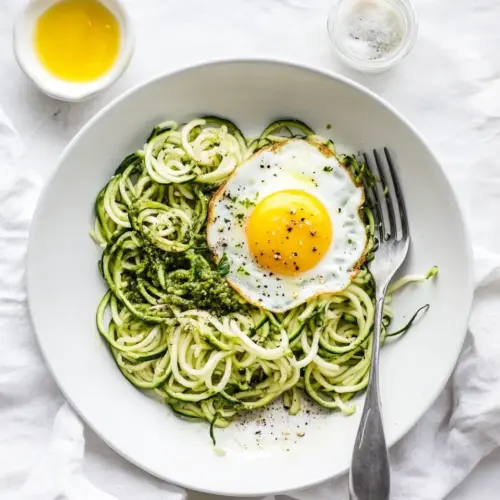
There is something quietly elegant about piling green noodles on a plate, topping with a sunny fried egg, and sprinkling toasted pine nuts on top. The colors are appealing, and the textures invite you to dig in right away.
Ingredient List for Zucchini Noodles With Pesto Fried Eggs
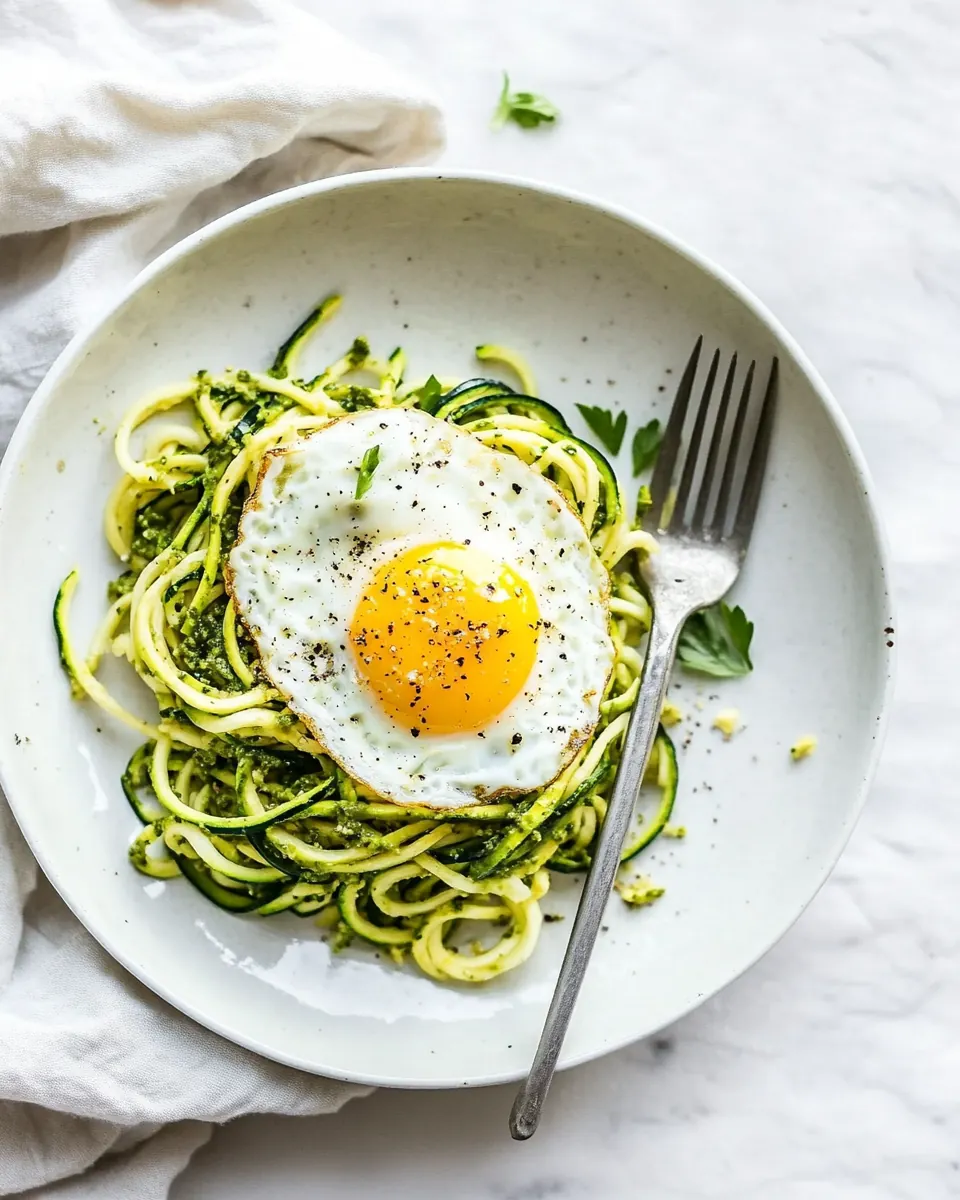
These ingredients are chosen to support a fresh, herb forward pesto and light, textured noodles. The key players are the pine nuts that provide toasty depth, the bright, leafy herbs for lift, and the eggs for richness. The small amounts of ghee or extra-virgin olive oil are there to carry flavor and help with gentle cooking, while salt and pepper bring everything into balance.
- 1/4 cup + 2 tablespoons pine nuts toasted: Toasted and nutty, provide a crunchy, rich element that enhances pesto's depth and adds texture to the dish; can be lightly crushed into the sauce or used as a finishing garnish for contrast.
- 1 cup fresh herbs of choice (I used basil) lightly packed: Fresh and aromatic, supply bright herbal flavor that forms the base of a vibrant pesto and balances the richness of nuts and oil; lightly packing ensures a concentrated herb profile without overstuffing the blender.
- 2 scallions trimmed and roughly chopped: Mildly pungent and crisp, add an onion-like freshness with subtle sweetness when chopped, helping to round out the pesto's savory layers and complement the herbs; rough chopping aids even blending.
- 1 clove garlic crushed: Aromatic and sharp, deliver pungent, savory notes that intensify the pesto's flavor profile; crushing releases oils for maximum impact and helps meld with the herbs and oil.
- 1/4 teaspoons ea salt or more to taste: Salty seasoning used to enhance and balance flavors in the pesto and zucchini; start modestly and adjust to taste to avoid over-salting delicate components.
- 3 tablespoons extra-virgin olive oil: Rich and fruity, emulsify and carry the pesto's flavors while adding silky mouthfeel; combine with herbs and nuts to create a cohesive sauce and drizzle as needed.
- 1 teaspoon freshly squeezed lime juice or lemon juice: Bright and acidic, provide a citrus lift that cuts through richness and brightens the pesto and zucchini; freshly squeezed juice offers clean acidity and freshness.
- 2 to 3 pounds zucchini julienned or spiralized: Tender and mild, serve as the main vegetable base when julienned or spiralized into noodles that absorb pesto and pair with eggs; choosing consistent size ensures even cooking and texture.
- 1/2 teaspoons ea salt or more, to taste: Salt seasoning used for the zucchini to draw out moisture and season the vegetable strands; adjust to taste after draining any excess water to maintain texture.
- 3 teaspoons ghee or extra-virgin olive oil, divided: Clarified fat or oil used for cooking, provide a neutral or buttery cooking medium for frying eggs and lightly sautéing zucchini; dividing the amount allows for separate uses during cooking.
- Freshly ground black pepper to taste: Aromatic seasoning that adds a finishing edge and subtle heat, enhancing all components when freshly ground over eggs and zucchini; apply to taste for balanced seasoning.
- 2 large eggs: Protein-rich and versatile, produce creamy yolks and set whites when fried, adding richness and structure to the dish; cook to desired doneness to create contrasting textures with the noodles.
Cooking Method for Zucchini Noodles With Pesto Fried Eggs
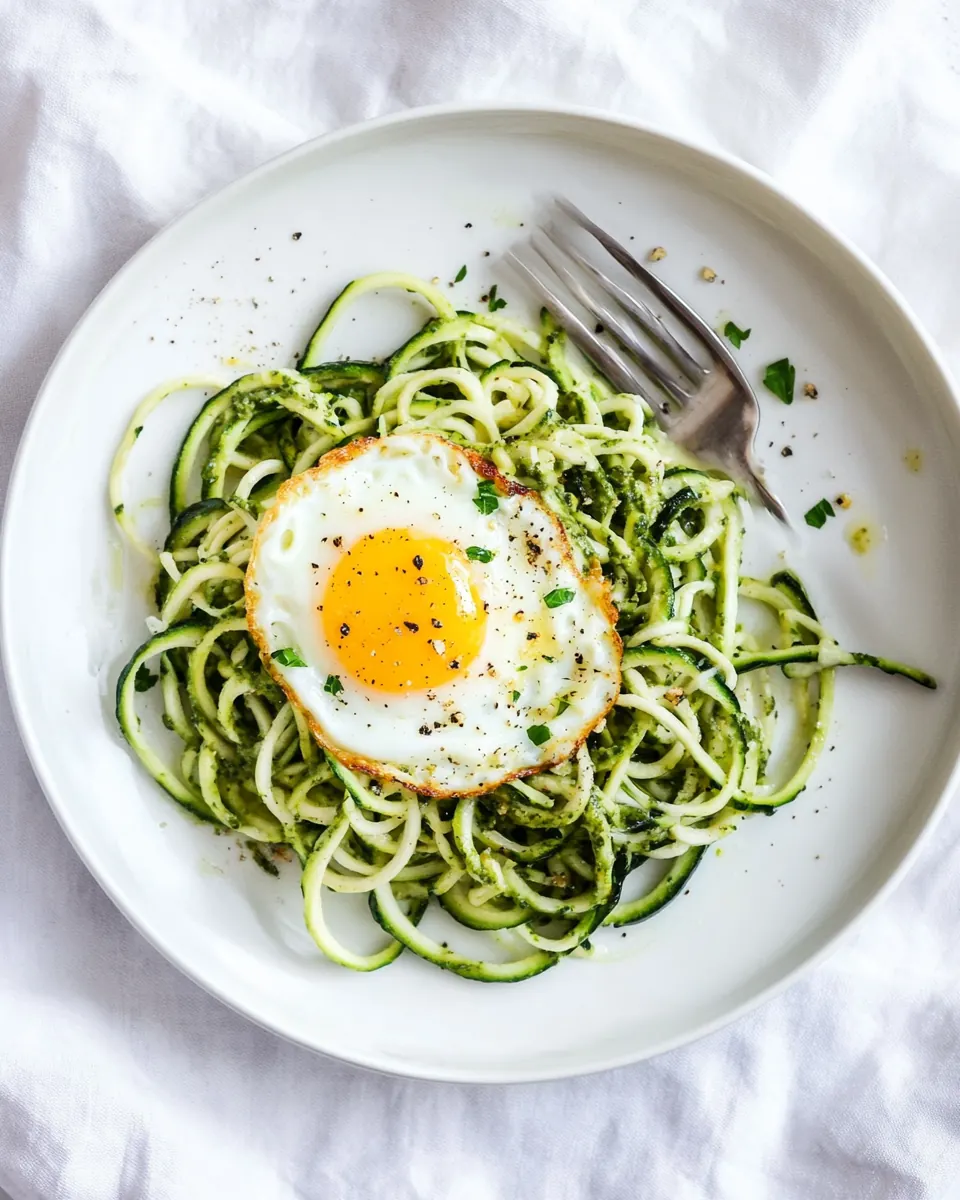
Cooking this is straightforward, and the instructions below walk you through small sensory cues and troubleshooting so you get consistent results. Keep your tools handy, taste as you go, and listen for the gentle sizzle that signals the right moment to act.
- In a food processor, combine 1/4 cup of the toasted pine nuts, fresh herbs, scallions, garlic, and salt. Pulse until coarsely chopped.: At this stage you will smell the sharp green aroma of freshly chopped herbs and the warm nuttiness from the toasted pine nuts . The sound is intermittent pulses as the blade bites through leaves and nuts, and the texture should look roughly chopped rather than a paste. This coarse texture keeps some bite in the pesto, which I prefer for visual appeal and mouthfeel. If you overprocess, the mixture will be too fine and the pesto may oxidize faster and lose its bright color. A common mistake is to run the processor continuously, which generates heat and can make the pesto feel dull. Pulse in short bursts, scraping down the sides to ensure even chopping.
- Add the olive oil and lime (or lemon) juice, then pulse again, scraping down the sides of the bowl as needed.: When you add the extra–virgin olive oil and citrus, the mixture will start to shine and smell rounder, with a citrus lift cutting through the herbaceous base. The pulses should emulsify and create a slightly glossy sauce. Visually, you want a loose, spreadable texture that will cling to the noodles. If it looks separated or oily, you may have added the oil too quickly; instead, add it in a slow stream and use short pulses. Avoid leaving large unblended chunks of pine nuts unless you intentionally want extra crunch.
- Taste the pesto and adjust the salt if necessary. Set aside.: Taste will tell you if the pesto needs more salt or acid. The bright citrus should elevate the green notes and the pine nuts should add a soft, toasty undertone. Adjustments here matter because the pesto is a concentrated flavor component. If it tastes flat, add a pinch more salt or a tiny squeeze of citrus. Do not add too much salt at once, as it is harder to fix an over salted sauce.
- Place the spiralized zucchini in a colander lined with paper towels. Toss with 1/2 teaspoon of salt and let sit for 10 minutes to draw out excess moisture. Then rinse the zucchini under cold water and pat dry with paper towels.: You will notice beads of moisture forming as the salt draws water from the zucchini . That initial soft hissing of liquid against the paper towel is part of the process. Rinsing removes surface salt so the noodles stay balanced, and patting dry prevents the pan from steaming the noodles into limpness. A mistake to avoid is skipping the rinse, which can leave the dish too salty, or skipping the drying step, which can water down the pesto and make the noodles soggy.
- Heat 1 teaspoon of ghee (or olive oil) in a large skillet over medium-high heat. Add the noodles and cook, tossing frequently, until softened but still slightly crisp, about 2 to 3 minutes.: When the skillet is hot the fat will shimmer and release a faint aroma. As you add the zucchini , you should hear a quick, gentle sizzle rather than a loud spatter; that tells you the pan is at the right temperature. Toss frequently so the noodles heat evenly and develop a slight blush of color without turning mushy. Look for tender ribbons that still hold their shape. Overcooking is common here, leaving you with limp strands that have lost texture, so watch carefully and stop once they are tender crisp.
- Remove the skillet from heat, stir in the pesto, and toss to combine. Season with additional salt and freshly ground black pepper to taste. Cover the skillet to keep the noodles warm while you prepare the eggs.: Off the heat, the residual pan temperature prevents the pesto from dulling, preserving its bright color and fresh flavor. When you toss, you will see the glossy pesto clinging to each strand and smell an herbaceous, nutty perfume. Add freshly ground black pepper to introduce a warm finish. A common misstep is tossing the pesto in while the pan is scorching hot, which cooks the herbs and flattens the taste; removing from heat is an important step.
- In a separate medium skillet, heat the remaining 2 teaspoons of ghee (or olive oil) over medium heat. Fry the eggs to your preference.: As you heat the fat for the eggs , it will begin to shimmer and give off a toasty scent if using ghee . Slide in the eggs and listen for a satisfied sizzle. The whites should set at the edges with a tender center, and the yolks should remain glossy unless you prefer them fully cooked. For runny yolks, cook until whites are set but the yolks still wobble. A pitfall is crowding the pan or using oil that is too hot, which can make the whites tough and bubbly rather than tender.
- Divide the noodles between two plates. Top each portion with a fried egg and sprinkle with the remaining tablespoon of toasted pine nuts. Serve immediately.: The final assembly is when textures and temperatures meet. You will see bright green noodles, a warm, glossy egg perched on top, and little flecks of toasted pine nuts adding crunch. Pierce a yolk and watch it silk over the pesto, creating a luscious coating. Serve right away for the best contrast of warm noodles and egg with crunchy nuts. Letting it sit too long will cool the noodles and soften the nuts, losing the contrast that makes this dish so satisfying.
Recipe Variations about Zucchini Noodles With Pesto Fried Eggs
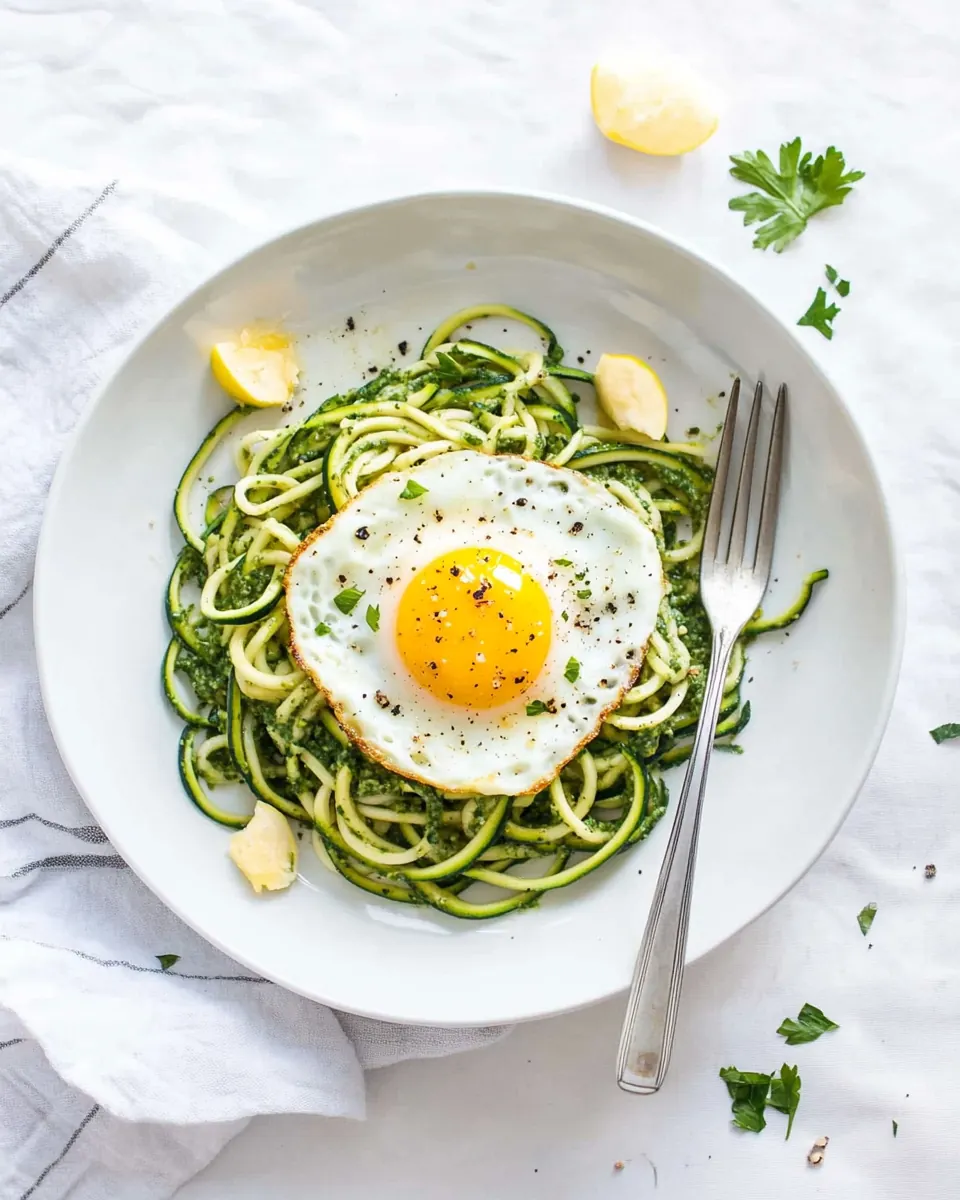
This section offers thoughtful variations and practical pointers to adapt Zucchini Noodles With Pesto Fried Eggs to different tastes and situations. These expanded tips will help you balance texture, flavor, and timing.
- Alternate herbs: Swap basil for parsley or a mix of parsley and mint for a brighter, slightly peppery pesto, which can change the overall flavor profile without altering technique.
- Nut alternatives: If you do not have pine nuts, try toasted sunflower seeds for a similar textural contrast, though the flavor will shift toward earthier notes.
- Oil choices: Use a fruity extra-virgin olive oil for a robust finish, or use milder oil for a subtler background that lets the herbs shine.
- Cooking fat for eggs: Fry eggs in ghee for a nutty aroma and higher smoke point, or use olive oil for a leaner profile and lighter flavor.
- Doneness control: For runny yolks, cook the eggs until the whites are set but the yolks still wobble; for firmer yolks, cover the pan briefly to finish cooking through.
What to Serve With Zucchini Noodles With Pesto Fried Eggs
This dish stands on its own, yet a few thoughtful accompaniments can turn it into a fuller meal or tailor it to the occasion. Here are ideas for pairings, occasions, and storage that complement the delicate, herb forward profile.
- Light green salad: A crisp salad with a lemon vinaigrette freshens the palate and echoes the citrus in the pesto, great for a summer lunch.
- Crusty bread: Warm bread is perfect for mopping up runny yolks if you want a heartier bite, especially at a casual brunch or weekend dinner.
- Simple soup: A clear vegetable broth or a chilled cucumber soup pairs well for an elegant multi course lunch, providing a contrast of temperatures.
- Occasion suggestions: This works well for a relaxed weekend brunch, an easy weeknight dinner, or a light meal during Ramadan evenings when you want something nourishing but not heavy.
- Storage tips: Store leftover pesto separately from the noodles in airtight containers in the refrigerator for up to three days. Reheat noodles gently in a skillet, adding a splash of water to refresh texture, and reheat eggs briefly or fry fresh.
- Seasonal pairings: In summer, serve with fresh tomatoes or grilled vegetables for a fuller plate. In cooler months, add heartier greens or roasted root vegetables on the side to add warmth.
FAQ
Conclusion
What makes this recipe special is the way fresh herb pesto, tender zucchini noodles, and a fried egg come together to create a simple yet layered meal. The combination balances brightness, texture, and satisfying richness so every bite feels complete. If you are looking for a fast, vegetable forward dish that still feels indulgent, give it a try and notice how a few thoughtful steps—salting the zucchini, toasting the nuts, and frying the eggs—transform humble ingredients into something memorable.
Zucchini Noodles With Pesto Fried Eggs
Equipment
- Food Processor
- Large Skillet
- Medium skillet
- Colander
- Paper towels
Ingredients
- 1/4 cup + 2 tablespoons pine nuts toasted Toasted and nutty, provide a crunchy, rich element that enhances pesto's depth and adds texture to the dish; can be lightly crushed into the sauce or used as a finishing garnish for contrast.
- 1 cup fresh herbs of choice (I used basil) lightly packed Fresh and aromatic, supply bright herbal flavor that forms the base of a vibrant pesto and balances the richness of nuts and oil; lightly packing ensures a concentrated herb profile without overstuffing the blender.
- 2 scallions trimmed and roughly chopped Mildly pungent and crisp, add an onion-like freshness with subtle sweetness when chopped, helping to round out the pesto's savory layers and complement the herbs; rough chopping aids even blending.
- 1 clove garlic crushed Aromatic and sharp, deliver pungent, savory notes that intensify the pesto's flavor profile; crushing releases oils for maximum impact and helps meld with the herbs and oil.
- 1/4 teaspoons ea salt or more to taste Salty seasoning used to enhance and balance flavors in the pesto and zucchini; start modestly and adjust to taste to avoid over-salting delicate components.
- 3 tablespoons extra-virgin olive oil Rich and fruity, emulsify and carry the pesto's flavors while adding silky mouthfeel; combine with herbs and nuts to create a cohesive sauce and drizzle as needed.
- 1 teaspoon freshly squeezed lime juice or lemon juice Bright and acidic, provide a citrus lift that cuts through richness and brightens the pesto and zucchini; freshly squeezed juice offers clean acidity and freshness.
- 2 to 3 pounds zucchini julienned or spiralized Tender and mild, serve as the main vegetable base when julienned or spiralized into noodles that absorb pesto and pair with eggs; choosing consistent size ensures even cooking and texture.
- 1/2 teaspoons ea salt or more, to taste Salt seasoning used for the zucchini to draw out moisture and season the vegetable strands; adjust to taste after draining any excess water to maintain texture.
- 3 teaspoons ghee or extra-virgin olive oil, divided Clarified fat or oil used for cooking, provide a neutral or buttery cooking medium for frying eggs and lightly sautéing zucchini; dividing the amount allows for separate uses during cooking.
- Freshly ground black pepper to taste Aromatic seasoning that adds a finishing edge and subtle heat, enhancing all components when freshly ground over eggs and zucchini; apply to taste for balanced seasoning.
- 2 large eggs Protein-rich and versatile, produce creamy yolks and set whites when fried, adding richness and structure to the dish; cook to desired doneness to create contrasting textures with the noodles.
Instructions
- In a food processor, combine 1/4 cup of the toasted pine nuts, fresh herbs, scallions, garlic, and salt. Pulse until coarsely chopped.: At this stage you will smell the sharp green aroma of freshly chopped herbs and the warm nuttiness from the toasted pine nuts . The sound is intermittent pulses as the blade bites through leaves and nuts, and the texture should look roughly chopped rather than a paste. This coarse texture keeps some bite in the pesto, which I prefer for visual appeal and mouthfeel. If you overprocess, the mixture will be too fine and the pesto may oxidize faster and lose its bright color. A common mistake is to run the processor continuously, which generates heat and can make the pesto feel dull. Pulse in short bursts, scraping down the sides to ensure even chopping.
- Add the olive oil and lime (or lemon) juice, then pulse again, scraping down the sides of the bowl as needed.: When you add the extra-virgin olive oil and citrus, the mixture will start to shine and smell rounder, with a citrus lift cutting through the herbaceous base. The pulses should emulsify and create a slightly glossy sauce. Visually, you want a loose, spreadable texture that will cling to the noodles. If it looks separated or oily, you may have added the oil too quickly; instead, add it in a slow stream and use short pulses. Avoid leaving large unblended chunks of pine nuts unless you intentionally want extra crunch.
- Taste the pesto and adjust the salt if necessary. Set aside.: Taste will tell you if the pesto needs more salt or acid. The bright citrus should elevate the green notes and the pine nuts should add a soft, toasty undertone. Adjustments here matter because the pesto is a concentrated flavor component. If it tastes flat, add a pinch more salt or a tiny squeeze of citrus. Do not add too much salt at once, as it is harder to fix an over salted sauce.
- Place the spiralized zucchini in a colander lined with paper towels. Toss with 1/2 teaspoon of salt and let sit for 10 minutes to draw out excess moisture. Then rinse the zucchini under cold water and pat dry with paper towels.: You will notice beads of moisture forming as the salt draws water from the zucchini . That initial soft hissing of liquid against the paper towel is part of the process. Rinsing removes surface salt so the noodles stay balanced, and patting dry prevents the pan from steaming the noodles into limpness. A mistake to avoid is skipping the rinse, which can leave the dish too salty, or skipping the drying step, which can water down the pesto and make the noodles soggy.
- Heat 1 teaspoon of ghee (or olive oil) in a large skillet over medium-high heat. Add the noodles and cook, tossing frequently, until softened but still slightly crisp, about 2 to 3 minutes.: When the skillet is hot the fat will shimmer and release a faint aroma. As you add the zucchini , you should hear a quick, gentle sizzle rather than a loud spatter; that tells you the pan is at the right temperature. Toss frequently so the noodles heat evenly and develop a slight blush of color without turning mushy. Look for tender ribbons that still hold their shape. Overcooking is common here, leaving you with limp strands that have lost texture, so watch carefully and stop once they are tender crisp.
- Remove the skillet from heat, stir in the pesto, and toss to combine. Season with additional salt and freshly ground black pepper to taste. Cover the skillet to keep the noodles warm while you prepare the eggs.: Off the heat, the residual pan temperature prevents the pesto from dulling, preserving its bright color and fresh flavor. When you toss, you will see the glossy pesto clinging to each strand and smell an herbaceous, nutty perfume. Add freshly ground black pepper to introduce a warm finish. A common misstep is tossing the pesto in while the pan is scorching hot, which cooks the herbs and flattens the taste; removing from heat is an important step.
- In a separate medium skillet, heat the remaining 2 teaspoons of ghee (or olive oil) over medium heat. Fry the eggs to your preference.: As you heat the fat for the eggs , it will begin to shimmer and give off a toasty scent if using ghee . Slide in the eggs and listen for a satisfied sizzle. The whites should set at the edges with a tender center, and the yolks should remain glossy unless you prefer them fully cooked. For runny yolks, cook until whites are set but the yolks still wobble. A pitfall is crowding the pan or using oil that is too hot, which can make the whites tough and bubbly rather than tender.
- Divide the noodles between two plates. Top each portion with a fried egg and sprinkle with the remaining tablespoon of toasted pine nuts. Serve immediately.: The final assembly is when textures and temperatures meet. You will see bright green noodles, a warm, glossy egg perched on top, and little flecks of toasted pine nuts adding crunch. Pierce a yolk and watch it silk over the pesto, creating a luscious coating. Serve right away for the best contrast of warm noodles and egg with crunchy nuts. Letting it sit too long will cool the noodles and soften the nuts, losing the contrast that makes this dish so satisfying.
Notes
- Alternate herbs: Swap basil for parsley or a mix of parsley and mint for a brighter, slightly peppery pesto, which can change the overall flavor profile without altering technique.
- Nut alternatives: If you do not have pine nuts, try toasted sunflower seeds for a similar textural contrast, though the flavor will shift toward earthier notes.
- Oil choices: Use a fruity extra-virgin olive oil for a robust finish, or use milder oil for a subtler background that lets the herbs shine.
- Cooking fat for eggs: Fry eggs in ghee for a nutty aroma and higher smoke point, or use olive oil for a leaner profile and lighter flavor.
- Doneness control: For runny yolks, cook the eggs until the whites are set but the yolks still wobble; for firmer yolks, cover the pan briefly to finish cooking through.
