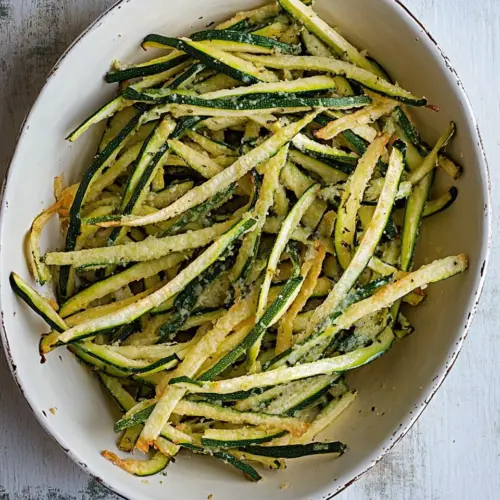
Zucchini Shoestring and Ribbon Fries
Zucchini Shoestring and Ribbon Fries deliver a satisfyingly crispy exterior and tender interior, using simple ingredients for big texture. Lightly coated in seasoned flour after a quick dip in cold milk, the thin shoestrings fry to golden crunch while ribbons stay soft and foldable. Perfect as an easy weeknight side or party snack, this recipe is quick to make and impossible to resist.
Equipment
- Large Pot
- Thermometer
- Slotted Spoon
- Mesh strainer
- Kitchen paper
Ingredients
- 6 large zucchini or 8-10 medium Provide bulk and a mild, slightly sweet vegetable base that crisps when cut thin; use the specified number to yield enough shoestring and ribbon fries for sharing. Retain moisture to help create tender interiors while allowing the exterior to brown in hot oil.
- 750 ml –1 litre vegetable oil Supply the frying medium that transfers high heat evenly and produces crisp, golden exteriors; measure within the given range to ensure adequate depth for immersion frying. Maintain temperature stability to prevent soggy results and to cook the zucchini quickly.
- 400 ml cold milk Add a cool liquid binder that helps loosen the batter and prevent clumping while keeping the coating light; keep it cold to slow gluten formation in the flour. Use the stated amount to reach a pourable consistency that adheres to the zucchini without becoming heavy.
- 400 g flour – seasoned with salt and pepper Create the structure of the batter and provide a seasoned coating that crisps during frying; combine with cold milk to form a smooth, clingy batter. Adjust seasoning in the flour as directed so each fry carries balanced salt and pepper flavor.
- salt Enhance and balance flavors by seasoning both the batter and finished fries; sprinkle to taste to bring out the zucchini's natural sweetness and to highlight the crisp exterior. Use modestly when salting at different stages to avoid over-seasoning.
Instructions
- Cut the zucchini into fries and or ribbons.: When you slice the zucchini , notice the contrast between the pale interior and the darker skin, and feel the firm but yielding flesh under your knife. Shoestrings should be thin and uniform so they crisp quickly, while ribbons need a steady hand and a vegetable peeler to create long, silky strips that wilt slightly when fried. A common mistake is cutting uneven pieces, which leads to some being overcooked and others undercooked, so aim for consistent thickness. If you hear a dull thud when slicing, your blade might be dull, which increases tear and uneven shapes. Keep pieces similar in size for even frying.
- Heat the oil in large pot so that its at least 1/4 full and bring it to 190 C.: As the vegetable oil warms, it will change from glossy to slightly more fluid and shimmer when it approaches frying temperature. At 190 C the oil should produce a steady sizzle when a sliver of zucchini is gently touched to it. Use a thermometer if you can, since oil that is too cool will make greasy, soggy fries, while oil that is too hot will brown them too quickly. One trap is adding too much at once which drops the oil temperature; fry in small batches to keep heat steady. If your oil smokes, reduce the heat and let it cool to the proper range before continuing.
- Gently dredge the zucchini in the milk and then toss them around the seasoned flour until well coated.: When you dip the zucchini into cold milk , you’ll notice the surface becomes slightly tacky, which helps the seasoned flour adhere. Tossing should feel light and even so the flour forms a thin wrap rather than a heavy batter. The flour will move from powder to a fine crust on the zucchini, and the smell is subtle, mostly of raw flour with a hint of seasoning. Avoid clumping by shaking off excess flour; clumps lead to dense, doughy spots when fried. If the coating falls off in the oil, it usually means the zucchini was too wet or the flour was applied too heavily.
- Drop them in the hot oil in batches and fry for around 3 minutes and until they turn a golden brown.: As each piece hits the oil, listen for a lively sizzle that calms into a steady hiss, and watch color transform from pale to a warm golden brown. The sound is a reliable guide; a faint sizzle means the oil is cooling, a loud roar means it might be too hot. Frying for about 3 minutes usually gives crisp exteriors and tender interiors for thin cuts, but thickness matters so watch for visual cues over clock time. A common error is overcrowding, which causes the temperature to plummet and yields soggy fries, so maintain generous spacing as they float and dance in the oil.
- Lift out with a slotted spoon or mesh strainer and drain on kitchen paper and serve.: When you remove the fries, they should glisten lightly with oil and sound crisp when tapped. Draining on paper absorbs excess oil so the coating stays crunchy, and a gentle sprinkle of salt at this stage sticks to the warm surface and brightens every bite. Pay attention to residual heat; leftovers will continue to crisp briefly, but prolonged sitting under a lid will steam them. One mistake is stacking fries while hot, which traps steam and makes them limp, so arrange them in a single layer until ready to serve.
Notes
- Try thinner shoestrings to maximize crunch, especially if you prefer a snap in every bite rather than a softer interior.
- Make wider ribbons when you want a tender, foldable texture that contrasts nicely with the crisp shoestrings on the same platter.
- Control oil volume by using just enough oil for shallow frying if you prefer less oil usage, though you may need to turn pieces more often for even color.
- Season the flour generously with salt and pepper so the flavor is built into the crust, not only applied at the end.
- Serve immediately, these are best hot and fresh; waiting too long causes the coating to soften from steam.
- Use a mesh strainer for lifting to drain oil efficiently and to keep the fried pieces intact and crisp.