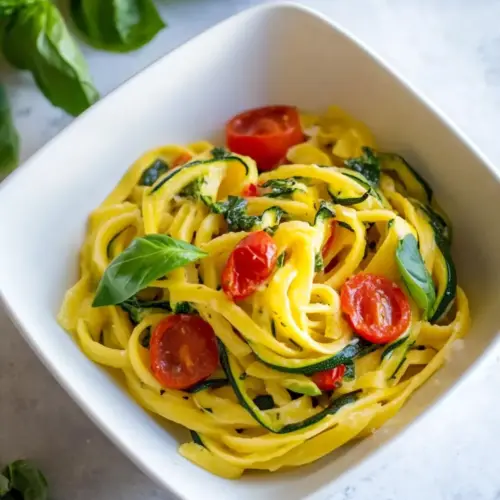
Zucchini Pasta
Zucchini Pasta is a light, creamy and easy weeknight dinner that combines tender zucchini noodles with blistered cherry tomatoes, bright lemon, and savory Parmesan cheese. This quick skillet recipe delivers fresh summer flavors and satisfying texture in about 25 minutes, making it ideal for busy evenings when you want a flavorful, wholesome meal. Try it for an effortless, crowd pleasing dinner.
Equipment
- Skillet
- Tongs
- Spiralizer
- Small Bowl
Ingredients
- 2 pounds zucchini about 4 medium Shredded or spiralized to create a light, vegetable-based noodle substitute that holds sauces and soaks up flavor; provides bulk, moisture, and a mild, slightly sweet base for the dish. Cooked briefly to preserve a tender-crisp texture that contrasts with other components. Can release water when salted, so drain or squeeze if necessary to prevent a watery sauce.
- 1/4 cup freshly squeezed lemon juice about 1 medium lemon Squeezed to add bright acidity and lift that balances the richness of butter and Parmesan; contributes a fresh, citrusy aroma and tang. Used to deglaze the pan or finish the sauce for brightness. Zest can be reserved separately if additional lemon oil is desired.
- 2 teaspoons cornstarch Mixed with a small amount of cold liquid to form a slurry that thickens the sauce and helps it cling to the zucchini strands; provides silkiness without adding extra cream. Added sparingly and heated briefly to activate thickening properties. Prevents separation in a buttery, lemony emulsion.
- 2 tablespoons unsalted butter Melted to create a glossy, rich base for the sauce that carries flavor and helps emulsify lemon juice and cornstarch; contributes a silky mouthfeel and savory depth. Used for sautéing aromatics and lightly browning tomatoes. Adds a subtle creamy note without overpowering the fresh ingredients.
- 1 small shallot finely chopped Finely chopped and sautéed to release a sweet, delicate onion flavor that forms the aromatic backbone of the sauce; offers subtle complexity without harshness. Cooked until translucent to build savory depth. Complements garlic and shallots' natural sweetness when lightly caramelized.
- 3 cloves minced garlic Minced and cooked briefly to infuse the oil and butter with pungent, savory aroma; provides a sharp, aromatic note that enhances overall flavor. Added late in the cooking process to avoid bitterness from burning. Works synergistically with shallot and tomatoes for a balanced savory profile.
- 1 pint cherry tomatoes halved Halved and briefly sautéed to deliver bursts of concentrated sweetness and acidity that add texture and color; they soften and release juices that form part of the sauce. Roasted or pan-cooked until blistered for added caramelized flavor. Provide juicy pockets that contrast with tender zucchini noodles.
- 1/4 teaspoon red pepper flakes Sprinkled in small amounts to introduce gentle heat and a subtle warming background note that elevates other flavors; enhances the overall complexity without overwhelming. Adjusted to taste for desired spiciness. Pairs well with lemon and Parmesan to cut through richness.
- 1/2 cup grated Parmesan cheese plus additional for serving Grated and stirred into the sauce to impart salty, nutty, umami richness that binds flavors and adds a savory finish; contributes creaminess when melted into the warm mixture. Reserved extra for sprinkling at the end to enhance presentation and flavor. Balances acidity from lemon and tomatoes.
- 1/2 cup packed fresh basil leaves roughly chopped Roughly chopped and folded in at the end to contribute fresh, aromatic herbaceousness and a bright green color; provides a cooling counterpoint to warm, savory elements. Releases fragrant oils when torn or chopped, amplifying aroma. Enhances freshness and pairs particularly well with lemon and Parmesan.
- Kosher salt Used to season to taste, enhancing and balancing all other flavors; helps bring out natural sweetness in vegetables while controlling overall seasoning. Added incrementally during cooking and adjusted at the end. Essential for achieving depth and savory balance.
- Ground black pepper Ground to add sharp, aromatic heat and a subtle pungent kick that complements the saltiness and acidity in the dish; used sparingly to avoid overpowering delicate flavors. Added during cooking and adjusted to taste at the end for a final bright note. Supports the overall seasoning profile.
Instructions
- Spiralize the zucchini. Set aside.: The moment you spiralize, you will notice the clean, crisp sound of the strands and the bright green color that promises freshness. The why is simple, the long strands mimic pasta and allow for even coating by the sauce, so take a few seconds to ensure uniform size to avoid uneven cooking. Troubleshooting tip, if the noodles are too long they can tangle, so loosely coil them into a shallow bowl; if they seem watery, gently blot with a paper towel to remove excess moisture before cooking.
- In a small bowl or large liquid measuring cup, whisk together the lemon juice and cornstarch. Set near your stove.: As you whisk, the lemon will lighten and the cornstarch will dissolve into a silky slurry that looks almost glossy, which is important because it will thicken on contact with heat. The purpose is to create a bright, clingy sauce that binds the vegetables, so whisk until completely smooth. If lumps appear, strain them out; a lumpy slurry can create uneven texture in the finished dish.
- In a large skillet, melt the butter over medium heat. Add the shallots and saute until soft, about 3 minutes.: You will hear a gentle sizzle as the unsalted butter warms and smells will start to unfurl from the shallot, a soft sweet aroma that signals the base is forming. Sauteing until soft ensures the shallot releases sweetness without browning, which keeps the sauce delicate. Avoid turning the heat too high, because browning will shift the flavor from sweet to nutty and can overpower the lemon brightness.
- Add the garlic and cook just until very fragrant, about 30 seconds.: The brief, fragrant burst from the garlic is crucial for layering savory notes; you will notice the room fill with a warm scent almost immediately. This short cooking time prevents any bitterness from developing. If you smell a sharp, acrid scent, the garlic is burning, so reduce the heat and stir quickly to prevent an off taste.
- Add the cherry tomatoes and stir to coat. Let cook 2 minutes, just until the tomatoes begin to soften.: As the cherry tomatoes warm, they will start to sigh and release sweet juices, and their skins may wrinkle slightly. This step builds a natural, fruity base for the sauce. Cook just until they yield, because overcooking will fully collapse them and make the sauce watery rather than silky. If you want more concentrated flavor, gently press a few to release juices sooner, but do not mash the entire batch.
- Add the lemon juice mixture and red pepper flakes. Let simmer 1 minute.: When the lemon slurry hits the hot pan, you will see it thicken almost immediately, creating a glossy coating that glazes the tomatoes. The small amount of red pepper flakes will bloom in the hot liquid and lift the savory profile with gentle heat. The why is that the acid activates the cornstarch to set into a sauce; a common error is to add the slurry to a too cold pan, which prevents proper thickening, so ensure the pan is hot but not aggressively boiling.
- Add the zucchini noodles. Toss them with the mixture, using a pair of tongs to coat them as evenly as possible with the sauce and to break apart the noodles. At first the mixture will seem dry.: The first contact between the hot pan and the zucchini strands causes a slight hiss and the noodles will begin to wilt; tossing helps them heat evenly and encourages the vegetables to release their liquid, which will then coalesce into the sauce. The why here is texture control, you want the noodles tender yet still springy. A frequent misstep is overcrowding the pan which leads to steaming instead of sautéing, so if needed work in batches or use the largest skillet you have.
- Add the Parmesan cheese. Keep tossing and cooking. As the zucchini cooks and gives up its liquid, it will form a sauce that coats the pasta. Continue to cook and toss, until the zucchini noodles are al dente, about 4 minutes.: When the Parmesan cheese meets the warm pan, it melts into the juices and thickens into a creamy cloak; you will see tiny ribbons of sauce forming and smell a savory, nutty note. The technique matters because low, steady heat allows the cheese to incorporate rather than oil separating. Avoid heating too high, which can make the cheese clump or become grainy, and do not overcook the noodles, as they will lose their pleasant bite.
- Add a good pinch of salt and several grinds of pepper, then toss in the basil. Taste and adjust seasoning as desired. Serve right away, topped with extra Parmesan cheese.: The final seasoning step is where everything comes together, the Kosher salt and ground black pepper sharpen flavors and the basil releases a fragrant, herbaceous top note when it hits the warm noodles. Toss gently so the basil wilts just enough to perfume the dish without turning limp. A common mistake is over seasoning before tasting, remember the Parmesan cheese adds salt, so season gradually and finish with extra cheese at the table if desired.
Notes
- Make Ahead Keep spiralized zucchini in an airtight container for up to 2 days in the refrigerator, but pat dry before using to minimize excess moisture and preserve texture.
- Mild Heat If you prefer less spice, reduce the red pepper flakes by half and add them to taste at the end so you control the warmth precisely.
- Cheese Swap If you want a slightly different savory profile, grate aged hard cheese similar to Parmesan cheese, but keep the quantity the same to ensure the sauce binds correctly.
- Basil Timing For a more integrated herb flavor, chiffonade some basil and stir it in a minute earlier, but add a few fresh leaves at the end for aroma contrast.
- Tomato Texture Use slightly riper cherry tomatoes for more natural sweetness and a looser sauce, and if they are tart, allow them to cook an extra minute to mellow their acidity.