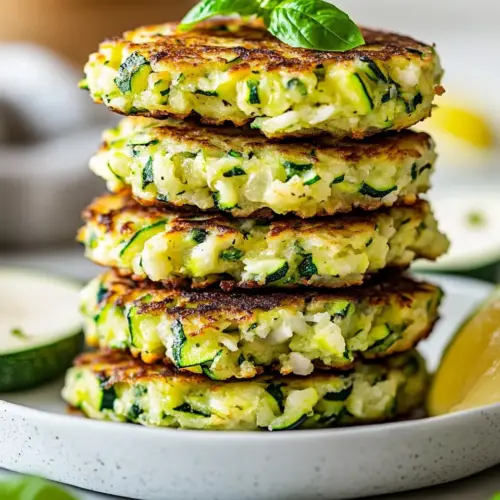
Zucchini Fritters
Zucchini Fritters are crisp and golden on the outside, tender inside, with bright notes of lemon zest and savory Parmesan cheese. These easy fritters make a great easy weeknight dinner or snack, pairing beautifully with creamy dips for a satisfying bite. Make them to enjoy a simple, flavorful dish that showcases summer zucchini and comes together with pantry staples.
Equipment
- Colander
- Bowl
- Dish towel
- Skillet
- Spatula
- Plate
Ingredients
- 1 lb zucchini, coarsely grated Provide a moist base and mild flavor while releasing water that should be squeezed out before mixing to prevent soggy fritters.
- 1 teaspoon kosher salt Add seasoning and help draw out excess moisture from grated zucchini when mixed and allowed to rest, enhancing texture and overall flavor.
- 1/3 cup all-purpose flour Bind the mixture and provide structure, helping fritters hold together while adding a neutral, tender crumb when cooked.
- 1/2 cup panko Contribute lightness and crispness to the batter, creating a crunchy exterior and absorbing some moisture for better texture.
- 1/2 cup Parmesan cheese, freshly grated Offer savory umami and salty depth, melting into the batter to enrich flavor and give a nutty, slightly sharp finish.
- 3 scallions, thinly sliced Bring fresh oniony brightness and mild crunch, balancing richness and adding a subtle aromatic lift to the fritters.
- 2 cloves garlic, minced Provide pungent savory notes that deepen flavor, marrying with other aromatics to create a balanced savory profile.
- 1 large egg, beaten Act as a primary binder that helps ingredients coagulate and set during cooking, contributing richness and a cohesive texture.
- 1/2 teaspoon lemon zest Impart a bright citrus aroma and subtle zing that lifts flavors and balances the richness of cheese and egg.
- Pinch of crushed red pepper flakes Add a touch of heat and complexity, enhancing savory flavors without overpowering the delicate zucchini.
- Salt and black pepper, to taste Season to taste with salt and ground pepper to enhance and balance flavors, ensuring the fritters are well-seasoned before serving.
- 2 tablespoons olive oil, for frying Enable pan-frying with a stable oil that promotes even browning and a crisp exterior while adding a hint of fruitiness.
- For serving: sour cream or plain Greek yogurt, tzatziki sauce, or marinara sauce Accompany the fritters with creamy, tangy, or tomato-based sauces for contrast in texture and flavor when serving.
Instructions
- Place grated zucchini in a colander in the sink or over a bowl. Sprinkle with kosher salt and toss well. Let sit for 10 minutes. Use a spatula or spoon to press down on the zucchini to push out the liquid. Transfer the zucchini to a clean dish towel, paper towels, or cheese cloth and squeeze out excess liquid. Don’t skip this step. You want to remove as much moisture as possible.: The grated zucchini will release its liquid promptly, and you should notice droplets forming around the strands, which is normal and expected. Letting it sit with the kosher salt draws out moisture, and you will feel the zucchini soften as the liquid separates. This step matters because moisture is the enemy of crispness, and squeezing the zucchini later prevents watery batter. A common mistake is skimming this step, which results in fritters that fall apart or steam instead of browning properly.
- In a large bowl, combine the grated zucchini, flour, panko, Parmesan cheese, scallions, garlic, egg, lemon zest, and pinch of crushed red pepper flakes. Add a little salt and black pepper, to taste.: When you mix these components you should sense a cohesive mass forming, with the Parmesan cheese and panko absorbing any remaining dampness. The aroma of garlic and lemon zest will become noticeable, teasing the final flavors. This combination creates the ideal balance between binder and texture. If you add too much flour here, the fritters will be dense, so keep measurements accurate.
- Line a plate or platter with paper towels and set aside.: The paper towels will be your landing pad for cooked fritters, and you should see them collect tiny beads of oil as you transfer golden rounds from the skillet. This keeps the fritters crisp rather than oily. If you skip this rest, oil will pool and the fritters can become soggy; always prepare your draining station beforehand.
- In a large cast iron skillet or nonstick skillet, heat the olive oil over medium high heat. When the oil is hot and shimmering, drop about 1/4 cup of the fritter batter into the pan. Lightly flatten with a spatula. You can make 3 to 4 fritters at a time, just make sure they aren’t touching.: Heat the olive oil until it is shimmering and fragrant, but not smoking, which is the cue to begin frying. You will hear a lively sizzle when the batter hits the pan, a satisfying sound that means the exterior is caramelizing. The right oil temperature ensures even browning and minimal oil absorption. Frying at too low a temperature causes greasy fritters, while too hot will burn the exterior before the center cooks through.
- Cook for 3 minutes until deep golden brown. If the fritters are browning too quickly, you can turn down the heat a little. Flip and cook the other side for 3 minutes until deep golden brown. You might need to add a little more oil as you go.: As you drop the batter, flatten lightly with a spatula so the fritters cook evenly and develop a broad golden surface. You will see edges set quickly and small bubbles appear as moisture escapes. Keep fritters separated so they do not steam each other. A misstep here is overcrowding the pan, which lowers the oil temperature and prevents proper browning.
- Transfer to lined plate and cover with foil to keep warm while you repeat with remaining batter.: During these minutes watch for a deep golden hue forming along the edges and underside, and listen to the steady sizzle indicating proper heat. The smell will turn toasty and nutty as the Parmesan cheese begins to brown, which adds flavor. If you notice rapid darkening, reduce the heat slightly to allow the center to catch up without burning the outside. Flipping too early can cause the fritter to tear, so let the first side set firmly.
- Serve warm with a dollop of sour cream or plain Greek yogurt, tzatziki sauce, or dunk the fritters in marinara sauce.: After flipping, press gently with the spatula just once to ensure contact with the pan and even browning. The second side often cooks faster, and you will hear a slightly different, crisper sizzle as excess moisture has mostly cooked off. If the fritters need more time, adjust the heat rather than extending at the wrong temperature. A typical error is flipping multiple times, which can break the crust and cause sogginess.
- You might need to add a little more oil as you go: As you cook multiple batches the skillet will lose some oil to absorption and evaporation, and adding a splash maintains the ideal frying surface so the next set browns correctly. The oil should always coat the pan lightly for even conduction. Add too much oil and the fritters will sit in fat instead of crisping, so replenish modestly.
- Transfer to lined plate and cover with foil to keep warm while you repeat with remaining batter: The plate will collect a faint sheen of oil while the foil preserves warmth and prevents drying. You want to serve the fritters hot, so working in batches and covering them briefly helps maintain texture. Avoid stacking too many fritters when covered, because trapped steam can soften the crust.
- Serve warm with a dollop of sour cream or plain Greek yogurt, tzatziki sauce, or dunk the fritters in marinara sauce: Serving immediately provides the best contrast between the crisp exterior and tender interior, and the sauces add cooling or tangy accents. Each sauce shifts the character slightly, for instance tzatziki sauce adds herbaceous brightness while marinara sauce gives a comforting, tomato forward pairing. Reheating later will still be tasty, but expect some loss of crispness.
Notes
- Grating tip Use a box grater or food processor to grate the zucchini evenly, then salt and let it sit to draw out moisture for a firmer batter and crispier fritters.
- Squeezing method Transfer the zucchini to a clean dish towel or cheese cloth and wring it tightly until most liquid is expelled; this prevents the batter from becoming watery and ensures better browning.
- Oil management Start with about 2 tablespoons of olive oil and add small amounts between batches to maintain an even frying surface without making the pan greasy.
- Temperature check The oil should shimmer but not smoke before you add fritters; if it smokes lower the heat and let it cool slightly to avoid burnt edges.
- Batch strategy Fry 3 to 4 fritters at a time depending on pan size, keeping them from touching so each piece cooks evenly and develops a uniform crust.
- Storage and reheating Store leftovers in an airtight container in the fridge for up to one week, and re crisp in a hot skillet or oven to return some crunch before serving.