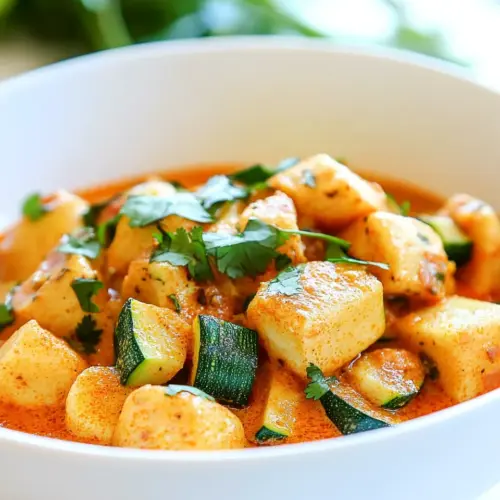
Zucchini Curry
Zucchini Curry is a creamy, fragrant skillet meal that blends bold red curry paste with silky coconut milk for an easy weeknight dinner. Tender chicken and crisp baby carrots round out the texture, while palm sugar and fish sauce deliver the classic sweet salty balance. Try this quick, flavorful dish when you want restaurant worthy results without fuss.
Equipment
- Skillet
- Spatula
- Measuring Spoons
Ingredients
- 1 tablespoon oil Add to the pan to provide a neutral cooking fat and help fry aromatics and curry paste; it also prevents sticking and aids heat transfer. Use at the beginning of cooking to bloom flavors and create a glossy sauce base.
- 1 1/2 tablespoons red curry paste Stir in to deliver concentrated spicy, savory, and aromatic curry flavor; it’s the primary seasoning that defines the dish’s Thai-style profile. Adjust amount carefully to control heat and depth, and fry briefly to release its essential oils.
- 8 oz (230 g) boneless and skinless chicken breast, cut into cubes Cook to supply lean protein and body to the curry; cubed pieces sear quickly and absorb the sauce’s flavors. Ensure even-sized cubes for uniform cooking and add early enough to cook through while remaining tender.
- 6 baby carrots Slice or halve to contribute mild sweetness, crunch, and color contrast; carrots hold up well to simmering and add bite. Add with enough time to become tender but retain slight texture, enhancing the dish’s balance.
- 6 oz (175 g) zucchini, cut into quarters Chop and add to provide tender, slightly sweet vegetable flesh that soaks up curry flavors and adds moisture. Cut into uniform quarters to ensure even cooking and preserve a pleasant bite without becoming mushy.
- 80 ml coconut milk Pour in to lend creamy richness, subtle sweetness, and a silky mouthfeel while mellowing the curry paste’s heat. Stir well to incorporate into the sauce and prevent curdling when simmering.
- 1/4 cup water Measure and add to loosen the sauce to the desired consistency and help balance intensity; water controls thickness without altering flavor much. Add gradually to reach a saucy but not watery finish.
- 2 teaspoons palm sugar, or white sugar to taste Stir in to introduce soft caramelized sweetness and round out salty and spicy notes; sugar balances acidity and heat for a harmonious taste. Taste and adjust to personal preference, adding gradually to avoid over-sweetening.
- 1/2 teaspoon fish sauce Use sparingly to add a pungent, savory, umami kick and brighten the overall flavor with a hint of saltiness. Add near the end of cooking to preserve its delicate fermented aroma and prevent overpowering the dish.
Instructions
- Heat a skillet over medium heat and add the oil. Sauté the red curry paste until it becomes aromatic.: Close your eyes for a moment and tune into the sound and sight of the pan warming, the oil should start to shimmer gently and may send up a faint glint when the light catches it. The reason we warm the skillet first is to ensure even contact so ingredients sear and flavors develop instead of stewing. You may hear a soft hiss when the oil is ready, and that is your cue to proceed. A common mistake here is overheating until the oil smokes; that scorches delicate aromatics and gives a bitter edge. If the pan seems too hot, reduce to medium low and let it settle, you want steady gentle heat not aggressive flames. Keep spatula nearby and move to the next step without delay, because timing matters for flavor.
- Add the chicken and carrots to the pot and stir well to coat them with the curry paste.: As soon as the red curry paste hits the pan, it should sizzle and release a burst of spice and herb scents, almost floral with toasted notes. Stir constantly so the paste warms evenly and turns glossy, about forty five seconds to one minute, until you can smell its complexities more clearly. This stage blooms the paste so its chilies and aromatics infuse the oil , creating a deeper, rounder flavor in the final sauce. Be mindful not to let it stick and blacken, which causes bitterness; if you see dark flecks, lower the heat and add a splash of water to deglaze. If your paste is dense, press it flat with the back of your spoon so it heats uniformly.
- Add the zucchini, coconut milk, and water, and bring the curry to a boil for about 5 minutes. Then add the palm sugar and fish sauce, letting it boil for another minute or so, or until the zucchini is slightly soft but not overcooked. Dish out and serve immediately with steamed jasmine rice.: When the cubed chicken and baby carrots hit the aromatic base, you should hear and feel the heat change as ingredients meet the pan, with the chicken edges beginning to firm and the paste clinging like a glaze. Toss quickly to coat each piece so they pick up that concentrated flavor. This contact sears the surface slightly, locking juices inside the chicken and caramelizing natural sugars on the carrots, both of which enhance taste and texture. A typical slip is overcrowding the pan which causes steaming instead of searing; if the skillet is crowded, cook in batches or use a larger pan to maintain high contact heat. Keep stirring periodically so nothing sticks while you prepare the next liquids.
- Add the zucchini, coconut milk, and water, and bring the curry to a boil for about 5 minutes.: When you pour in the coconut milk and measured water , the pan will hiss and the sauce will look pale and milky, then begin to swirl into an even emulsion. As it warms, aromas will mellow and the sauce will start rising to a gentle boil, with tiny bubbles forming around the edges. The bubbling signals that the flavors are integrating and that the vegetables will start to tenderize. Keep the heat to medium to maintain a steady gentle boil, stirring occasionally so the sauce does not stick or reduce too quickly. Watch the zucchini color shift to a deeper green and the flesh to appear slightly translucent; those visual cues mean it is softening. A common error here is to boil too vigorously, which can break down the coconut milk and make the sauce grainy, so lower the heat if the bubbles become aggressive.
- Then add the palm sugar and fish sauce, letting it boil for another minute or so, or until the zucchini is slightly soft but not overcooked.: As soon as you stir in the palm sugar and fish sauce , you will notice the sauce gain a glossy sheen and a layered balance of sweet and savory. The sugar mellows the heat of the paste, while the fish sauce deepens the savory backbone without tasting overtly fishy when used in this measured amount. Continue simmering for a short minute to allow the liquid to marry and the zucchini to reach that tender yet firm stage, where it yields to a fork but still holds shape. Overcooking will produce a mushy texture and a watery sauce, so sample a small piece for doneness early. If you find the sauce too salty, a tiny squeeze of acid or a pinch more sugar can nudge the balance back, but add conservatively as it is easy to overshoot.
- Dish out and serve immediately with steamed jasmine rice.: When you plate the curry, you should see a creamy sauce that clings to the chicken and vegetables, with steam carrying fragrant coconut and spice to the table. Serving right away preserves the best texture, especially of the zucchini , which will continue to soften if left in the hot sauce. A frequent misstep is letting the curry sit uncovered, which cools and thickens it unevenly, so serve straight from the pan for peak flavor and temperature. Garnish if desired and enjoy the contrast of warm curry and fluffy rice in each bite.
Notes
- Boost the Heat Add a small pinch of chili flakes or a teaspoon more red curry paste if you want a spicier finish, but increase gradually and taste as you go to avoid overpowering the dish.
- Milder Option Use a milder paste or reduce the amount of red curry paste, balancing heat with a touch more palm sugar if needed to maintain flavor complexity.
- Richer Sauce Stir in a spoonful of coconut cream or the thick top of the canned coconut milk at the end to amplify silkiness without changing the cooking time.
- Vegetable Swap Keep the method but swap the baby carrots for thinly sliced bell peppers for a different sweet crunch, adjusting cook time so they remain slightly crisp.
- Herb Finish A handful of fresh herbs added just before serving can lift the dish; cilantro or Thai basil are classic, but add only at the end to preserve their fragrance.