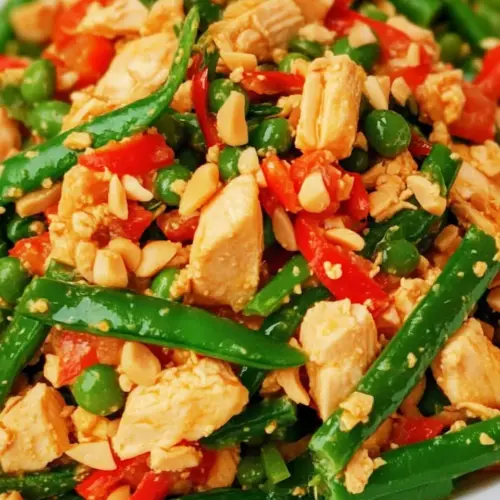
Yam Tua Poo Thai Chicken and Bean Salad
Yam Tua Poo Thai Chicken and Bean Salad is a creamy and crunchy Thai inspired salad featuring tender chicken, crisp green beans, toasted coconut, and a zesty coconut lime dressing. This easy weeknight dinner presents layered textures and bright flavors, perfect when you want something fast yet impressive. Make it for a simple lunch or a casual dinner, it rewards you with bold taste and light satisfaction.
Equipment
- Saucepan
- Dry frying pan
- Large Bowl
- Knife
Ingredients
- 1 lb boneless skinless chicken breast Cooked and sliced to provide lean protein that forms the salad's hearty base; poaching or grilling yields moist texture and neutral flavor that soaks up the dressing.
- 1/2 tablespoons salt Used sparingly to season the chicken and boiling water, enhancing overall taste and balancing the salad's sweet and acidic elements; dissolve evenly for consistent seasoning.
- 1/2 lb fresh green beans, trimmed Blanched or steamed until crisp-tender to contribute bright color, crunchy texture, and fresh vegetal notes; trim ends for uniform bite and presentation.
- 1/2 tablespoons salt Added again as a measured seasoning to the beans' cooking water or directly to the vegetable for consistent salting; ensures balanced flavor across components.
- 1/4 cup unsweetened coconut flakes Toasted lightly to offer sweet, nutty aroma and chewy texture, complementing the coconut cream in the dressing and reinforcing Thai flavor profiles.
- 1 red chile, seeded and thinly sliced Sliced thinly to impart concentrated heat and fragrant chili aroma, providing spicy contrast and visual color that can be adjusted to taste by leaving seeds in or removing them.
- For the Dressing: Designates the separate component that unifies the salad; prepares readers to assemble a creamy, tangy dressing that defines the dish's Thai character.
- 1/2 cup canned coconut cream or milk Whisked into a rich, creamy base for the dressing to provide body, subtle coconut sweetness, and a lush mouthfeel that balances acidity and spice.
- 2 teaspoons chili paste, preferably roasted Stirred in to contribute smoky, concentrated chili flavor and deeper heat; roasted paste adds complexity and anchors the dressing's spiciness.
- 2 cloves garlic, minced Minced and incorporated to deliver pungent, savory depth and aromatic bite; softens when mixed into the coconut base while enhancing overall savoriness.
- 2 tablespoons fresh lime juice Squeezed in to add bright acidity and citrus fragrance that cuts through the creaminess and lifts the salad's flavors, making the dish lively.
- 1 tablespoon fish sauce Measured to introduce umami and salty depth, harmonizing with lime and sugar while contributing authentic Southeast Asian savory character.
- 1 tablespoon sugar Dissolved to supply balanced sweetness that rounds sharp flavors and mellows the heat; adjust to personal preference for sweet-tart balance.
- For the Toppings: Introduces a new subsection for finishing touches and crunchy garnish, signaling optional flavorful elements to sprinkle over the assembled salad.
- 2 tablespoons French fried onions Sprinkled last to provide crunchy, savory contrast and a hint of fried onion sweetness; enhances texture and offers a classic finishing crunch.
- 3 tablespoons roasted peanuts, crushed Crushed and scattered to add earthy crunch and roasted nuttiness that complements the coconut and chili, finalizing the dish with textural and flavor balance.
Instructions
- Bring a small saucepan filled with water to a boil. Add 1/2 tablespoon of salt along with the chicken and bring to a boil. Reduce the heat to medium, cover, and simmer the chicken until it is cooked through, about 12 minutes. Remove the chicken from the pan, discarding the liquid, allow it to cool and then cut it into 1/4 inch cubes. Set aside.: The kitchen will start to smell faintly mineral and carry a rising, gentle steam as you heat the water, a clear sign the pot is reaching its job. Using enough water ensures the chicken cooks evenly rather than cooling the pan too much on contact, which can lead to uneven doneness. A common mistake is crowding the pan, which lowers the water temperature and prolongs cooking; avoid that by using a pot large enough for the chicken to move freely. Listen for the steady, spirited bubbling that marks a true boil, then proceed to the next measured additions.
- Bring another saucepan filled with water to a boil and add 1/2 tablespoon salt. Add the green beans and blanch them for about 1 minute until barely tender and still crisp. Immediately drain the liquid and let the beans cool under cold running water. Cut the beans into 1/4 inch pieces and set aside.: The addition of salt at this stage seasons from within, so the chicken tastes more than surface salted. When you return the water to a boil after adding the chicken , the sound shifts to a higher, energetic simmer, and you will see the surface slightly racing. Over salting at this point can make the meat taste briny, so measure carefully. If the water seems too aggressive, lower the heat briefly to avoid a violent boil that can toughen the meat.
- In a dry frying pan over medium heat, toast the coconut flakes, stirring to prevent burning, until light golden brown, 1-2 minutes. Set aside.: As the pot simmers with the lid on, the kitchen fills with a gentle, savory aroma, and the chicken becomes opaque and firm to the touch. This gentle, moist cooking method keeps the meat tender. A pitfall is over cooking, which yields dry, stringy texture; check at around 10 minutes by testing the thickest part. Resting covered helps the juices redistribute, which matters for a juicy result.
- To make the dressing combine all the dressing ingredients and stir until the sugar dissolves. Place the chicken and beans in a large bowl and add the dressing. Toss to mix and thoroughly coat the chicken and beans. Add the toasted coconut, French fried onions, and peanuts and toss again until combined. Serve hot or cold as a light meal with a carb of your choice or as a side.: Cooling the chicken slightly before cutting prevents it from shredding or losing juices. You will notice a softer, slightly glossy surface when it has rested enough to cube cleanly. Use a sharp knife and steady strokes to get uniform 1/4 inch pieces for even texture. Cutting too early often tears the meat and squeezes out juices, so be patient and let it rest briefly.
- Bring another saucepan filled with water to a boil and add 1/2 tablespoon salt: This second pot will create a bright blanch for the green beans , and the smell will be fresh and neutral, unlike the pot used for the chicken . Salted blanching water seasons the green beans quickly while preserving color. Avoid using the same water as the chicken to keep flavors separate and crispness intact.
- Add the green beans and blanch them for about 1 minute until barely tender and still crisp: Blanching should be quick, and you will see the beans deepen in color and become slightly more flexible but still snap when bent. This near crisp doneness protects that refreshing bite in the finished salad. A common error is over blanching, which yields limp, dull beans; watch the clock closely and test one bean by biting it.
- Immediately drain the liquid and let the beans cool under cold running water: Shocking under cold water stops the cooking instantly, locking in bright green color and crisp texture. The sound of the water will shift to a gentle hiss as it cools the beans, and their surface will feel firm and cool to the touch. If you skip this step, residual heat will continue cooking them and make the texture soft and unattractive.
- Cut the beans into 1/4 inch pieces and set aside: Uniform 1/4 inch cuts echo the size of the cubed chicken , creating balanced bites. The clean, short pieces are easier to toss and eat. Cutting irregularly leads to inconsistent texture; aim for even slices for a harmonious eating experience.
- In a dry frying pan over medium heat, toast the coconut flakes, stirring to prevent burning, until light golden brown, 1 to 2 minutes: As you toast, the coconut will release a sweet, toasty aroma and take on a warm golden hue. Stirring constantly is key because coconut can scorch quickly and develop a bitter edge if neglected. If you notice dark flecks, remove the pan immediately, as that bitter note will be noticeable in the finished salad.
- Set aside: Let the toasted coconut cool on a plate to preserve its crunch, and you will notice it becomes drier and crunchier as it rests. Cooling prevents residual pan heat from steaming the flakes, which would soften them. Store it in a single layer briefly to avoid steam buildup, which is a small but important step for texture retention.
- To make the dressing combine all the dressing ingredients and stir until the sugar dissolves: When the dressing comes together, the kitchen gains a fragrant, slightly spicy perfume of garlic, lime, and chili. Stirring until the sugar dissolves creates a smooth, cohesive dressing without grainy bits. If sugar remains undissolved, it can give sweet pockets that unbalance the salad, so whisk thoroughly and taste for balance.
- Place the chicken and beans in a large bowl and add the dressing: The dressing should lightly coat each piece, and as you toss, you will see a glossy sheen develop on the chicken and green beans . Proper coating ensures every bite has a balance of creaminess and acidity. Overdressing can mask textural contrasts, so add gradually and toss until evenly distributed.
- Toss to mix and thoroughly coat the chicken and beans: Tossing by hand helps you feel the distribution and prevents delicate ingredients from breaking. You will hear a soft shuffle of ingredients and see the dressing cling to the surfaces. A common mistake is aggressive tossing which can mash the beans or shred the chicken ; be gentle and deliberate.
- Add the toasted coconut, French fried onions, and peanuts and toss again until combined: These toppings introduce crunch and toasted aroma, transforming the texture from soft to vibrant. Toss gently to distribute them evenly without turning them to dust. If you add them too early they can soften from the dressing, so fold them in just before serving.
- Serve hot or cold as a light meal with a carb of your choice or as a side: Serving temperature changes the experience, warm emphasizes comfort and aroma while cold highlights brightness and crunch. Plate the salad so the toppings sit on top, preserving visual contrast. A common oversight is refrigerating with crunchy toppings in place which makes them soggy; store toppings separately if not serving immediately.
Notes
- Control the Heat: Use a seeded red chile to moderate spice and add seeds back slowly if you want more intensity, since chili paste and fresh chile sizes vary.
- Measure Salt in the Water: Add the specified 1/2 tablespoons salt to each pot so the chicken and green beans are seasoned from within, preventing the need to oversalt later.
- Choose the Right Coconut: Pick canned coconut cream for a richer dressing or coconut milk if you prefer a lighter finish, and shake the can if separated for consistency.
- Keep Crunch Separate: Store the French fried onions and crushed peanuts separately until serving to maintain their crispness and textural impact.
- Toast with Care: Toast the coconut flakes over medium heat, stirring constantly, and remove them at the first golden note to avoid a bitter, burnt flavor.
- Make Ahead Tips: You can poach the chicken and blanch the green beans earlier in the day, storing them chilled and tossing with dressing just before serving for maximum freshness.