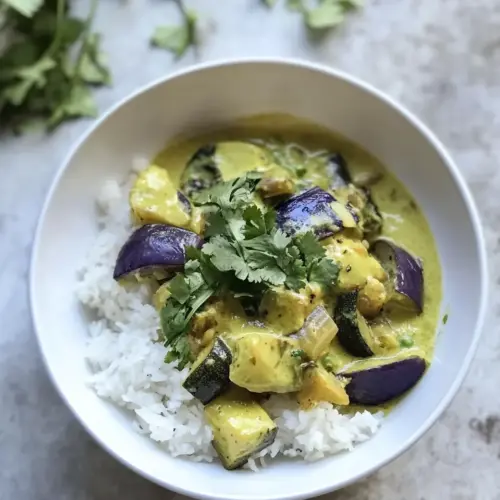
Winter Vegetable Green Curry
Winter Vegetable Green Curry is a creamy, aromatic bowl that blends rich coconut milk with vibrant green curry paste, tender cauliflower, silky oyster mushrooms, and crisped tofu. It makes an easy weeknight dinner that feels both nourishing and bright, perfect for cold evenings when you want warming comfort without heaviness. Try it for a cozy, flavorful meal.
Equipment
- Chef knife
- Medium Saucepan
- Small sauté pan
Ingredients
- 2 ounces firm tofu Press and cube to add a firm, protein-rich texture that soaks up curry flavors and holds shape when simmered.
- 14 ounce can coconut milk Pour creamy liquid to create a rich, coconut base that balances spice and lends a silky mouthfeel to the curry.
- 2 shallots, peeled and minced Peel and mince to provide a sweet, aromatic foundation that deepens savory notes when sautéed at the start.
- 2 garlic cloves, minced Mince finely to contribute pungent, aromatic heat that enhances savory depth and brightens the curry’s flavor.
- 1/2 cup chicken stock, or veggie stock Measure as a simmering liquid to adjust consistency and add savory depth; use vegetable stock to keep it vegetarian.
- 3 -4 tablespoons green curry paste, depending on spice level Stir in according to taste to supply concentrated aromatic heat, herbs, and aromatics that define the curry’s profile.
- 2 tablespoons fish sauce, optional – skip if you’d like to make this vegetarian Add sparingly to introduce salty, umami complexity and authentic Southeast Asian flavor; omit to keep the dish vegetarian.
- 1/2 small head of cauliflower, about 4 ounces Break into florets to offer a tender, slightly nutty vegetable that soaks up sauce and adds body to the curry.
- 3 -4 oyster mushrooms, sliced into 1/4-inch strips Slice into strips to provide meaty, earthy bites that contribute chewy texture and absorb the curry sauce well.
- 1 yellow squash, sliced Slice evenly to contribute mild sweetness and soft texture that balances richer, creamier components in the curry.
- Wedges of lime Serve as wedges to provide zesty acidity that brightens and balances the dish when squeezed over individual portions.
- Small handful of cilantro, loosely chopped Chop loosely to add fresh, herbal brightness and a burst of green aroma as a finishing garnish for contrast.
Instructions
- Lay the block of tofu on a few paper towels; top the tofu with a few more, and set something moderately heavy on top. This will help the tofu expel its extra water. Allow to drain for 15 minutes; when done, slice the tofu into a small to medium dice. Set aside.: The pressed tofu should feel firmer after 15 minutes, and you will notice liquid gathering on the towels, which is a good sign that the tofu will brown better. Sensory cues include a firmer hand feel and a faint nutty soy scent as moisture leaves, and when you slice it the edges should be clean not soggy. The reason this matters is that dry surface allows Maillard browning when the tofu hits hot oil, producing crispness and savory notes. A common mistake is skipping pressing, which results in steaming rather than browning, leaving the cubes pale and soft rather than golden and textured.
- To a medium saucepan, set over medium heat, add the coconut milk (reserving the can for future use), shallots and garlic. Cook for 2-3 minutes, until the shallots and garlic are softened. Add the chicken stock (or veggie stock) to the reserved can and swish it around (we want as much coconut as possible) until all of the remaining coconut milk has been combined with the stock; pour in the pot and proceed to add the fish sauce (if using) and green curry paste, according to your spice tolerance. Stir until the curry paste has completely dissolved. Bring the heat down to a medium low, so the mixture is lightly simmering.: You should hear a gentle softening sound as the shallots and garlic hit the warm coconut, and a sweet aromatic swirl will rise from the pot within two to three minutes. Visually the shallots will turn translucent and the aromatics will coat the surface of the milk, signaling readiness. This step builds the foundational flavor by blooming aromatics into the fat of the coconut milk , which helps distribute their fragrance across the curry. Avoid overbrowning here, which can introduce bitter notes that throw off the curry balance.
- Meanwhile, in a small sauté pan, set over medium heat, pour in a tablespoon of olive oil. When the oil is hot, add the tofu and allow to cook and get crispy on its first side, about 2 minutes. Flip the tofu and cook for an additional minute or so. Remove with a slotted spoon and set aside.: Using the reserved can captures every bit of coconut milk and intensifies the coconut flavor in the sauce. When you pour the mixed stock into the pot you will see the sauce thin slightly and develop a glossy surface as it warms. This step ensures nothing goes to waste and that the final consistency is saucy not clotted. A common pitfall is adding cold stock straight from the fridge, which can temporarily cool the pot and slow the cooking, so try to have it at room temperature.
- To the coconut milk mixture, add the cauliflower and yellow squash. Cover the pot and cook for 5-7 minutes, until both are tender. Add the oyster mushrooms and reserved fried tofu and cook for an additional minute. Serve over rice and garnish with a few squeezes of lime (a must, in my opinion!) and a sprinkling of cilantro.: As you stir the green curry paste into the warm coconut base it will dissolve and release a fragrant, herbal cloud, and the sauce will take on a more vivid green tint. Smell and taste as you go so you can tailor heat, because brands vary; the paste transforms the profile from mild to punchy. This blending step matters because it allows the paste to infuse evenly rather than clumping, which would leave pockets of intense flavor. One mistake is dumping in too much paste at once, which can make the curry one dimensional and overly spicy.
- Stir until the curry paste has completely dissolved bring the heat down to a medium low so the mixture is lightly simmering: You want a gentle shimmer on the surface not a vigorous boil, and you will hear a soft, steady simmer rather than rapid bubbling. The low simmer cooks the aromatics and allows the flavors to marry without breaking the coconut emulsion. If it boils too hard the sauce can separate and become oily, which changes the silky texture we seek.
- Meanwhile in a small saute pan set over medium heat pour in a tablespoon of olive oil when the oil is hot add the tofu and allow to cook and get crispy on its first side about 2 minutes: Listen for a quick, lively sizzle when the tofu meets the oil and watch for golden edges forming, which indicate good contact and heat. The aroma will evolve from neutral soy to toasty and slightly nutty as the surface browns. Crisping the tofu creates a textural counterpoint to the creamy curry and prevents the cubes from turning mushy in the sauce. Avoid overcrowding the pan, which leads to steaming instead of crisping.
- Flip the tofu and cook for an additional minute or so remove with a slotted spoon and set aside: After flipping you should see evenly bronzed sides and feel a slight resistance when nudging the cubes with the spatula, which tells you they are ready. Removing the tofu preserves that crispness while the rest of the dish finishes, so the final assembly keeps textural difference intact. A typical mistake is leaving the tofu in too long in a wet sauce, which will soften the crust you worked to develop.
- To the coconut milk mixture add the cauliflower and yellow squash cover the pot and cook for 5 to 7 minutes until both are tender: You will hear a low whisper from the covered pot and then a soft bubbling when the vegetables begin to release steam, and the cauliflower should yield to a fork with a slight resistance while the yellow squash becomes tender yet not mushy. This timing helps them absorb curry flavors without disintegrating, preserving texture contrast. Overcooking will make the vegetables limp and lose their structure, so check early and often.
- Add the oyster mushrooms and reserved fried tofu and cook for an additional minute: When the oyster mushrooms hit the pot you will detect an earthy perfume and the mushrooms will soften quickly, becoming silky and glossy as they soak up the sauce. Reintroducing the fried tofu now allows it to warm through without losing its crust, and the final minute melds flavors so each component harmonizes. The main misstep is adding mushrooms too early, which can make them overly soft and watery rather than pleasantly tender.
- Serve over rice and garnish with a few squeezes of lime and a sprinkling of cilantro: The bowl should be shimmering with glossy sauce, and the bright citrus from the lime will sing against the richness when you squeeze it at the table. The chopped cilantro provides a fresh, green finish both visually and aromatically. Serving immediately preserves the contrast between the saucy base and the crisped tofu ; letting it sit too long will soften textures and mute the herbaceous finish.
Notes
- Pressing the tofu: Always press your tofu for at least 15 minutes to remove excess water, which helps it brown and hold texture when fried.
- Reserve the coconut: Rinse the empty coconut milk can with stock to scrape out leftover cream and add it back to the pot, maximizing flavor and avoiding waste.
- Control curry intensity: Start with 3 tablespoons of green curry paste and increase after tasting, since different pastes vary greatly in heat and saltiness.
- Timing vegetables: Add firmer vegetables like cauliflower earlier and softer ones like yellow squash later so everything reaches the right tenderness together.
- Finish with acid: Squeeze fresh lime just before serving to lift flavors and cut through the richness of the coconut milk.