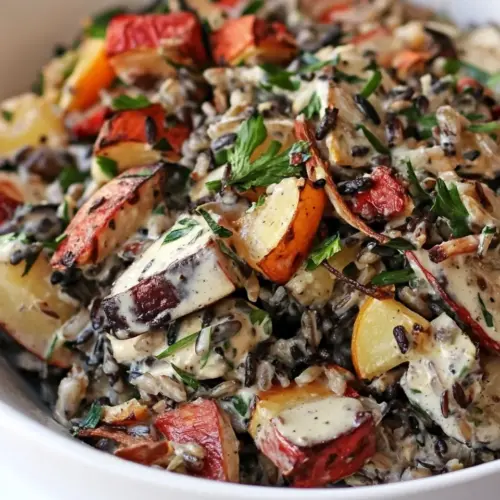
Wild Rice Salad with Roasted Vegetables and Lemon Tahini Dressing
Wild Rice Salad with Roasted Vegetables and Lemon Tahini Dressing is a hearty and bright bowl with chewy wild rice, caramelized root vegetables, and a creamy lemon tahini dressing. It's creamy yet light, full of texture, and ideal for an easy weeknight dinner or a make ahead potluck dish. The harmony of nutty, sweet, and tangy flavors makes it a recipe you'll want to share and repeat.
Equipment
- Saucepan
- Rimmed Baking Sheet
- Large Bowl
Ingredients
- 3/4 cup (125 g) wild rice Cook and tenderize to provide a nutty, chewy base for the salad; rinse and simmer until the grains split and are tender, then fluff and cool before combining with other elements to absorb flavors.
- 6 cups (750 g) peeled and cubed root vegetables; any mix of carrots, parsnip, celery root, beets, and butternut squash, or other favorites Roast and caramelize to add sweet, earthy, and textural contrast; chop into uniform cubes, toss with oil, salt, and pepper, and roast until golden and fork-tender to complement the wild rice.
- Olive oil Toss and coat the vegetables to promote even roasting and mouthfeel; drizzle over veggies before baking to help browning and to carry seasoning throughout the salad.
- Sea salt and black pepper Season and enhance overall flavor balance; sprinkle and adjust during cooking and roasting to elevate natural sweetness and provide a savory counterpoint to the dish.
- 2 spring onions or green onions, minced Garnish and add mild pungency and crunch when minced; scatter over the finished salad to introduce bright, oniony notes and a fresh textural pop.
- 1/2 cup (15 g) chopped fresh parsley and chives, (or other favourite herbs) Herb and freshness provider to brighten the dish; finely chop and fold in at the end to introduce green, aromatic lift and contrast to roasted flavors.
- 1/4 cup (80 g) tahini Emulsify and lend a creamy, slightly bitter sesame backbone to the dressing; whisk with lemon juice, water, garlic, and soy to create a luscious coating for the salad.
- 1 tablespoon fresh squeezed lemon juice Acid and brightness agent to balance creaminess and roast flavors; squeeze fresh to add zesty lift and to help thin tahini while sharpening overall taste.
- 3 tablespoons water Thin and adjust dressing consistency while blending flavors; add incrementally to reach a pourable texture that helps the dressing coat rice and vegetables evenly.
- 1 clove garlic, peeled and minced Flavor and aromatic enhancer to deepen the dressing; mince and incorporate into the tahini mixture for pungent, savory depth that complements the other ingredients.
- 1 teaspoon soy sauce Umami and saltiness booster to round out the dressing profile; stir into the tahini and lemon mixture to introduce a savory complexity and balanced seasoning.
Instructions
- Put the wild rice in a saucepan and cover with plenty of salted water. Bring to a boil, then reduce the heat to a gentle boil and cook the rice until it’s tender, about 45 minutes.: The pot will smell faintly nutty as the wild rice simmers, and you will see the grains swell and split slightly, becoming more translucent at the edges. Stir once or twice early to prevent sticking, then let it simmer gently so it cooks evenly. I often taste a grain around 35 minutes to check for tenderness, aiming for a toothsome bite without grit. If the water is too low, add a little more so the rice does not scorch on the bottom. A common mistake is boiling too hard, which can make the grains separate unevenly and become chewy around the center, so maintain a gentle simmer and be patient, the texture is worth the wait.
- While the rice is cooking, preheat the oven to 375ºF (190ºC). Drizzle a few spoonfuls of olive oil on a rimmed baking sheet. Spread the cubed vegetables over the pan and season well with salt and freshly ground pepper.: As the oven warms, the kitchen will begin to take on a roasted vegetable aroma when they start to brown, and you will notice the oil shimmering on the sheet. Lay the cubes in a single layer for even heat exposure, and sprinkle salt and black pepper so each piece develops flavor as it caramelizes. If you overcrowd the pan the vegetables will steam rather than roast, so use two pans if needed. A typical error is using uneven sizes which leads to inconsistent doneness, so aim for uniform cubes for predictable results.
- Toss the vegetables with the olive oil and spread them on the baking sheet in an even layer. Bake for 30 to 45 minutes, stirring once or twice during cooking, until the vegetables are fully cooked.: During roasting you will see edges turn golden brown and some pieces get crisp, releasing a sweet, buttery scent from the natural sugars. Stirring once or twice helps each side brown and prevents burning in hot spots. Look for tender interiors and caramelized surfaces, that is your cue to remove them from the oven. Avoid opening the oven too often, as heat loss prolongs cooking and reduces consistent caramelization. If some pieces brown faster, remove them early so they do not become bitter from charring.
- When the rice is done, drain it well and toss it in a large bowl with the cooked vegetables and let cool to room temperature. Once cool, stir in the onions and herbs.: Draining well prevents the salad from becoming soggy, and tossing while warm allows the grains to absorb some of the roasted flavor. As the mixture cools, the steam dissipates and textures firm up, which is why I let it reach room temperature before adding the minced spring onions and herbs. The fresh herb aroma will remain bright when added at the right moment. A frequent misstep is adding herbs or onions too early and losing their texture, so reserve them for the final mix.
- Make the lemon-tahini dressing by stirring together the tahini, lemon juice, water, garlic, and soy sauce, then pour it over the salad and stir it in well. Taste, and add a bit more salt and lemon juice, if desired.: The dressing starts as thick and nutty, and as you whisk it with water and lemon it loosens into a glossy, clingy emulsion that will coat each grain and vegetable cube. You should smell the citrus brightening the tahini , and when poured the dressing should coat without pooling. Stir thoroughly so every component has a touch of dressing, then taste for balance and make small adjustments. Overdressing can make the salad heavy, so add incrementally and stop when you reach a bright, harmonious profile.
Notes
- Prep vegetables evenly Use a ruler for consistent cubes if you want uniform roasting results, or group similar sizes on separate pans so everything finishes at the same time.
- Use room temperature rice Allow the wild rice to cool slightly before mixing it with the warm vegetables so it does not steam and become mushy, preserving the salad texture.
- Thin the dressing gradually Add the water tablespoon by tablespoon to reach a silky sheen, you can always add more but you cannot take liquid away once mixed.
- Adjust salt after soy sauce The teaspoon of soy sauce contributes sodium, so taste before adding extra salt to avoid over seasoning.
- Make components ahead Roast vegetables and cook the wild rice a day ahead, storing them separately and combining with fresh herbs and dressing before serving for best texture.