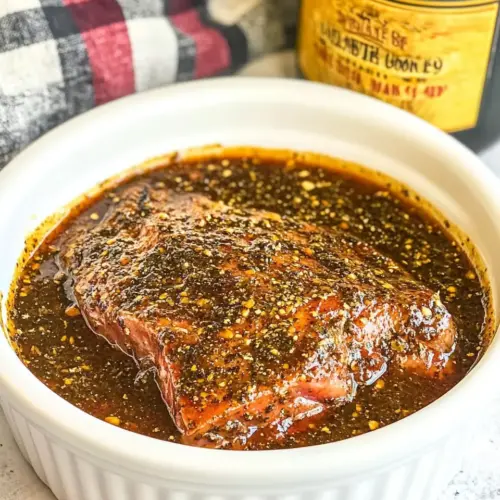
Wicked Good Steak Marinade
Wicked Good Steak Marinade is a bold, savory blend that yields a caramelized crust and juicy interior, combining tangy, sweet, and spicy notes. This easy weeknight dinner booster uses pantry staples like olive oil, soy sauce, and brown sugar to create a steakhouse worthy finish, perfect for grilling or searing. Make it to upgrade any cut of steak and impress with minimal effort.
Equipment
- 9x13-inch Baking Dish
- Charcoal Chimney Starter
- Grilling Tongs
- 12-inch Cast Iron Skillet
Ingredients
- 1/4 cup olive oil Adds a smooth, fruity fat that carries flavors and helps coat the steaks for even marinade coverage; also contributes to a tender crust during cooking when seared at high heat.
- 1/4 cup Worcestershire sauce Provides a deep, savory umami backbone with tangy-sweet undertones that enhance beefiness and balances richer components; helps penetrate meat fibers for improved flavor infusion.
- 1/4 cups soy sauce Contributes a salty umami element that amplifies overall savoriness and helps break down proteins to tenderize the steaks; balances the marinade by enhancing other seasonings.
- 1/2 cup hot sauce Delivers bright heat and tang that livens the marinade, cuts through the richness of the beef, and helps tenderize the meat slightly through its acidic components; offers a bold spicy finish when grilled.
- 3 tbsp brown sugar Introduces mellow caramel sweetness that counterbalances salty and spicy elements, helps create a glossy sear, and promotes slight caramelization on the steak surface when cooked.
- 2 tbsp beef bouillon granules Supplies concentrated beefy flavor and savory depth that intensifies the meatiness of the dish while also contributing saltiness and aiding quick seasoning penetration into the steaks.
- 2 tbsp Montreal steak seasoning Provides a robust, aromatic blend of herbs and spices designed specifically for beef that adds crust-building flavor, a peppery profile, and hearty seasoning complexity to the marinade.
- 3 tbsp minced garlic Adds pungent, aromatic garlic character that infuses the steaks with savory depth and a slightly sweet roasted garlic note after cooking; aids in flavor absorption into the meat.
- 1 tbsp dried minced onion Delivers a subtle, savory onion presence with gentle sweetness that complements garlic and other aromatics while helping round out the overall flavor profile of the marinade.
- 1 tsp pepper Imparts sharp, warming spice that enhances the overall seasoning profile, balances sweetness and acidity, and contributes to a well-rounded savory taste in each bite.
- 4 steaks Serves as the primary protein component that soaks up the marinade flavors, providing the meaty canvas for searing and grilling; proper marinating time yields improved tenderness and flavor penetration.
Instructions
- Whisk all the ingredients together and pour over steaks. Let marinate in the refrigerator a few hours to overnight.: The first thing you will notice is the aroma as the garlic and brown sugar mingle with the tangy Worcestershire sauce and hot sauce , creating a layered scent that hints at caramel and spice. Use a bowl that gives you room to whisk briskly so the olive oil emulsifies slightly with the other liquids, which helps the marinade cling to the meat. As you pour over the steaks , press gently so the marinade coats every surface, then tilt the dish to make sure liquid pools around the edges for even contact. A common mistake is barely mixing the marinade, leaving pockets of concentrated salt or sugar that can unevenly season the meat. Smell the mixture, and if any one note seems too loud, a small adjustment to the soy sauce or brown sugar will balance it.
- Remove steaks from marinade and discard the marinade.: As the steaks rest, the salt and acidic notes will start to penetrate the meat, and you will notice the aroma shift from bright to deeper, more integrated. Refrigeration slows enzymatic changes while allowing flavors to infuse, so keep the steaks covered and chilled. The texture will change subtly, becoming more supple as the marinade works. Avoid marinating at room temperature, which can promote bacterial growth, and do not exceed the time you are comfortable with, since very long marinades can begin to break down delicate fibers excessively. If the meat feels tacky and deeply colored, that is a good indicator that it has absorbed the flavors.
- Cook the steaks with your preferred cooking method to the desired temperature.: When you are ready to cook, take the steaks out and let excess liquid drip back into the dish. Discarding the used marinade prevents any raw meat juices from contaminating cooked food, which is important for safety. Pat the steaks lightly with paper towels if you want a better sear, because a too wet surface will steam instead of caramelize. You should hear a faint sizzle as excess liquid hits the hot pan or grill and evaporates; that sound turns into a steady sear when the surface is hot enough. One common error is trying to reuse the marinade without proper boiling, which risks contamination. If you need a sauce from the marinade, bring it to a rolling boil for several minutes to sterilize it.
- Cook the steaks with your preferred cooking method to the desired temperature: As you place the steaks on the hot surface, listen for an immediate, lively sizzle, which signals the Maillard reaction beginning to form a brown crust. Visual cues matter, watch for the edges to start browning and for juices to rise to the surface, which usually indicates the steak is approaching medium rare to medium depending on thickness. Use a thermometer to be precise, aiming for your target temperature and remembering carryover heat will add a few degrees after resting. A frequent mistake is flipping too often, which interrupts crust formation; let the steak sit until a rich, browned crust releases easily from the pan or grill. After cooking, let the meat rest tented loosely for a few minutes so juices redistribute and the texture becomes uniformly tender.
Notes
- Choose your cut intentionally, because thicker steaks hold up to longer sears and develop a better crust; if you pick a thin cut, shorten marinating time slightly to avoid over tenderizing.
- Use low sodium soy sauce when possible, as it lets you control the overall salt level and prevents the steak from becoming overly salty after marinating.
- Bring steaks to cold but not frozen, keep them refrigerated while marinating and only remove shortly before cooking to reduce bacterial risk and promote even cooking.
- Adjust hot sauce to taste, since the heat level can vary by brand; start with less and add more next time if you want extra kick.
- If substituting fresh onion for dried, finely mince and reduce other liquids slightly to keep the marinade balance and avoid excess moisture on the steak surface.
- When using bouillon granules, dissolve them fully into the liquid to avoid gritty pockets of concentrated flavor that can overwhelm small bites.