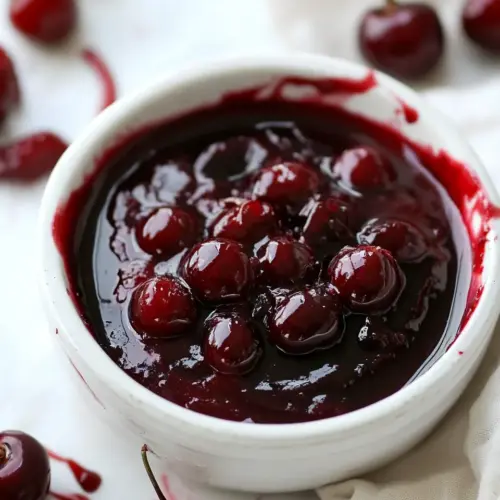
Whole Cherry Syrup
Whole Cherry Syrup concentrates juicy, dark sweet cherries into a glossy, fragrant syrup that is silky and versatile. It offers bright fruit notes with a smooth finish, perfect for drizzling over breakfasts or stirring into drinks. This easy small batch recipe delivers big flavor and lasting jars of summer, ideal for simple gifts or elevating everyday dishes.
Equipment
- Small Saucepan
- Wooden Spoon
- Fine sieve
- Measuring Cups
Ingredients
- 1/2 pound dark sweet cherries pitted Provide rich, ripe fruit flavor and color while offering natural sweetness and a slight tartness; pitting ensures a smooth syrup without bitter pits and allows the cherries to break down evenly when cooked, releasing juices and deepening the sauce's aroma.
- 1/2 cup water Bring necessary liquid to help dissolve sugar and create the syrup base; water helps control consistency and prevents scorching by allowing gentle simmering to extract fruit flavors and meld ingredients evenly.
- 1 cup sugar Supply the primary sweetening and preservative agent that balances cherry tartness and contributes to syrup body and mouthfeel; sugar also helps thicken the mixture as it reduces and promotes a glossy finish when cooled.
- 1 tablespoon butter Add richness and a silky mouthfeel while mellowing sharp edges of acidity; butter helps finish the syrup with a glossy sheen and smooth texture, enhancing flavor and preventing excessive foaming while cooking.
Instructions
- Bring cherries, water and sugar to a boil in a small saucepan. Reduce heat to a simmer and cook for 15-20 minutes, scraping the sides of the saucepan so crystals don’t form. Mix in the butter, remove from heat and serve.: The kitchen will fill with a sharp, fruity scent as the mixture heats, bright and immediate, and you will see bubbles form across the surface as the sugars dissolve. This initial heat helps the fruit release its juices quickly, which is essential for extracting concentrated flavor, and the visual cue to look for is a steady, rolling boil rather than a timid simmer. A common mistake at this stage is using too high a flame, which can scorch the sugars at the pan edges and create bitter notes. Keep the saucepan stable, swirled gently to dissolve the sugar, and scrape the sides as the crystals soften so nothing sticks. You'll notice the cherries beginning to soften within minutes and the color becoming more vibrant as fruit breaks down. The sound will shift from isolated pops to a continuous bubbling, and the aroma will deepen from fresh fruit to something more jam like.
- Reduce heat to a simmer and cook for 15 to 20 minutes, scraping the sides of the saucepan so crystals don’t form: At this stage the texture evolves slowly, and the simmering sound becomes gentler, almost whispering as the liquid reduces and concentrates. Simmering rather than boiling preserves bright fruit notes while allowing water to evaporate, thickening the syrup without burning. As you scrape the sides, you prevent grainy sugar from forming and ensure even caramelization on the bottom, which would otherwise create uneven flavor pockets. Keep an eye on the color shift toward a deeper red and the way viscosity increases, coating your spoon in a glossy film. If the mixture splatters, lower the heat; if it refuses to thicken after 20 minutes, increase the heat briefly while stirring constantly. One trap is walking away; even a short neglect can let the sugars stick and burn, which ruins the batch.
- Mix in the butter: When you pull the pan from the heat, the sound quiets, and steam rises in a fragrant plume. Adding the butter now enriches the syrup, smoothing edges and creating a luxurious sheen. Stir gently until the butter fully melts and emulsifies, noticing how the syrup becomes silkier and slightly more opaque. This step helps integrate fat into the sugar fruit matrix, rounding flavors and improving mouthfeel. Avoid reheating aggressively after adding butter, or it may break and separate, leaving oily streaks. If your butter does not incorporate smoothly, let the pan cool briefly and stir more slowly; overworking it at high temperature is the usual cause of separation. The aroma will mellow, and the syrup should drip in thick ribbons from your spoon when ready.
- Remove from heat and serve: After the final stir the room will relax into a soft, warm scent, and you can judge readiness by the syrup's flow. Properly made, it will coat a spoon and fall slowly in continuous ribbons. Serving while warm gives a fluid texture ideal for drizzling, while cooled syrup will be slightly thicker and stickier. Transfer to a clean jar if you plan to store it, leaving a small headspace for expansion if freezing. The main mistake here is letting it cool uncovered near drafts, which can encourage crystallization on the surface. Seal promptly for storage and label with date; small jars cool faster and reduce risk of spoilage. The finished syrup should taste balanced, glossy, and true to the cherry character you started with.
Notes
- Adjust sweetness: If your cherries are very sweet, reduce the sugar slightly and taste toward the end of cooking to avoid an overly cloying syrup.
- Control thickness: For a thinner syrup, stop cooking earlier; for a thicker syrup, extend the simmer time, watching closely to prevent burning.
- Strain for clarity: If you want a perfectly smooth, clear syrup, strain through a fine sieve or cheesecloth, pressing gently to extract as much liquid as possible.
- Small batch storage: Divide into small jars so you only thaw or open what you need, preserving the rest from repeated temperature changes.
- Use fresh fruit: Frozen cherries can work in a pinch, but fresh dark sweet cherries give the most vibrant color and aroma.