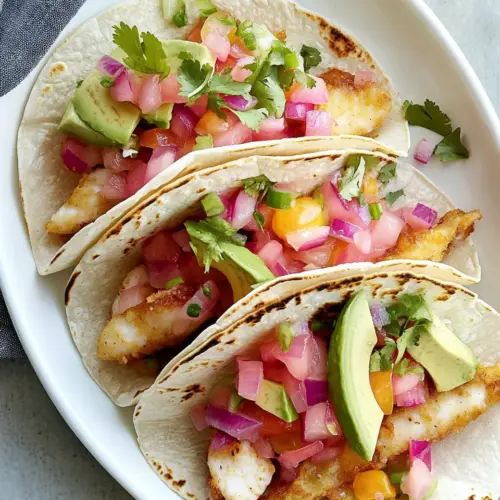
Whitefish and Crispy Avocado Tacos
Whitefish and Crispy Avocado Tacos deliver flaky, golden whitefish and airy, crunchy battered avocado with a bright mango pineapple salsa for a fresh, crispy, and easy weeknight dinner. The interplay of sweet fruit, tangy pickled red onion, and herby cilantro makes each bite sing, perfect for casual gatherings and summer meals. Try them for a memorable handheld meal that is simple to assemble.
Equipment
- Sauté Pan
- Mixing Bowl
- Paper towels
- Whisk
- Tongs
Ingredients
- 1 cup diced pineapple Provide sweet, tropical brightness and juicy texture to the salsa; dice small so pieces distribute evenly and release natural juices that balance spicy or acidic components. Use fresh pineapple to add acidity and a caramel-like sweetness that complements the fish and avocado in the tacos.
- 1 cup diced mango Add floral sweetness and a soft, fibrous texture to the salsa; dice uniformly to blend with pineapple and onion for consistent bites. Choose ripe mango for a lush mouthfeel that enhances contrast with crunchy and savory elements.
- 1 small red onion, diced Contribute sharp, pungent crunch and aromatic bite when finely diced for the salsa; small pieces help cut through sweetness and oiliness. Rinse briefly if desired to tame intensity, then mix with fruit and herbs for layered flavor.
- 1 small red, orange or yellow bell pepper, diced Bring crisp, mild sweetness and colorful crunch when diced; use red, orange, or yellow for visual appeal and balanced pepper flavor. Add to the salsa for contrast in texture and a slightly floral pepper note that brightens the dish.
- 1/2 a lime Provide bright acidity to the salsa and quick-cure pickled onion; halve and squeeze freshly for natural citrus juice that lifts flavors. Reserve extra juice for seasoning fish or finishing the tacos to enhance overall freshness.
- 1/2 cup chopped cilantro Add fresh herbaceous aroma and bright green color; chop finely to distribute flavor throughout the salsa and garnish. Use cilantro leaves mostly, discarding thick stems to avoid bitterness and ensure a clean, citrusy finish.
- 1/4 teaspoon kosher salt, or more to taste Season and enhance all components with clean, crystalline salt; measure and adjust to taste to balance sweetness and acidity. Use kosher salt for even seasoning that helps meld salsa, fish batter, and pickled onion flavors.
- 1 red onion, sliced Provide milder, sweet onion flavor and crisp texture when sliced for quick-pickling; use consistent slices to absorb pickling liquid evenly. Combine with sugar and lime to make tangy pickled onions that add acidity and crunch to tacos.
- 2 tablespoons sugar Sweeten the pickling brine and mellow raw onion bite; measure precisely to balance lime acidity and prevent excessive sourness. Dissolve sugar in warm water before adding onion to ensure a smooth, tangy-sweet pickle.
- 1/2 a lime Add fresh citrus acidity to the pickling brine and salsa; halve and squeeze to extract juice for bright, tangy flavor. Use freshly squeezed lime for more aromatic brightness than bottled juice, which elevates both salsa and pickled onions.
- 1/4 cup water Help dissolve sugar and carry pickling flavors; use approximately warm water to create a brine that softens onion slices without overcooking. Adjust water temperature slightly to aid sugar dissolution while keeping pickles crisp.
- 1/2 cup rice flour Provide a light, gluten-free coating base for the fish; use rice flour to create a delicate, crispy crust when fried. Whisk with spices and water or egg to form a batter that clings to whitefish for even browning.
- 1/4 teaspoon cumin Add warm, earthy flavor and a hint of smokiness when mixed into the batter; measure carefully to avoid overpowering the delicate fish. Combine with other spices to deepen savory notes in the coating for the fried whitefish.
- 1/4 teaspoon paprika Contribute mild smoky warmth and color to the batter; paprika enhances visual appeal and subtle flavor without overwhelming the fish. Use sweet or smoked paprika depending on desired smokiness for the taco filling.
- 1/2 teaspoon kosher salt Provide necessary salinity to season the batter and fish; use slightly more than fine salt due to kosher salt's larger crystals. Sprinkle into the flour mixture and taste-adjust overall seasoning after cooking the fish.
- 1 pound whitefish (tilapia, red snapper, or seabass) Serve as the lean, flaky protein centerpiece for the tacos; choose tilapia, red snapper, or seabass for mild flavor and firm texture that holds up to frying. Pat dry before dredging to ensure the batter adheres and cooks to a crisp exterior.
- 1 ripe avocado, cut into 1/4 inch slices Offer creamy richness and cool texture when sliced thin for topping tacos; cut into quarter-inch slices for easy frying and comfortable bite size. Use ripe but firm avocado to maintain shape when coated and briefly fried to make crispy avocado slices.
- 1 small bunch cilantro Provide additional fresh herb garnish and bright, leafy aroma for finishing; use cilantro sprigs or chopped leaves to complement the salsa and lime. Trim and wash thoroughly, reserving some leaves for plating and some for mixing into salsa.
- corn tortillas Serve as the vessel for assembling the tacos; warm slightly to increase pliability and prevent cracking. Choose fresh corn tortillas for authentic flavor and texture that pairs well with fried fish and vibrant toppings.
Instructions
- Place all the salsa ingredients in a bowl and stir to combine well. Set aside.: Start by combining the pineapple , mango , diced red onion , diced bell pepper , chopped cilantro , lime juice, and a pinch of kosher salt in a bowl, then stir gently to distribute the juices so the fruit gleams and releases a fragrant, sweet aroma. You should hear a soft plop as pieces settle, and the bowl will steam faintly if the fruit was warm from handling. This step lets the flavors marry while you make the other components, ensuring syrupy juices mingle with citrus and herbs for a bright topping. If you skip resting, the salsa will still be tasty but the flavors will not be as integrated, so give it at least a few minutes. A common mistake is cutting fruit unevenly; keep pieces uniform so every bite gets balance.
- In a saute pan, combine the sliced onions, sugar, lime juice, and water. Bring to a boil, and stir occasionally 1-2 minutes, until the sugar has dissolved and the liquid has reduced slightly. Transfer to a mixing bowl and set aside to pickle.: As the syrupy liquid heats, you will smell the sugar caramelizing slightly while the sharpness of the sliced red onion softens. Watch for tiny bubbles forming around the edges as the mixture hits a gentle boil; this signals the sugar is dissolving and the acids are starting to mellow the onion. Transfer the hot liquid with the onions into a bowl so the heat helps the pickling process. The onions will take on a translucent pink hue and a pleasant tang within minutes, and they become tender rather than harsh. Avoid boiling too long, which can make them limp and overly sweet, and be careful not to scorch the sugar by leaving it unattended.
- In a mixing bowl, combine the rice flour, cumin, paprika, and salt. Place half of flour mixture in a shallow bowl. Pat the fish dry, and dredge on both sides with the flour.: Mix the rice flour and spices until the color looks even, releasing a warm, earthy scent from the cumin and a red tint from the paprika . Pat the whitefish fillets with paper towels until no surface moisture remains, so the coating adheres properly and sizzles rather than steaming when it hits the oil. Dredge each fillet lightly, shaking off excess so you have a thin, even crust that will brown evenly. The goal is a golden exterior with flaky interior; too much flour makes a pasty shell, so keep the dredging light. A common error is not drying the fish enough, which leads to the coating slipping off during cooking.
- Heat a thin layer of oil in a saute pan, add the fish and cook 3-5 minutes on each side, until cooked through and golden brown. Remove from the heat and break into pieces.: Warm a thin film of oil until it shimmers but does not smoke, then gently place the floured whitefish into the pan, where it should hiss softly, creating a satisfying sizzle. As it cooks, the edges will darken to an appetizing golden brown, and you will see the fillet start to flake along natural separations. Cook for 3 to 5 minutes per side depending on thickness, turning only once to maintain a crisp crust. Remove and let rest briefly, then break into bite sized pieces with a fork; the flesh should be opaque and moist. If the oil is too cool, the crust will absorb oil and feel greasy; if too hot, the exterior will burn before the inside cooks, so aim for a steady shimmer.
- Place the remaining flour mixture in a mixing bowl and stir in 1/4 cup water. Whisk well to create a batter.: Combine the reserved spiced rice flour with 1/4 cup water and whisk until you have a smooth, slightly thick batter that coats the back of a spoon. The batter should be free of lumps and should cling to the avocado slices without running off in streams, indicating the right viscosity. Letting it sit briefly can help hydrate the flour and give a lighter fry texture. If the batter is too thin, the coating will be pale and fragile; if too thick, it will be heavy and doughy, so adjust with small amounts of water .
- Heat a thin layer of oil in the saute pan, dip the avocado slices into the batter and allow excess to drip off.: Warm oil to a moderate heat where it shimmers gently, then submerge each avocado slice in the batter, holding it for a second so the surface adheres, and lift to let excess drip back into the bowl. You should hear a soft, quick drip and see the batter form a glossy coat on the avocado , highlighting its pale green flesh. Allowing the excess to fall prevents oversized blobs that fry unevenly. Be mindful as battered avocado is delicate; dropping slices too forcefully can cause breakage.
- Cook the coated avocado in the saute pan 1-3 minutes, until crispy. Transfer to a paper towel-lined plate.: Fry the battered avocado slices in the warm oil until the coating turns golden and crisp, which should take about 1 to 3 minutes, flipping gently if needed so both sides develop an even crust. You will notice a light crunch when you tap with tongs and a toasty aroma from the rice flour as the exterior browns. Transfer to a paper towel lined plate to drain; this step keeps them crisp while you finish assembly. Avoid overcrowding the pan, which lowers the oil temperature and yields soggy results.
- Heat the tortillas if desired, and fill with fish, avocado, pickled onions, mango pineapple salsa, and extra cilantro.: Warm the corn tortillas over a hot, dry skillet or briefly in the oven until they are pliable and slightly charred at the edges, releasing a faint toasty aroma. Fill each tortilla with pieces of warm whitefish and a couple of crispy avocado slices, then top with pickled red onion , a generous spoonful of mango pineapple salsa, and a sprinkle of chopped cilantro . The contrast of hot and cool, crunchy and creamy, should be immediately apparent in both scent and texture. Serve immediately for best texture, as sitting too long will soften the batter and the tortillas may become soggy.
Notes
- Fish swap: If you cannot find the suggested whitefish, choose another firm, flaky fillet such as cod, provided it has a similar texture to the listed options.
- Make it gluten free: The recipe already uses rice flour, so the tacos are naturally suitable for those avoiding wheat, just confirm your corn tortillas are certified gluten free.
- Advance prep: You can make the salsa and the pickled red onion up to a day in advance; store them separately in airtight containers to preserve texture.
- Keeping batter crisp: Maintain oil temperature and do not overcrowd the pan so the battered avocado fries quickly and stays crisp rather than absorbing excess oil.
- Balancing sweetness: If your pineapple or mango is overly sweet, add a touch more lime or a pinch of kosher salt to the salsa to balance flavors.