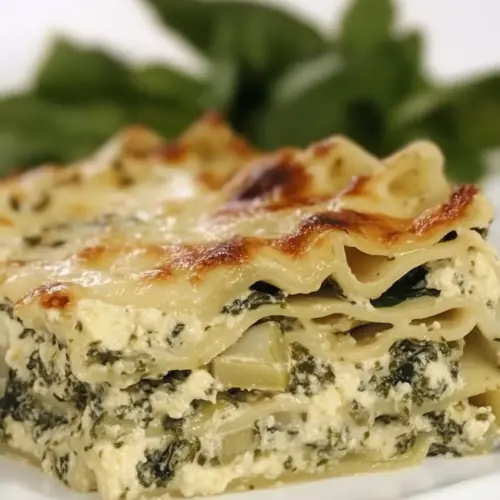
White Spinach Artichoke Lasagna
White Spinach Artichoke Lasagna is a creamy layered casserole that combines tender lasagna sheets, silky béchamel, and a savory filling of baby spinach and artichoke hearts. This easy weeknight dinner brings gooey mozzarella cheese and bright pesto notes together for a comforting, crowd pleasing meal you will keep making again and again.
Equipment
- Large Pot
- Skillet
- Baking Sheet
- 9×13 baking dish
- Whisk
- Mixing Bowl
Ingredients
- 9 lasagna sheets Provide structure and layers for the lasagna; cook according to package instructions before assembling to ensure tender, even sheets that hold the filling together. Offer a neutral wheat base that absorbs sauces and melds flavors between layers for a cohesive final bake.
- 2 1/2 cups mozzarella cheese grated Add gooey, melty richness and a stretchy texture; sprinkle between layers and on top for a golden, bubbling finish after baking. Contribute a mild, creamy dairy flavor that balances the savory spinach and artichoke components.
- 1/2 cup parmesan cheese grated Provide a sharp, salty, and umami kick that enhances cheese and sauce flavors; grate finely and distribute through the filling and on top for added depth. Also helps create a slightly crisp, savory crust when browned under the oven heat.
- 3 tablespoons olive oil Sauté aromatics and prevent sticking while adding a fruity, slightly peppery base flavor; heat before adding onions and garlic to bloom their aromas. Also contributes healthy fats that help meld cheeses and sauces into a smooth, cohesive filling.
- 1 1/2 cups onion diced Build sweet, savory depth and body when softened; cook until translucent to release natural sugars and create a savory backbone for the filling. Finely diced pieces distribute evenly so every bite has consistent flavor and texture throughout the layers.
- 2 cloves garlic minced Infuse pungent, aromatic notes and enhance savory depth; mince and sauté briefly to release essential oils without burning for a balanced garlic flavor. Use sparingly to prevent overpowering delicate cheese and vegetable components in the lasagna.
- 5 oz baby spinach 1 bag Add tender leafy greens, mild flavor, and moisture to the filling; wilted spinach blends with cheeses to create a creamy, nutritious layer. Provide color and get bulk without overwhelming the dish, offering vitamins and a pleasant, slightly earthy taste.
- 1 cup artichoke hearts drained and chopped (I used the marinated kind) Introduce briny, tangy, and slightly sweet artichoke flavor with tender, meaty texture when chopped and mixed into the filling. Marinated varieties bring extra acidity and herb notes that brighten the rich, creamy components of the lasagna.
- salt & pepper to taste Season to enhance and balance all flavors; sprinkle to taste during cooking and assembly to ensure layers are well seasoned. Provide contrast to creamy cheeses and starchy pasta, helping to lift and define each component.
- 3 oz cream cheese softened Contribute smooth, creamy body and tangy richness when softened and folded into the cheese mixture for the filling. Help bind other cheeses and vegetables together, creating a luscious, spreadable layer that adds moisture and silkiness.
- 1/2 cup parmesan cheese grated Add additional salty, nutty, and umami character when mixed into the filling or sprinkled on top for extra savory complexity. Reinforce cheesy flavor throughout the dish and aid in achieving a pleasing browned crust after baking.
- 1 egg Bind filling ingredients and add richness; beat or fold into the cheese mixture to help set the layers as the lasagna bakes. Provide slight structure and create a silkier texture while contributing mild custard-like firmness when cooked.
- 3 tablespoons butter Offer a rich, buttery mouthfeel when melted and used to start the béchamel sauce; melt gently to combine with flour for a smooth base. Enhance overall richness and help carry the sauce's flavors through the pasta layers.
- 3 tablespoons all purpose flour Thicken sauces by forming a roux with butter; cook briefly with butter to remove raw flour taste before adding milk. Provide body and stability to the béchamel so it coats the lasagna layers without becoming watery.
- 2 cups milk Create the creamy béchamel base that binds the lasagna; whisk into the roux gradually to achieve a smooth, lump-free white sauce. Add moisture and subtle dairy flavor that complements cheeses and vegetables throughout the bake.
- salt & pepper to taste Season the béchamel and overall dish to taste; add sparingly and taste as you go to avoid over-salting with cheeses present. Help balance richness and amplify subtle flavors when adjusted properly in the final sauce.
- 1/8 teaspoon nutmeg Introduce warm, aromatic depth in small amounts to the white sauce; grate or measure precisely to avoid overpowering the delicate creamy flavors. Provide a subtle nutty note that complements dairy and leafy greens without dominating the profile.
- 1/3 cup prepared pesto Bring concentrated herbal, garlicky, and nutty notes to the lasagna; swirl into the cheese or sauce layers to add bright, savory complexity. Use sparingly to enhance overall flavor balance and introduce a fresh, pesto-driven accent to the creamy components.
Instructions
- Bring large pot of water to boil. Salt the water, add 2 tablespoons of oil and cook lasagna sheets for half the time recommended on the package. Drain and place on lightly greased baking sheet and set aside.: The steaming, rolling boil should smell faintly of the mineral content in your water and you will hear a steady, lively rumble. Properly salted water seasons the lasagna sheets from the inside out, so I add salt once the water boils and then a touch of olive oil to keep sheets from sticking. Drain promptly and spread the sheets on a lightly greased baking sheet so they cool without clumping, which preserves their shape for layering. A common error is overcrowding the pan, which leads to sticking and tearing; managing space is key to keeping the sheets intact.
- In the same pot, saute onions and garlic in olive oil until softened, about 5 minutes. Stir in spinach. After 1-2 minutes, it should be wilted. Stir in chopped artichoke hearts, salt and pepper. Remove from pan to cutting board and chop into smaller pieces, if desired. {Optional} Spoon mixture into bowl and stir together with cream cheese, parmesan cheese, egg and more salt and pepper. Set aside.: As the pasta cooks, you will notice the color shift to a paler hue and the texture give a slight resistance when you bite a corner. Cooking only half the recommended time ensures the sheets finish cooking in the oven without becoming mushy. After draining, lay them flat to avoid folding. Overcooking here is the biggest mistake, so test early and err on the side of slightly undercooked.
- In the same pot, melt butter over medium heat. Sprinkle in flour and whisk. Cook 1 minute. Pour in milk and whisk to remove any lumps. Sauce will thicken. Add in salt, pepper, nutmeg and pesto. Remove from heat.: When the onion turns translucent and the garlic releases a warm savory aroma, you will know the base is ready. The sound changes from a high sizzle to a gentle, steady bubble as moisture reduces. Stir often so the garlic softens without burning, which imparts bitterness. If you notice dark brown bits, lower the heat and deglaze with a splash of water to avoid off flavors.
- To assemble, lightly grease 9×13 baking dish. Spread 1/4 cup sauce on the bottom of the baking dish. Place 3 cooked noodles across the bottom. Top with half the filling, 1 cup of grated mozzarella cheese and 1/3 of the sauce. Repeat this pattern again: noodles, filling, cheese, sauce. Top with remaining three noodles, remaining sauce and remaining 1/2 cup mozzarella and parmesan cheeses.: The moment you add the baby spinach , it will rapidly wilt, collapsing into the pan and releasing a fresh, green scent. This shrinkage is expected; it concentrates the vegetable flavor. Cook until most moisture evaporates so the filling does not become watery later. Leaving too much liquid is a common oversight, so cook until just damp rather than soggy.
- Cover and bake at 375 degrees for 30-45 minutes or until hot and bubbly. Remove foil and broil 2-3 minutes or until cheese has browned. Remove from oven. Let lasagna rest 10-15 minutes before serving.: At this point the leaves will have softened and brightened, and you will hear less sputter as moisture reduces. Remove promptly once wilted to preserve color and avoid overcooking. Overwilted spinach loses vibrancy and becomes slimy in texture, which flattens the overall dish.
- Stir in chopped artichoke hearts salt and pepper: Adding the chopped artichoke hearts introduces a tangy, slightly briny aroma. Mix thoroughly so they distribute evenly among the greens, then season with salt and pepper to taste. If using marinated artichokes, be mindful of extra oil or acid; drain them well to prevent thinning the filling. Uneven chopping can cause textural imbalance, so aim for uniform pieces.
- Remove from pan to cutting board and chop into smaller pieces if desired: Transferring the mixture to a cutting board lets you control the texture visually and by touch; a few quick chops will create a cohesive filling that spreads easily. The mixture should feel slightly tacky but not runny. Avoid overchopping into a paste, which diminishes the vegetable identity and makes the filling overly dense.
- Spoon mixture into bowl and stir together with cream cheese parmesan cheese egg and more salt and pepper: The bowl will feel cool against your hands as you fold in softened cream cheese , grated parmesan cheese , and the beaten egg . These ingredients bring silkiness and binding power; the filling should become glossy and hold together. Taste and adjust seasoning, remembering the cheeses contribute sodium. Adding the egg to a mixture that is too hot risks scrambling it, so let the mixture cool slightly if needed.
- Set aside: Resting the filling lets flavors meld and firms the mixture for easier layering. You will notice the mixture becomes less fluid as the components bind, which makes assembly neater. Skipping this rest can make the filling spread too thin, leading to uneven layers.
- In the same pot melt butter over medium heat: The butter should foam slightly and smell creamy. This is the base for your béchamel; keep the heat steady so it melts uniformly without browning. Browning the butter will move the sauce toward a nuttier profile, which changes the intended delicate character.
- Sprinkle in flour and whisk: As you add the all purpose flour , whisk constantly. The mixture will thicken into a paste with a faint toasted scent. Cook for about a minute to remove raw flour flavor, watching the color remain pale. If lumps form, add liquid slowly while whisking to smooth them out; a lumpy roux leads to a grainy sauce.
- Cook 1 minute: This brief cook time develops a cooked flavor while maintaining the sauce's light color. Stirring continuously prevents scorching and ensures the roux remains silk like. Neglecting to cook the roux can leave a raw, chalky taste in the finished béchamel.
- Pour in milk and whisk to remove any lumps: Adding the milk in a thin stream while whisking transforms the roux into a glossy sauce. The sound shifts to a gentle simmer and the mixture will thicken gradually. Keep the heat moderate to avoid scalding and stir until smooth. If you see small curdled bits, the heat was probably too high or the milk was too cold; correct by whisking vigorously and lowering the heat.
- Sauce will thicken: You will see the sauce coat the back of a spoon and form a slow moving trail when you run your finger through it. That coating stage indicates the correct consistency for layering, providing moisture without being soupy. If the sauce is too thin, cook a bit longer; if too thick, whisk in a splash more milk .
- Add in salt pepper nutmeg and pesto: Stirring in salt , pepper , a pinch of nutmeg , and the pesto brightens the béchamel. Do this off heat or on very low heat to preserve the herb aroma of the pesto. Taste and fine tune, because the cheeses used elsewhere will add saltiness to the finished dish. Over seasoning at this stage can be hard to correct later.
- Remove from heat: Taking the sauce off the heat prevents it from breaking and keeps its smooth texture. Let it cool slightly before assembling so it does not make the sheets soggy. Assembling while the sauce is piping hot can cause shifting of layers and excess moisture.
- To assemble lightly grease 9×13 baking dish: Greasing ensures the lasagna releases cleanly after baking, and a lightly oiled surface helps the bottom layer glide into place. I prefer an even, thin coating so the dish browns closely to the edges without sticking. Too much grease pools and can make the bottom greasy.
- Spread 1/4 cup sauce on the bottom of the baking dish: That initial puddle prevents the first layer of lasagna sheets from sticking and begins the layering of moisture and flavor. Use the back of a spoon to spread it evenly, noticing the sheen as it glides across the pan. Uneven distribution can lead to dry spots in the lasagna.
- Place 3 cooked noodles across the bottom: Lay the lasagna sheets so they overlap slightly and cover the base. The visual should look like a clean, even bed that will receive the filling. If the noodles are too close together, the center may be dense; leave a small margin for the sauce to travel and coat the edges.
- Top with half the filling 1 cup of grated mozzarella cheese and 1/3 of the sauce: Spread half of the prepared filling evenly, then sprinkle mozzarella cheese for melt and stringiness, followed by a third of the béchamel for moisture. This layering sequence ensures each forkful contains filling, cheese, and sauce. Overcrowding any single layer can make the lasagna overly heavy in spots.
- Repeat this pattern again noodles filling cheese sauce: Building a second layer mirrors the first and creates predictable structure. As you repeat, press gently to compact but not squeeze out the filling. Uneven layering here leads to slices that fall apart when cut, so aim for consistent thickness across the pan.
- Top with remaining three noodles remaining sauce and remaining 1/2 cup mozzarella and parmesan cheeses: Finish with the remaining lasagna sheets , the rest of the béchamel, and the final cheeses for a golden top. The cheese will create a bubbly, browned surface under the broiler that signals readiness. Too little sauce on top can dry out the noodles, while too much will make the top soggy.
- Cover and bake at 375 degrees for 30 to 45 minutes or until hot and bubbly: You will hear a gentle bubbling and smell concentrated dairy and herb notes as the lasagna heats through. The internal temperature should be hot and the edges bubbling; that indicates the layers are cooked and flavors have melded. Baking much longer risks drying, so monitor during the last ten minutes to achieve a tender interior with moist layers.
- Remove foil and broil 2 to 3 minutes or until cheese has browned: The broiler transforms the top into a caramelized, golden crust with small blistered spots. Watch closely because it browns fast; you want a speckled, appetizing color rather than blackened bits. Leaving it under the broiler too long is the quickest way to ruin the top.
- Remove from oven: Once browned and bubbling, the lasagna carries a warm, rich aroma. Let it sit on a cooling rack briefly so residual steam does not create a watery top layer. Cutting while too hot can make the slices fall apart because the filling has not had time to set.
- Let lasagna rest 10 to 15 minutes before serving: During this rest the layers settle and the filling firms, making neat slices easier to achieve. You will notice steam diminish and the structure feel more cohesive when you cut into it. Serving immediately is tempting, but patience here pays off in cleaner plating and better texture.
Notes
- Grate cheese fresh for better melting and aroma, which gives the top that irresistible golden finish.
- Under cook noodles slightly so they finish in the oven, preventing a mushy texture in the finished lasagna.
- Dry marinated artichokes thoroughly to avoid excess oil or vinegar thinning the filling, which preserves layer integrity.
- Cook off spinach moisture completely; excess liquid is the most common reason for a watery lasagna.
- Season in stages tasting after mixing the filling and again after making the béchamel so you can control salt levels precisely.
- Let it rest before slicing for ten to fifteen minutes so the filling firms and slices stay neat.