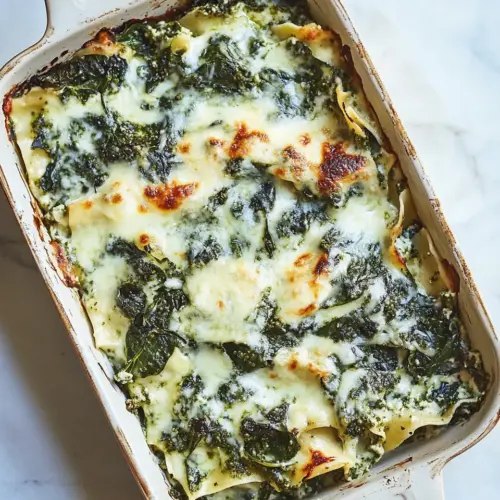
White Pesto Spinach Lasagna
White Pesto Spinach Lasagna is a creamy, herbaceous vegetarian lasagna with melty Raclette and parmesan, silky ricotta, and caramelized mushrooms. This easy weeknight dinner doubles as a make ahead showstopper, delivering rich, comforting layers with bright pesto notes. Perfect for cozy winter meals and feeding a crowd, it is an irresistible reason to bake a pan this weekend.
Equipment
- Large Skillet
- 9x13-inch Baking Dish
- Mixing Bowl
- Whisk
- Spatula
Ingredients
- 2 tablespoons extra virgin olive oil Drizzle extra virgin olive oil into the pan to sauté aromatics and mushrooms, adding a fruity, peppery richness that enhances overall flavor. Use it to prevent sticking and provide a silky mouthfeel to the white sauce and vegetable layers. Add near the start of cooking to bloom flavors without overpowering delicate cheeses.
- 6 tablespoons salted butter Melt salted butter to build a nutty, creamy roux and enrich the béchamel base, contributing both fat and seasoning for depth. Use it to coat mushrooms during sautéing and to create a smooth, glossy sauce that binds the lasagna layers. Adjust heat to avoid browning excessively, preserving a tender sauce texture.
- 12 ounces wild mushrooms, roughly torn Tear wild mushrooms roughly to increase surface area for even browning and to impart an earthy, umami character throughout the lasagna. Sauté until golden to concentrate flavors and remove excess moisture before layering. Combine a variety of types to add textural contrast and complex savory notes.
- kosher salt and pepper Season with kosher salt and pepper to enhance natural flavors and balance the richness of cheeses and butter without introducing metallic notes. Sprinkle incrementally while cooking, tasting as you go to avoid over-salting, especially because cheeses and broth contribute sodium. Use coarse salt for seasoning components and freshly cracked pepper for a bright finish.
- 2 cloves garlic, minced or grated Mince or grate garlic to release pungent, aromatic oils that underpin the savory profile of the sauce and mushroom mixture. Add early during sautéing to infuse the oil and butter, then cook briefly to mellow the raw sharpness. Use measured amounts to support but not overpower the basil pesto and cheeses.
- 1 tsp dried oregano Add dried oregano to contribute a warm, slightly bitter herbaceous note that complements tomatoes and cheeses in Italian-style dishes. Stir into the sauce or mushroom mix so its flavors hydrate and disperse evenly. Use sparingly since dried herbs can concentrate when cooked.
- 1/4 cup all-purpose flour Whisk all-purpose flour into melted butter to form a roux, which thickens the béchamel and creates a smooth, velvety sauce that holds the lasagna together. Cook briefly to remove raw flour taste before gradually whisking in milk and broth. Ensure even incorporation to avoid lumps and achieve the desired consistency.
- 2 cups whole milk Warm whole milk and whisk into the roux to create a creamy béchamel base, providing richness and a tender mouthfeel that balances the saltiness of cheeses. Use at moderate heat to prevent scalding and help the sauce thicken properly. Milk's fat content aids in emulsifying the sauce for a cohesive texture.
- 2 cups vegetable broth Pour vegetable broth into the roux mixture to thin and flavor the béchamel, adding savory depth without overpowering the vegetarian profile. Combine gradually with milk to control sauce consistency and introduce additional umami. Choose a low-sodium broth if monitoring salt due to cheeses and butter.
- 2 cups shredded Emmi Raclette (provolone or fontina can be used) Shred Emmi Raclette (or provolone/fontina) to melt into the sauce and between layers, contributing a creamy, slightly nutty, and stringy texture when baked. Sprinkle evenly to ensure gooey pockets of cheese and a golden finish. Balance amount to prevent a greasy separation while maximizing meltability.
- 1 cup grated parmesan cheese Grate parmesan cheese finely to incorporate sharp, salty umami that brightens the béchamel and layers, providing a savory backbone and lovely crust when baked. Mix into the sauce and sprinkle between layers for concentrated flavor. Use freshly grated for best melting and flavor release.
- 2 cups whole milk ricotta cheese Spoon whole milk ricotta cheese between layers to add fluffy, creamy body and a mild tang that lightens the overall richness. Spread thin, even layers to create tender pockets and help bind noodles to fillings. Drain if overly wet to prevent excess moisture in the lasagna.
- 2 (10 ounce) packages frozen spinach, thawed and drained Thaw and drain frozen spinach thoroughly to remove excess water, then fold into ricotta or sauce to add vegetal flavor, color, and nutritional bulk. Squeeze out liquid to prevent a watery bake and mix well to distribute evenly through the layers. Use two packages for a generous, even spinach presence.
- 1/2 cup basil pesto, homemade or store bought Stir basil pesto into the ricotta or béchamel sparingly to introduce fresh, herbaceous, and nutty notes that lift the dish and provide classic Italian flavor. Use homemade or store-bought to control intensity and salt; fold gently to maintain texture. Add enough to impart a distinct pesto character without overwhelming other components.
- 1 box no-boil lasagna noodles Layer no-boil lasagna noodles to form the structural framework of the dish, softening as they bake and absorbing sauce for cohesive, tender slices. Arrange sheets evenly and overlap slightly where needed, ensuring adequate sauce coverage to hydrate them. Use as instructed on the box to achieve proper doneness without pre-cooking.
Instructions
- Preheat the oven to 350 degrees F. Grease a 9×13 inch pan. Heat the olive oil in a large skillet over medium heat. When the oil shimmers, add the mushrooms and season with salt and pepper. Cook undisturbed for 5 minutes or until golden, stir and continue cooking until the mushrooms have caramelized, 3-5 minutes. Remove the mushrooms from the skillet to a plate. Add the butter, garlic and oregano, salt, and pepper and cook 30 seconds or until fragrant. Whisk in the flour and cook for about 1 minute. Add the milk and broth. Bring to a boil and stir for 1 minute. Remove from heat and stir in the Raclette cheese and 1/2 cup of parmesan cheese. Stir until the cheese is fully melted and the sauce is smooth. Set the cheese sauce aside. In a medium bowl combine the ricotta, spinach, and pesto. Spread 1/4 of the cheese sauce in the bottom of the prepared baking dish. Top with 3-4 lasagna sheets. Spread with 1/2 the ricotta cheese mixture, another 1/4 of the cheese sauce, and half of the mushrooms. Place another 3-4 lasagna noodles on top and then top with the remaining ricotta cheese mixture, another 1/4 of the cheese sauce, and the remaining mushrooms. Add the remaining lasagna noodles and pour the remaining cheese sauce over top. Top with a 1/2 cup of parmesan cheese. Bake uncovered for 45 minutes or until the top has bubbled up and browned a bit. Let stand 10 minutes before serving.: As the oven warms you will notice the faint hum and steady heat that creates the right environment for the lasagna to bake through evenly. This steady temperature allows the cheeses to melt gently, preventing cracking or separation, and produces a pleasing, lightly browned top. A common mistake is to skip preheating which can lead to uneven cooking and a gummy center, so always wait until the oven reaches temperature.
- Grease a 9×13 inch pan: Greasing the pan prevents sticking and encourages the edges to brown slightly. When you oil or butter the dish the fats also conduct heat directly to the bottom layer, yielding a pleasant crust. Be careful not to use too much grease which can pool and create oily spots on the edges.
- Heat the olive oil in a large skillet over medium heat: The oil should shimmer but not smoke, giving off a faint aroma. Medium heat ensures the mushrooms will brown rather than steam. If the pan is too cool the mushrooms will release liquid and not caramelize, so allow the oil to warm first.
- When the oil shimmers, add the mushrooms and season with salt and pepper: As the mushrooms hit the pan you should hear a soft sizzle and see them begin to darken at the edges. Salt draws moisture out then encourages browning, which builds deep savory flavor. Avoid overcrowding the pan or they will steam instead of sear.
- Cook undisturbed for 5 minutes or until golden, stir and continue cooking until the mushrooms have caramelized, 3 to 5 minutes: Leaving the mushrooms alone is key to developing a golden crust and concentrated flavor. After the initial sear stir to brown all sides evenly, the aroma will become nutty and rich. Stirring too frequently prevents that initial caramelization, so patience is essential.
- Remove the mushrooms from the skillet to a plate: Removing them lets you use the same pan to build the sauce without burning residual bits. Those browned mushroom bits can be deglazed later, but transferring them prevents overcooking. A common slip is to leave them in and overcook while you make the sauce.
- Add the butter, garlic and oregano, salt, and pepper and cook 30 seconds or until fragrant: The butter will foam and the garlic will release a warm, aromatic scent almost immediately, signaling readiness. This brief cook time softens the garlic and releases oils, adding depth to the sauce. Avoid browning the garlic too long or it will develop a bitter edge.
- Whisk in the flour and cook for about 1 minute: Cooking the flour removes its raw starchy taste and begins to form a roux that will thicken the sauce. You will see the mixture become slightly sandy then smooth, and the scent will shift to a toasty note. Do not skip this step or the sauce may taste floury.
- Add the milk and broth: Pouring in the whole milk and vegetable broth turns the roux into a creamy base. Stirring as you add liquids prevents lumps and creates a uniform texture. If you add liquids too quickly you risk lumping, so whisk steadily.
- Bring to a boil and stir for 1 minute: The sauce will thicken as it reaches a simmer and small bubbles will appear around the edges, signaling the starch has activated. This brief boil helps evaporate excess moisture and concentrates flavor. Avoid a rolling boil which can cause splatter and separation.
- Remove from heat and stir in the Raclette cheese and 1/2 cup of parmesan cheese: Off heat, the cheeses melt into a glossy, elastic sauce without becoming grainy. The residual heat is gentler and promotes smooth integration. If you add the cheese to a very hot pan it can seize and become stringy, so temper the temperature.
- Stir until the cheese is fully melted and the sauce is smooth: As you stir the sauce will transform from cloudy to satin-smooth, with a sheen that clings to the spoon. This texture ensures each noodle is evenly coated and prevents dry pockets. If the sauce seems too thick, a splash of broth will loosen it without weakening flavor.
- Set the cheese sauce aside: Letting the sauce rest allows it to cool slightly and thicken to a spreadable consistency, making assembly neater. The resting stage also lets flavors meld. Avoid letting it sit too long or it may set too firm to pour easily; gentle reheating fixes that.
- In a medium bowl combine the ricotta, spinach, and pesto: Mixing these ingredients produces a bright, herby layer that contrasts the richer white sauce. The texture should be even, with the spinach incorporated so you do not get watery pockets. If the spinach is not well drained the mixture will release liquid during baking, so squeeze it thoroughly.
- Spread 1/4 of the cheese sauce in the bottom of the prepared baking dish: This base layer prevents the noodles from sticking and ensures even moisture distribution. The sauce should be glossy and not gloppy, which lets the noodles soften properly. Using too little sauce can yield dry noodles, so be generous.
- Top with 3 to 4 lasagna sheets: Arrange the no boil lasagna noodles to overlap slightly so there are no gaps, creating a cohesive layer. The noodles will soften and meld with the sauce during baking. Be careful not to overcrowd or force them; they will expand slightly.
- Spread with 1/2 the ricotta cheese mixture, another 1/4 of the cheese sauce, and half of the mushrooms: Layering in this order ensures each bite has a balance of cream, sauce, and mushroom. The contrast between soft ricotta and caramelized mushrooms is important for mouthfeel. A common error is to mound ingredients unevenly, which leads to inconsistent baking.
- Place another 3 to 4 lasagna noodles on top and then top with the remaining ricotta cheese mixture, another 1/4 of the cheese sauce, and the remaining mushrooms: Building symmetrical layers keeps the structure stable as it bakes. Make sure each layer is evenly spread so the lasagna cooks uniformly. Uneven layers can produce pockets that remain cooler while the edges overcook.
- Add the remaining lasagna noodles and pour the remaining cheese sauce over top: The final sauce pour should cover the noodles and seep into the edges, creating a unified casserole. Aim for a glossy top so when it bakes you get an attractive, bubbling surface. If the sauce is too thick, add a tablespoon of broth to help it spread.
- Top with a 1/2 cup of parmesan cheese: The parmesan forms a savory crust that browns and offers a slight crunch against the creamy interior. Sprinkle evenly so the top colors uniformly. Using too much can create a hard crust that cracks when you cut the lasagna.
- Bake uncovered for 45 minutes or until the top has bubbled up and browned a bit: During baking you will hear gentle bubbling and smell a rich, toasty aroma as the cheese develops color. The edges should be set and the center heated through. If your oven runs hot watch for rapid browning and tent with foil to avoid burning while the center finishes cooking.
- Let stand 10 minutes before serving: Resting lets the lasagna settle so slices hold together cleanly. Steam will redistribute and the texture firms slightly, making serving easier. Cutting too soon can result in a sloppy presentation and loss of the layered structure.
Notes
- Swap the melting cheese: Try provolone or fontina in place of the Emmi Raclette for a slightly different melting profile and a milder, nutty flavor that still yields a creamy sauce.
- Boost the herb note: Stir a tablespoon extra of pesto into the cheese sauce for a more pronounced basil aroma that brightens the entire dish without changing texture.
- Make it ahead: Assemble the lasagna up to a day before, cover tightly and refrigerate, then bake straight from chilled, adding 5 to 10 minutes to the baking time as needed.
- Texture contrast: Sprinkle a small handful of breadcrumbs mixed with olive oil and parmesan on top for a delicate crunchy finish if you want a bit more contrast to the creamy layers.
- Adjust salt carefully: Because Parmesan and Raclette are salty, taste the sauce before adding extra salt, and remember that the cheeses will concentrate while baking.
- Make it lighter: If you prefer a lighter version, use part skim ricotta and reduce the butter slightly, keeping in mind the texture will be less rich but still satisfying.
- Double the pesto swirl: For a more pronounced green ribbon, alternate thin streaks of pesto between layers so each slice has a herbaceous line of flavor throughout.