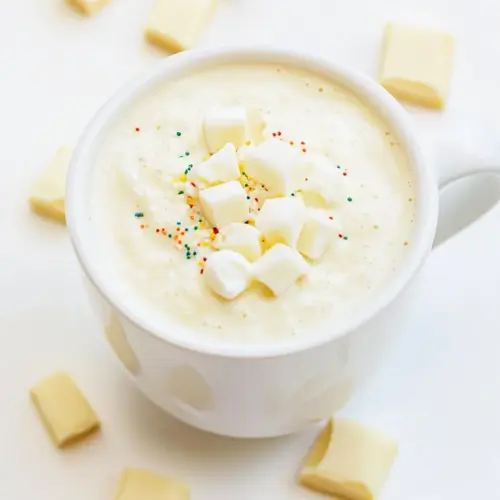
White Hot Chocolate
White Hot Chocolate offers a creamy, silky mug of comfort with melted white chocolate, warm whole milk, and a hint of vanilla. Rich but easy, it is perfect for chilly evenings or a cozy treat, delivering a luxurious texture through a simple method. Make it for a quick indulgence or to elevate a casual gathering.
Equipment
- Saucepan
- Whisk
- heat proof bowl
Ingredients
- 3 ounces good quality white chocolate, finely chopped Provide creamy sweetness and rich cocoa-free chocolate flavor when melted; finely chopped pieces ensure quick, even melting into the milk for a smooth texture. Use high-quality white chocolate to avoid graininess and to impart a luxurious mouthfeel that defines white hot chocolate.
- 1 teaspoon tapioca starch or cornstarch Thickens and stabilizes the beverage by absorbing excess liquid and creating a silky body; dissolve in a small amount of cold milk first to prevent lumps. Use tapioca starch for a clearer, glossy finish or cornstarch as a readily available alternative with similar thickening power.
- 1/4 cup non-fat dry milk powder Adds concentrated dairy solids to boost creaminess and deepen milky flavor without increasing liquid; dissolves into the hot milk to enhance texture and help achieve a richer mouthfeel. Choose non-fat dry milk powder to intensify milkiness while keeping overall fat level controlled.
- 1 1/2 cups whole milk Serves as the liquid base that dissolves and carries the melted white chocolate and dry milk, creating the hot beverage; heat gently to avoid scalding which can cause separation. Whole milk contributes natural fats that enhance creaminess and body in the final drink.
- 1/2 teaspoon vanilla Enhances and rounds the sweet, milky flavors with warm aromatic notes; stir in near the end of cooking to preserve its fragrant character. Use pure vanilla for depth and to complement the white chocolate without overpowering it.
- whipped cream and rainbow sprinkles, for serving Garnishes the finished drink with airy richness and playful color contrast; whipped cream adds softness while rainbow sprinkles provide texture and a festive appearance. Add immediately before serving to maintain whipped cream volume and sprinkle crunch.
Instructions
- Place chopped chocolate in a medium, heat-proof bowl and set aside.: The quiet aroma of chopped white chocolate sitting in a warm bowl signals a simple but crucial staging step. You want the pieces ready so that when you pour warm milk over them they soften immediately and begin to melt uniformly. The visual cue to watch for is the edges of the chocolate softening and losing their sharp sheen, which tells you melting is underway. If the chocolate is not chopped finely, melting will be uneven and you may end up with small, stubborn lumps. A common error is overheating the chocolate later, which can cause it to seize; keeping it separate until the milk is hot but not boiling prevents that.
- In a saucepan, whisk together starch and milk powder. Slowly pour in milk, whisking until smooth and no lumps remain. Heat over medium heat until mixture just starts to steam. Pour over white chocolate. Let sit for 30 seconds, then stir until smooth and melted.: As you whisk the tapioca starch and dry milk powder together, you will notice a fine, dusty texture that will disappear once liquid is added. This dry blending prevents clumps and ensures the thickener disperses evenly through the whole milk . Work with your whisk to lighten the powder and break up any pockets, and you will feel a smoother mixture under the whisk. If you skip this dry whisk, the starch can form lumps that resist dissolving and ruin the texture.
- Return mixture to saucepan and stir over medium heat until thickened, about 5 to 7 minutes. Remove from heat and stir in vanilla. Divide among mugs, top with whipped cream and sprinkles, and serve.: Pour the whole milk in a slow stream while whisking so the powders hydrate and dissolve fully. You'll see the mixture become glossy and homogeneous, with no gritty specks. The sound is a gentle, steady whisking rhythm rather than splashing, and the smell will begin to take on a richer dairy note. If lumps appear, keep whisking over low heat; never add cold milk at the end, as that can chill the mixture and promote clumping.
- Look for tapioca starch (not to be confused with the granules or pearls or pudding) in the baking aisle of specialty grocers, online, or at asian food stores. I liked it because it thickens just as effectively as cornstarch but with a creamier texture and no starchy aftertaste.: Place the saucepan over medium heat and watch closely; the moment the surface shows wisps of steam and tiny bubbles form around the edge, you have reached the right temperature. At this point the mixture will smell warm and slightly sweet. Avoid bringing it to a rapid boil, because high heat can scald the milk and change the flavor. If you see vigorous bubbling, lower the heat immediately; that is the most common mistake here.
- Pour over white chocolate: Pour the steaming milk mixture slowly over the chopped white chocolate , covering the bits completely. You will see the chocolate begin to slump and soften as the heat transfers, and the surface will develop a glossy sheen as it melts. The gentle pooling of warm milk cracking the bowl of chocolate is satisfying, and it prevents direct heat which could scorch the chocolate. If you pour boiling liquid, the chocolate can seize and become grainy, so keep the temperature moderate.
- Let sit for 30 seconds, then stir until smooth and melted: This brief pause allows latent heat to melt the chocolate without aggressive stirring. After 30 seconds, begin stirring slowly from the center outward; you will feel the texture change from clumpy to silky, and the aroma will deepen into a rich milky sweetness. The visual cue is a smooth, glossy emulsion with no streaks. Stirred too soon or too vigorously, the mixture may trap air and look foamy; stir gently and consistently.
- Return mixture to saucepan and stir over medium heat until thickened, about 5 to 7 minutes: Returning the bowl contents to the saucepan and heating gently allows the tapioca starch to activate and thicken the drink. As you stir, expect a transformation from a loose milk to a coating, velvety texture that clings to the spoon. You will see the liquid deepen slightly in opacity and slow in movement. Keep the heat at medium and stir continuously to avoid scorching. A frequent misstep is turning up the heat to hurry the process, which can create a grainy texture.
- Remove from heat and stir in vanilla: Remove the saucepan from direct heat and add the vanilla , folding it in so the aroma is preserved. The scent of vanilla will bloom immediately, lifting the sweet notes of the white chocolate and rounding the flavor. Stirring off heat prevents the volatile vanilla aromatics from dissipating. Adding vanilla too early while boiling will reduce its impact.
- Divide among mugs, top with whipped cream and sprinkles, and serve: Pour the finished White Hot Chocolate into warmed mugs so it stays hot longer. The glossy surface should reflect light and feel thick enough to coat the back of a spoon. Crown each cup with a generous swirl of whipped cream and scatter sprinkles for color and a playful crunch. Serve immediately; letting it sit will cool and thicken further. Reheating can alter texture, so it is best enjoyed right away.
- Look for tapioca starch in the baking aisle of specialty grocers, online, or at asian food stores: Finding the right tapioca starch matters because it provides a creamier mouthfeel than some alternatives. When shopping, check labels to ensure you are getting fine starch rather than pearls or preflavored products. The texture difference is noticeable in the finished drink, and using the wrong form can yield uneven thickening. If you cannot find it, cornstarch will work as a backup, but the mouthfeel will be slightly different.
Notes
- Use higher cocoa butter content chocolate: Choosing top tier white chocolate with more cocoa butter improves meltability and gives a richer mouthfeel, elevating each sip.
- Swap tapioca for cornstarch if needed: Cornstarch thickens reliably in a pinch, though the texture will be slightly less silky than with tapioca starch.
- Warm your mugs first: Preheating cups keeps the drink hotter longer and prevents premature cooling that can change texture.
- Adjust sweetness by chocolate choice: If you prefer less sweetness, choose a less-sweet white chocolate or reduce the amount slightly to balance the cup to your taste.
- Top with flavored whipped cream: A lightly sweetened whipped cream or one flavored with a hint of vanilla can amplify the overall aroma and mouthfeel.