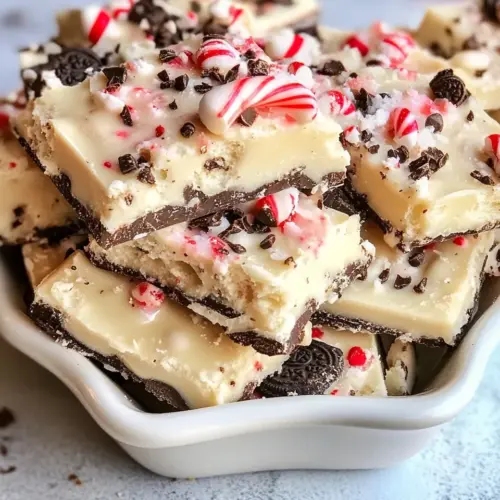
White Chocolate Saltine Toffee with Oreos and Peppermints
White Chocolate Saltine Toffee with Oreos and Peppermints is a crispy, creamy holiday treat combining crunchy saltine crackers, buttery dark brown sugar toffee, and silky white chocolate chips, topped with crushed oreo cookies and pepermints. Easy to make and irresistibly festive, it is perfect for gifting or parties, delivering sweet salty contrast and a memorable crunch.
Equipment
- Rimmed Baking Sheet
- Saucepan
- Spatula
- Parchment Paper
- Refrigerator
Ingredients
- 1 sleeve saltine crackers - about 30-40 Arrange a single layer of crisp crackers to form the toffee base, providing a salty, crunchy foundation that holds the caramel and chocolate while contrasting the sweet toppings.
- 1 cup butter 2 sticks Melt gently to combine with sugar and create the caramel layer; provides rich butterfat that soaks into crackers and yields a glossy, tender toffee when boiled to the proper temperature.
- 1 cup dark brown sugar Dissolve into the butter to form a deep, molasses-flavored caramel; contributes sweetness, chewiness, and color while balancing the saltines and white chocolate.
- 24 oz white chocolate chips recommend ghiradelli Melt smoothly over the cooled caramel to create a creamy, sweet coating; supplies the soft, milky white chocolate flavor and helps bind the crushed toppings to the toffee.
- Kosher salt - to taste Sprinkle sparingly to brighten flavors and enhance contrast; adds a savory note that cuts through the sweetness and highlights the layered textures.
- 1/2 cup peppermints approximate amount - add more or less according to your own esthetic - crushed Crunch and sprinkle over the finished chocolate to add peppermint flavor and festive color; crushed candies provide a cool, refreshing bite and visual interest.
- 1/2 cup oreo cookies crushed Crumble and scatter on top to contribute chocolate-cookie texture and a touch of cocoa flavor; crushed Oreos add contrast, slight crunch, and an extra layer of sweetness.
Instructions
- Preheat the oven to 425.: You will notice the kitchen air warming as the oven ramps up, and the high heat is crucial because it helps the butter and dark brown sugar mixture bubble aggressively on the crackers, creating a thin, even toffee layer. If the oven is not fully hot, the mixture will not bubble properly and can lead to a sticky, undercooked center, so confirm the temperature with an oven thermometer. A common mistake is placing the sheet in too early, which results in uneven bubbling and spots that stay gummy.
- In a sauce pan, melt the butter and brown sugar together and bring to a boil. Allow to boil for about 5-6 minutes - stir occasionally.: As the butter and dark brown sugar melt, you will smell a deep, toasty molasses aroma, and then the mixture will begin to sizzle and bubble. The visual cue to watch for is a steady, even boil with medium to large bubbles; this ensures enough water has evaporated for proper toffee formation. Stir occasionally to prevent hot spots, and keep the heat steady because overcooking will darken the caramel too much, while undercooking will make it soft. If the sugar begins to smoke or turns very dark, you've gone too far.
- Put down parchment or a silpat mat or greased aluminum foil on a rimmed baking sheet. Lay saltine crackers out to cover the baking sheet (the pan must have a rim. It's important).: The parchment or foil protects the pan and makes removal simple, while the rim keeps the liquid contained. Arrange the saltine crackers side by side; they may not line perfectly, and that is okay because the caramel will bridge the gaps. The visual indicator of readiness is a full surface of crackers with few large gaps. A mistake to avoid is using a flat sheet without a rim, which will let the butter sugar mixture run off and ruin both the oven and the texture.
- Pour the brown sugar/butter boiling mixture over the crackers, cover as evenly as possible.: When you pour, you will hear a gentle sizzling as the hot caramel hits the crackers. The sound and the steam rising are signs the mixture is doing its work. Try to pour in a few streams rather than one concentrated puddle to distribute the caramel more evenly. The why behind this is even coverage produces uniform crispness; if you concentrate the caramel in one area you will get chewy spots. If it pools, use a spatula quickly to nudge it outward while hot, but be careful not to burn yourself.
- Bake at 425 for 4-5 minutes until bubbly.: In the oven the sheet will begin to shimmer as the caramel reaches a vigorous bubble. Visually, you want a consistent bubbling across the surface, not just little isolated pockets. This bubbling stage is when the moisture leaves and the toffee will form its signature snap once cooled. A common pitfall is leaving it too long to chase color, which can turn the caramel too dark and bitter; trust the bubbling cue rather than color alone.
- Remove the sheet pan from the oven and pour the chips over the crackers. Don’t worry - they will melt. When they melt, use the back of a wooden spoon or a spatula and spread the chocolate over the crackers. Sprinkle Kosher salt evenly over the surface.: The hot caramel will soften the white chocolate chips , and within minutes the chips will slump and begin to melt into silky puddles. The smell becomes creamy and sweet, and as you spread the melted chips you should see a glossy, even layer forming. Sprinkling Kosher salt now ensures it adheres to the chocolate. If the chips cool too quickly without spreading, allow the pan to sit a minute longer, then use gentle pressure to smooth. Avoid overworking the chocolate or it may seize and become grainy.
- Allow to cool a bit on the counter and then sprinkle with crushed oreos and peppermints.: As the surface cools, the melted white chocolate chips will be tacky enough to catch the crushed oreo cookies and pepermints without them sinking in. The contrast of dark crumbs and red peppermint shards against the pale chocolate is visually appealing. If you add toppings too early while the chocolate is very fluid they may sink; if you wait too long they may not stick. A helpful rule is to wait until the chocolate has lost its glossy sheen but is still warm to the touch.
- Place the entire baking sheet into the fridge or even the freezer until the chocolate is hard - about an hour. Break it into pieces or cut with a knife or even a pizza cutter to create different sized pieces.: Cooling transforms the textures, turning the caramel into a brittle, snappable toffee and the chocolate into a firm shell. You will hear faint clicks as it sets, and the cold will make the cracking process clean when you break or cut it. Avoid rushing the set by trying to break it warm, which yields a sticky, messy result. If you chill too long in a very cold freezer, condensation can form when brought back to room temperature, so wrap or cover if storing for longer.
- Store in a resealable container.: Once firm, the bar will give a satisfying crisp sound as you break it, and the interior will show neat layers of cracker, caramel, and chocolate. Use a knife for clean edges or press with your hands to create rustic shards. A common error is trying to cut too soon; pieces will crumble or smear if still warm. Cut on a stable surface and apply steady pressure for predictable shapes.
- Store in a resealable container.: Proper storage keeps the pieces crisp and prevents the toppings from absorbing extra moisture. Layer with parchment between sheets if stacking to avoid sticking. Room temperature storage is fine for short periods, but refrigeration prolongs freshness. Watch out for humidity, which can soften the toffee over time, so keep in a cool, dry spot for best texture.
Notes
- Swap chocolate types carefully Use a high quality alternative to the white chocolate chips if you want a different flavor profile, but be mindful that melting characteristics vary and may affect spreadability.
- Adjust peppermint intensity Increase or decrease the amount of crushed pepermints to suit your taste, adding more for a bold mint hit or less for a subtler hint that complements the sweetness.
- Control salt levels Sprinkle Kosher salt sparingly at first and taste a tiny piece after it sets, you can always add more to contrast the sweetness without overdoing it.
- Change cookie crunch Vary the amount of crushed oreo cookies to add more chocolate texture or keep it restrained so the white chocolate remains dominant.
- Make different shapes Cut or break into bite sized pieces for gifting or larger squares for sharing, and use a pizza cutter for quick, consistent strips.