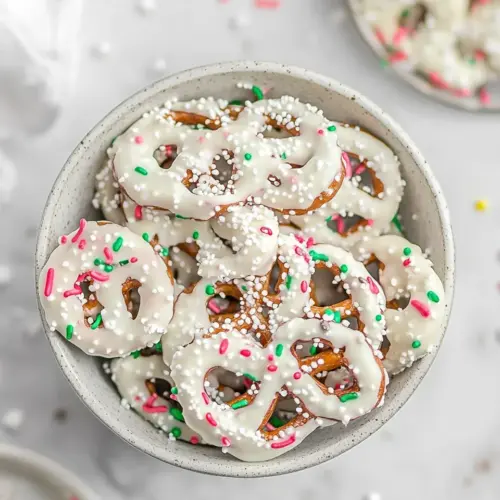
White Chocolate Pretzels
White Chocolate Pretzels are a creamy and crispy bite sized treat, combining crunchy pretzels with smooth melted coating for an easy party snack. This simple, no fuss recipe is perfect as an easy weeknight treat or a crowd pleasing appetizer alternative, and it sets quickly so you can serve them the same day. Make a batch for gatherings or gift giving for a sweet reason to celebrate.
Equipment
- Baking Sheet
Ingredients
- 12 ounces white almond bark (6 squares) Melting provides the creamy base for coating pretzels and helps bind decorations; melt slowly over low heat or in short microwave bursts to avoid scorching and achieve a smooth, glossy consistency suitable for dipping.
- 50 mini pretzels Coating requires even distribution to ensure each pretzel is fully covered; use tongs or forks for dipping, shake off excess, and place on parchment to set so the coating hardens with a crisp finish.
- Sprinkles optional, for decoration Decorating adds color and texture to finished pretzels and makes them festive; sprinkle quickly after coating while still wet to ensure adhesion, and allow fully to set before serving or packaging.
Instructions
- Line a baking sheet with parchment paper and set aside.: The moment you step into this action you will notice the tactile readiness it brings, parchment provides a nonstick surface so the coated pretzels release cleanly and keep their neat edges. I like the quiet rustle of the paper as I smooth it across the sheet, it feels deliberate and calming. This setup prevents wasted cleanup time and ensures the candies set without sticking, which matters for presentation. A common mistake is skipping parchment which can cause the coating to adhere to the pan, making removal messy and breaking some pretzels.
- Place the white almond bark in a large microwave-safe bowl. Microwave in 30-second increments, stirring between, until melted.: Choosing the right container matters, a large bowl gives you space to stir without splashing, and it helps heat distribute evenly. I prefer glass because it heats predictably and I can see the bark soften. When the bark begins to collapse in on itself, you know it is approaching the right melting stage. Avoid tiny bowls, as they concentrate heat and can scorch the coating.
- Once melted, remove from the microwave.: Listen to the rhythm of this step, it is part technique and part patience. The bark will soften first around the edges then in the center, and stirring encourages even melting. Each 30 second burst should be followed by a smooth stir, and you will notice the texture become glossy and fluid. Overheated bark can seize or become grainy, so the incremental approach prevents burning and keeps the finish silky. A frequent slip is microwaving too long at once, which leads to lumps or a scorched flavor.
- Dip the pretzels into the melted almond bark, then place onto the prepared baking sheet.: There is a brief window when the coating is perfectly fluid and easy to work with, that is when you want to dip. The warmth is comforting and gives off a gentle aroma that hints at the sweetness to come. I usually swirl the spoon in the bowl and watch the coating fall back smoothly, a sign it is ready. If you let it sit too long before dipping, it may thicken and not coat evenly; conversely, handle it while slightly too hot and you risk thinning the coat too much.
- Top with sprinkles, then let set until the almond bark has hardened.: The tactile part of the process is always the most satisfying, the pretzels click as you pick them up, and the coating should cling and form a glossy layer. I use a fork for removal and tap gently to let excess drip back, watching the coating settle into an even shell. Visually you want a smooth, mostly opaque coating that hides the surface but keeps the pretzel shape visible. One misstep is moving too slowly while dipping, which can allow pooling at the base, creating uneven bottoms; steady hands make for consistent bites.
- Top with sprinkles, then let set until the almond bark has hardened: Once decorated, the treats need a few minutes to firm. The air will cool the coating and you will see it dull slightly as it sets, that is your cue. I leave the tray undisturbed in a cool area, and within a short time the surface will be matte and give a gentle snap when pressed. If you try to stack them too early, you risk smudging the finish, so patience at this stage protects the final look. A typical error is placing them in a warm spot, which prolongs setting and may attract dust or debris onto the sticky surface.
Notes
- Use flavored coatings If you can find flavored white coatings, they add a hint of almond or citrus without extra steps, offering subtle variety for parties.
- Double dip for thicker shells After the first layer sets, dipping again produces a chunkier, more substantial coating which holds sprinkles better.
- Chill briefly to speed setting Placing the tray in a cool area speeds up firming, but avoid the refrigerator which can create condensation and dull the finish.
- Decorate immediately Add sprinkles right after dipping while the coating is still tacky so they adhere cleanly and look intentional.
- Prep an assembly line Line up your pretzels, bowl of coating, and parchment so the process is efficient and social, making it great to do with kids or friends.