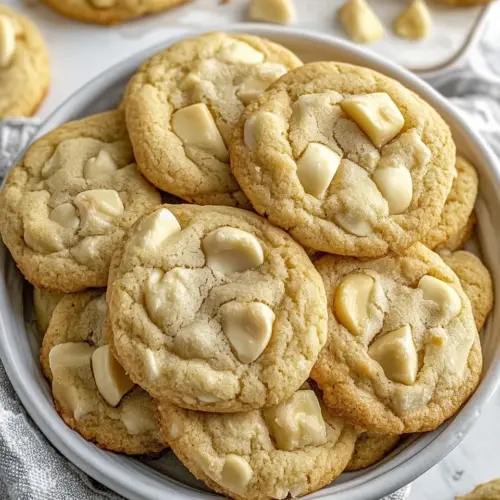
White Chocolate Macadamia Nut Cookies
White Chocolate Macadamia Nut Cookies are creamy and buttery with crunchy nutty bites and sweet pockets of white chocolate, making them an irresistible treat for gatherings or an easy weeknight bake. Soft centers and lightly golden edges create a perfect texture contrast, and simple techniques deliver consistent results, so you will want to make them again and again.
Equipment
- KitchenAid Hand Mixer
- Stainless Steel Cookie Scoop
- Aluminum Baking Sheet (2 pack)
- Parchment Paper
Ingredients
- 2 1/2 cups all-purpose flour Provides structure and bulk to the cookie dough, helping form the crumb and overall texture. Balances moisture by absorbing wet ingredients and supports leavening for a tender bite.
- 1 teaspoon baking soda Leavens the dough by producing carbon dioxide when combined with acidic components and heat. Ensures cookies spread appropriately and gain a light, airy interior.
- 1/2 teaspoon salt Enhances overall flavor by balancing sweetness and strengthening gluten slightly, which contributes to dough structure. Helps control fermentation and preserves shelf stability.
- 1 cup unsalted butter (2 sticks, softened) Adds richness and moisture while contributing to a tender, melt-in-your-mouth texture through its fat content. Aids in flavor development and yields golden edges when creamed with sugars.
- 3/4 cup granulated sugar Provides sweetness and contributes to crisp edges and slight caramelization through Maillard reactions. Helps with cookie spread and creates a lighter, sweet flavor profile.
- 3/4 cup light brown sugar (packed) Adds deeper, molasses-like sweetness and moisture that promotes chewiness and complex caramel notes. Works with butter during creaming to trap air for a lighter texture.
- 2 large eggs Adds moisture and protein that sets the cookie structure during baking, contributing to tenderness and lift. Also helps emulsify the dough for uniform texture and even browning.
- 1 1/2 teaspoons vanilla extract Imparts aromatic sweetness and rounds flavor, enhancing the overall profile without adding moisture. Helps unify flavors and complements the buttery and nutty components.
- 1 cup white chocolate chips (or chunks) Contributes creamy sweetness and a smooth, melt-in-the-mouth contrast to the cookie. Adds pockets of sweetness and texture variation that balance the dough’s richness.
- 1 cup macadamia nuts (salted and roasted, roughly chopped) Provides crunchy texture and a buttery, rich flavor with a distinctive nuttiness that contrasts the sweet chips. Adds savory-salty notes and textural interest when roughly chopped.
Instructions
- Preheat your oven to 350°F (175°C). Line baking sheets with parchment paper or silicone baking mats.: As the oven warms, notice the gentle rise in kitchen heat and the faint scent of warmed air, which signals readiness. Preheating ensures immediate oven spring for even spread and consistent baking. A common misstep is putting cookies into an oven that is not fully heated, which can lead to uneven texture and overbaked edges. If you are unsure about your oven temperature, use an oven thermometer for accuracy.
- In a medium bowl, whisk together the flour, baking soda, and salt. Set aside.: As you whisk, observe how the dry ingredients blend into a uniform pale mixture; this step distributes leavening and salt so the lift and seasoning are consistent in every bite. Sifting is not necessary but helps if your flour is compacted. Avoid dumping wet ingredients into unmixed drys, which can create pockets of baking soda and uneven rise.
- In a large mixing bowl, use a hand mixer or stand mixer to beat the butter, granulated sugar, and brown sugar together until light and fluffy, about 2-3 minutes.: During creaming you'll see the mixture turn paler and loftier, and you will hear a softer, aerated texture as air incorporates. This trapped air melts during baking, producing tender crumb and slight lift. If you under cream, the cookies may be heavy; if you over cream, they can become too soft and collapse when baked. Scrape the bowl sides to ensure even creaming.
- Beat in the eggs, one at a time, followed by the vanilla extract. Mix until well combined.: Adding the eggs one by one allows the batter to emulsify slowly, ensuring a smooth, cohesive dough. You will notice the mixture become silkier and slightly glossy after the eggs incorporate. If you add eggs too quickly when the butter is too cold, the mixture can curdle. If that happens, warm the bowl slightly and continue mixing gently.
- Gradually add the dry ingredients to the wet ingredients, mixing on low speed until just combined. Do not overmix.: As the flour folds in, the dough will thicken and take on a more cohesive feel, with faint streaks disappearing. Mixing on low prevents too much gluten development, which would make the cookies tough. Overmixing is the most common error at this stage, resulting in dense cookies. Stop as soon as the last streak of flour vanishes.
- Gently fold in the white chocolate chips and chopped macadamia nuts with a spatula.: Folding preserves the dough's airiness and distributes the white chocolate chips and macadamia nuts evenly. You will hear the soft scrape of the spatula and see pockets of chips and nuts scattered through the dough. Be gentle to avoid breaking the nuts or crushing larger chocolate chunks. If you overwork the dough here, the texture can become uniform and lose the delightful bursts.
- Scoop tablespoon-sized balls of dough (or use a cookie scoop) and place them about 2 inches apart on the prepared baking sheets.: As you portion the dough, the balls should feel cool and slightly tacky, holding shape without sagging. Spacing allows each cookie to spread without touching. If your dough is too warm, chill it briefly so the cookies do not flatten excessively. A common mistake is crowding the sheet, which produces misshapen, stuck together cookies.
- Bake in the preheated oven for 10-12 minutes, or until the edges are lightly golden and the centers look slightly underbaked. They will continue to set as they cool.: While baking watch for the edges to take on a pale golden color and the centers to appear glossy and soft. The oven's heat will produce a faint sweet, toasty aroma. Taking cookies out while centers are slightly underdone yields a tender interior after cooling. Leaving them too long will make them uniformly crisp and potentially dry.
- Allow the cookies to cool on the baking sheets for 5 minutes before transferring them to a wire rack to cool completely. Serve warm or store in an airtight container for up to a week.: The cookies finish setting on the hot sheet, and you will feel the base firm under a spatula as you transfer them. Cooling on a rack prevents condensation and keeps edges crisp. Storing while too warm can create sogginess; ensure they are fully cooled before sealing. If you want warm cookies later, reheat briefly in a low oven.
Notes
- Swap chocolate format Chopping a white chocolate bar gives larger, creamier pockets compared to chips, and creates noticeable melted centers that are luxuriously soft.
- Adjust nut size Rough chop the macadamia nuts to include both small bits and larger pieces so every bite offers different textures, from delicate crunch to sizable buttery chunks.
- Chill for flavor Refrigerating the dough for up to 48 hours deepens flavor and controls spread, yielding a chewier center and more complex taste.
- Freeze for convenience Portion dough balls and freeze them for up to 3 months; bake from frozen adding 1 to 2 minutes to the bake time for fresh cookies anytime.
- Control sweetness If you prefer slightly less sweetness, reduce the granulated sugar by one to two tablespoons, which preserves texture while tempering sweetness.