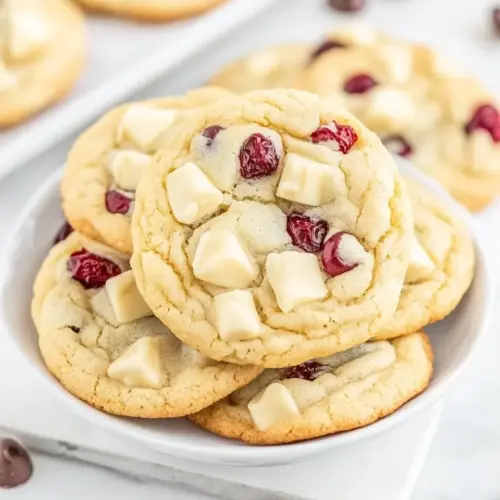
White Chocolate Chip Cranberry Cookies
White Chocolate Chip Cranberry Cookies are soft, chewy, and packed with creamy pockets of white chocolate and bright dried cranberries. This easy cookie recipe yields tender centers and golden edges, perfect for cozy afternoons or holiday cookie swaps. With simple pantry ingredients and a reliable method, they are an irresistible treat that’s worth baking again and again.
Equipment
- Electric Mixer
- Mixing Bowls
- Baking Sheet
- Parchment Paper
- Cookie Scoop
- Wire Rack
Ingredients
- 1 cup butter unsalted, softened Cream together to create a rich, tender cookie base; softened unsalted butter provides fat that contributes to spread and chew while carrying flavor throughout the dough. Ensure butter is at room temperature for smooth incorporation and even creaming with sugars.
- 3/4 cup brown sugar Add moisture and deep caramel flavor while helping create a soft, chewy texture; brown sugar’s molasses content enhances color and keeps cookies tender. Pack lightly when measuring to maintain consistent sweetness and texture.
- 1/2 cup granulated sugar Contribute sweetness and aid in crisping edges; granulated sugar helps with structure and caramelization during baking. Combine thoroughly with butter to produce the proper aeration and texture in the dough.
- 2 large eggs Bind the dough and add moisture while contributing to leavening through steam; large eggs also enrich flavor and aid in structure formation. Use room-temperature eggs for more even mixing and better emulsion with fats.
- 1 teaspoon vanilla extract Enhance overall flavor with a warm, aromatic note that complements white chocolate and cranberries; vanilla extract rounds and intensifies sweet flavors. Add during creaming or with eggs to distribute flavor evenly.
- 2 1/2 cups all purpose flour Provide the bulk and structure of the cookies through gluten formation when mixed; all purpose flour balances tenderness and chewiness in the final product. Measure correctly and avoid overmixing after adding to maintain a tender crumb.
- 3/4 teaspoon baking soda Act as a leavening agent to help cookies spread and rise slightly by producing carbon dioxide when reacting with moisture and heat. Use the specified amount to ensure proper texture without excessive doming or collapse.
- 1/2 teaspoon salt Balance flavor and enhance other ingredients while controlling yeast and chemical reactions; salt strengthens dough and brightens sweetness. Dissolve evenly into the dough to avoid pockets of concentrated saltiness.
- 3/4 cup white chocolate chips Add creamy sweetness and a smooth, melt-in-your-mouth texture that contrasts with tart cranberries; white chocolate chips provide bursts of sweet richness throughout each cookie. Fold in gently to distribute without overworking the dough.
- 3/4 cup dried cranberries Introduce tartness and chewy texture that contrasts with the sweet white chocolate, adding fruity brightness to each bite. If desired, soak briefly to soften slightly, but drain well to prevent excess moisture in the dough.
Instructions
- Preheat oven to 350 degrees. Line baking sheets with parchment paper or lightly oil the pan.: You will feel the warm air as the oven comes to temperature, and the faint scent of heated metal becomes comforting. Preheating ensures even bake times and helps the cookies set properly at the edges while staying soft inside. A common mistake is putting cold dough into an underheated oven which can cause uneven rise and flatter cookies. Use parchment or a light oil to prevent sticking, and position racks in the middle to promote uniform heat circulation.
- Add butter, brown sugar and white sugar together in a large mixing bowl. With an electric mixer or a stand mixer, beat together the butter and both sugars on medium until light and fluffy.: You will notice the mixture turn paler and become airy, a sign that air has been incorporated for lighter texture. The creamed mixture should look smooth and slightly voluminous, giving off a sweet, caramel like aroma from the brown sugar . Avoid over beating which can incorporate too much air and yield cakier cookies. If the mixture appears curdled, pause and scrape the bowl, then beat briefly at a lower speed to recombine.
- Crack eggs and add vanilla extract to the butter and sugar mixture. Mix the ingredients well until combined.: When you add the eggs , the mixture will momentarily look looser and glossier, and you should hear a change in the mixer’s sound as the ingredients blend. The scent of vanilla will lift the aroma, giving a rounded warmth. Mixing until just combined avoids overworking the emulsion. A frequent error is adding eggs that are too cold, which can cause the butter to seize, so bring eggs to room temperature first.
- In a medium mixing bowl add flour, baking soda, and salt. Mix the dry ingredients well until combined.: The dry mix should look uniform and free of lumps, and the faint smell of raw flour will be present. Sifting is optional but helps aerate and evenly distribute the baking soda and salt . Overmixing the dry ingredients after they meet the wet can develop gluten, so keep them separate and mix until just even. If you see pockets of baking soda , break them up to avoid uneven leavening.
- Add dry ingredients to the wet ingredients using an electric mixer. Mix well on first a low setting then a medium setting until the dry ingredients are fully mixed into the wet ingredients and a dough comes together.: As the dough comes together you will notice it pull away from the bowl sides, forming a soft cohesive mass with a slightly tacky feel. Start on low so the flour doesn’t fly everywhere, then increase speed to bring everything together evenly. The dough should not be overly sticky; if it is extremely wet you likely mismeasured flour. Over mixing here can make the cookies tough, so stop as soon as there are no streaks of flour.
- Fold in the white chocolate chips and cranberries into the dough until combined.: Folding in by hand preserves the dough’s texture and prevents overworking. You should hear a soft rustle as the chips and cranberries are distributed, and see specks of white and red throughout. Avoid vigorous stirring which can break chips and overdevelop the gluten. If one area has a clump of chips, use a spatula to gently redistribute for even bites.
- Use a medium cookie scoop and scoop the cookie dough into about two tablespoon balls. Place cookie dough at least two inches on your prepared baking sheet. Press a few extra dried cranberries and white chocolate chips into the top of the cookies for a prettier cookie if desired.: The scooped dough should feel dense but pliable, with chips and cranberries visible on the surface. Spacing the balls about two inches apart gives them room to spread into golden edged rounds. If you crowd the pan they will merge and bake unevenly. Gently pressing a few extra bits on top gives a bakery finish and helps ensure visual appeal after baking.
- Bake the cookies for 10-12 minutes until golden brown on edges but still gooey in the center. Let the cranberry white chocolate cookies cool for 2-3 minutes on the baking sheet. Then move to clean kitchen towels or wire racks for the cookies to cool completely before storing. Enjoy!: As they bake you will smell caramelizing sugars and see edges deepen to a light golden brown while centers remain soft. The cookies will still be slightly puffed when you remove them, but will set as they cool. A common pitfall is overbaking which yields dry cookies; trust the visual cue of golden edges rather than a strict timer. Letting them rest briefly on the sheet allows structure to set, then transferring to a rack prevents sogginess underneath.
Notes
- Swap presentation: Press extra white chocolate chips and dried cranberries on top before baking for a bakery style look that also gives more visible flavor in each bite.
- Chill for thicker cookies: Refrigerate scooped dough for 30 to 60 minutes to slow spread, yielding a taller, chewier cookie if you prefer a denser profile.
- Toast chips lightly: Briefly warm the white chocolate chips in a hot oven for a minute before folding in to deepen their flavor, but avoid melting them entirely in the dough.
- Even bite distribution: Fold chips and cranberries gently by hand to keep them intact and ensure each cookie has a balanced amount, preventing clumps in some cookies and emptiness in others.
- Presentation tip for gifting: Stack cooled cookies with parchment layers in a tin and include a handwritten label mentioning they are best within a few days for ideal chew.