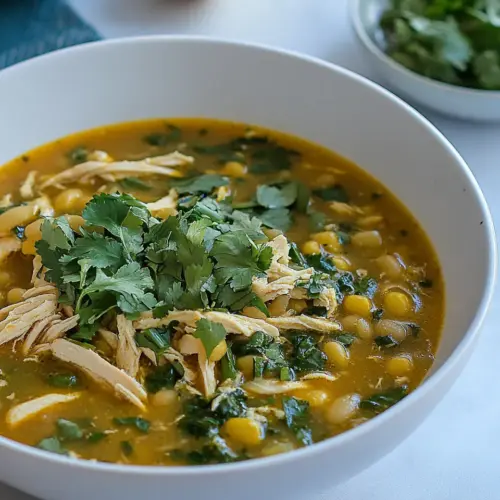
White Chicken Chili
White Chicken Chili is a creamy, bright bowl that blends puréed white beans and shredded rotisserie chicken into a cozy, easy weeknight dinner. The poblano and jalapeño add gentle warmth, while fresh lime and cilantro lift every spoonful. This comforting yet light chili is perfect for cold nights or casual gatherings, and it comes together quickly for a persuasive reason to make it tonight.
Equipment
- Large Pot or Dutch Oven
- Food Processor
Ingredients
- 215.5 -ounce (439-g) cans white beans, rinsed and drained Packed in cans and now rinsed and drained to remove excess sodium and starch, white beans contribute a creamy body and protein-rich base that thickens the chili while offering tender, comforting bites throughout the stew. Their mild flavor absorbs spices and broth, providing hearty substance and fiber to make the dish satisfying and nutritious.
- 4 cups (1 L) low-sodium chicken broth, divided Used as a flavorful cooking liquid and simmering base, low-sodium chicken broth adds savory depth while allowing control over overall saltiness; dividing the broth lets you adjust consistency as the chili reduces. Its gentle chicken notes meld with shredded chicken and spices to create a cohesive, savory backbone for the recipe.
- 2 tablespoons extra-virgin olive oil Added for sautéing aromatics and developing flavor, extra-virgin olive oil imparts a fruity, slightly peppery richness while helping onions and peppers soften without burning. It also carries fat-soluble spices and aids in building the chili’s overall mouthfeel and sheen.
- 1 large yellow onion, diced Chopped into small pieces and cooked until translucent, diced yellow onion brings sweetness and savory complexity that forms the aromatic foundation of the chili. Its softened texture and caramelized sugars balance spicy and acidic elements while contributing body to the broth.
- 1 jalapeño pepper, seeded and minced (see note) Finely minced and seeded to control heat, jalapeño pepper contributes bright, vegetal heat and a fresh peppery bite; seeding reduces capsaicin for a milder spice level. Its lively flavor lifts the chili with a touch of heat that complements the milder poblano and aromatic spices.
- 2 medium poblano peppers, seeded and diced (see note) Removed seeds and diced for a smoky, mild pepper presence, poblano peppers add depth, subtle sweetness, and charred complexity when sautéed or roasted before incorporation. Their tender texture and earthy flavor enhance the chili’s layered pepper profile without overpowering the dish.
- 4 garlic cloves, minced Minced and added to the aromatics to release a pungent, garlicky fragrance, garlic cloves provide sharp savory notes that amplify umami and complexity. Cooking briefly prevents bitterness while allowing mellow, rounded flavors to infuse the broth and complement the spices.
- 1 tablespoon ground cumin Measured and toasted lightly with the aromatics to awaken warm, earthy tones, ground cumin contributes a nutty, slightly bitter backbone that is essential to chili-style seasonings. Its warmth pairs with coriander and chile powder to create the signature Southwestern spice profile.
- 1 1/2 teaspoons ground coriander Ground coriander brings citrusy, floral warmth when added with other spices, offering light, lemony undertones that brighten the chili’s deeper flavors. Using it alongside cumin helps round out the spice blend and enhances overall aromatic complexity.
- 1 teaspoon ancho chile powder Ancho chile powder supplies mild, smoky, slightly sweet chile flavor that deepens the chili base without intense heat, adding richness and subtle dried-fruit notes. Its dark, warm profile enhances color and gives the stew a gentle chile character that complements fresh peppers.
- Salt Added sparingly to taste to balance and enhance all flavors, salt elevates aromas, tenderizes ingredients, and controls overall seasoning; using it judiciously prevents overpowering the low-sodium broth choices. Adjusting salt at the end helps fine-tune the chili’s savory balance against the lime and cheese garnishes.
- 1 rotisserie chicken, skin removed and shredded (about 4 cups) Shredded from a rotisserie and stirred in for texture and protein, skin-removed rotisserie chicken brings tender, ready-cooked meat with savory roasts notes that meld into the broth. Its convenience shortens cooking time while contributing hearty, familiar flavor and bite-sized pieces throughout the chili.
- 3/4 cup frozen corn Frozen corn folded in late provides bursts of sweetness and pop of texture, brightening each spoonful with crisp kernels that contrast creamy beans and tender chicken. Thawing or briefly simmering preserves the corn’s color and fresh flavor while integrating it into the stew.
- 1 tablespoon fresh lime juice, from one lime, plus more to taste Squeezed in for bright acidity, fresh lime juice balances richness and cuts through the creaminess with tangy citrus brightness; starting with one tablespoon allows for subtle lift while leaving room for adjustment. Added at the end preserves the fresh aromatic oils and guarantees a lively finish.
- 1/4 cup fresh chopped cilantro Chopped and stirred or sprinkled on top for herbaceous freshness, cilantro adds bright, lemony-green notes and a fragrant finish that enlivens the chili. Its fresh leaves contrast the cooked flavors and provide a crisp, cooling complement to the spices and heat.
- Sour cream Dolloped as a creamy, cooling garnish, sour cream brings tang and richness that mellows the chili’s spices and adds a luscious mouthfeel to each bite. Its chilled creaminess creates a pleasant temperature and texture contrast when spooned over hot bowls.
- Crushed tortilla chips Crumpled or crushed and used as a crunchy topping, crushed tortilla chips introduce a salty, crispy texture that contrasts the chili’s creaminess and adds a pleasant corn flavor. Sprinkling them just before serving preserves crispness and enhances the overall eating experience.
- Shredded cheddar or Pepper Jack cheese Shredded and scattered over bowls to melt slightly into the warm chili, cheddar or Pepper Jack cheese contributes creamy, melty richness and either a sharp cheddar tang or a spicy kick from Pepper Jack. The cheese rounds out flavors, adds indulgent texture, and helps bind toppings together.
- Lime wedges Served on the side for squeezing over individual bowls, lime wedges provide additional fresh acidity and aromatic zest so diners can tailor brightness to taste. Their juicy segments make it easy to finish and personalize the chili with a crisp citrus note.
Instructions
- In a food processor, blend half of the beans (1 can) with 1 cup (240 ml) of the chicken broth. Set aside both the puréed beans and the remaining whole beans.: The aroma of puréed beans is subtle and earthy, and when you pulse them with warm chicken broth the texture becomes luxuriously smooth, almost velvety. This step matters because it forms the creamy body of the chili without heavy dairy, giving the broth a rich mouthfeel that coats the spoon. As you blend, you should see a homogenous, pale mixture with no large bean pieces, and the sound will shift from loud chopping to a steady hum. A common mistake is overfilling the food processor, which can lead to uneven puréeing, so work in batches if needed. If the purée seems too stiff, add a tablespoon of reserved broth to loosen it, and set aside both the puréed mixture and the remaining whole beans so you retain contrasting textures.
- Add the oil to a large pot or Dutch oven and heat it over medium-high heat. Add the onion, jalapeño pepper, and poblano peppers and cook, stirring frequently, until soft, 4 to 5 minutes. Add the garlic and cook for one minute more. Add the cumin, coriander, and ancho chile powder and continue to cook, stirring frequently, for one minute more to toast the spices. Add the chicken broth, puréed beans, and 1/2 teaspoon of salt; bring to a boil. Reduce the heat to low and simmer, uncovered, for 20 minutes.: When the oil warms, it will shimmer slightly, signaling it is ready to receive the aromatics. The onion , jalapeño, and poblano will soften and release sweet, vegetal scents as they cook, and you should hear a gentle sizzle as you stir. Cooking until they are tender, roughly four to five minutes, develops sweetness that underpins the chili, which is essential for balancing the spices. Stir frequently so pieces cook evenly and do not brown, unless you want a little caramelization for extra depth. Avoid crowding the pot, as that can steam the vegetables instead of sautéing them, resulting in less flavor development.
- Stir in the shredded rotisserie chicken, reserved whole beans, corn, and lime juice; bring back to a simmer and cook until everything is heated through, about 5 minutes. Taste and adjust seasoning with more salt and lime juice, if necessary. Stir in the cilantro. (Note that the broth will be somewhat soupy — that's how it is supposed to be. It thickens the longer it sits; see note below.) Ladle the chili into bowls and serve with sour cream, crushed tortilla chips, and lime wedges.: As these vegetables begin to soften, the kitchen will fill with a mild sweetness and a green pepper note, and their edges should look translucent with softened color. This texture shift is important because it mellows sharp flavors and allows the garlic and spices added next to bloom without tasting raw. Keep the heat moderate, and stir often to prevent sticking; if they brown too much you will alter the intended gentle profile. A frequent misstep is rushing this stage, which leaves bits with a raw, harsh bite.
- Add the garlic and cook for one minute more: Once the garlic hits the warmed vegetables, it will release a bright, pungent aroma that quickly mellows into a toasty note. That one minute is crucial to cook off the raw edge while preserving aromatic oils that will infuse the oil and vegetables. Watch closely because garlic can go from fragrant to burnt in moments, turning bitter. If you smell any acrid notes, lower the heat immediately and stir to cool the pan.
- Add the cumin, coriander, and ancho chile powder and continue to cook, stirring frequently, for one minute more to toast the spices: Toasting the ground spices in the hot oil quickens the release of volatile oils, giving warm, nuanced flavors rather than flat spice powder. The scent will bloom into warm, earthy, and slightly smoky layers. Stirring prevents hot spots that could scorch the powders and create bitterness. A common error is skipping this step, which results in a less dynamic spice profile; another is overtoasting, which can make the spices taste burnt, so monitor by aroma more than time.
- Add the chicken broth, puréed beans, and 1/2 teaspoon of salt; bring to a boil: When you pour in the chicken broth and puréed beans , the pot will hiss and the mixture will loosen into a pale, hearty broth. Bringing it to a boil helps integrate flavors quickly, and you will notice a gentle rolling of bubbles across the surface. This technique extracts maximum flavor from the aromatics and spices. Add the initial salt carefully since the broth and rotisserie chicken will add savory notes later; you can always adjust more at the end. Avoid a vigorous boil that could break down textures too aggressively.
- Reduce the heat to low and simmer, uncovered, for 20 minutes: As the pot simmers, the broth will deepen in color and the aroma will concentrate; you may see small, steady bubbles and gentle steam rising. This simmer lets flavors marry and the puréed beans slightly thicken the liquid. Leaving it uncovered allows some reduction which intensifies taste, but watch the liquid level to prevent reducing too far. A common mistake is simmering too hard which evaporates too much liquid, making the chili overly thick; if that happens, stir in reserved chicken broth a little at a time.
- Stir in the shredded rotisserie chicken, reserved whole beans, corn, and lime juice: When you add the shredded rotisserie chicken , whole beans , and frozen corn , the pot will regain a lively simmer as the colder ingredients bring down the temperature. The contrast of creamy purée and whole elements creates a pleasing mouthfeel, while the fresh lime juice brightens the overall taste. Simmer until everything is heated through, about five minutes, and the corn should be tender yet still pop slightly when bitten. A mistake here is adding too much lime early, which can flatten with extended cooking, so reserve a bit to finish at the table.
- Bring back to a simmer and cook until everything is heated through, about 5 minutes: During these final minutes the aromas will harmonize and steam will carry a vivid citrus and spice note. Texture checks are helpful here the chicken should be warmed through and the beans tender. This step is about final temperature and balance rather than chemistry changes, so keep the simmer gentle. Overcooking can break down the chicken too much and make the overall texture less satisfying.
- Taste and adjust seasoning with more salt and lime juice, if necessary: Tasting is the final quality control. The flavors should be balanced with savory depth, a touch of heat, and bright acidity. Add small increments of salt and lime and stir, tasting between additions, until it sings. A frequent error is over-salting in one go, so take a cautious, iterative approach. Remember that chilling or sitting time can mute acid, so adjust again just before serving if you made it ahead.
- Stir in the cilantro: Fresh chopped cilantro folded in at the end will yield a fragrant, herbaceous lift and a burst of green color. Because cilantro wilts with heat, add it at the last moment so it stays vibrant. Avoid adding it too early or it will lose its fresh brightness and become muted, changing the intended finish.
- Ladle the chili into bowls and serve with sour cream, crushed tortilla chips, and lime wedges: When you serve, the steam should carry the mingled aromas of spices and citrus, and each bowl can be finished to taste with a dollop of sour cream , crunchy tortilla chips, and an extra squeeze of lime . The toppings create texture and temperature contrasts that make each spoonful lively. A common serving mistake is adding chips too early, which makes them soggy, so keep them in a separate dish for immediate garnish.
Notes
- Stovetop to One Pot: Keep the recipe in a single large pot or Dutch oven to minimize cleanup and allow flavors to meld consistently. Using one pot makes it easy to simmer gently and monitor liquid levels, plus it concentrates aromatics. Avoid transferring between pans, which can lose juices.
- Spice Level Control: Preserve the seeds and ribs of the jalapeño for more heat, and add them at the end to maintain a sharper bite. If you prefer milder, remove seeds and test a small piece first. Remember to wash hands after handling.
- Broth Adjustment: Use extra chicken broth to make a thinner, more spoonable soup, or reduce slightly for a heartier bowl. If thickened too much after resting, warm and add liquid a little at a time until desired texture returns.
- Creaminess Without Dairy: Rely on puréed beans to achieve a creamy mouthfeel, rather than adding cream. For an even silkier texture, blend an extra half can of beans with some broth and stir in gradually.
- Topping Station: Offer separate bowls of sour cream, shredded cheese, crushed tortilla chips, and lime wedges so guests can customize. Serving toppings separately preserves textures and allows individual heat adjustments.