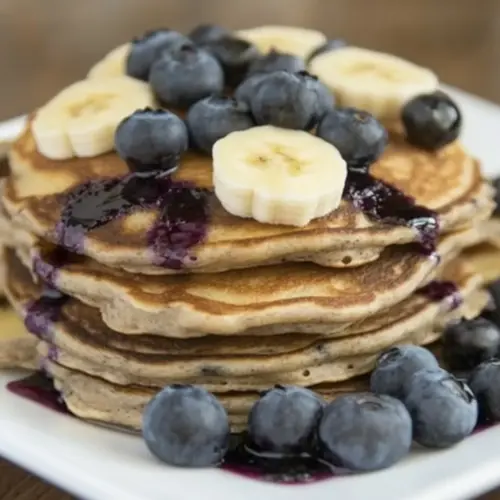
Weight Watchers Banana Blueberry Pancakes
Weight Watchers Banana Blueberry Pancakes are a light, easy breakfast featuring creamy mashed banana, tender almond flour, and juicy blueberries. These pancakes are naturally sweet, quick to assemble, and perfect for an easy weeknight or relaxed weekend morning, offering a satisfying, healthier twist on a classic comfort dish.
Equipment
- Blender
- Nonstick skillet or griddle
- Spatula
- Measuring Cup
Ingredients
- 1 banana large, very ripe, well mashed Mashed to provide natural sweetness and moisture, creating a binding base that helps hold the pancake batter together while reducing need for added sugars. Adds subtle banana flavor and contributes to fluffy texture when combined with eggs and almond flour.
- 2 eggs large Beaten to act as the primary binder and leavening aid, giving structure and lift to the pancakes while helping to set the batter during cooking. Supplies protein and richness that improve mouthfeel and help the pancakes brown evenly.
- 1/2 cup almond flour Ground almond product used to create a tender, low-carb pancake base that adds nutty flavor and a slightly crumbly, moist texture. Helps absorb moisture from the banana and eggs while providing healthy fats and protein for satiety.
- 1/2 teaspoon cinnamon Aromatic spice used to enhance overall flavor by adding warmth and depth, complementing the sweetness of banana and blueberries without adding calories. Blends into the batter to impart subtle complexity and a comforting, bakery-like note.
- 1/3 cup blueberries fresh Fresh fruit folded in to add bursts of juicy sweetness and bright acidity that balance the richness of the batter. Provides texture contrast and visual appeal while delivering antioxidants and natural flavors without extra sugar.
Instructions
- Add the first 4 ingredients to a blender and pulse until smooth. Add blueberries being careful not to break open.: The aroma of warm banana will become more pronounced during blending, and you'll notice the batter's texture transform to a silky, slightly thick liquid, which indicates the eggs and almond flour have integrated. This method minimizes lumps and gives a uniform crumb. You should avoid over blending until the mixture is foamy, because that can make the pancakes too airy and cause them to collapse while cooking. A common mistake is leaving large banana chunks, which leads to uneven cooking pockets, so check that the batter is consistent before proceeding.
- Lightly oil a nonstick griddle or skillet with coconut oil or ghee, heat to medium. Add batter using 1/4 cup and cook until golden on both sides, about 3-4 minutes per side. Pancakes are ready to flip when they start to get dry around the edges.: When you fold in the blueberries , you will see little blue specks suspended in the batter and smell a subtle fruity perfume. Gently folding protects the berries so they stay intact and create those delightful bursts while cooking. If you stir vigorously, the berries will bleed and make the batter watery, which affects browning. Take care not to overmix, and if some berries do split, know that they still add flavor but will change the batter consistency.
- Serve with additional blueberries and diced bananas, if desired. Enjoy!: As the oil warms, it will shimmer and give off a faint toasted scent, which signals readiness. A properly heated surface creates immediate contact sizzle that begins forming a golden crust, sealing moisture inside. If the pan is too cold, pancakes will spread thin and remain pale, and if it is too hot, the exterior will char before the center cooks. To test, sprinkle a few drops of water, they should dance and evaporate slowly.
- Add batter using 1/4 cup and cook until golden on both sides, about 3 to 4 minutes per side: As the batter hits the hot surface, listen for a soft sizzling, and watch the edges set and small bubbles form on top, which are immediate visual cues. The underside should develop a warm golden color before flipping, which ensures the interior has had time to set. A bad flip happens when the center is still raw, so wait for those edge and bubble signals. If pancakes brown too quickly, lower the heat and give the center more time to catch up.
- Pancakes are ready to flip when they start to get dry around the edges: That drying around the rim indicates the batter's proteins have set and the pancake can survive being turned. You'll see the top surface lose glossiness and the edge lift slightly, often making it easy to slide a spatula underneath. Flipping too soon causes tearing, and flipping too late risks over-browning. If a pancake tears, press gently with the spatula to reshape it, and consider reducing the heat a touch for subsequent pancakes.
- Serve with additional blueberries and diced bananas, if desired: When plated, the warm blueberries will release a little juice and the diced banana adds fresh texture contrast, enhancing each bite. Presentation amplifies enjoyment, so I like arranging fruit on top and letting any melted cooking fat glisten. Avoid heavy syrups if you want to keep the lighter profile; a small drizzle of something sweet is enough. If pancakes cool and firm up, pop them briefly under low heat to revive their softness.
Notes
- Scale smart Double the batter but reduce eggs slightly to maintain texture, as noted in the recipe notes, which prevents pancakes from becoming overly eggy.
- Blender choice matters Use a high speed blender for the smoothest batter, it produces a consistent texture and prevents large banana pieces from remaining.
- Oil selection Coconut oil or ghee both contribute a subtle flavor and a reliable nonstick surface, choose based on your preferred aroma and dietary needs.
- Temperature patience Allow the griddle to reach an even medium heat, trialing with a tiny test pancake helps you adjust before cooking the full batch.
- Warm plates Keep finished pancakes on a warm plate in a low oven to maintain texture while you finish cooking the remainder.