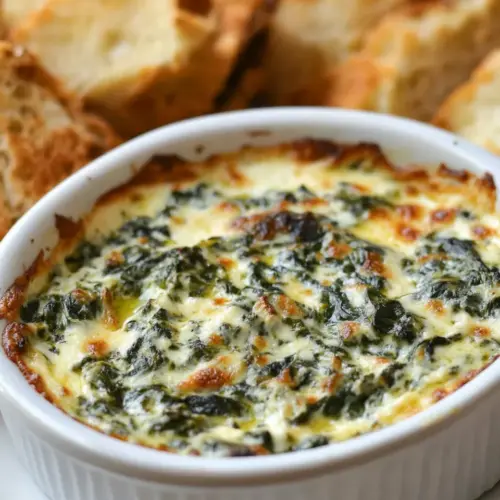
Warm Spinach Mascarpone Dip
Warm Spinach Mascarpone Dip is a creamy, savory appetizer that bubbles with melted cheese and bright spinach flavor. This easy, cozy dip balances silky mascarpone with sharp parmesan cheese and a touch of heat, making it perfect for gatherings or weeknight snacks. It reheats beautifully, and its comforting texture makes it an irresistible reason to serve it again and again.
Equipment
- Sauté Pan
- Oven
- Ramekins
Ingredients
- 16 ounces frozen chopped spinach, defrosted Thaw and squeeze excess water from chopped spinach to prevent a watery dip and concentrate flavors; cook briefly if desired to deepen color and reduce moisture, then chop more finely for a smoother texture.
- 1 small onion, minced Sauté minced until translucent and fragrant in oil to build a sweet, aromatic base that complements the creamy cheese components and mellows raw onion sharpness.
- 2 tablespoons olive oil Heat and use to sauté aromatics and bind flavors together; drizzle in gradually to control fat content and prevent sogginess while adding a fruity, savory undertone.
- 1/2 teaspoon kosher or sea salt (1/4 teaspoon table salt) Season sparingly to enhance overall flavor balance and help bring out the sweetness of cooked onion and umami from cheeses; adjust quantity based on taste and dietary needs.
- 1/4 teaspoon freshly ground black pepper Season lightly to add mild peppery heat and aromatic depth; freshly ground black pepper sharpens other spices and rounds out the savory profile.
- 1/4 teaspoon ground nutmeg (freshly grated if you have) Add warm, slightly sweet nutmeg to provide a subtle aromatic warmth that complements dairy richness and elevates the savory-sweet balance of the dip.
- 1/4 teaspoon cayenne pepper powder Sprinkle cayenne pepper for moderate heat and lingering warmth that contrasts the rich, creamy mascarpone and brightens the overall flavor without overpowering.
- 8 ounces mascarpone cheese, softened at room temperature Soften mascarpone at room temperature to achieve a silky, creamy base that emulsifies with cheeses and spinach, creating a luxuriously smooth, rich dip texture.
- 1/2 cup grated parmesan cheese Fold in grated parmesan to contribute salty, nutty umami and a slightly granular texture that deepens savory flavor and helps thicken the dip when melted.
Instructions
- Preheat the oven to 350 F.: The kitchen will begin to smell warm and slightly sweet as the oven cycles, creating an ideal environment for baking the dip so the edges brown and the center stays creamy. Preheating ensures even cooking, which matters because placing the dip into a cold oven can make it take longer and bake unevenly. A common mistake is skipping preheat, which often results in a dip that bubbles at the edges before the center is warm. Make sure your oven reads close to 350 F on an oven thermometer if you want precision.
- Take a handful of the defrosted spinach and squeeze and discard the water from the spinach. Squeeze as much of the water out as you can, you should get about a little less than a cup of spinach water.: You will feel the cool, slippery texture of the defrosted spinach as you squeeze; the goal is to remove as much liquid as possible so the dip does not become runny. This step matters because excess water prevents the cheeses from creating a silky consistency and will increase baking time. If you notice a lot of green water, squeeze in small batches until the liquid runs clear. A common slip is not squeezing thoroughly, which leaves a watery mouthfeel and diluted flavor.
- Heat a saute pan over medium heat. When hot, add the olive oil and swirl to coat. Add the onions and saute until soft and translucent, about 4-5 minutes (take your time, if you do this over high heat, the onions will burn and become bitter). Add the spinach and saute until the spinach is warm, but still bright green about 30 seconds.: When the pan warms you may notice a faint toasty smell from the metal, and a drop of water will dance on the surface. Adding olive oil next creates a glossy film that helps conduct heat and prevent sticking. This heat level gently cooks the onion without browning too fast. Too high heat will make onions bitter, so keep it steady and patient.
- Season and toss with salt, pepper, nutmeg and cayenne. Turn off the heat and stir in the mascarpone cheese and the grated parmesan.: The olive oil should shimmer but not smoke; once it does you will see a thin, even coating across the pan. This prevents the onion from clinging and encourages even softening. If the oil smokes, lower the heat to protect the delicate aroma and avoid imparting a burnt flavor. Overcrowding the pan here can also cause uneven cooking.
- Pour into 2 small ramekins (or other oven-safe dish) and bake for 30 minutes until the cheese is bubbling around the edges. Serve warm with pita chips, bread or celery sticks.: As the onion sizzles you will hear a gentle crackle and smell a sweet, mellow aroma as sugars release. Take your time, stirring so the pieces soften uniformly and do not brown. This slow softening builds a delicate base flavor; rushing with higher heat risks caramelizing too quickly, creating bitter edges instead of a sweet backbone.
- Add the spinach and saute until the spinach is warm, but still bright green about 30 seconds: Tossing in the squeezed spinach will instantly cool the pan a bit and release a fresh, green scent. Stir just until warmed through so it retains a vibrant color and lift. Overcooking will darken the leaves and flatten the flavor, while underwarming leaves the cheese colder and harder to incorporate.
- Season and toss with salt, pepper, nutmeg and cayenne: As you add the salt , black pepper , nutmeg , and cayenne pepper powder , breathe in the combined aroma which should feel layered and inviting. Seasoning at this stage lets the spices bloom in the warm pan, integrating into the spinach . Taste a tiny bit and adjust carefully, because the parmesan cheese later will add more saltiness. Over seasoning early is a common error, so go light and tweak after folding in cheeses if needed.
- Turn off the heat and stir in the mascarpone cheese and the grated parmesan: With the pan off heat the residual warmth will gently soften the mascarpone , allowing it to melt into a lusciously smooth emulsion with the seasoned spinach . You should see the mixture take on a glossy sheen and a velvety texture. The parmesan cheese adds savory granularity and helps the top develop a pleasing crust when baked. If the cheeses seize or clump, let the pan cool slightly and stir thoroughly; overheating the cheeses can change texture.
- Pour into 2 small ramekins or other oven safe dish: Spoon the mixture into shallow oven safe containers, smoothing the tops so they heat evenly. The shallow depth encourages even bubbling and attractive browning. If the dish is too deep the center may take longer to warm, producing uneven texture. Arrange the ramekins on a baking sheet to catch any bubbling overflow.
- Bake for 30 minutes until the cheese is bubbling around the edges: During baking you will see small bubbles form and hear a gentle crackle as moisture escapes; the edges should show a golden halo while the center remains glossy and spoonable. This visual cue tells you the proteins and fats have harmonized into a creamy set. Overbaking will dry the center and make the dip grainy, so remove it when it first starts to bubble and shows light browning.
- Serve warm with pita chips bread or celery sticks: The first scoop should be warm and silky, with a fragrant mix of herbs and cheese. Serve immediately so guests can enjoy the contrast between the bubbling hot interior and the crisp dippers. A common mistake is letting the dip sit too long, which cools and firms the texture; if that happens gently rewarm for a few minutes to restore silkiness.
Notes
- Remove excess water: Squeeze the defrosted spinach very thoroughly using a clean towel or your hands, because trapped water dilutes flavor and prevents proper bubbling.
- Low and steady saute: Cook the onion over medium heat until translucent so it lends sweetness without bitterness, stirring occasionally to avoid hot spots.
- Room temperature cheese: Let the mascarpone sit out until soft, this helps it incorporate evenly with the warm greens and prevents clumps.
- Use a shallow dish: Baking in shallower ramekins encourages even browning and keeps the interior creamy rather than drying out in a deep vessel.
- Watch for bubbling: Pull the dip from the oven when bubbling appears at the edges and light browning begins, that ensures a silky center.