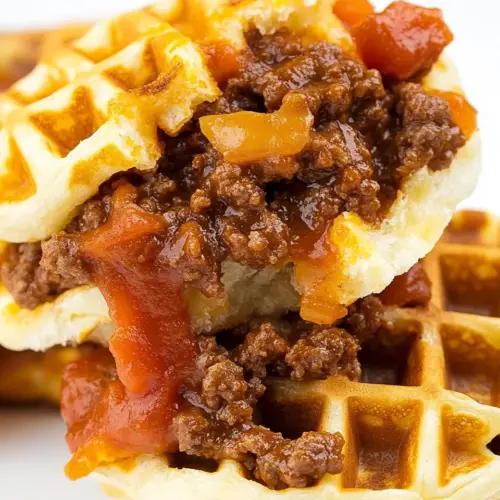
Waffled Sloppy Joe Sliders
Waffled Sloppy Joe Sliders are crispy, saucy, and irresistibly fun. This easy weeknight dinner marries savory ground beef with a tangy tomato sauce and a hint of sweetness, finished in a hot waffle iron for crunchy edges and tender centers. Perfect for family meals or casual gatherings, these sliders are quick to prepare and deliver big flavor with minimal fuss, making them a must try.
Equipment
- Large Frying Pan
- Waffle Iron
- Spatula
Ingredients
- 1 tbsp canola oil Heat-friendly fat used to sauté aromatics and brown meat, providing a neutral base that won't overpower flavors. Helps prevent sticking in the pan and promotes even cooking. Adds subtle richness to the finished filling.
- 1/2 cup diced onion, diced Aromatic vegetable diced to add sweet, savory depth and tender texture once softened in the pan. Releases moisture and natural sugars when cooked, balancing acidity from tomato components. Works with other vegetables to build the savory backbone of the sauce.
- 1/2 cup diced carrots Sweet root vegetable diced to contribute natural sweetness and body to the mixture. Softens during cooking and helps thicken the sauce with its starches. Complements the onion and tomato for a well-rounded flavor profile.
- 1/2 cup finely chopped celery Crisp stalk vegetable finely chopped to provide aromatic backbone and a slight vegetal bite. Releases subtle savory notes when sautéed, enhancing depth and texture. Aids in building the classic base for hearty sauces and fillings.
- 3 crushed cloves garlic Aromatic pungent ingredient crushed to release strong, savory oils and bright flavor into the dish. Adds immediate fragrance and umami when cooked briefly with the aromatics. Balances richness of meat and tomatoes with sharpness.
- 1 1/2 lb ground beef Primary protein component that brings richness, structure, and savory flavor to the sliders. Browns to develop caramelized notes and provides the hearty mouthfeel expected in sloppy joe filling. Combines with seasonings and sauces to create the main filling.
- 1 1/2 teaspoon kosher salt Coarse salt used to season the meat and vegetables, enhancing and balancing all other flavors in the dish. Draws out moisture from aromatics during cooking and helps develop a seasoned crust on browned meat. Essential for proper overall seasoning.
- 1 teaspoon fresh cracked pepper Coarse ground spice used to introduce warm, sharp flavor and subtle heat contrast. Adds aromatic complexity and mitigates richness by brightening the palate. Cracked texture contributes a pleasant burst of peppery bite.
- 1/2 teaspoon cayenne pepper Hot spice added in small measure to provide controlled heat and a mild smoky note. Enhances overall warmth without overpowering the other flavors when used judiciously. Balances sweetness from sugar and ketchup.
- 2 cup s tomato sauce (or 1 15-ounce can whole tomatoes, puréed) Tomato base ingredient providing acidity, body, and rich tomato flavor to bind the mixture. If using whole tomatoes puréed, it contributes fresh tomato character and texture; if using sauce, it yields consistent thickness. Serves as the primary saucy component that coats the meat.
- 1 tablespoon tomato paste Concentrated tomato component used to deepen tomato intensity and thicken the sauce for clingy texture. Adds umami and a slightly caramelized quality when cooked into the mixture. Helps achieve a balanced tomato flavor without excess wateriness.
- 1/2 cup ketchup Sweet and tangy condiment added for sweetness, moisture, and familiar sloppy joe flavor profile. Provides viscosity that helps the sauce adhere to the meat and slider buns. Balances acidic tomato and savory seasonings.
- 2 tablespoon brown sugar Sweetener that contributes molasses-like richness and rounded sweetness to counterbalance tomato acidity. Helps create a glossy, well-rounded sauce and enhances caramelization during simmering. Adjusts overall flavor complexity.
- 1 tablespoon Worcestershire sauce Savory, umami-rich condiment used to deepen flavor and add subtle tangy-salty complexity. Enhances meatiness and integrates the sweetness and acidity for a cohesive sauce. A small amount significantly boosts savory depth.
Instructions
- Heat oil in large frying pan over medium heat. Once oil is hot, stir in onions, carrots and celery. Cook until onions are translucent and carrots and celery are soft, about 5 minutes. Stir in garlic and cook for 2 more minutes.: As the oil warms, you will notice a faint shimmer and a subtle aroma, signaling it is ready. The gentle sizzle when you add the first bit of onion should be steady, not violent. This stage is about creating a soft, sweet base, so keep the heat controlled. If the oil smokes, lower the temperature immediately to avoid bitter flavors. A common mistake is rushing this step, which leaves the vegetables undercooked and raw tasting, so be patient until the pan gives that even, steady sizzle.
- Increase heat to medium-high, stir ground beef into vegetable mixture. Cook, stir and crumble meat until browned, about 10 to 12 minutes. Stir in salt, pepper and cayenne pepper.: You should hear a lively but gentle sizzling as the vegetables hit the pan. Stir frequently so each piece softens evenly and develops a slight translucency at the edges. Watch the color of the onion , it will go from opaque to translucent, and the carrots will begin to slightly darken at the tips. If the pan browns too quickly, the vegetables may char instead of sweetening, so reduce heat a touch. The goal is softened vegetables that still have structure, which helps support the sauce later.
- Lower heat back to medium and add tomato sauce, tomato paste, ketchup, brown sugar and Worcestershire sauce. Cook and stir until the liquid is reduced by a third and mixture is thick, about 15 to 30 minutes.: You will smell a mellow sweetness as the sugars in the vegetables begin to surface, and the pan will fill with a warm, mellow aroma. Test a small carrot piece for tenderness, it should yield without disintegrating. Overcooking will make the mixture mushy, so aim for tender yet distinct pieces. Stirring every minute prevents sticking and promotes even cooking.
- Stir in garlic and cook for 2 more minutes: When you add the crushed garlic , it will perfume the pan almost immediately, releasing aromatic oils. Keep the heat at medium and stir constantly, because garlic can turn bitter if it burns. You are aiming for a softened, fragrant note that blends with the vegetables. A typical slip here is leaving garlic unmoved, which causes dark bits and an unpleasant sharpness, so keep it moving for those two minutes.
- Increase heat to medium-high, stir ground beef into vegetable mixture: As the heat rises you will hear a louder sizzle, and the pan will steam a bit when the ground beef hits the vegetables. This is the moment on which browning depends, so spread the meat out to maximize contact with the pan. Browning creates complex, savory flavors that are essential for a robust sauce. If the pan becomes crowded, the meat will steam instead of brown, so work in a single layer as much as possible.
- Cook, stir and crumble meat until browned, about 10 to 12 minutes: You will see the meat change from pink to brown and release juices that mingle with the vegetables. Use your spatula to break the meat into small pieces so it cooks evenly and creates bits that can caramelize. The sound will be a steady sizzle punctuated by occasional pops as moisture evaporates. Watch for large pools of liquid; if present, increase heat briefly to encourage evaporation. A common error is stopping stirring prematurely, which leaves unevenly cooked chunks, so keep breaking and turning the meat.
- Stir in salt, pepper and cayenne pepper: As you add these seasonings, they will immediately lift the overall aroma and start to season the entire pan. Salt helps extract moisture and flavors from the meat and vegetables, while the fresh cracked pepper and cayenne pepper provide brightness and gentle heat. Mix thoroughly so the seasoning is evenly distributed. Over or under seasoning at this stage significantly alters the final taste, so taste a small amount of the cooked meat to check balance before moving on.
- Lower heat back to medium and add tomato sauce, tomato paste, ketchup, brown sugar and Worcestershire sauce: When these wet ingredients hit the pan you will hear a softer simmer and the aroma will turn more tomato forward, with sweet and umami layers building. Stir well to combine, scraping up any browned bits from the pan, which dissolve into the sauce and boost flavor. The brown sugar will soften the acidity while the Worcestershire sauce deepens the savory profile. A frequent misstep is adding cold canned items straight from the fridge, which can cool the pan too much; instead, allow canned ingredients to warm slightly if chilled.
- Cook and stir until the liquid is reduced by a third and mixture is thick, about 15 to 30 minutes: As the sauce simmers, you will see it transform from loose and glossy to a thicker, clingy mixture that coats the meat. Listen for a steady gentle bubbling and watch for the sauce to cling to your spoon. The smell will concentrate, becoming richer and more cohesive. Stir periodically to prevent sticking and to check thickness. If the sauce still seems watery at the low end of the time range, raise heat briefly to speed reduction. A common mistake is not allowing enough time for reduction, which leaves a watery filling that makes the sliders soggy when pressed.
Notes
- Preheat the waffle iron fully before pressing the sliders to ensure an immediate crisp exterior without overcooking the filling.
- Dry the filling briefly on medium heat if it seems very loose, this helps the mixture cling to buns and prevents sogginess when pressing.
- Use room temperature canned tomatoes if possible, to avoid shocking the pan and lengthening cooking time when they hit the hot skillet.
- Season gradually and taste as you go, especially after the sauce has reduced, so you can balance sweetness and acidity precisely.
- Work in batches when pressing sliders in the waffle iron so you do not crowd and so each slider gets even heat and crisping.
- Keep warm in a low oven if serving a crowd, this maintains texture while you finish additional batches without drying them out.