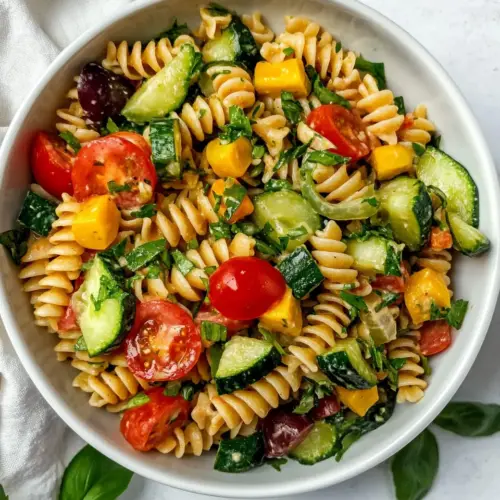
Veggie Pasta Salad
Veggie Pasta Salad is a bright, crunchy, and easy pasta bowl that combines al dente rotini with sweet peas and corn, juicy tomatoes, crisp bell pepper, cooling cucumbers, and briny olives, all tossed in a tangy Dijon and balsamic vinegar vinaigrette. It makes a perfect easy weeknight dinner or picnic side, and the flavors improve after chilling, so it is a delightful make ahead choice.
Equipment
- Large Bowl
- Whisk
- Large Pot
- Colander
Ingredients
- 1 tbsp Dijon mustard Add bold, tangy flavor and help emulsify the dressing, binding oil and vinegar while adding depth and a slight sharpness to the salad.
- 1/2 tsp grated garlic Provide a pungent, aromatic kick that brightens the dressing and complements fresh vegetables without overpowering them when finely grated.
- 1/4 tsp Italian seasoning store-bought or homemade, or try herbs de Provence Introduce a fragrant, herby background that layers Mediterranean flavors into the dressing and ties together the vegetables for a cohesive taste.
- 3 tbsp balsamic vinegar Deliver bright acidity and a slightly sweet complexity to the dressing, balancing oil and mustard while lifting the overall flavor profile.
- 1/3 cup olive oil Contribute richness and body to the dressing while coating the pasta and vegetables, adding fruity, savory notes and mouthfeel.
- 8 oz . dry rotini pasta (1/2 box), or try fusilli, penne, or farfalle Supply tender, chewy texture and a hearty base for the salad, absorbing the dressing and providing substance to make the dish filling.
- 1 cup frozen peas Bring sweet, poppable bursts of vegetable flavor and bright color while adding a tender contrast to the pasta and other components.
- 1 cup frozen corn Add sweet, crisp kernels that contribute color contrast, natural sweetness, and textural variety alongside the peas and vegetables.
- 1 pint cherry tomatoes halved Offer juicy, slightly acidic sweetness that adds freshness, vibrant color, and a burst of umami-like flavor when halved and mixed in.
- 1 cup mixed-color diced bell pepper Provide crunchy, colorful bite and mild sweetness that enhances texture and visual appeal while pairing well with the dressing.
- 1 cup Persian cucumbers sliced into half moons Deliver crisp, cool freshness and slight cucumber crunch with mild flavor, balancing richer elements and adding a bright mouthfeel.
- 1/2 cup sliced olives green or black Contribute briny, savory notes and a soft, slightly chewy texture that deepen the salad's flavor and add Mediterranean character.
- fresh basil leaves for garnish Garnish with fragrant leaves that add fresh, aromatic, peppery-sweet notes and a visually appealing finishing touch to the dish.
Instructions
- In a large bowl, whisk the mustard, grated garlic, and Italian seasoning together. Add the balsamic vinegar and whisk to combine. Slowly drizzle in the olive oil while whisking constantly. Season with salt and pepper to taste. Set aside.: The aroma of freshly grated garlic will be the first thing you notice, sharp and inviting, cutting through the mellow notes of the Dijon mustard . As you whisk in a glass or ceramic bowl, you'll see the mustard break up and start to suspend flecks of seasoning, creating a speckled, flavorful base. I like to press the back of the whisk against the bowl to work the herbs into the mustard, which releases their oils and deepens the flavor. A common mistake is under-whisking, which can leave the dressing separated later, so make sure the mustard and herbs are thoroughly combined before moving on.
- Bring a large pot of salted water to a boil.: When you pour in the balsamic vinegar , listen for the soft patter as it hits the bowl, and watch the liquid swirl into the mustard, bringing a glossy sheen. The vinegar brings a bright, slightly sweet acidity that wakes up the other aromatics. Whisk briskly for about ten to twenty seconds to fully integrate the vinegar so the mixture looks unified. If you skip this step or add oil too quickly, the dressing can split, creating watery pockets that will not cling to the rotini .
- Cook the pasta to al dente, according to the package directions. One minute before draining the pasta, add the peas and corn to the pot with the pasta.: As you drizzle in the olive oil , you should see the mixture thicken into a cohesive emulsion, turning slightly paler and smoother. The whisking action traps tiny droplets of oil in the vinegar and mustard, which is why a steady, slow pour is essential. The resulting dressing will feel silky on the tongue and adhere to the pasta and vegetables. One pitfall here is rushing the pour, which often results in separation, so take your time and keep a steady rhythm.
- Drain the pasta, peas, and corn and run them under cool water, just until they are no longer hot to the touch.: Salt brightens flavors, while freshly ground pepper adds a background warmth. Sprinkle a little, then taste, because the olives and balsamic already contribute saltiness. When seasoning, pay attention to how the vinegar sharpens and the oil smooths, adjusting the seasoning so neither element overpowers the other. Over-salting is easy to do, so err on the side of lightness and remember you can always add more later.
- Add the pasta, peas, and corn to the bowl with the vinaigrette and toss to combine.: Letting the vinaigrette sit briefly lets the flavors marry, and it will feel more cohesive when you toss it with the warm pasta. You may notice the scent deepen as the herbs rehydrate slightly in the liquid. Avoid covering the bowl too tightly at this stage, because you want the aromatics to stay bright, not stewed. A common error is letting the dressing sit for hours at room temperature, which can mute freshness; for best results, use within a few hours.
- Add the remaining vegetables—tomatoes, bell pepper, cucumbers, and olives. Toss to combine.: The sound of the rolling boil is a cue that the pot is hot and ready. Adding salt to the water seasons the pasta from within, so don’t skip this step. The water should taste faintly ocean like, which ensures the rotini will carry enough base seasoning. Many people under season their pasta water, leading to a bland final dish, so be generous but not excessive with salt.
- Season with additional salt and pepper, if needed. Garnish with fresh basil, if desired.: Cooking to al dente means the rotini will be tender with a slight resistance in the center, which is ideal because the pasta will soften a touch more as it cools and absorbs dressing. You should see the pasta swell and the surface become slightly glossy. Overcooked pasta becomes mushy and will not provide that satisfying bite, so taste a piece a minute or two before the lower end of the package time to judge readiness.
- Enjoy immediately or chill until ready to serve. This pasta salad is delicious at room temperature or cold.: Adding frozen peas and corn at this moment gently warms them without turning them to mush, preserving their pop and sweetness. You will see the bright green of the peas revive as they heat, and the kernels will glisten. A common misstep is adding frozen vegetables too early, which yields dull color and a mealy texture, so time this to the final minute.
- Drain the pasta, peas, and corn and run them under cool water, just until they are no longer hot to the touch: The cold rinse stops the cooking instantly and prevents the starch from making the salad gluey. As the water runs, you will feel the temperature drop and notice the pieces separate, which keeps the salad light. Be careful not to soak them for too long, as prolonged rinsing can wash away some flavor and leave the pasta a little limp.
- Add the pasta, peas, and corn to the bowl with the vinaigrette and toss to combine: When the warm pasta meets the vinaigrette, the dressing will coat each corkscrew and cling in the grooves, creating glossy, flavorful strands. Use a gentle folding motion to avoid crushing the pasta. This step distributes seasoning evenly and warms the dressing slightly, which helps flavors meld. Avoid aggressive stirring, which can break the pasta and make the texture uneven.
- Add the remaining vegetables—tomatoes, bell pepper, cucumbers, and olives: Introducing the chopped tomatoes , diced bell pepper , sliced cucumbers , and olives brings in contrast in texture and temperature. The tomatoes will release tiny pockets of juice that mingle with the dressing, while the peppers and cucumbers stay crisp. Toss gently so the pieces remain intact, and be mindful that overly vigorous tossing can bruise the tomatoes .
- Toss to combine: A final toss ensures each bite has a little of everything. As you fold everything together, listen for faint clinks of vegetables against the bowl, and notice the salad’s color deepen into a cohesive mosaic. If any ingredients cluster, break them up with your spoon so the seasoning is even. A frequent mistake is under tossing, leaving pockets of unseasoned pasta or vegetables.
- Season with additional salt and pepper, if needed: After tasting, you may want a pinch more salt or a crack of pepper to balance the sweetness of the corn and tomatoes . Adjusting seasoning at the end allows you to calibrate for saltiness lost during boiling or rinsing. Avoid adding too much at once; small adjustments are safer and more precise.
- Garnish with fresh basil, if desired: Tearing the basil leaves releases fragrant oils that perfume the entire bowl, making the salad smell as good as it tastes. Scatter the leaves on top for a bright, herbal finish. Don’t thinly slice the basil on a cutting board with a metal knife for too long, because bruising can darken the leaves and mute their aroma.
- Enjoy immediately or chill until ready to serve: Served right away, the salad has a slightly warm, comforting quality, while chilling it lets the flavors meld and yields a refreshingly cool dish. Either way, the salad keeps well for a day or two refrigerated in an airtight container. Common pitfalls include leaving it out at room temperature for too long in hot weather, so refrigerate promptly if not eaten within a couple of hours.
Notes
- Choose the right pasta shape Opt for corkscrew or ridged shapes like rotini, fusilli, or penne because they trap dressing and tiny vegetable pieces, ensuring flavor in every bite.
- Use good olive oil A high quality olive oil makes the dressing silkier and more flavorful, which matters because the oil is a major source of mouthfeel in this salad.
- Warm pasta absorbs dressing better Toss the slightly warm rotini with dressing so it soaks up flavor, then chill if you prefer the salad cold; this gives the best of both temperature worlds.
- Timing for frozen vegetables Add frozen peas and corn in the last minute of boiling to preserve color and texture rather than turning them mushy.
- Fresh basil at the end Add torn basil leaves right before serving so the herb retains its aroma and bright appearance, rather than becoming limp.
- Serve chilled or room temp The salad is versatile, so plan for both options; chilling melds flavors while serving at room temperature makes it more aromatic.
- Adjust vinegar to taste If you like more brightness, add a touch more balsamic vinegar in small increments and taste as you go to avoid over acidifying the dish.