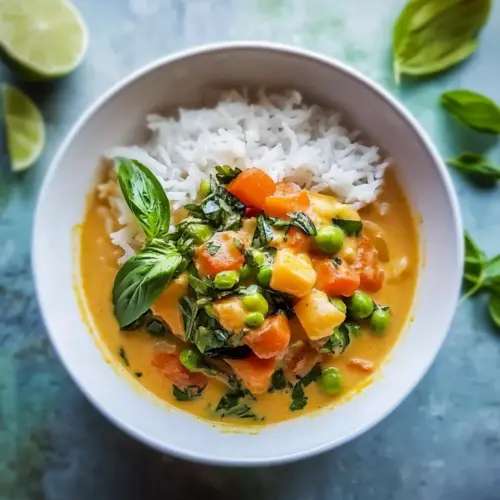
Vegetarian Thai Green Curry
Vegetarian Thai Green Curry is a creamy, aromatic bowl of coconut milk and green curry paste studded with butternut squash and chickpeas. This easy weeknight dinner delivers bold Thai flavors with a silky sauce and bright lime finish, perfect for comforting family meals or meal prep. Make it for its rich texture and vibrant balance of sweet, salty, and tangy notes.
Equipment
- Large Pot
Ingredients
- 2 tablespoons coconut oil Melted and aromatic, used to sauté aromatics and vegetables until translucent and fragrant, providing a rich coconut backbone to the curry. Adds a subtle tropical note that complements the coconut milk and balances spices. Helps prevent sticking and carries fat-soluble flavors throughout the dish.
- 1 cup finely diced red onion Finely diced and softened to build sweetness and depth when cooked down, creating a flavorful base for the curry sauce. Releases juices that meld with spices and coconut milk to enhance overall mouthfeel. Contributes texture and a mild savory-sweet element.
- 1 cup finely diced red bell pepper Finely diced and added early to tenderize and sweeten the curry, offering bright color and a crisp-sweet flavor. Balances spicier components and provides contrast to creamy elements. Helps add visual appeal and light vegetal notes.
- 1 cup finely diced carrots Finely diced and sautéed to add natural sweetness, body, and slight earthiness to the curry, absorbing flavors from the spices and coconut milk. Helps create a hearty texture and complements the butternut squash and chickpeas. Provides added nutritional value and color.
- 1 tablespoon minced garlic Minced and tossed into the hot oil to release pungent aromatics that form the fragrant base of the curry. Infuses the dish with savory depth and sharpness that balances sweet and creamy components. Enhances overall complexity and aroma.
- 2 teaspoons minced ginger Minced and browned briefly to release warm, peppery notes that lift the curry’s flavor profile and add brightness. Blends with garlic and lemongrass to create a vibrant aromatic foundation. Helps cut through richness of coconut milk.
- 1 tablespoon lemongrass paste Pasted and stirred into the aromatics to deliver citrusy, herbaceous lemongrass flavor throughout the sauce, enhancing authenticity. Provides a fragrant, slightly floral note that complements the green curry paste and kaffir leaves. Acts as a concentrated brightening agent.
- 1 teaspoon salt Sprinkled to season and enhance all flavors, helping to balance sweetness and acidity while bringing out savory notes. Dissolves into the sauce to allow spices and aromatics to shine. Critical for proper taste balance and seasoning.
- 4 tablespoons green curry paste Spoonfuls stirred in to supply the central spicy, herbaceous Thai character and deepen the curry’s color and heat level. Blends with coconut milk and aromatics to create a cohesive, layered sauce. Acts as the main concentrated source of green curry flavors.
- 1 -1/2 teaspoons ground coriander Ground and added for warm, citrusy, slightly nutty spice that complements the curry paste and aromatics. Enhances savory depth and provides subtle complexity in the background. Works well with cumin-like and coriander-forward flavors.
- 3 cups butternut squash Cubed and simmered until tender, offering a sweet, nutty, and creamy texture that soaks up curry flavors and enriches the sauce. Adds body and seasonal color while contributing to the dish’s heartiness. Balances spicy and savory components.
- 1 (15.5-ounce) can chickpeas Drained and added for protein, fiber, and a creamy, slightly nutty element that pairs well with coconut milk. Absorbs curry flavors and provides a filling vegetarian alternative to meat. Enhances texture and nutritional content.
- 2 (13.5-ounce) cans coconut milk Poured in to create the silky, creamy coconut base that carries curry paste and aromatics, producing a rich mouthfeel. Balances heat with natural sweetness and gives the sauce its signature tropical character. Helps emulsify spices and ingredients.
- 8 Kaffir lime leaves Added whole to impart intense citrusy, floral, and slightly bitter aroma that infuses the sauce while simmering. Removed before serving or left for presentation, they provide authentic Thai fragrance. Elevate the overall aromatics without altering texture significantly.
- 1 -1/2 cups snow peas trimmed and halved Trimmed and halved, then added near the end to retain bright color, crisp-tender snap, and fresh vegetal sweetness. Provides light textural contrast to softer squash and chickpeas and lifts the finished dish. Contributes a pop of green and freshness.
- 1 -3 tablespoons light brown sugar Measured and stirred in to adjust mild sweetness and round out acidity, ensuring the curry has a balanced flavor profile. Helps mellow aggressive heat or accentuate savory notes when needed. Can be tuned to personal preference for subtle caramel undertones.
- 1 tablespoon soy sauce Measured and mixed to introduce umami and salty depth that enhances the savory components of the curry without overwhelming aromatics. Blends with other seasonings to round flavors and accentuate complexity. Use sparingly to maintain balance.
- 1 to 2 tablespoons lime juice Squeezed to introduce bright, fresh acidity that cuts through richness and elevates overall flavor, adjusted to taste for desired brightness. Balances sweetness and salt while refreshing the palate. Adds a zesty finish that brightens each bite.
- Thai basil or regular basil, for garnish Torn or chopped and used as a fresh garnish to add peppery, sweet, and slightly licorice-like herbal notes that complement the curry’s flavors. Contributes vibrant green color and aromatic lift when sprinkled on top. Enhances presentation and herbal complexity.
- Cooked rice Served alongside to absorb the flavorful sauce and provide a neutral, comforting starch that complements the curry’s richness. Offers a simple textural contrast and helps make the meal more filling. Ideal for soaking up leftover curry sauce.
- Warmed roti bread Warm and soft accompaniment used to scoop and enjoy the curry, adding a chewy, bready contrast to creamy sauce and vegetables. Works well for sharing and extends the meal’s textural variety. Complements flavors without introducing competing tastes.
Instructions
- Dice red onion, carrot, and bell pepper (by hand or quickly in the food processor). Mince garlic and ginger. (I peel the ginger with a spoon or vegetable peeler first.) Peel and chop butternut squash into bite-sized pieces (1/2-inch in size) so they'll cook at the right time. Drain and rinse chickpeas.: When you begin, your knife work sets the cooking rhythm, and the kitchen will fill with a mix of sweet and earthy scents as you chop red onion , carrot , and red bell pepper . The sound of a steady chopping cadence is reassuring and helps you keep even sizes, which ensures everything softens uniformly. Minced garlic and ginger smell pungent and sharp raw, but that harshness mellows quickly when heated. Peel the butternut squash and cut into half inch cubes so the pieces become tender without falling apart, and rinse the canned chickpeas to remove any metallic or starchy canning liquid. A common mistake is uneven chopping, which leads to some pieces overcooked and others underdone, so take the extra five minutes to make sizes consistent and your final texture will be harmonious.
- Heat coconut oil in a large pot over medium-high heat. Add onion, carrot, and red pepper and sauté 7–9 minutes, or until onions begin to turn golden. Add garlic, ginger, and lemongrass paste. Stir to coat everything with oil. Season to taste with salt (I add 1 teaspoon salt.) Lower heat to medium and add green curry paste and ground coriander. Stir often, 2–3 minutes or until very fragrant. Add chickpeas and butternut squash and stir to coat, 1 minute.: As the coconut oil melts and warms, it releases a soft, sweet fragrance that pairs nicely with sautéing vegetables, and you ll hear a gentle sizzle when the diced vegetables hit the pan. The onions should become translucent and start to show golden edges, signaling the natural sugars are caramelizing and building depth. When you add minced garlic , ginger , and lemongrass paste , their aromas will bloom and the air will shift to bright, citrusy, and gingery notes. Seasoning early with salt helps draw moisture and concentrates flavor, but watch the heat closely because burnt garlic will give a bitter note that is hard to fix. If the pan seems too hot, lower to medium to keep the aromatics from scorching.
- Pour in coconut milk. Stir. Scrape the bottom of the pot and press all squash below the liquid. Bring to a boil, then reduce heat to a rapid simmer (it should be bubbling at the edges but not boiling), 18–25 minutes, stirring occasionally. The butternut squash should be fork tender and curry sauce reduced; this happens at around 20–22 minutes for me. If the sauce is reducing too quickly and squash isn't getting tender, add a splash of vegetable stock/broth or water. (You also may need to lower the heat a little.) If squash isn't getting tender and the sauce isn't reducing, increase heat slightly. Add snow peas and cook 2–3 more minutes or until tender.: Adding the green curry paste to warm oil and vegetables releases essential oils and intensifies its herbal complexity, filling the kitchen with lemongrass, cilantro, and chili notes. The sound will be a quiet bubbling as the paste loosens and integrates, and the fragrance should be immediately more potent. Sprinkle in ground coriander to introduce a gentle citrus warmth that complements the paste. When you fold in the rinsed chickpeas and diced butternut squash , their surfaces will become glossy as they are coated, which helps the upcoming simmer infuse them. One mistake is adding the paste to a pan that is not hot enough, which prevents the flavors from blooming; conversely, too high heat can burn the paste, so aim for a steady medium and stir often.
- Add sugar (start with less; you can always add more), soy sauce, and lime juice to the curry (feel free to adjust these ingredients to personal preference — adding more soy sauce for seasoning/umami flavor, more lime for a fresh flavor, and more sugar if it's too spicy). Taste and add more salt if needed; I typically add another 1/4 up to 1/2 teaspoon—flavors should be vibrant!: When the coconut milk hits the pot the aroma becomes creamy and tropical, and the sauce will slowly turn glossy as it heats. Use a spatula to scrape the bottom to release any browned bits, which are flavor gold, and push the butternut squash pieces under the liquid so they cook evenly. When the liquid reaches a gentle boil, reduce to a rapid simmer where small bubbles form around the edge; heavy rolling boils can break the coconut milk texture and cause splitting. Stir occasionally to prevent sticking, and watch the squash for fork tender texture, which should feel soft but still hold shape. If the sauce reduces too fast and the squash remains firm, a splash of vegetable stock or water will give it the time to finish cooking without scorching. Overcrowding the pot or cutting uneven pieces are common errors that lead to inconsistent doneness, so keep pieces uniform and give them space to simmer.
- Remove curry from heat. Garnish individual bowls with basil. I like to serve lime wedges on the side! Serve over cooked rice with warmed roti bread. Enjoy!: At this stage, the kitchen will fill with a complex blend of coconut richness, herbal heat, and stewed sweetness, and incorporating light brown sugar , soy sauce , and lime juice brings those flavors into balance. The sugar rounds the edges, the soy sauce deepens umami, and the lime juice sharpens the high notes so the curry sings. Taste thoughtfully and add seasonings in small increments so you can hone in on the precise balance you enjoy. A common misstep is over seasoning quickly; because the flavors concentrate as the curry cools slightly, start modest and fine tune with short taste tests.
- Remove curry from heat. Garnish individual bowls with basil. I like to serve lime wedges on the side! Serve over cooked rice with warmed roti bread. Enjoy!: Once you take the pot off the stove, the aroma should be inviting and layered, and adding torn Thai basil or regular basil immediately releases bright herbal perfume that perks up each bowl. Serving over steaming cooked rice allows the grains to soak up the curry, while warm roti bread gives a chewy option for scooping. Let the curry settle for a minute so flavors meld to their final balance, and offer lime wedges for fresh acidity at the table. A typical mistake is serving too quickly, before the flavors marry, so give it a brief rest off heat to finish harmonizing.
Notes
- Adjust curry paste intensity Start with less green curry paste if your brand is particularly spicy, taste as you go, and add more later if you want greater heat and herbaceous punch.
- Lighten the sauce Substitute one can of coconut milk with 1 cup of vegetable stock to reduce richness while maintaining body and mouthfeel.
- Make it heartier Add extra canned chickpeas or a cup more butternut squash to increase bulk and make the curry more filling for meal prep portions.
- Swap herbs If you can t find Thai basil, stir in fresh regular basil or a small handful of chopped cilantro at the end for a bright finish.
- Control sweetness Use light brown sugar sparingly, adding a teaspoon at a time until the spice softens and flavors balance to your taste.