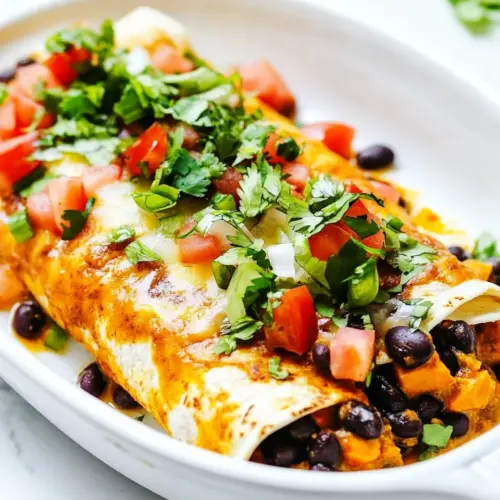
Vegetarian Enchiladas
Vegetarian Enchiladas combine creamy roasted sweet potato, hearty black beans, and melty cheddar for a comforting, satisfying bake. This easy weeknight dinner features saucy layers and bright toppings like avocado and cilantro, offering a creamy and slightly smoky flavor profile. Make it to feed a crowd or enjoy leftovers that reheat beautifully, perfect for cozy fall evenings and casual gatherings.
Equipment
- Skillet
- 9 x 13 inch casserole dish
- Oven
Ingredients
- 1 tablespoon olive oil Lightly heat to coat a pan and provide a nonstick surface for sautéing vegetables and developing flavor; helps distribute heat evenly and contributes a subtle fruity note when used in moderation. Use at the start of cooking to soften aromatics and prevent sticking, and adjust amount if using a nonstick pan or baking instead.
- 1 sweet potato diced Cube and roast or sauté until tender to add natural sweetness, texture, and body to the filling; provides a creamy bite when cooked through and soaks up spices and sauce. Cut into uniform pieces to ensure even cooking and combine with other vegetables for balanced flavor in the enchiladas.
- 1 onion diced Dice finely and sweat until translucent to build savory depth and sweetness in the filling; releases aromatic compounds that form the base of the dish. Cook gently to avoid browning too much, which helps meld flavors with spices and other vegetables.
- 1 red bell pepper diced Dice and sauté until soft to contribute a crisp-sweet vegetal flavor and vibrant color to the filling; pairs well with the sweet potato and onion for balanced sweetness. Add toward the middle of cooking so it retains some texture without becoming mushy.
- 1 teaspoon chili powder Sprinkle and toast briefly with the vegetables to add warm, mild heat and classic chili flavor to the filling; enhances overall depth without overpowering other seasonings. Adjust quantity to taste and combine with other spices for a layered flavor profile.
- 1/2 teaspoon paprika Stir in to lend a smoky, slightly sweet undertone that complements chili powder and roasted vegetables; builds complexity in the seasoning blend. Use sparingly to avoid dominating the palate and to harmonize with the cumin and salt.
- 1/4 teaspoon cumin Add ground to introduce earthy, slightly nutty warmth and to anchor the spice blend; pairs especially well with roasted vegetables and beans. Combine with other spices early in cooking to bloom the flavors in hot oil.
- salt and pepper Season to taste to balance and enhance all other flavors, controlling overall saltiness and peppery heat; ensures each component of the filling and sauce is properly seasoned. Taste as you cook and after assembling to adjust levels for a well-rounded final dish.
- 1 15 ounce can black beans, drained and rinsed Rinse and drain before adding to the filling to provide creamy protein and a hearty texture that contrasts with vegetables; offers plant-based protein and fiber that make the enchiladas more filling. Fold in gently to avoid mashing and distribute evenly throughout the rice and vegetable mixture.
- 2 cups white rice cooked Cook fully and fluff to create a starchy base that adds bulk and soaks up sauce; provides a neutral backdrop that helps bind the filling components. Use cooled or room-temperature rice to prevent excess moisture when assembling the enchiladas.
- 6 flour tortillas Warm slightly to make pliable for rolling and assembling the enchiladas; acts as the vessel that holds the filling and sauce together during baking. Lightly heat if needed to prevent cracking, and stack with a clean cloth to keep them soft while assembling.
- 3 cups shredded cheddar cheese divided Grate and divide to melt over the assembled enchiladas and create a golden, gooey topping; adds rich, salty flavor and attractive color when broiled. Reserve some for layering inside and some for sprinkling on top to ensure cheesy cohesion throughout.
- Homemade Enchilada Sauce (or 2 cups red enchilada sauce) Pour or ladle over the filling and inside tortillas to provide moisture, tang, and signature enchilada flavor; helps meld the filling and cheese during baking. Use homemade or a good-quality canned sauce to control spice and consistency, and ensure enough sauce to cover the dish evenly.
- Chopped Cilantro Chop and sprinkle as a fresh, herbaceous garnish that brightens rich, saucy enchiladas with a burst of green flavor; adds visual contrast and aromatic lift. Add just before serving to preserve its fresh texture and color.
- Avocado diced Dice and serve as a creamy, cooling topping that adds healthy fats and a smooth contrast to spicy sauce; contributes richness and a silky mouthfeel. Add immediately before eating to prevent browning and maintain fresh texture.
- Tomatoes chopped Chop and scatter as a fresh, juicy garnish that contributes acidity and a subtle crispness to balance the richness of cheese and sauce; adds color and brightness. Add shortly before serving to retain firmness and bright flavor.
Instructions
- Preheat oven to 350 degrees. In a medium sized skillet over medium high heat add the olive oil, sweet potato, and bell pepper. Sauté for 5-7 minutes or until tender. Add in the chili powder, paprika, cumin, salt, pepper, black beans and rice. Remove from heat.: The kitchen will begin to warm and you may notice a faint hum from the oven as it ramps up, signaling readiness for baking. Preheating ensures the casserole cooks evenly and the cheese melts smoothly, creating that perfect bubbly top. A common oversight is putting the pan into a cold oven, which lengthens bake time and can lead to uneven melting. If your oven runs hot or cool, use an oven thermometer to confirm the 350 degrees target.
- In a 9 x 13 inch casserole dish add 1 cup of the enchilada sauce to the bottom of the pan.: As the olive oil warms it will ripple and release a gentle sheen, and when you add the diced sweet potato and red bell pepper you will hear a light sizzle. That sound means moisture is escaping and browning will begin, building flavor through caramelization. Cook without crowding so pieces brown rather than steam; overcrowding is the most common culprit for limp vegetables.
- To assemble: Add about 1/4 cup of the vegetable mixture to the tortilla with 2 tablespoons of shredded cheese. Roll up and place seam side down in the casserole dish. Repeat.: During sautéing you will notice edges taking on a golden hue and the aroma shifting to a sweet, toasty note as the sweet potato softens. Stir occasionally to encourage even color and check tenderness with a fork. A frequent mistake is walking away; staying nearby allows you to adjust heat and prevent sticking, preserving the bright flavor of the vegetables.
- Pour the enchilada sauce on top of the tortillas and sprinkle with remaining cheese. Bake for 25-30 minutes or until cheese is bubbly and cooked throughout. Garnish with optional toppings.: When you sprinkle the chili powder , paprika , and cumin , the pan will release fragrant steam as the spices bloom in the residual heat, deepening the filling's aroma. Fold in the drained black beans and cooked white rice so they warm and absorb those flavors; the mixture should feel cohesive but not wet. Avoid adding too much salt early because the enchilada sauce and cheddar cheese add sodium later, which can lead to an overly salty outcome.
- Remove from heat: Once the filling is combined, the pan will cool slightly and the ingredients will settle into a unified texture, making it easier to assemble. This pause prevents the tortillas from getting soggy and helps the flavors mingle. A common misstep is assembling while the filling is piping hot, which can cause the tortillas to tear or become overly soft, so let it rest briefly.
- In a 9 x 13 inch casserole dish add 1 cup of the enchilada sauce to the bottom of the pan: Spreading a layer of enchilada sauce on the dish creates a slick surface that prevents sticking and ensures each rolled enchilada has a saucy bed to bake on. The sauce will begin to warm as the dish sits, releasing its tangy aroma. If you skip this layer, the bottom tortillas can become dry and adhere to the pan, making serving difficult.
- To assemble: As you assemble the enchiladas, your hands will feel the warm, pliable flour tortillas and the filling should be cool enough to handle without steaming. Place about a quarter cup of the vegetable mixture and two tablespoons of shredded cheddar cheese into each tortilla, roll gently but firmly so they hold their shape, and set them seam side down in the sauced dish. Rolling too loosely can cause them to unfurl during baking, while rolling too tightly can compress the filling and make the texture dense.
- Add about 1/4 cup of the vegetable mixture to the tortilla with 2 tablespoons of shredded cheese: The contrast between the warm filling and the soft tortilla should be pleasant to the touch, and the small amount of cheese inside helps the roll bind when baked. This controlled portioning prevents overstuffing, which can lead to bursting or uneven cooking. If you see sauce leaking while rolling, your filling may be too wet, so drain any excess moisture before assembling.
- Roll up and place seam side down in the casserole dish: Arranging the rolls seam side down helps them maintain form as the cheese melts and the sauce bubbles, producing tidy servings with a golden top. As they settle in the dish you may notice a little space between them, which allows heat to circulate. Packing them tightly will make it harder for heat to penetrate evenly, while spacing too far apart reduces sauciness on the sides.
- Repeat: Filling and rolling the remaining tortillas becomes almost meditative as you watch the pan of enchiladas take shape; by the last one the rhythm feels natural. Keep an eye on consistency so each roll has a similar amount of filling, which ensures uniform baking. A typical error is rushing and overfilling the final tortillas, which leads to uneven results.
- Pour the enchilada sauce on top of the tortillas and sprinkle with remaining cheese: Pouring the remaining enchilada sauce over the assembled rolls and topping with the rest of the shredded cheddar cheese creates a protective, flavorful blanket that melts and browns. The sauce will hiss slightly when it hits the warm tortillas, and the cheese will begin to shine as it melts. Be mindful of even coverage so every roll bakes with enough moisture and the cheese browns uniformly rather than in isolated spots.
- Bake for 25 to 30 minutes or until cheese is bubbly and cooked throughout: As they bake the kitchen will fill with a savory, tangy aroma and the cheese will transform into a molten, golden layer; bubbling at the edges is a good visual cue that they are done. The 350 degrees heat melds the filling and crisps the tortilla edges slightly. If you under bake, the cheese will not set and the interior may be cool; over baking risks drying the tortillas, so watch for even bubbling and a light golden color.
- Garnish with optional toppings: Once out of the oven, the sizzling will quiet and the surface will settle into a cohesive casserole. I like to add chopped cilantro , diced avocado , and chopped tomatoes for freshness, which brightens each bite. Avoid adding toppings while very hot if they are delicate, as they may wilt or soften too much; add them just before serving for vibrant contrast.
Notes
- Warm tortillas first Warm each flour tortilla in a hot skillet or wrapped in a damp towel in the microwave for a few seconds, so they become pliable and less likely to tear when rolling.
- Portion consistently Use a measuring cup to add roughly one quarter cup of filling to each tortilla so the rolls bake evenly and look uniform in the casserole dish.
- Drain excess liquid If your filling seems watery, drain off any excess liquid from the pan before assembling to prevent soggy tortillas after baking.
- Grate cheese fresh Freshly shredded cheddar cheese melts more smoothly and gives a creamier top than pre shredded varieties, improving both texture and appearance.
- Layer sauce under and over Spread some enchilada sauce on the pan before arranging rolls and pour the rest on top to ensure thorough sauciness and prevent sticking.
- Let rest before serving Allow the casserole to sit five to ten minutes after baking so the filling sets slightly, making it easier to serve neat portions.