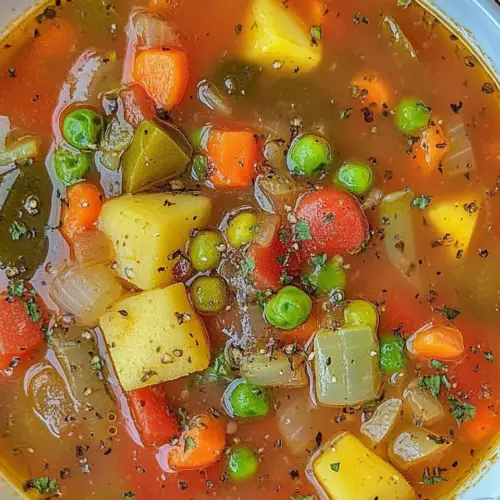
Vegetable Soup Recipe
Vegetable Soup Recipe is a cozy, hearty bowl of comfort with creamy potatoes, sweet carrots, and bright green beans. This easy weeknight dinner uses pantry staples and frozen vegetables for fuss free prep, yielding a flavorful, savory broth that warms the soul. Perfect for winter evenings and feeding a crowd, it is nutritious and satisfying, a reason to make it again and again.
Equipment
- Large Pot
- Wooden Spoon
- Knife
- Cutting Board
Ingredients
- 2 tbsp butter Melted to sauté aromatics and create a rich base, providing a subtle creamy flavor that carries other ingredients. Adds body and helps gently cook onions and garlic without sticking. Enhances overall mouthfeel and contributes to a slightly glossy finish in the soup.
- 1 medium yellow onion, chopped Chopped to add sweet, savory depth and texture while releasing natural sugars during sautéing. Softens and blends into the broth, forming a foundational flavor layer. Supports aromatic balance with the garlic and herbs throughout the simmering process.
- 2 cups carrots, peeled and sliced (baby carrots would work too) Peeled and sliced to contribute natural sweetness, color, and tender bite; helps thicken the broth slightly as some starches release. Adds bright orange visual appeal and pairs well with savory seasonings. Cooks until tender while maintaining shape if sliced uniformly.
- 1 cup celery, chopped Chopped to provide a crisp, slightly bitter contrast and fragrant base note when sautéed with onion and butter. Helps build savory complexity and adds fibrous texture for heartiness. Retains some crunch when cooked briefly or softens with longer simmering.
- 2 tsp garlic, minced Minced to introduce a pungent, aromatic punch that elevates savory flavors throughout the soup. Releases essential oils quickly when sautéed, infusing the broth with depth. Balances sweeter vegetables and complements herbs and tomatoes.
- 8 cups low-sodium chicken stock or veggie stock Used as the primary cooking liquid to meld flavors while controlling sodium level for a lighter finish. Provides a savory backbone and volume for simmering vegetables until tender. Can be substituted between chicken or vegetable stock depending on dietary preference.
- 2 cans Italian diced tomatoes, 14.5 oz cans (undrained) Added undrained to contribute brightness, acidity, and tomatoey umami, enriching the broth with visible tomato pieces. Supplies acidity that balances sweetness from root vegetables and richness from butter. Helps create a heartier, more complex soup base.
- 3 cups potatoes, peeled and diced about 1/2" thick Peeled and diced to add starchy substance, helping thicken the soup and provide a comforting texture. Absorbs flavors from the broth and seasonings, becoming tender and hearty when simmered. Offers substantial bite to make the soup more filling.
- 1/3 cup parsley, fresh, chopped Fresh, chopped to impart a bright herbal lift and fresh green color that brightens the finished soup. Scatters throughout as a finishing herb, enhancing freshness and aroma. Complements other herbs and cuts through richer flavors.
- 2 bay leaves Added whole to release a subtle, bay-like herbal depth while simmering, infusing the broth with complexity. Easily removed before serving, providing background warmth without overpowering other ingredients. Enhances the layered savory profile over long cooking.
- 1 tsp Italian seasoning Sprinkled in to contribute a balanced blend of dried Mediterranean herbs that harmonize with tomatoes and vegetables. Provides consistent, ready-made aromatic notes like oregano, basil, and thyme. Helps round out savory elements with minimal effort.
- 1/2 tsp salt Measured to gently season the soup and bring out natural flavors without overwhelming the vegetables. Allows control over overall saltiness especially when using low-sodium stock. Can be adjusted to taste toward the end of cooking.
- 1/4 tsp black pepper Ground to lightly season and add subtle heat and depth that complements herbs and vegetables. Enhances savory notes and balances sweetness from carrots and tomatoes. Should be used sparingly to avoid dominating delicate flavors.
- 1 1/2 cups green beans, fresh or frozen, trimmed and chopped Trimmed and chopped to supply fresh green texture and a crisp snap or tender bite depending on cooking time. Adds vegetal flavor and color, increasing nutritional value and variety. Cooks quickly and integrates well with other vegetables.
- 1 cup corn, frozen Frozen to contribute bursts of sweetness and natural starchy texture, adding color and a pleasant bite. Thaws quickly into the hot soup, releasing kernels that complement other vegetables. Provides a sweet counterpoint to savory and acidic elements.
- 1 cup peas, frozen Frozen to add soft, sweet pops of flavor and vibrant green color, balancing savory and acidic components. Thaws during simmering and helps make the soup more nutritious and texturally varied. Blends seamlessly with peas' mild flavor.
Instructions
- Heat a large pot over medium-high heat and add butter. Once melted, add in the onions, carrots and celery and sauté until onions are tender (about 4 minutes). Add in the garlic and sauté an additional 30 seconds, until fragrant.: The kitchen should begin to smell warm and inviting as the butter melts and starts to foam slightly, emitting a nutty aroma. You want the surface of the pot hot enough that the butter sizzles softly when it meets the pan, which helps the onion and other aromatics release their flavors. If the butter browns too quickly, reduce the heat, because burned butter will add bitterness. A common mistake is using very high heat, which can scorch the butter before the aromatics have a chance to soften. Watch for a glossy sheen on the pan and tiny bubbles forming around the edges.
- Stir in the broth, tomatoes, potatoes, parsley, bay leaves, Italian seasoning, salt and pepper. Taste and adjust seasonings if desired. Bring mixture to a boil and then add in the green beans. Reduce heat to medium-low, cover and simmer until the potatoes and carrots are fork-tender (about 25 to 30 minutes).: The moment the chopped onion hits the pan you should hear a gentle sizzle and smell the sweetening scent as the onion softens. Stir so the carrots and celery get coated in the butter , then cook until the onion turns translucent and the edges begin to look glossy, about four minutes in my experience. This step builds a sweet savory foundation, and rushing it will leave the broth flat, so resist the urge to crank up the heat. If the vegetables start to brown, lower the heat and stir more frequently to keep them tender and fragrant.
- Finally, stir in the frozen corn and peas and cook until heated through, about 5 more minutes. Remove the bay leaves and discard. Serve warm with crackers or toasted bread. Enjoy!: When you add the minced garlic , the aroma should pop almost immediately, bright and sharp, but it only needs a short time to release its oils. I count off about thirty seconds while stirring constantly to prevent it from burning, as burnt garlic becomes bitter. You should notice a fragrant, almost floral scent and the pan will hiss gently as the moisture in the garlic evaporates. If you smell bitterness, that means it has overheated, and you should start over to avoid unpleasant flavors.
- Stir in the broth, tomatoes, potatoes, parsley, bay leaves, Italian seasoning, salt and pepper: Pouring in the eight cups of stock loosens the browned bits from the bottom of the pot, creating a savory base that carries the rest of the flavors. The undrained canned tomatoes will add a touch of acidity, turning the broth a slightly reddish hue and making it smell richer. Adding the diced potatoes now ensures they simmer in the seasoned liquid and absorb flavor as they soften. Toss in the chopped parsley , bay leaves , and dried herbs, then season with the measured salt and black pepper . Stir to combine, and you should see the pot come together visually as everything floats in the broth. A frequent error here is over salting early; the flavors concentrate during simmering, so start modest and adjust later.
- Taste and adjust seasonings if desired: With the aromatics and liquids combined, dip a spoon in and taste for balance. You should sense a gentle mix of savory, herby, and slightly tangy notes from the tomatoes . If something feels muted, a pinch more salt or a bit more Italian seasoning can help. I always taste at this stage because seasoning early lets the flavors meld while simmering. Avoid adding too much salt at once; it is easier to add more later than to correct over salted broth.
- Bring mixture to a boil and then add in the green beans: Increasing the heat until small rolling bubbles break across the surface brightens the aromas as steam rises. Once boiling, add the chopped green beans so they begin to soften in the hot liquid but still keep some color and bite. The visual cue is the broth moving energetically, and you may notice a fresh vegetal scent as the green beans hit the heat. A mistake is to keep the soup at a vigorous boil for too long, which can make the green beans overcooked and the broth cloudy; you want a lively boil only briefly before reducing heat.
- Reduce heat to medium-low, cover and simmer until the potatoes and carrots are fork-tender: Lowering to a gentle simmer allows flavors to concentrate without rough agitation. Covering traps steam and shortens cooking time, so the potatoes and carrots soften evenly to that ideal tender but intact texture, about twenty five to thirty minutes. You will see the broth become slightly thicker as the potatoes release starch. Listen for a soft, steady bubbling and look for a tender fork test through a potato piece. Over simmering can make vegetables fall apart, while under simmering leaves them too firm, so check periodically for the right balance.
- Finally, stir in the frozen corn and peas and cook until heated through: Adding the frozen corn and peas at the end preserves their bright color and pops of sweetness. As they heat, you should hear a gentle hiss as the ice melts, followed by a softer simmer. The vegetables will become tender in about five minutes, and the soup will smell fresh and slightly sweet. Be careful not to overcook these, as they turn mushy quickly; aim for vibrant, just warmed through texture.
- Remove the bay leaves and discard: Before serving, fish out the bay leaves and discard them. They release great aroma while simmering, but their leathery texture and strong taste are not pleasant to eat. This is more of a finishing housekeeping step that keeps the eating experience smooth. A common oversight is leaving them in the bowl, which can surprise an unsuspecting eater with a sharp mouthful.
- Serve warm with crackers or toasted bread: Ladle the soup into bowls so steam rises and the aroma carries to the table, pairing it with crackers or toasted bread for dipping. I like the contrast of soft soup and crisp bread, which adds textural interest. Present it hot, and consider garnishing with a sprinkle of the reserved chopped parsley for a fresh visual cue. If the soup cools, reheat gently on the stove until simmering, stirring occasionally to preserve texture.
Notes
- Swap vegetables Use the note suggestion to swap in vegetables like broccoli or cauliflower, keeping similar cut sizes so cooking times remain consistent, which preserves texture and avoids unevenly cooked pieces.
- Make it vegetarian Choose the veggie stock option in place of low sodium chicken stock to keep the soup plant based while maintaining depth of flavor through longer simmering and a touch more herbs.
- Boost herbs Increase fresh parsley at the end for a brighter finish, or stir in additional dried Italian seasoning early for a deeper herb presence, watching salt levels as herbs can concentrate flavors.
- Texture variations For a creamier bowl, mash a portion of the cooked potatoes against the pot wall and stir them back in to naturally thicken the broth without dairy.
- Make ahead The soup reheats beautifully; cool and store in the fridge for up to four days, reheating gently on the stove to preserve vegetable texture and freshness.