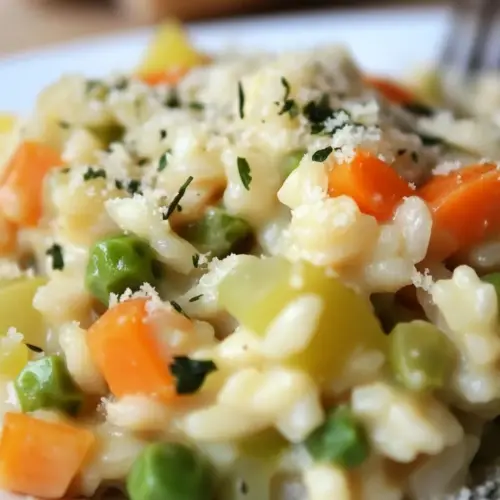
Vegetable Risotto
Vegetable Risotto is a creamy, comforting bowl that balances tender arborio rice with sweet carrot, bright asparagus, and pops of peas. This easy weeknight dinner yields a silky texture thanks to slow absorption of warm broth and a finish of parmesan cheese and heavy cream, making it an irresistible choice when you want simple, satisfying fare.
Equipment
- Large skillet with high sides
- Wooden Spoon
- Ladle
- Saucepan for broth
Ingredients
- 2 squares Savory Butter & Olive Oil Saute Express Saute Starter or 2 tablespoons of olive oil Melted to provide a flavorful cooking medium and aromatic base; Savory Butter & Olive Oil Saute Express Saute Starter or olive oil helps gently soften aromatics and toast the rice for depth of flavor. Adds richness and helps prevent rice from sticking while building the fond for deglazing and layering flavors.
- 1 small onion diced Diced to add sweet, aromatic complexity and texture; small onion releases sugars when sautéed, creating a savory foundation that balances the dish. Incorporates into the risotto early to infuse the cooking fat and rice with mellow onion flavor.
- 1 cup arborio rice Toasted briefly to develop a nutty aroma and create the starchy core of the dish; arborio rice’s high starch content yields the creamy risotto texture when gradually cooked with hot broth. Requires constant stirring and incremental liquid addition to release starch and achieve the desired al dente creaminess.
- 1 cup carrot diced Diced to contribute sweetness, color, and subtle earthiness; carrot pieces soften during simmering and add tender texture contrasts. Helps balance savory and creamy elements while providing additional nutrients and visual appeal.
- 4 cups chicken broth or vegetable broth Simmered and added gradually to hydrate the rice and build creamy consistency; chicken or vegetable broth supplies savory depth and salt to taste. Keeping the stock hot and adding in increments allows starch release from the rice for proper risotto creaminess.
- 1/4 cup heavy cream Stirred in near the end to enrich mouthfeel and create a silkier finish; heavy cream increases luxuriousness and helps bind the grains together. Should be added off heat or with minimal simmering to avoid thinning or breaking the emulsion.
- 1 cup frozen peas Folded in to introduce bright color, pop of sweetness, and tender bite; frozen peas quickly heat through and preserve a fresh flavor. Adds balance to the savory risotto and contributes small bursts of texture throughout the dish.
- 1 cup asparagus sliced + steamed Sliced and steamed to provide a fresh, slightly grassy crunch and seasonal note; asparagus complements the creamy risotto with vegetal brightness. Added toward the end or used as garnish to maintain color and gentle firmness.
- 1/2 cup parmesan cheese grated Grated to impart salty, nutty umami and to help thicken and finish the risotto; parmesan cheese enriches flavor while melding into the rice for a cohesive, creamy coating. Stirring it in off heat prevents separation and yields a glossy finish.
- salt & pepper to taste Adjusted to personal preference to enhance overall flavor balance; salt and freshly ground pepper season the dish and accentuate other ingredients. Added gradually and tasted frequently to avoid over-salting the concentrated broth and cheese.
Instructions
- Preheat large skillet with high sides over medium heat. Sauté onion in melted Savory Butter & Olive Oil Sauté Express Sauté Starter over medium heat. Pour in arborio rice and stir to incorporate evenly.: The pan should give a steady, even warmth and you will notice a faint shimmer on the surface when it is ready, which helps the aromatics soften uniformly. Using a skillet with high sides traps steam and makes stirring easier, helping the arborio rice release starch for creaminess. A common mistake is overheating, which can scorch the bottom; keep the heat at medium so the onion and carrot sweat rather than brown too quickly. If it seems too hot, lower the heat and wait for the shimmer to calm.
- Stir in carrot and sauté 5 minutes until rice starts to toast and onion and carrot start to get tender. Pour in 1 cup of chicken broth, stirring frequently until rice soaks up the liquid.: You will hear a soft sizzle as the diced onion hits the fat, and a sweet fragrance will bloom within a minute or two. This step builds the flavor base, coating the pieces so they turn translucent and slightly tender, which adds a gentle sweetness to the finished dish. Avoid browning; if the edges start to color, briefly reduce the heat and stir continuously to prevent bitter notes.
- Continue in this fashion until all the chicken broth has been absorbed by the rice. Rice should be cooked al dente.: The rice will clink against the pan and begin to toast faintly, releasing a nutty aroma. Stir for a minute so each grain is glossy from the fat, which helps the grains absorb broth evenly later. Toasting locks in a subtle flavor and improves texture, but do not let the rice darken. If you see color developing, remove from heat momentarily to cool the pan slightly.
- Stir in cream, peas, asparagus and parmesan cheese. Taste and adjust seasonings with salt and pepper. Serve immediately.: You should notice gentle sizzling and the carrot softening, their sweet scent combining with the rice. This pre-cooks the carrot so it becomes tender in step with the rice, avoiding raw crunch at the end. A misstep here is undercooking the carrot, which leaves it too firm; ensure the pieces are small and the pan stays at medium heat to coax tenderness without burning.
- Pour in 1 cup of chicken broth, stirring frequently until rice soaks up the liquid: As you add the warm broth , the mixture will sound more like a gentle simmer, and steam will rise. Stirring encourages the rice to release starch, which thickens the mixture into that classic creamy texture. If you pour cold liquid it can shock the rice and slow the cooking, so keep your broth warm. A common error is walking away; frequent stirring ensures even absorption and prevents sticking.
- Continue in this fashion until all the chicken broth has been absorbed by the rice: The rhythm of ladle, stir, wait becomes meditative, and you will see the risotto change from separate grains to a cohesive, saucy mass. Watch for visual cues, the surface should look glossy and the rice plump but still with a slight bite. Overcooking here creates a mushy texture, so test often and stop when grains are al dente. If it becomes too dry before the rice is done, add a splash more warm broth .
- Rice should be cooked al dente: Al dente means a gentle resistance at the center when you bite a grain, with the exterior creamy and tender. This texture makes the risotto satisfying, giving both body and bite. If the rice is chalky at the core, continue the ladle and stir cycle with warm broth and check every minute. Avoid overcooking to prevent a pasty finish.
- Stir in cream, peas, asparagus and parmesan cheese: When the pot is off the heat the steam will help melt the parmesan cheese and warm the peas and asparagus without overcooking them, preserving color and snap. The aroma will turn lush and slightly sweet as the cream binds with the rice starches, creating a velvety sauce. A typical mistake is adding cheese on high heat, which can make it stringy; remove from direct heat and stir briskly for a glossy finish.
- Taste and adjust seasonings with salt and pepper: Tasting at this stage is crucial because the broth and parmesan cheese contribute salt, and you want a balanced final dish. Use small pinches of salt and a few twists of pepper , tasting after each adjustment. Over-salting is hard to fix, so increment slowly, and remember you can always add a squeeze of lemon or more cheese if the risotto needs brightening.
- Serve immediately: Risotto is best enjoyed right away, while the texture is creamy and the vegetables are freshly tender. As it sits it will set and thicken, so transfer to warm bowls and garnish if you like. If you must hold it, keep it warm and loosen with a splash of warm broth or cream before serving. A common problem is plating too late, which yields a dense texture; pace your final touches so the dish hits the table at peak creaminess.
Notes
- Warm your broth first A warm broth keeps the cooking consistent and helps the arborio rice release starch more readily, making the risotto creamier. Cold broth will slow cooking and can lead to uneven texture.
- Control the heat Cook over medium rather than high to avoid scorching, which preserves the gentle sweetness of the onion and carrot. If the pan gets too hot, momentarily reduce heat to maintain an even simmer.
- Use fresh grated cheese Freshly grated parmesan cheese yields a silkier finish and better flavor integration than pre-grated options that may contain anti-caking agents.
- Add vegetables late Add your peas and steamed asparagus toward the end to keep them bright and slightly crisp, which gives a pleasant contrast to the creamy rice.
- Adjust cream to preference If you prefer lighter texture, reduce the heavy cream to two tablespoons or omit it entirely; the risotto will still be creamy thanks to the rice starch.
- Fix a too-thick risotto If the risotto sets up while you wait, stir in a little warm broth or a splash of water to loosen it and restore glossy texture before serving.