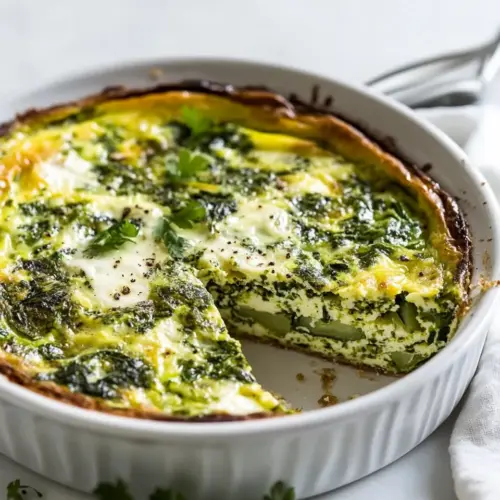
Vegetable Crustless Quiche
Vegetable Crustless Quiche offers a creamy, savory custard studded with bright asparagus and tender leek, finished with crumbly feta and fresh dill. This easy weeknight or brunch dish is light yet satisfying, with a silky texture and herbaceous lift. Make it when you want a simple, elegant meal that showcases spring produce and requires minimal fuss.
Equipment
- Pie Dish
- Microwave
- Whisk
- Mixing Bowl
Ingredients
- cooking spray Lightly coat a baking dish to prevent sticking and ensure easy removal of the quiche after baking; the neutral spray requires no measuring and keeps the crustless base intact while browning edges gently.
- 2 cups chopped asparagus Roughly chop tender asparagus to provide vegetal texture and bright, slightly sweet flavor; sauté or blanch briefly to concentrate flavor and release moisture before folding into the custard mix.
- 3/4 cup leek, cut into rings or half moons Slice leeks into rings or half moons to add a mild, onion-like sweetness and subtle aromatic depth; rinse thoroughly to remove grit and lightly cook to soften and mellow before combining with eggs.
- 1 cup crumbled feta Crumble feta to introduce tangy, salty creaminess and pockets of savory richness throughout the quiche; distribute evenly to balance the vegetables and lend a Mediterranean character.
- 2/3 cup 2% milk Whisk 2% milk into the eggs to create a smooth, slightly lighter custard that sets tenderly while keeping calories moderate; it contributes moisture and helps achieve a silky texture.
- 1/4 cup half & half Add half & half to enrich the custard with extra creaminess and a fuller mouthfeel; use sparingly to avoid an overly heavy result while promoting a luscious, custardy set.
- 5 large eggs Beat large eggs to form the structural base of the quiche custard, providing lift and binding the vegetables and cheeses together; whisk thoroughly for a uniform, tender bake.
- 3/4 teaspoon kosher salt Season with kosher salt to enhance and balance the flavors of vegetables, cheese, and custard; dissolve into the mixture so seasoning is distributed evenly without creating salty pockets.
- 1/8 teaspoon ground black pepper Grind black pepper to introduce mild heat and aromatic bite that complements the herbs and cheese; add cautiously to preserve the delicate flavors without overpowering them.
- 1/4 cup chopped dill Chop fresh dill to contribute bright, herbaceous notes and a clean, slightly anise-like flavor that pairs well with feta and asparagus; sprinkle into the custard for aromatic complexity.
- 1 teaspoon za’atar, optional Sprinkle za’atar optionally to add a warm, herbal, and slightly tangy Middle Eastern spice blend that boosts flavor; use sparingly to accentuate without dominating the quiche.
Instructions
- Preheat your oven to 350 degrees. Spray a pie dish with oil.: The oven should be fully warmed so the custard begins to set evenly the moment it goes in, producing a tender interior and lightly golden edges. You will notice a faint warmth and an even ambient heat when it is ready. If you skip preheating, the quiche may bake unevenly, leaving the center undercooked while the edges overbake. Common troubleshooting involves using an oven thermometer to confirm the true temperature, because oven dials can be inaccurate.
- Steam the chopped asparagus & leeks in the microwave with 1 tablespoon water until tender crisp and green but not mushy, about 2 1/2 to 3 minutes.: A light coating of cooking spray prevents sticking and helps the quiche come out cleanly. The sprayed surface looks uniformly glossy and will release the quiche without tearing. If you over spray, excess oil can pool and make the bottom greasy; pat away any pooling with a paper towel before adding the ingredients. Using a glass or ceramic pie dish will influence baking time slightly, so watch for visual doneness cues.
- Evenly spread the asparagus & leeks in the dish and top it evenly with the crumbled feta.: Steaming preserves the bright color and fresh bite of asparagus and softens the leek without making them watery. You'll hear a gentle hiss from the steam and see the vegetables turn a more vibrant green. Over steaming results in limp, dull colored vegetables that sink into the custard texture, so err on the side of undercooking if unsure. If your microwave is powerful, reduce the time slightly to avoid overcooking.
- Make the custard mixture by whisking together the milk, half and half, eggs, salt, black pepper. Pour the custard into the dish, top with dill & za’atar and bake 35 to 40 minutes, until the center is set.: Arrange the steamed vegetables in a single, even layer so each bite includes both texture and flavor. The scattered feta will melt slightly into the vegetables while still keeping its crumbly character, lending salty pockets. If you mound the vegetables, the custard may not penetrate evenly, producing dense areas. Take a moment to distribute the feta so no single area becomes overwhelmingly salty.
- Cut the quiche into 6 pieces and serve.: Whisk until the mixture is smooth and slightly frothy, which helps incorporate air and yields a lighter set. The mixture should look homogenous, pale, and slightly glossy. A common misstep is underwhisking, which can leave streaks of egg white or uneven texture in the finished bake. Use a whisk and a bowl large enough to avoid splashing, and taste a tiny bit to check seasoning before pouring.
- Pour the custard into the dish, top with dill & za’atar and bake 35 to 40 minutes, until the center is set: As the quiche bakes, you will see the custard begin to puff slightly and the edges turn a soft golden color, while the center should still jiggle gently but not look liquid. The aroma will shift to a warm, eggy scent accented by herb and feta . If it browns too quickly, tent loosely with foil to prevent overbrowning while allowing the center to finish cooking. Incomplete set indicates it needs more time; check after 5 additional minutes rather than removing too early.
- Cut the quiche into 6 pieces and serve: After a brief rest, the quiche will firm up and slice cleanly, revealing layers of green vegetables and creamy custard. The surface should have a gentle, silk like appearance with no visible wet custard. If you slice too soon, the pieces may be sloppy and lose shape. Let it rest for about 10 minutes so the structure stabilizes and the flavors meld.
Notes
- Lightly oil the dish to ensure easy release without excess grease, and use a spray rather than pouring oil so you don't end up with pooled fat on the bottom of the quiche.
- Mind the vegetable size, chop the asparagus into consistent pieces and slice the leek uniformly so they cook evenly and distribute flavor through each slice.
- Reserve a little cheese to sprinkle on top, which will brown attractively and add a textural contrast to the creamy interior.
- Check for doneness visually rather than relying solely on time, the center should be set with a slight jiggle, not liquid, and edges should be golden.
- Taste and adjust seasoning before baking, remembering the feta adds saltiness; start lighter on added salt and increase after baking if needed.