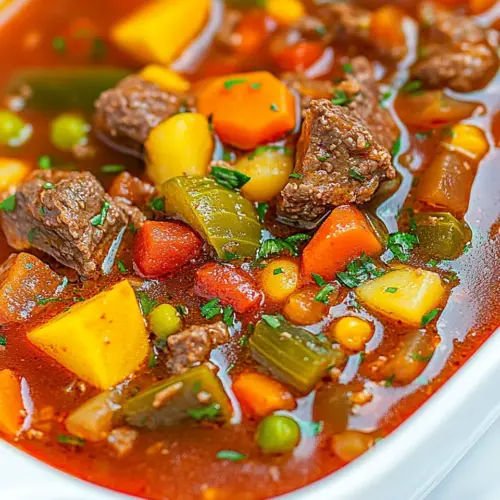
Vegetable Beef Soup
Vegetable Beef Soup is a hearty, savory bowl that combines tender beef with vibrant vegetables in a rich broth. This easy weeknight dinner delivers creamy potato bites, crisp green beans, and sweet corn in every spoonful, perfect for cold evenings. Make a big pot for leftovers that only get better over time, a comforting reason to cook it tonight.
Equipment
- 6-quart Dutch Oven
Ingredients
- 1 pound (450 g) stew meat Season and brown to build deep savory flavor and tenderize the meat; use high heat initially to sear and then simmer gently for stew texture. Adjust cooking time until fork-tender, which enriches the soup base with beef juices.
- Salt and pepper to taste Enhance overall taste balance and highlight other flavors; season gradually while cooking and adjust to preference at the end. Use freshly ground pepper for brightness and iodized or sea salt for depth.
- 3 tablespoons (45 ml) olive oil divided – or avocado oil Sauté and add fat for browning and flavor development; split use allows initial searing of meat and later softening of aromatics. Choose oil with a high smoke point if browning aggressively.
- 1 large onion diced Soften and sweeten when sautéed, contributing aromatic depth and a savory backbone to the soup. Dice uniformly to ensure even cooking and release natural sugars.
- 1 large carrot diced Provide natural sweetness and body after being diced and cooked down, helping to balance acidity from tomatoes. Cut into consistent pieces so they cook at the same rate as other vegetables.
- 2 celery stalks chopped Add mild savory crunch and aromatic support when chopped; celery helps build the classic mirepoix base for balanced flavor. Cook until tender to release its celery-salt character without becoming mushy.
- 3 cloves garlic minced Infuse pungent, aromatic flavor when minced and briefly sautéed to avoid bitterness; garlic brightens and layers into the soup's savory profile. Add near the end of sautéing to preserve its aroma.
- 4 cups (950 ml) beef broth Create the liquid base and impart beefy richness, concentrating flavors as the soup simmers; choose low-sodium if controlling salt. Simmer long enough to meld ingredients and extract flavors from the meat and aromatics.
- 14.5 ounces (400 g) canned diced tomatoes Contribute acidity, sweetness, and texture, helping to deglaze the pan and round out flavors; include juices when adding to the broth. Canned tomatoes also add body and umami without extra prep.
- 1 teaspoon Italian seasoning Introduce a blend of Mediterranean herbs to add warmth and complexity; sprinkle in early to allow flavors to infuse during simmering. Adjust quantity to taste as dried herbs are more concentrated than fresh.
- 2 bay leaves Provide subtle earthy, slightly floral notes and a gentle bitterness when simmered; bay leaves enhance overall depth during long cooking. Remove before serving as the leaves are not typically eaten.
- 2 medium (300 g) potatoes diced Add heartiness and creaminess when diced and simmered until tender; potatoes thicken the broth slightly and make the soup more filling. Cut into uniform pieces to ensure even doneness alongside other vegetables.
- 1 cup (125 g) green beans trimmed and cut into 1-inch pieces Contribute fresh green color, crisp-tender texture, and a slightly grassy flavor when trimmed and cooked to desired doneness. Add during simmering so beans remain bright and not overly soft.
- 1 cup (150 g) corn kernels (frozen or fresh) Bring bursts of sweet corn flavor and pleasant kernels of texture; use frozen or fresh depending on season and convenience. Stir in late to preserve sweetness and avoid overcooking.
- 2 tablespoons chopped fresh parsley Finish the dish with fresh herbal brightness and mild peppery flavor when chopped and sprinkled over the soup. Add at the end to maintain color and aromatic lift.
Instructions
- In a large Dutch oven, heat 2 tablespoons of olive oil over medium-high heat. Add the stew meat. Season the beef with salt and pepper and brown the beef in batches to avoid overcrowding. Once browned, transfer the beef to a plate and set aside.: The first sensory cue is the gentle shimmer of the oil and the faint scent of warm fat. When the oil ripples, it signals readiness for the beef . A proper sear seals in juices and creates browned bits on the bottom of the pot that later dissolve into rich flavor. If the oil smokes, reduce the heat immediately to avoid burning. A common misstep is adding meat to oil that is not hot enough, which leads to pale, steamed pieces instead of caramelized ones. Listen for the satisfying sizzle when the beef hits the pan, and aim for deep brown edges not gray.
- In the same pot, add another tablespoon of olive oil. Add the onions, carrots, and celery. Sauté for about 4-5 minutes or until the onions become translucent. Add the minced garlic and sauté for an additional minute.: You should hear individual pieces sizzle and see a developing mahogany crust. Browning in batches prevents the pot from cooling and steaming the meat. The aroma will shift from raw to nutty and complex as the Maillard reaction happens. If you crowd the pan, the meat will release moisture and will not brown. A helpful tip is to let each piece sit undisturbed for a minute before turning to develop color.
- Pour the beef broth and diced tomatoes (with their juice) into the pot. Return the browned beef to the pot. Add the Italian seasoning, bay leaves, and season with salt and pepper. Bring the mixture to a boil. Once boiling, reduce the heat to low, cover, and let it simmer for about 25 minutes.: After browning, the beef may be slightly underdone internally, but the exterior will hold concentrated flavor. Removing it clears the pot for the next step and preserves those fond bits. If you leave the meat in, the aromatics can burn or become soggy. A mistake I see is not deglazing the pot after removing the meat, which wastes flavor stuck to the bottom.
- Incorporate the diced potatoes into the pot. Let it simmer, covered, for an additional 15 minutes.: You will notice the pot releasing rich browned aromas, and the fresh oil helps loosen the fond. As the vegetables hit the pan, they begin to soften and their natural sugars emerge. Stir occasionally so they cook evenly and develop a translucent sheen without browning too quickly. If the heat is too high the vegetables will char rather than sweeten, so adjust as needed. The sound will change from a robust sizzle to a gentler sauté as moisture releases.
- Add the green beans to the pot and let it simmer for another 10 minutes or until the green beans are tender but still vibrant in color. Stir in the corn and let it cook for 5 more minutes or until heated through.: Watch the onions turn glossy and slightly tender, and enjoy the fragrant lift when the garlic hits the warm vegetables. Garlic cooks fast, so adding it near the end prevents bitterness. A common error is letting the garlic burn, which imparts a harsh flavor. The smell should shift to sweet and savory, signaling readiness for liquids.
- Turn off the heat. Stir in the freshly chopped parsley. Taste and adjust the seasoning if necessary.: When you add the liquids you will hear a satisfying simmer as the fond dissolves and melds into the broth. Returning the beef now lets it finish cooking slowly in a rich environment, absorbing the tomato brightness. Stir gently to combine, scraping the bottom to integrate the browned bits. If you skip scraping, you lose that deep, savory base.
- Ladle the soup into bowls and serve warm with crusty bread or a side salad if desired.: The aromas of herbs and bay leaves will perfume the pot, and a rolling boil indicates the liquid is building momentum. Boiling briefly ensures flavors mingle before the long simmer. Overboiling for too long can toughen some cuts of meat, so bring to a boil only briefly to combine everything evenly.
- Once boiling reduce the heat to low cover and let it simmer for about 25 minutes: A gentle simmer is the ideal environment for tough cuts to relax and turn tender. You will see small bubbles rise steadily to the surface and the broth will begin to deepen in color. This slow cooking breaks down connective tissue in the beef , creating a silky mouthfeel. Stir occasionally, but avoid vigorous stirring which can break apart vegetables. A common oversight is keeping heat too high, which evaporates liquid and concentrates saltiness.
- Incorporate the diced potatoes into the pot Let it simmer covered for an additional 15 minutes: Adding the potatoes now ensures they cook through without disintegrating. As they simmer, they will release a bit of starch that slightly thickens the broth and adds comfort. Watch for tender edges and a creamy interior when testing with a fork. Cutting potatoes unevenly can lead to uneven texture, so aim for consistent dice sizes.
- Add the green beans to the pot and let it simmer for another 10 minutes or until the green beans are tender but still vibrant in color: The sound will return to a soft simmer, and the sight of bright green beans against the broth is a good visual cue. They should be tender yet retain snap for contrast. Overcooking dims their color and turns them mushy. If you accidentally overcook, briefly plunge the pot into a cool surface to halt the process, or add fresh beans at the end.
- Stir in the corn and let it cook for 5 more minutes or until heated through: The kernels contribute little bursts of sweetness and a pleasing textural pop. Frozen corn will warm quickly, so five minutes is usually enough. The aroma will sweeten slightly and the spoon will pick up flecks of yellow that brighten each bowl. Avoid cooking too long which can make corn mealy.
- Turn off the heat Stir in the freshly chopped parsley Taste and adjust the seasoning if necessary: Off heat, the parsley keeps its bright green color and fresh herbaceous lift. The final taste should feel balanced between savory broth, bright tomatoes, and sweet vegetables. Adjust salt and pepper in small increments, as residual heat can concentrate flavors. A common error is over seasoning at the end without tasting first.
- Ladle the soup into bowls and serve warm with crusty bread or a side salad if desired: Serving releases a last fragrant puff, and the visual of steaming bowls invites settling into the meal. The texture should show tender beef , distinct potatoes , crispish green beans , and sweet corn . If the soup seems thin, let it rest uncovered briefly to concentrate, but if it is too thick, add a splash of broth. Avoid serving it piping hot; a slightly cooled bowl allows flavors to become more perceptible.
Notes
- Try ground beef if stew meat is unavailable, using lean ground beef gives a different texture but still yields a hearty bowl. Brown it thoroughly and drain excess fat if needed to avoid a greasy broth.
- Frozen vegetables work when freshness is limited, but add them toward the end so they just warm through and keep their texture. Avoid adding them too early as they release water and can thin the broth.
- Fire roasted tomatoes give a smoky note that adds complexity without extra steps; substitute them directly and consider reducing other smoky ingredients.
- Make it spicy by adding chili powder or serving hot sauce on the side, which lets each person control heat without altering the whole pot.
- Swap potatoes for barley or rice if you want a different mouthfeel; add pre cooked grains at the end to avoid overcooking and turning them mushy.
- Double the batch for meal prep but use a larger pot, ensuring ample surface area for proper browning and even simmering.
- Storage tips include cooling quickly and refrigerating in airtight containers for up to 4 days, or freezing portions for longer keeping.