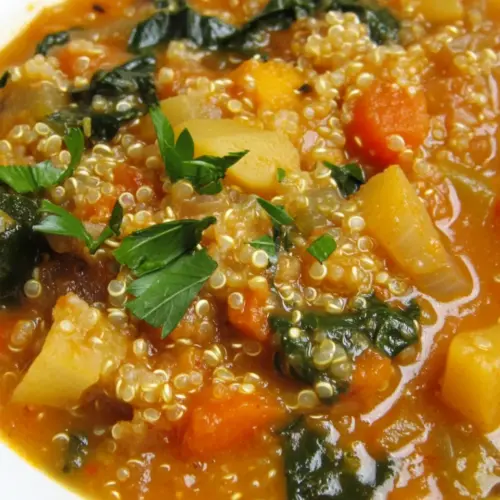
Vegetable and Quinoa Stew
Vegetable and Quinoa Stew is a creamy yet light, comforting bowl that blends nutty quinoa with tender vegetables and bright tomato broth. Perfect for an easy weeknight dinner, it offers hearty texture, vibrant herbs, and simple pantry ingredients for fuss free cooking. Make a big pot to enjoy leftovers that taste even better the next day.
Equipment
- Large Pot or Dutch Oven
- Wooden Spoon
Ingredients
- 2 tablespoons canola oil Heat and coat the pan to prevent sticking and provide a neutral frying medium; canola oil also helps transfer heat evenly and allows aromatics to bloom. Use at the start to sauté vegetables and develop a gentle base flavor for the stew.
- 2/3 cup quinoa Rinse and drain before cooking to remove any residual saponins; quinoa adds nutty texture and acts as a nutritious, protein-rich grain to bulk the stew. Simmer with liquids until fluffy to absorb flavors and thicken the broth slightly.
- 1 carrot diced Peel and dice to add tender-sweet texture and subtle earthiness; carrot contributes color and natural sweetness that balances acidic tomatoes. Cook until tender so it melds with other vegetables and releases its sweetness into the stew.
- 1/2 onion finely chopped Finely chop to release aromatic compounds and provide a savory foundation; onion builds the stew’s flavor base and adds mild sweetness when softened. Gently sauté until translucent to deepen flavor without overwhelming delicate ingredients.
- 1 head cauliflower small, chopped Chop into bite-sized florets to provide bulk, mild nutty flavor, and pleasing texture; cauliflower absorbs surrounding flavors and adds body to the stew. Simmer until tender so it integrates with quinoa and vegetables without disintegrating.
- 1/2 green bell pepper seeded and chopped Seed and chop to contribute bright, slightly bitter notes and crunchy texture; green bell pepper adds freshness and vegetal complexity to the stew. Cook until softened to release its flavor and blend with the tomato base.
- 2 cloves garlic crushed Crush to quickly release pungent oils and aromatic intensity; garlic lends depth and savory warmth that enhances the overall flavor profile. Add early in cooking and sauté briefly to avoid burning while maximizing aroma.
- 2 cups vegetable stock Provide a seasoned liquid base that adds depth and vegetable-derived umami; vegetable stock helps build a savory backbone for the stew. Use during simmering so flavors meld and quinoa cooks properly.
- 3 1/2 cups water Combine with stock to create the primary cooking liquid and ensure proper grain hydration; water increases volume and helps control stew consistency. Simmer with all ingredients so flavors dilute and harmonize as needed.
- 8 canned whole peeled tomatoes chopped Chop canned whole peeled tomatoes to add bright acidity, body, and tomato-rich flavor; they contribute both liquid and texture to the stew. Break down during cooking to create a chunky, flavorful tomato base.
- 4 tablespoons tomato sauce from the can with the tomatoes Spoon from the can to boost concentrated tomato flavor and enhance saucy thickness; tomato sauce adds a smooth, consistent tomato note to the broth. Stir in with tomatoes to enrich the stew’s overall tomato profile.
- 1 1/2 cups Chinese cabbage sliced Slice to introduce mild, crisp leaves that add a subtle cabbage sweetness and delicate texture; Chinese cabbage softens and contributes volume without overpowering other greens. Add toward the end so it retains some bite and freshness.
- 8 basil leaves torn Tear to release aromatic, sweet, and slightly peppery notes; basil infuses the stew with a fresh Italian herb character. Add near the end of cooking or as a finishing touch to preserve its fragrance and bright flavor.
- 2 bay leaves Add whole to infuse a warm, herbal, slightly floral background; bay leaves release subtle depth during simmering. Remove before serving since leaves are inedible but contribute an important aromatic layer.
- 4 shakes of Italian seasoning Shake to season with a balanced blend of Mediterranean herbs and spices; Italian seasoning adds oregano, thyme, and rosemary notes that complement tomato-based dishes. Use sparingly to avoid overpowering fresh herbs and vegetables.
- 2 cups baby spinach Toss in to wilt and provide tender leafy texture along with a mild, slightly sweet taste; baby spinach boosts nutrition and adds vibrant color. Stir in at the end of cooking to preserve nutrients and delicate texture.
- salt and pepper to taste Season to personal taste to enhance and balance flavors; salt and pepper amplify natural tastes and control overall seasoning. Add gradually and taste as you go to avoid over-seasoning the stew.
- 1/4 cup parsley for garnish Garnish to add fresh, bright herbal flavor and visual appeal; parsley provides a clean, slightly peppery finish that lifts the dish. Sprinkle just before serving to preserve its color and fresh aroma.
Instructions
- Heat the oil in a large pot or dutch oven on medium-high heat. Stir in the quinoa, carrot, onion, bell pepper, cauliflower, and garlic. Cook for a few minutes until lightly browned, stirring frequently.: As the oil warms you will hear a faint shimmer and see it move smoothly across the pan surface, indicating it is ready. I usually test by dropping a small piece of onion in; it should sizzle gently, not spit wildly. This initial heat helps the vegetables start caramelizing, which builds deeper flavor later. A common mistake is overheating the oil so it smokes, which can lead to bitter notes. If that happens, lower the heat and wipe the pan clean to start again, otherwise the stew will pick up an acrid taste.
- Pour in the stock, water, tomatoes and sauce, cabbage, bay leaves, Italian seasoning, basil, and spinach. Increase the heat to high and bring to a boil. Reduce the heat to medium and simmer until the quinoa and vegetables are tender, about 10 minutes. Season to taste with salt and pepper. Garnish with parsley before serving. Also don’t forget to remove the bay leaves!: Right after the oil is ready, adding these ingredients releases their aromas, and you will smell sweet carrot and savory onion almost immediately. The quinoa will toast faintly, giving a subtle nutty scent. Keep stirring frequently so nothing sticks, and watch for the edges of the onion to turn translucent and the quinoa to look slightly drier. One trap is crowding the pot, which steams rather than sautés; if the vegetables are releasing too much water, increase heat briefly to evaporate excess moisture for better browning.
- Cook for a few minutes until lightly browned, stirring frequently: During these minutes you should see small golden spots on the vegetable edges and hear a soft sizzle. This light browning develops complexity in the broth later on. The smell will shift from sharp raw aromatics to a sweeter, toasty profile. Avoid letting anything burn, as burned bits will introduce bitterness; if you spot dark edges, lower the heat and stir in a splash of stock to deglaze and lift those flavors into the stew.
- Pour in the stock, water, tomatoes and sauce, cabbage, bay leaves, Italian seasoning, basil, and spinach: When the liquids hit the pot you will notice a steam burst and the aroma will deepen, combining tomato tang with herb notes. The Chinese cabbage may look bulky at first but it wilts down quickly. Adding herbs and bay leaves now infuses the whole pot as it simmers. A common pitfall is adding delicate greens too early; they can overcook and lose color, so be mindful of timing. Also, stirring gently helps distribute ingredients without mashing softer pieces.
- Increase the heat to high and bring to a boil: Turning the heat up until the surface is rolling will make the stew actively bubble, and you will see the quinoa moving in the broth. This vigorous boil ensures everything gets evenly heated and helps the broth incorporate the tomato flavor fully. Watch closely so it does not boil over, and reduce heat as soon as it reaches a rolling boil to maintain a steady simmer.
- Reduce the heat to medium and simmer until the quinoa and vegetables are tender, about 10 minutes: As the pot simmers you will hear a gentle bubbling and the smell will settle into a comforting, stewy aroma. The quinoa should plump and become translucent with a tiny white ring around each grain, and vegetables should be fork tender. Simmering gently concentrates flavors while keeping textures intact. A common mistake is boiling too hard which can break down vegetables and make the broth cloudy, so aim for a moderate simmer and stir occasionally to prevent sticking.
- Season to taste with salt and pepper: After simmering, the stew's flavor will be more developed, and this is when seasoning matters most. Taste a spoonful warm, not scalding hot, and add small increments of salt and pepper until the flavors feel balanced. Over salting is easy, so go slowly. If you overshoot, a splash of water or extra vegetables can help mellow it out.
- Garnish with parsley before serving: Once served into bowls, sprinkle the parsley for a bright finish that lifts the whole dish visually and on the palate. Fresh herb aroma at this point contrasts nicely with the warm, cooked flavors. A mistake here is adding garnish too early when it will wilt into the stew; keep it fresh by adding just before serving.
- Also don’t forget to remove the bay leaves: The bay leaves have done their job by now, infusing subtle savory notes, and you will often catch their scent if you lift one from the pot. Leaving them in the bowl can create an unpleasant, papery chew, so always fish them out before plating. It is easy to miss them, so I usually set them on a small spoon beside the pot so no one bites into one unexpectedly.
Notes
- Roast first — Roast the cauliflower and carrot in the oven until golden before adding to the pot for a deeper caramelized flavor profile.
- Hearty grain mix — Replace half the quinoa with farro or barley if you want a chewier texture and heartier bite.
- Extra greens — Double the amount of baby spinach or stir in kale at the end for extra color and nutrients.
- Herb forward — Add more torn basil and a handful of chopped parsley right before serving for a very fresh, bright finish.
- Smoother broth — Use an immersion blender on a portion of the stew for a creamier mouthfeel while retaining some chunky vegetables.
- Make it spicy — Stir in a pinch of red pepper flakes with the Italian seasoning if you like a gentle heat that complements the tomato base.