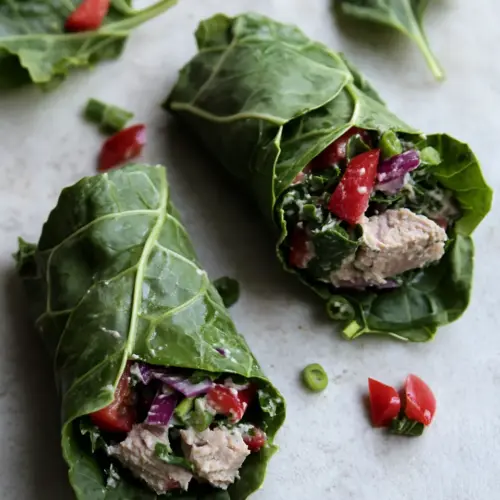
Vegan Tuna Salad Collard Green Wraps
Vegan Tuna Salad Collard Green Wraps are a creamy, briny, and crunchy plant based twist on classic tuna salad. Made with walnuts, Kalamata olives, and sea veggies, these easy wraps are perfect for an easy weeknight lunch or picnic. Bright heirloom tomato slices and sturdy collard green leaves keep each bite fresh and portable, a satisfying reason to make it today.
Equipment
- Food Processor
- Mixing Bowl
- Toothpicks
Ingredients
- 1 1/2 cups raw walnuts Provide a crunchy, rich base with natural oils and a slightly bitter undertone that mimics flaky fish when processed; blend until crumbly to create the tuna-like texture and add body to the salad.
- 1 cup pitted Kalamata olives Add a briny, tangy depth and soft texture that contributes umami and salty contrast; finely chop or pulse to distribute savory olive flavor throughout the mixture.
- 1/4 cups seaweed or sea veggies (I used dried wakame) Contribute a subtle oceanic, mineral-rich flavor and iodine complexity that enhances the seafood illusion; rehydrate if dried and finely chop before mixing for even distribution.
- 2 celery stalks coarsely chopped Introduce a fresh, crisp bite and mild vegetal sweetness that balances richer elements; chop coarsely so pieces remain discernible and provide textural contrast.
- 2 tablespoons Bubbie’s relish (I used sauerkraut, since it’s what I had) Bring bright acidity and fermented tang to cut through richness and add probiotic complexity; chop or mince finely to disperse sharp, vinegary notes throughout the salad.
- 16 collard green leaves stems removed Serve as sturdy, slightly bitter wrappers that hold the filling together and add a leafy, nutrient-dense vessel; remove stems and blanch briefly if needed for easier rolling.
- 2 heirloom tomatoes thinly sliced Provide juicy, slightly sweet acidity and a fresh tomato flavor that brightens each bite; thin slices can be layered inside wraps or served alongside for a refreshing contrast.
- 1 tablespoon fresh chopped chives optional Offer a mild oniony, herbaceous finish when finely chopped, enhancing aroma and adding a gentle, fresh garnish; sprinkle sparingly to avoid overpowering delicate flavors.
Instructions
- In a food processor, pulse the walnuts until mealy. Add the olives, sea veggies, and relish (or kraut). Process again until a coarse paste. (You might have to add a tablespoon or two of water to get it smooth).: The room smells nutty and warm as the walnuts break down, releasing their oil and developing a faint toasted aroma. You want small granules, not a paste, so pulse in short bursts to control the texture. This stage builds the base mouthfeel, making the filling satisfyingly dense. If you process too long, the mixture becomes a paste and loses the desired bite; to fix that you can gently fold in a tablespoon of chopped celery for more texture.
- Transfer the mixture to a medium mixing bowl and fold in the chopped celery.: When these ingredients hit the walnuts , a briny perfume lifts from the bowl and the mixture darkens. The olives introduce bold saltiness, while the rehydrated sea veggies bring subtle marine notes that mimic tuna, and the relish or sauerkraut adds tang. Process until a coarse paste forms, watching the consistency closely. If the mix seems dry or is not coming together, add a tablespoon or two of water, which helps it bind without diluting flavor. A common error here is overblending, which eliminates the contrast between creamy and crunchy components.
- Stack two collard green leaves on a work surface so that there are no holes (one lengthwise and the other widthwise). Place 1/4 cup of the untuna mixture in the center, followed by a tomato slice. Sprinkle with coarse sea salt, fresh cracked pepper and the chives (if using). Fold in the bottom, followed by the sides and secure with a toothpick or bamboo skewer and serve!: As the blades grind, listen for the change in sound from loud churning to a steadier hum, and look for a texture like wet sand that holds together when pressed. Achieving this texture is crucial because it mimics the flakiness of tuna while maintaining plant based structure. If you over process, the filling will be too smooth and lose interest; under processing leaves large walnut chunks that can overwhelm the other flavors. Aim for a balance where the mixture clumps slightly but still has discernible pieces.
- You might have to add a tablespoon or two of water to get it smooth: Adding water softens the mixture and brings moisture for easier spreading, and you will notice the mixture become silkier and more cohesive. Add water sparingly to avoid a soupy filling, stirring between additions. Water also helps the mixture pick up and hold the seasonings, so make small adjustments. An easy mistake is adding too much liquid; if that happens, fold in extra chopped walnuts or celery to firm it back up.
- Transfer the mixture to a medium mixing bowl and fold in the chopped celery: Once in the bowl, the cool surface highlights the contrast between the dense paste and the crisp, watery celery . Folding rather than stirring preserves the crunch, and you will notice bright green flecks distributed throughout. This step is where the filling gains fresh texture and a refreshing bite. Overmixing at this point can soften the celery , so fold gently until it is evenly incorporated.
- Stack two collard green leaves on a work surface so that there are no holes: Lay one leaf lengthwise and another widthwise to cover any gaps, and you will see the dark glossy surface provide a sturdy platform for assembly. Removing the central stem helps the leaf bend without tearing, and the layered approach prevents leaks. Be careful not to stack too many, which makes rolling bulky; two is just right for strength and flexibility.
- Place 1/4 cup of the untuna mixture in the center, followed by a tomato slice: The bright red tomato contrasts visually with the earthy filling and adds a burst of juicy acidity in each bite. Spoon the filling into a compact mound and set a single thin tomato slice on top, aiming to keep juices contained. If tomatoes are very ripe, pat them dry first to avoid sogginess. Crowding too much filling can make the wrap hard to roll and prone to splitting.
- Sprinkle with coarse sea salt, fresh cracked pepper and the chives if using: A fine shower of coarse salt and a crack of black pepper wake up all the flavors, while the chopped chives add a mild onion note and a pop of color. Season sparingly because the olives already provide saltiness. Taste a small bit of the filling before seasoning heavily to avoid over salting, which is a common slip when working with brine rich ingredients.
- Fold in the bottom, followed by the sides and secure with a toothpick or bamboo skewer and serve: As you fold, the wrap compresses slightly and you will hear the quiet rustle of the leaves, feeling them seal the filling. Use firm but gentle pressure to form a tidy parcel and insert a toothpick to lock it in place. Serve immediately to enjoy the crispness of the collard green and the fresh tomato . If you wait too long, the tomato may release juices and soften the leaf, so assemble close to serving time when possible.
Notes
- Use raw almonds or cashews if you have a walnut allergy, pulse to a similar coarse texture so the filling remains hearty.
- Try different briny olives like Castelvetrano for a milder flavor, which softens the salinity if you prefer a less assertive bite.
- Rehydrate sea veggies briefly in warm water if they are very dry, drain well to avoid adding excess moisture to the filling.
- Bring relish or sauerkraut to room temperature before mixing so the flavors blend evenly and the oil does not congeal in the filling.
- Prep filling ahead and store separately for up to three days, this keeps the collard green leaves crisp and makes assembly quick at mealtime.