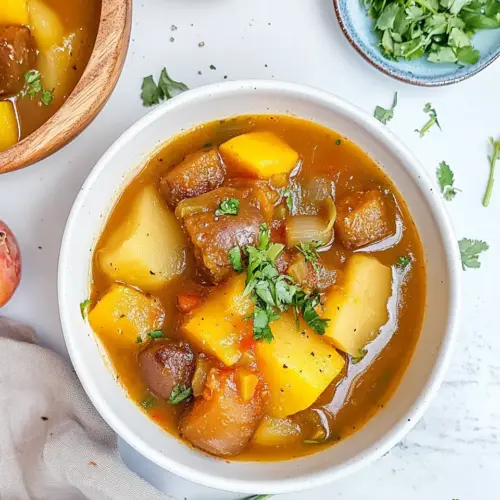
Vegan Sancocho
Vegan Sancocho is a hearty root stew with creamy yellow split peas, rehydrated dry mushrooms, and a medley of starchy roots. This warming, earthy stew is perfect as an easy weeknight dinner or a comforting winter meal, offering creamy textures and bold savory depth. Try it for a nourishing, crowd pleasing bowl that tastes like slow simmered comfort.
Equipment
- 6 qt pot
- Knife
- Cutting Board
Ingredients
- 1/4 cup olive oil Heat and flavor the base of the stew by sautéing to release aromatics and create a fragrant cooking foundation for the sancocho.
- 3 garlic cloves, crushed Crush and gently simmer to infuse the broth with pungent, savory notes that deepen overall soup complexity.
- 1 teaspoon oregano, (dry leaves) or 1/2 teaspoon of powdered orégano Add dried herb fragrance and a hint of earthiness to unify flavors; use powdered form for even distribution if preferred.
- 1 cup yellow split peas Provide protein and body by breaking down during simmering; yield creamy texture and earthy flavor that thickens the broth.
- 1 quart vegetable broth, [1 liter] or homemade vegetable broth recipe Form the liquid backbone of the dish; supply depth, minerals, and a savory medium for simmering the vegetables and legumes.
- 1 cup dry mushrooms, (about 2 oz [57 g]) of dry porcini (see notes) Rehydrate to impart concentrated umami and smoky, savory mushroom depth; soak and strain liquid into the broth for added intensity.
- 1/4 pound yuca, (cassava) [0.24 kg], peeled and cut into small pieces Contribute starchy, slightly sweet texture that holds shape while becoming tender; help thicken the stew and add traditional root flavor.
- 1/4 pound yautía, (malanga) [0.24 kg] (optional) Optional starchy tuber that adds moist, slightly nutty texture; include to increase variety and traditional authenticity when desired.
- 1/4 pound auyama, (kabocha squash) [0.24 kg] Impart sweet, nutty flesh that breaks down into silky pieces; balance starchy roots and add color and squash sweetness to the stew.
- 1 plantain, (green, unripe) cut into 1/2" slices Provide firm, starchy texture with mildly sweet, banana-like flavor; hold shape during cooking and add traditional Latin American character.
- 1/4 pound ñame, (yam, read more) [0.24 kg] (optional) Optional dense tuber that offers creamy, slightly sweet flesh when cooked; use to increase heartiness and traditional texture variety.
- 1 corn cob, cut into 1/2" slices (optional) Optional corn rounds that release sweet kernels and starch into the broth; add classic corn flavor and visual appeal to the stew.
- 1 bunch cilantro, and parsley, chopped Add fresh herbal brightness and a clean, citrusy finish; stir in near the end to preserve aroma and enhance overall freshness.
- 1 1/2 teaspoons salt, (or more, to taste) Season the soup to taste and enhance all flavors; dissolve during cooking to bring out savory notes and balance the dish.
- 1/2 teaspoon pepper, (freshly-cracked, or ground) (or more, to taste) Provide subtle heat and aromatic backbone when cracked or ground; balance flavors and add a gentle peppery finish.
- Agrio de naranja, to serve (optional) Serve as a bright, acidic condiment to cut richness and add zesty citrus tang; squeeze over bowls just before eating if desired.
Instructions
- Heat the olive oil over medium heat. Add the garlic, orégano, and split peas. Cook and stir for a few seconds.: Close your eyes and notice the pop as the olive oil warms, then the immediate fragrant rush when the crushed garlic hits the pan, releasing a nutty, slightly sweet aroma. As the oregano warms, it releases faintly piney, herbaceous notes that mingle with the oil, and the yellow split peas begin to toast gently, giving a toasty, almost nutlike scent. This is when the kitchen starts to smell like a stew that will stand up on its own. The brief heat helps jumpstart flavor without browning the garlic into bitterness. A common mistake here is overheating so the garlic burns and sours the base, so watch the pan and keep the heat moderate.
- Add 1 qt [1 lt] of vegetable broth plus 1 qt [1 lt] of water. Cover and lower temperature. Simmer until the split peas are very soft. Add more water to maintain the same level and stir when it becomes necessary.: You will hear a gentle simmer start, and within minutes steam will carry those roasted pea and mushroom notes into the air. The liquid should cradle the peas so they can swell and break down, turning the broth into a silky foundation. Stir occasionally to prevent sticking at the bottom, especially as the peas begin to thicken, scraping any bits that cling so they reincorporate flavorfully. The visual cue is the broth becoming more opaque and slightly viscous as the peas soften. If the simmer is too vigorous, the peas can pulverize unevenly, creating a gummy texture, so keep the heat low and patient. A typical misstep is neglecting to adjust liquid, which can lead to drying and uneven cooking.
- When the split peas are cooked through, add the dry mushrooms, cassava, malanga, plantain, pumpkin, yam, and corn. Simmer covered over medium heat until all the vegetables and roots are cooked through.: As you add the rehydrated dry mushrooms , they release concentrated umami back into the pot, deepening the color and scent of the broth. Dropping in the chopped yuca , yautía , auyama , sliced plantain , ñame , and corn brings a chorus of textures. Listen for a low, steady bubbling, and keep the lid mostly closed to trap steam so the roots soften evenly. Visual checks matter here: tender roots will yield to a fork with slight resistance, while squash will become glossy and creamy. Stir gently now and then to ensure even cooking. One common error is overcrowding the pot with unevenly sized pieces, which can leave some roots undercooked while others are falling apart.
- Chop the cilantro and parsley and add to the pot. Season with salt and pepper to taste.: Fresh chopped cilantro and parsley introduce a verdant lift when stirred into the hot stew, and the aroma brightens immediately. This is also the moment to fine tune seasoning; the salt will enhance the natural sweetness of the roots and the savory notes from the dry mushrooms and yellow split peas . Use small pinches of salt followed by a taste, because the stew concentrates as it cools. A troubleshooting tip is to sample a spoon and adjust gradually, since oversalting is difficult to correct, and pepper should be added sparingly to avoid masking the delicate herb fragrance.
- Remove from the heat and serve. Find serving suggestions above the recipe.: When you lift the pot off the burner you will notice how the flavors have settled and the aromas become rounder as the stew relaxes. Ladle into warm bowls so the heat and steam keep the herbs lively. If desired, finish with a splash of Agrio de naranja for a bright citrus counterpoint that cuts through the richness. Be mindful that leaving it on the heat too long can over soften delicate components, so remove promptly. A typical mistake is reheating at too high a temperature, which can break down textures and mute fresh herb aromas.
Notes
- Choose sturdy roots when selecting yuca, auyama, and plantain, because freshness affects texture and cooking time.
- Toast the split peas lightly in the oil at the start to build a toasty backbone and deepen the stew's color and flavor.
- Reserve mushroom soaking liquid after rehydrating dry mushrooms, then strain and add a little to the pot for added umami.
- Stagger additions so softer ingredients like auyama join later, preventing them from turning to puree in the long simmer.
- Finish with fresh herbs at the end, stirring them in off the heat to preserve their bright scent and green color.