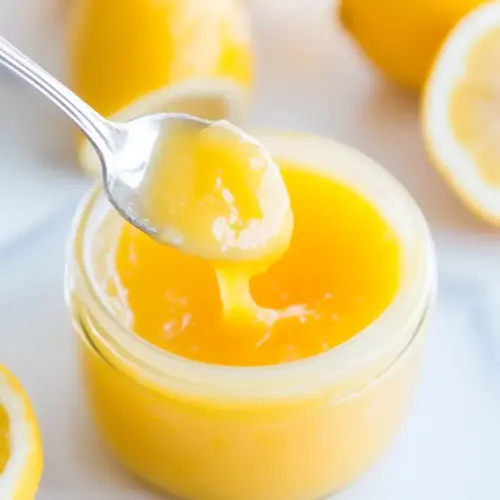
Vegan Lemon Curd
Vegan Lemon Curd is a creamy, tangy spread that balances bright citrus with smooth texture. This easy, quick recipe uses simple pantry ingredients to produce a glossy curd perfect for toast, tarts, and spooning over desserts, making it an ideal easy weekend project or quick weeknight finishing touch. Try it to add a lively burst of lemon to everyday treats.
Equipment
- Small Saucepan
- Whisk
- Measuring Cups
- Spoon
- Airtight Container
Ingredients
- 1/2 cup lemon juice Provide acidity and bright citrus flavor while balancing sweetness; helps set the curd by contributing liquid and reflecting fresh lemon character. Use freshly squeezed juice for best aroma and a clean, tangy finish that complements the sugar.
- 1/2 cup water Add necessary bulk liquid to dissolve starch and sugar and control curd consistency; helps dilute the lemon intensity for a balanced spreadable texture. Use room-temperature water to ensure even mixing and smooth heating without clumps.
- 1/2 cups sugar or erythritol Sweeten and balance the tartness while contributing to the curd's body and mouthfeel; sugar or erythritol provide sweetness and affect final texture and shelf life. Choose erythritol for a lower-calorie option but note slight cooling aftertaste and possible texture differences.
- 2 tbsp cornstarch Thicken by gelatinizing when heated with water and acid, creating the smooth, spreadable curd texture; cornstarch stabilizes the mixture and prevents separation during cooling. Mix thoroughly into the cold liquid to avoid lumps and cook until translucent to ensure full thickening.
- 1/8 tsp ground turmeric (optional for color) Impart a warm yellow hue without affecting taste when used sparingly; turmeric is optional for achieving classic curd color in small quantities. Add a tiny pinch to avoid flavor impact and stir well to distribute color evenly.
Instructions
- Combine the lemon juice, water, sugar, and optional turmeric in a small saucepan. Heat on low medium, and whisk in the cornstarch until fully dissolved. Bring to a boil, then turn the heat to low and stir constantly until it reaches your desired thickness. Enjoy hot, or let cool before transferring the vegan lemon curd to a covered container. Store in the refrigerator for up to two weeks. Thin out leftover lemon curd by reheating for a few seconds in the microwave or on the stove top.: The first thing you will notice is the sharp citrus aroma lifting from the bowl, bright and clean, which signals a fragrant base. I like to whisk the lemon juice with water and sugar off heat so the granules begin to dissolve gently, and if you add turmeric it immediately tints the mixture a warm yellow. This step is critical because pre mixing prevents clumping when heat is applied. Avoid dumping the dry cornstarch into a boiling pot, as that can create stubborn lumps you cannot easily whisk out.
- Heat on low medium, and whisk in the cornstarch until fully dissolved: As the pot warms you will hear a subtle soft hiss from the surface, and the scent of lemon will become more pronounced as volatile oils release. Sprinkle the cornstarch in gradually while whisking, ensuring each addition disappears into the liquid so it forms a smooth slurry. This attentiveness prevents grainy textures and ensures an even, glossy set later. If you whisk too slowly, you may develop pockets of undissolved starch, which will show up as tiny gritty bits in the finished curd.
- Bring to a boil, then turn the heat to low and stir constantly until it reaches your desired thickness: When the mixture hits a rolling bubble it will steam and scent the kitchen even more intensely, and that visual cue tells you the starch is activating. Once bubbling, reduce to low and keep the whisk moving, watching the liquid change from translucent to a thicker, ribbon like sheen. The sound will change slightly to a gentle simmer, and the aroma mellows into a richer lemon scent. Patience matters here, because if you remove it from heat too early, the curd will be thin when cooled. Overheating at high heat risks scorching, which gives a burnt or bitter undertone.
- Enjoy hot, or let cool before transferring the vegan lemon curd to a covered container: Fresh and warm, the curd will feel luxuriously silky on the tongue, with a lively citrus snap that pairs with toast. If you plan to store it, let it cool at room temperature until not hot to the touch before covering, which helps prevent condensation that can water down the surface. When you spoon into jars, aim for clean rims to preserve presentation. A mistake I see is sealing while still warm, causing excess steam to produce watery separation as it cools.
- Store in the refrigerator for up to two weeks: In the fridge the curd firms slightly and the flavors meld, creating a more rounded profile over time; you may notice the tartness softens a bit after a day. Keep it in an airtight container to avoid picking up other odors, and use within the suggested time for best freshness. Freezing is not recommended because the texture can become grainy after thawing. A common error is leaving it at room temperature too long, which shortens shelf life and risks fermentation.
- Thin out leftover lemon curd by reheating for a few seconds in the microwave or on the stove top: Reheating briefly loosens a chilled curd so it pours and spreads easily, and you will see steam and tiny bubbles appear as it warms. Heat in short intervals, stirring between bursts, or place back in a small saucepan on low while stirring to restore a glossy texture. This restores spreadability without thinning the flavor, but over reheating can make it watery or break the emulsion, so heat with care. Avoid blasting it at high heat which may cause separation and a dull flavor.
Notes
- Lower sugar option Use erythritol in a one for one swap for sugar to reduce calories while maintaining sweetness, tasting as you go to keep balance.
- Richer mouthfeel If you want a silkier texture, stir in a small amount of a neutral plant based cream at the end off heat to add body without overpowering the lemon.
- More vivid color Use the optional pinch of ground turmeric for a sunny hue, but keep it minimal to avoid altering flavor.
- Gentle thickening For a looser curd cook slightly less after boiling, then chill to set; this yields a spreadable, spoonable consistency good for drizzling.
- Sweeter profile If your lemons are especially tart, add a touch more sugar in small increments until the tartness and sweetness sing together.