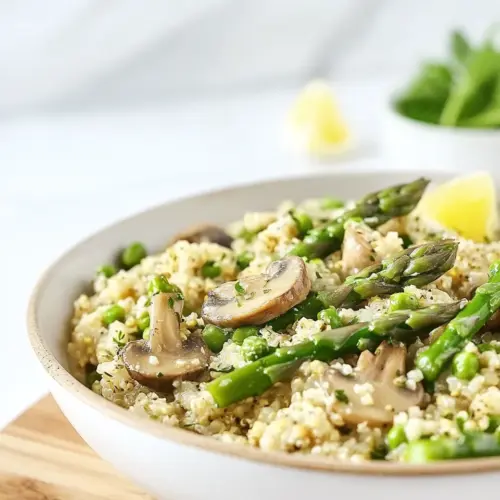
Vegan Cauliflower Rice Risotto with Asparagus Mushrooms
Vegan Cauliflower Rice Risotto with Asparagus Mushrooms is a creamy, vegetable forward dish with tender cauliflower rice, silky coconut milk, and bright asparagus. Perfect as an easy weeknight dinner or light spring meal, it balances savory mushrooms and a splash of balsamic vinegar for depth. Make it for a comforting, healthy dinner that reheats well.
Equipment
- Large Skillet or Dutch Oven
- Food processor or box grater
Ingredients
- 1 tablespoon extra virgin olive oil Enhance flavor and provide healthy fats while gently sautéing aromatics and vegetables; adds a subtle fruity richness to build the risotto base.
- 1 large yellow onion, diced Provide a sweet, savory foundation when diced and cooked until translucent; contribute texture and caramelized depth to the dish.
- 8 ounces mushrooms, sliced Add an earthy, umami-rich component when sliced and browned; contribute meaty texture and absorb surrounding flavors for complexity.
- 12 ounces asparagus, cut into 1-inch pieces Introduce a tender, slightly crisp vegetal element when cut into pieces and lightly sautéed; deliver fresh green notes and seasonal brightness.
- 1 clove garlic Impart a sharp, aromatic punch when minced or thinly sliced; elevate overall flavor and pair especially well with mushrooms and herbs.
- 1 tablespoon high quality balsamic vinegar Concentrate and brighten flavors with sweet-tangy acidity; balance richness and deglaze the pan to lift browned bits for extra depth.
- 1/2 teaspoon dried thyme (or 1 teaspoon fresh) Provide a warm, aromatic herbiness either dried or fresh; infuse the risotto with savory, slightly floral notes that complement vegetables.
- 1 pound cauliflower rice Serve as the grain-free base of the risotto, offering a light, rice-like texture; absorb liquids and flavors to create a creamy, satisfying dish.
- 3/4 cup coconut milk Contribute creamy richness and a subtle sweetness while helping bind and finish the risotto; lend a velvety mouthfeel without dairy.
- Fine sea salt Season to taste by enhancing and balancing all flavors; used sparingly to bring out the natural sweetness and umami of ingredients.
- Sliced green onions, for garnish Offer a fresh, sharp garnish when thinly sliced; add a mild oniony finish and visual contrast to the finished risotto.
- Black pepper, for garnish Provide a final touch of heat and complexity when freshly cracked; enhance overall flavor and create a mild spicy counterpoint.
Instructions
- Heat the olive oil in a large skillet or Dutch oven over medium heat. Sauté the onion until it starts to soften, about 5 minutes, then add in the mushrooms and asparagus and cook for 5 more minutes.: Warm the pan until the oil becomes shimmering but not smoking, then add the onion . You should hear a gentle sizzle as the onion hits the pan, which signals the oil is hot enough. The scent will turn from raw sharpness to a soft, sweet aroma as the pieces begin to turn translucent. This step softens the onion and builds the base flavor for the whole dish, so be patient and keep heat at medium to avoid browning too fast. A common mistake is cranking the heat, which leads to bitter, burnt edges instead of a sweet, mellow foundation. Stir occasionally so the onion cooks evenly and doesn't stick to the pan.
- If you haven't purchased prepared cauliflower rice for convenience, this would be a good time to prepare the rice while the vegetables are sautéing. Simply break up a head of cauliflower into florets and then pulse them in a food processor, or grate them with a box grater, to create a rice-like texture.: Listen for the change from heavy sizzling to a lighter, more even sound as moisture releases from the mushrooms . The mushrooms will shrink and develop richer, deeper aromas, while the asparagus will brighten in color and produce a subtle snapping sound as its moisture cooks off. This combination creates layered texture, where the tender onion and meaty mushrooms balance the fresh bite of the asparagus . Avoid overcrowding the pan; if ingredients pile up, they will steam instead of browning, which reduces flavor complexity. Keep an eye on color to ensure you get slight caramelization without burning.
- Add in the garlic, balsamic vinegar, and thyme and sauté for another minute. Add in the prepared cauliflower rice, coconut milk, and 1 teaspoon of salt, then stir well.: As you work, notice the sound of the processor and the way the florets transform into uniform grains. Freshly riced cauliflower has a raw, vegetal scent that mellows quickly with heat. Uniform pieces ensure even cooking and a better final texture, so take a moment to check for any large bits and reprocess them. A trap is leaving the pieces too large, which can create an uneven mouthfeel compared to the rest of the dish. If your cauliflower feels wet, pat it dry to prevent a watery result.
- Bring the coconut milk to a simmer and cover the pot with a lid. Lower the heat and let the vegetables cook until the cauliflower rice is tender, about 10 minutes. Remove the lid. If any excess liquid remains at the bottom of the pan, you can raise the heat to simmer it off. Adjust any seasoning to taste, adding more salt if desired. (I added another 1/2 teaspoon to mine-- I find that cauliflower needs quite a bit of seasoning!): At this point the air will be fragrant with garlic and the tang of balsamic vinegar , which should quickly reduce into a glossy coating on the vegetables. The small amount of thyme will give a subtle herbal note that complements the umami from the mushrooms . When you add the cauliflower rice and coconut milk , stir so each grain is lightly coated; you might notice a soft hissing sound as the colder liquid hits the hot pan. This step integrates flavors and starts the gentle softening process. A frequent misstep is not stirring enough, which can cause uneven seasoning pockets; ensure the salt is distributed so the dish seasons uniformly.
- Serve warm with sliced green onions and black pepper on top. Leftovers can be stored in an airtight container in the fridge for up to 4 days.: As steam begins to rise, the kitchen will fill with a warm, slightly sweet aroma from the coconut milk . Lower the heat to maintain a gentle simmer and cover so the trapped steam cooks the cauliflower rice through, resulting in a tender, creamy texture. Covering speeds the cooking and keeps moisture in, but be mindful to reduce heat so the coconut milk does not boil vigorously, which can separate fats and produce a curdled texture. A common issue is cooking at too high a temperature, which can make the sauce grainy instead of smooth. Keep it low and steady for the best result.
- Lower the heat and let the vegetables cook until the cauliflower rice is tender, about 10 minutes: During this period, breathe in the evolving aromas, watch the color deepen slightly, and listen for a calmer simmer. The cauliflower should soften to a rice like tenderness, absorbing the savory notes from the aromatics and the creaminess of the coconut milk . If excess liquid remains when you remove the lid, raise the heat briefly to let it evaporate, watching carefully so you do not scorch the bottom. Taste and adjust seasoning; I often add another 1/2 teaspoon of salt because cauliflower benefits from bold seasoning. The key mistake to avoid is under seasoning, which leaves the dish flat.
- Remove the lid. If any excess liquid remains at the bottom of the pan, you can raise the heat to simmer it off. Adjust any seasoning to taste, adding more salt if desired: At this stage, the texture should be creamy but not soupy. Increase the heat just enough to evaporate lingering liquid while stirring, which will concentrate flavors and enhance mouthfeel. Taste carefully and make small adjustments; salt and freshly ground black pepper can elevate the dish immediately. Over reducing can dry out the dish, so stop as soon as the consistency is right for you. A typical pitfall is leaving too much liquid, which makes the risotto watery rather than luscious.
- Serve warm with sliced green onions and black pepper on top: Plate the risotto while it is still hot so the aromas are vivid and the texture is at its creamiest. The sliced green onions add a crisp, fresh counterpoint and a pop of color, while the black pepper introduces a warm finish. Enjoy immediately, and if you are storing leftovers, cool quickly and refrigerate in an airtight container for up to 4 days. Reheat gently to restore the creamy texture. One mistake to watch for is letting it sit at room temperature for too long, which can affect freshness.
Notes
- Swap coconut milk for a lighter option — If you prefer a lighter mouthfeel, use a light coconut milk or a blend of plant based milk and a tablespoon of olive oil, but know the dish will be less rich and silky.
- Use pre riced cauliflower — For speed, purchase packaged cauliflower rice. Pat it dry before cooking to prevent excess water and to help the final texture stay creamy rather than soupy.
- Make it more herbaceous — Increase the fresh thyme to enhance aromatic lift, adding it at the end for brightness. Too much dried herb can become overpowering, so prefer fresh when possible.
- Boost umami — Add extra mushrooms or sear them in a hot pan first to deepen savory notes. Ensure they have room to brown; otherwise they will steam and lose flavor.
- Adjust salt carefully — Season incrementally and taste often, because cauliflower can go from under seasoned to over salted quickly. Add small amounts until it sings.