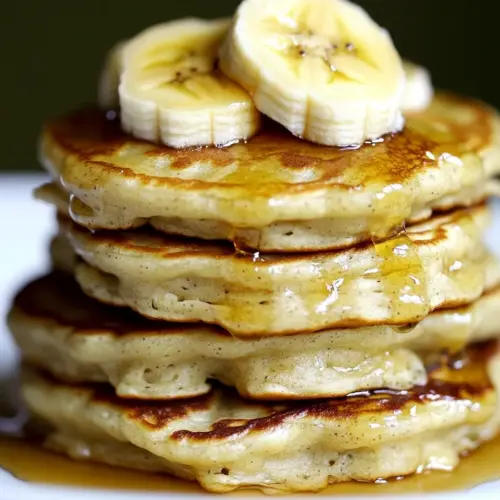
Vegan Banana Pancakes
Vegan Banana Pancakes are fluffy, naturally sweet, and easy to make with simple pantry staples. These pancakes blend ripe bananas, ground flax seed, and gluten free flour for a tender, plant based stack perfect for an easy weeknight breakfast or relaxed weekend brunch. Try them for a cozy morning that comes together quickly and tastes like comfort, without fuss.
Equipment
- Mixing Bowl
- Whisk
- Small Bowl
- Pancake griddle or skillet
- Measuring Cup
Ingredients
- 2 tbsp ground flax seed Acting as an egg substitute when mixed with water, provides binding and moisture for vegan pancakes while contributing a subtle nutty flavor and some fiber that improves texture.
- 6 tbsp water Combining with ground flax seed to create a flax 'egg', hydrates the mixture to form a gel that helps hold batter together and adds moisture without dairy or eggs.
- 1 1/2 cups Gluten-Free All-Purpose Flour Providing the bulk and structure for the batter, creates the pancake body and determines texture; using a gluten-free blend ensures tenderness and makes the recipe suitable for gluten-sensitive eaters.
- 2 tsp baking powder Leavening the batter by releasing carbon dioxide when heated, helps pancakes rise and become light and fluffy; balances density from gluten-free flour for a tender crumb.
- 1 tsp ground cinnamon Adding warm, sweet-spicy notes and aromatic depth, enhances overall flavor profile and pairs especially well with banana to create a cozy pancake aroma.
- 1/4 tsp sea salt Enhancing and balancing flavors while slightly strengthening batter structure, improves taste by rounding out sweetness and helping other flavors stand out.
- 1 cup unsweetened almond milk or coconut milk Contributing liquid to hydrate dry ingredients and create batter consistency, provides a subtle creamy base and keeps pancakes tender while remaining dairy-free.
- 2 large ripe bananas smashed Adding natural sweetness, moisture, and banana flavor while helping to bind batter slightly, creates a soft, tender crumb and intensifies overall pancake aroma.
- 1 tbsp pure maple syrup optional Sweetening gently and adding a hint of maple flavor when used, balances banana sweetness and can be omitted or adjusted to taste without affecting structure.
- 1 tsp pure vanilla extract Providing aromatic sweetness and enhancing other flavors, adds a subtle depth and rounds out the batter while complementing banana and cinnamon.
Instructions
- Stir together the ground flax seed and water in a small bowl to make flax 'eggs.' Allow this mixture to sit and thicken, stirring occasionally, while you're preparing the rest of the recipe, about 10 to 15 minutes.: The moment you stir the ground flax seed into the water , you will notice the mixture start to thicken and take on a glossy sheen, similar to beaten egg yolk but with a finer texture. Letting it rest for 10 to 15 minutes allows the slurry to form a gel, which is essential because that gelation gives the batter binding properties and prevents the pancakes from falling apart while cooking. You might smell a mild, nutty fragrance from the flax seed as it hydrates, which is normal. A common mistake is skipping the rest time, which leads to a runny binder and a loose batter, causing pancakes that spread too thin. If the mixture seems grainy after resting, stir it gently to ensure it is evenly hydrated and smooth before combining with the other wet ingredients.
- In a mixing bowl, stir together the flour, baking powder, cinnamon, and salt. In a separate bowl, whisk the mashed bananas, almond milk, maple syrup, and vanilla extract together.: When you mix the dry ingredients, the aroma of the ground cinnamon will bloom slightly, and the baking powder will be distributed so each pancake can rise consistently. I use a whisk to break up any small lumps and to evenly incorporate the Gluten Free All Purpose Flour , which helps avoid pockets of dense flour in the final pancakes. Visually, the mixture should be uniform in color with no streaks of spice or clumps of leavening. A typical pitfall is adding wet ingredients directly without properly aerating the dry mix, which can create flat pancakes or uneven texture. Take a moment to sift or whisk thoroughly so each bite is light.
- Add the flax mixture (flax egg) to the wet mixture and whisk to incorporate, then pour the wet mixture into the bowl with the dry mixture and stir to combine.: As you mash the bananas , their sweet scent intensifies and tiny ribbons of banana will be visible in the mixture, signaling natural sweetness and moisture. Whisking in the almond milk , pure maple syrup , and pure vanilla extract creates a glossy, slightly thick liquid that will marry with the flax gel and dry mix. You will notice tiny bubbles forming when the mixture is well combined, which indicates good incorporation. Avoid overwhisking to the point of breaking down the banana completely, because a little texture provides pleasant variation in the pancakes. A mistake I occasionally see is using cold plant milk straight from the fridge, which can chill the batter and affect rise, so let it sit a few minutes if possible.
- Heat a pancake griddle or skillet to just below medium heat. Add enough oil to coat the surface.: When you fold the flax gel into the wet mix, the batter will begin to thicken and show a cohesive body, indicating the binder is working. Pouring the wet into the dry and stirring until just combined keeps the pancakes tender by preventing overdevelopment of structure. You should see a slightly lumpy batter with streaks of banana and the occasional air pocket, which is a good sign. If you overmix until completely smooth, you risk dense pancakes, so stop when the dry streaks are mostly gone. A common troubleshooting tip is to let the batter rest five minutes after combining; this helps the flour hydrate and can improve texture. If your batter seems too thick, add a splash of the almond milk to loosen it to your preferred pour consistency.
- Measure about 1/8 cup to 1/4 cup of batter in a measuring cup and pour it onto the hot griddle/skillet until you run out of room. Be careful not to crowd your pancakes. Cook until several bubbles rise to the top of the pancake and the sides firm up.: As the pan warms, you will hear a soft, even hum and later a faint sizzle when you add a drop of batter, which signals the right temperature. Coating the surface with a thin film of oil prevents sticking and encourages even browning, creating those inviting golden edges. I test the heat by flicking a few drops of water into the pan; they should dance and evaporate quickly but not immediately burn. A frequent error is cooking at too high a temperature, which can brown the exterior too fast while leaving the center raw, so aim for a steady medium low to medium setting and adjust as needed based on how the pancakes color.
- Flip the pancakes and continue cooking until they're cooked through, another minute or two. Note: if your pancakes have a 'raw' consistency in the center, continue cooking them over medium heat or low heat, flipping every 2 minutes.: As the batter hits the hot surface, you will hear a gentle hiss and see the edges begin to set and change color. Bubbles forming across the surface are the visual cue that the interior is cooking and steam is escaping, which signals readiness to flip. Leaving space between pancakes prevents them from merging and helps maintain consistent heat across each cake. If you crowd the pan, the temperature will drop and the pancakes may steam instead of browning, resulting in a pale surface and dense texture. Keep an eye on the timing and the bubble formation rather than the clock alone for best results.
- Repeat for remaining batter. Serve with sliced bananas, pure maple syrup, nut butters, jam, or your favorite pancake toppings.: When you flip, the underside should be a warm, golden brown with slight caramelization from the bananas . The sound is a gentle sizzle rather than a roar, and the pancakes should feel springy to the touch. Cooking another minute or two allows the center to set fully and any moistness to redistribute, producing a tender, cohesive bite. If the center still tastes raw, lower the heat slightly and flip every two minutes until done; rushing this step with high heat is the main reason for undercooked middles.
- Repeat for remaining batter. Serve with sliced bananas, pure maple syrup, nut butters, jam, or your favorite pancake toppings.: As you finish the final batches, the kitchen will fill with a warm, sweet aroma and the stack will steam slightly as it cools, which is a good indicator to serve soon. I like to keep cooked pancakes on a warm plate in a low oven to maintain temperature without drying them out. Common mistakes include letting pancakes sit too long uncovered, which causes them to lose moisture and become less tender. Arrange toppings just before serving to preserve texture and contrast between warm pancakes and cool, fresh accompaniments.
Notes
- Make them extra fluffy by letting the batter rest for five to ten minutes after mixing so the baking powder can activate and the flour hydrates, which encourages a lighter crumb.
- Boost banana flavor by using very ripe bananas and mashing them with a fork until slightly chunky, so each bite offers pockets of banana sweetness.
- Adjust sweetness by omitting the optional pure maple syrup in the batter if your toppings are sweet, or add it if your bananas are less ripe for balanced flavor.
- Swap plant milk to change richness, using coconut milk for a silkier texture or almond milk for a lighter batter depending on your preference.
- Cook smaller pancakes by using a tablespoon to portion batter for quick, evenly cooked silver dollar style pancakes that are great for kids and portion control.
- Keep warm between batches by placing cooked pancakes on a sheet pan in a low oven, which preserves texture and heat without drying them out.