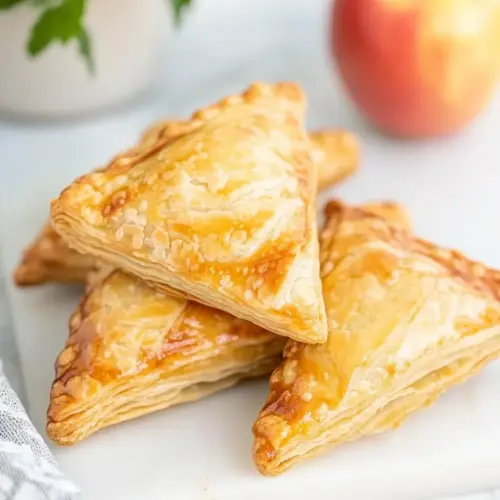
Vegan Apple Turnovers
Vegan Apple Turnovers are flaky, warmly spiced pastries filled with tender diced apples and a caramel like brown sugar sauce. This easy, crowd pleasing dessert offers crisp puff pastry layers and a glossy glaze, perfect for brunch or an easy weeknight treat. Make them for gatherings or cozy afternoons, they re simple to prepare and satisfyingly comforting.
Equipment
- Medium pan
- Rolling Pin
- Baking Sheet
- Mixing Bowl
- Knife
Ingredients
- 1 lb puff pastry (2 sheets) thawed according to package instructions Thawed according to package instructions and provide the flaky layers that form the turnover exterior, offering a buttery, crisp texture when baked. Keep chilled until assembling to maintain layers and prevent becoming too soft. Handle gently to avoid tearing and ensure even baking for golden, puffed results.
- 3 apples * peeled, cored, and finely diced Peeled, cored, and finely diced to create the tender fruit filling that softens and releases natural juices during cooking. Dice uniformly to ensure even cooking and consistent texture throughout each turnover. Use varieties that hold shape and balance sweetness and tartness for best flavor.
- 1 tablespoon unsalted dairy-free butter Melted to sauté the diced apples lightly and contribute a rich, buttery mouthfeel without dairy, enhancing the filling’s flavor. Use a dairy-free alternative with a high smoke point to gently caramelize fruit edges without burning. Add at the start of cooking to coat apples and help dissolve sugars.
- 1/4 cup (48 g) lightly packed brown sugar Lightly packed to sweeten and help create a caramel-like sauce as it dissolves with heat and water, deepening the filling’s flavor. Pack lightly to avoid over-sweetening while still providing moisture and color. Combine with spices early so the flavors meld into the cooked apples.
- 2 tablespoons water Added to dissolve sugar and help create a saucy filling that prevents dryness, while also aiding in heat transfer for uniform cooking. Use the measured amount to control consistency; more water would thin the filling, less might make it too sticky. Stir until sugars are fully dissolved before adding thickener.
- 1 teaspoon ground cinnamon Measured to season the filling with warm, aromatic spice that complements the apples without overpowering them. Adjust slightly to taste but maintain balance with other spices and sugar. Sprinkle in during cooking so the cinnamon infuses the fruit evenly.
- 1/2 teaspoon ground ginger Included to add a subtle warmth and spice complexity that pairs well with cinnamon and apples. Use sparingly to avoid overwhelming the filling, and incorporate during sautéing for even distribution. Ground ginger also helps brighten the overall flavor profile.
- 1/8 teaspoon ground cardamom and/or nutmeg optional Optional and added in small amount to introduce floral or nutty notes—cardamom for aromatic complexity or nutmeg for cozy depth—according to preference. Use only if desired, since strong spices can dominate the apple filling. Add during cooking to meld into the sauce.
- 1/4 teaspoon kosher salt Measured to enhance overall flavor and balance sweetness by lifting and rounding out the filling’s taste profile. Dissolve into the mixture while cooking so it integrates evenly and prevents pockets of saltiness. Keep to the specified small amount to avoid salting.
- 1 teaspoon cornstarch dissolved in 1 tablespoon of water Dissolved in water to act as a thickening slurry that sets the filling by absorbing excess liquid released by the apples. Add toward the end of cooking to achieve a glossy, sliceable filling that doesn’t leak from the pastry. Mix thoroughly to avoid lumps before incorporation.
- 1 tablespoon all purpose flour for dusting Used for dusting the work surface to prevent the puff pastry from sticking while rolling and shaping, ensuring clean edges and smooth handling. Sprinkle lightly to avoid adding excess flour into the pastry layers which could affect flakiness. Reapply as needed for a nonstick surface.
- 3 tablespoons plant-based milk for brushing Used for brushing the pastry seams and tops to help create color, sheen, and to seal turnovers so the filling stays enclosed during baking. Choose a plant-based milk with slight fat content for better browning and shine. Apply evenly with a brush just before baking.
- 1/2 cup (60 g) powdered sugar Sifted to create a smooth glaze when combined with non-dairy milk, adding a sweet finishing touch that complements the turnovers without making them soggy. Adjust quantity and consistency to achieve a drizzleable icing that sets slightly on cooling. Use fine powdered sugar for lump-free results.
- 1 -2 tablespoons non-dairy milk Combined with powdered sugar to thin the glaze to a drizzleable consistency for finishing the turnovers, adding moisture and shine without overpowering sweetness. Add gradually to reach desired thickness—use one tablespoon for a thicker glaze and two for a looser drizzle. Stir until completely smooth before drizzling.
Instructions
- Prep: Remove the puff pastry from the freezer and thaw according to package directions. Preheat the oven to 400 F and set a lined baking sheet aside.: As the oven warms, you should feel a gentle excitement and smell a faint neutral pastry scent in the air, not yet buttery or toasty. The thawing stage is critical because if the puff pastry is too warm it will lose its structure and become sticky, making clean cuts and folds difficult. A good indicator that pastry is ready is when it is pliable but still cold to the touch, with faint seams visible between layers. Avoid forcing the sheets open if they resist, because that tears delicate layers. Common troubleshooting is having pastry get too soft on a hot counter; if that happens, pop it back in the fridge for 10 to 15 minutes to firm up before rolling.
- Cook the Apples: Melt the butter over medium heat in a medium pan. Add the apples to the pan along with the brown sugar, water, cinnamon, ginger, cardamom, nutmeg, and salt. Mix well until the apples are evenly coated in spice. Sauté for 7 to 10 minutes, stirring occasionally, until the apples are tender and there is liquid on the bottom of the pan.: When the butter has melted and the pan gives off a faint nutty aroma, add the diced apples , brown sugar , and spices. The mixture should sizzle softly as the juices release, and within moments you will hear gentle bubbling and see glossy syrup forming on the bottom of the pan. Stir occasionally so the apples cook evenly and each piece is coated, aiming for tender but still slightly holding shape, about 7 to 10 minutes. The smell will turn warmly spiced and sweet, signaling caramelization. If the pan cooks too hot, the sugars can scorch and taste bitter, so lower the heat if you notice dark spots forming.
- Thicken the Filling: dissolve the cornstarch in water, add to the apples, and stir rapidly. Remove the apples from the heat and set aside while you prepare the puff pastry.: The cornstarch slurry should be clear and smooth before adding, and once stirred into the hot fruit it will transform the liquid into a glossy, thickened sauce within moments. You will see the juices go from runny to slightly syrupy and cling to the apples , which is the visual cue that the filling is set. This texture matters because it prevents the turnovers from becoming soggy while baking. If you add undissolved cornstarch, it can form gritty lumps, so make sure it is fully dissolved first.
- Cut the Puff: Lightly dust a cutting board or large surface with half of the flour, then place one sheet of puff pastry on top. Use a rolling pin to roll the pastry out into an 11" by 11" square, then cut into four equal squares.: Lightly dusting the board keeps the dough from sticking and helps you create a clean square when rolling to 11 by 11 inches. You should feel a gentle resistance as the rolling pin passes and hear a soft, dry pastry whisper rather than a sticky pull. Neat edges make folding easier and promote even baking. If the dough begins to stick or get warm, pause and chill it, because overworking warm pastry reduces flakiness.
- Fill the Pastry: Fill one half of each pastry square with the cooked apple mixture, leaving a 1/2" border on the edges. Brush the edges of the pastry with milk, then fold the other half of the pastry over to form a triangle; use a fork to pinch the edges together, then transfer to the baking sheet. Repeat steps 4 and 5 until you have 8 turnovers.: The filling should be cool or just warm when you spoon it onto the pastry, so the layers of dough do not steam and go soggy. Leave a 1/2 inch border so the edges can be sealed properly; when you brush the border with plant based milk , you create a glue that helps the pastry hold its shape as it bakes. Pinch edges firmly with a fork to create a sealed seam, which prevents leakage and encourages a pretty crimp pattern. A common error is overfilling, which leads to bursting during baking, so keep the portion modest and consistent.
- Bake: Cut 1-2 small slits in the top of each pastry with a knife to allow for ventilation, then brush the tops of each pastry with the remaining plant-based milk. Bake in the middle rack of the oven for 20 to 22 minutes, until the pasty is golden brown. Remove from the oven and let cool slightly on the baking sheet.: Before the pastries go in, cut 1 to 2 small slits on top to vent steam, then brush the tops with the remaining plant based milk for a golden finish. As they bake on the middle rack, the oven surrenders a warm aroma of browned pastry and caramelized apples . Look for a deep golden brown color and pronounced separation of layers as confirmation that the pastry is cooked through, usually about 20 to 22 minutes at 400 F. If the tops brown too quickly, tent with foil to avoid burning while the centers finish cooking.
- Make the Glaze (optional): Add the powdered sugar to a medium bowl and add 1 tablespoon of milk; mix well. If the mixture is too thick, add more milk in 1/2 teaspoon increments, until the glaze reaches your desired thickness.: The powdered sugar and non dairy milk should blend into a smooth, glossy glaze that drapes over the turnovers. Start with one tablespoon of milk and add in 1/2 teaspoon increments to reach a ribbon like consistency that holds its shape briefly on a spoon. If the glaze is too runny it will slide off instead of coating, if too thick it will clump and not drizzle evenly. Sift powdered sugar first to avoid lumps for a silky finish.
- Glaze & Serve: Drizzle the glaze over the turnovers, then serve warm; leftovers will keep at room temperature for up to 3 days or can be frozen for up to 2 months. Reheat leftovers in the oven or toaster oven.: Drizzling the glaze over slightly warm turnovers lets it set into a thin sheen rather than a wet puddle, adding a sweet, tactile contrast to the flaky crust. Serve warm to enjoy the ideal mix of crisp pastry and tender, aromatic filling. Leftovers keep at room temperature for up to 3 days or can be frozen; reheat in an oven or toaster oven to re crisp the layers. Avoid microwaving, which makes the pastry soft and chewy instead of flaky.
Notes
- Keep pastry cold When working with puff pastry, chill the sheets between touches; cool pastry gives better lift and cleaner edges.
- Choose mixed apples Use a combination of sweet and tart apples for a balanced filling that is not cloying.
- Measure spices carefully Start with the suggested amounts of cinnamon and ginger and adjust next time if you prefer bolder flavors.
- Dissolve cornstarch fully Make the slurry smooth in cold water before adding so the filling thickens evenly and stays glossy.
- Don t overfill Portion the filling evenly and leave a 1/2 inch border to ensure neat seals and avoid leaks.
- Brush sparingly A light coat of plant based milk gives color without making the pastry soggy, a little goes a long way.
- Reheat properly Use an oven or toaster oven to restore flakiness when serving leftovers; microwaves soften the crust.