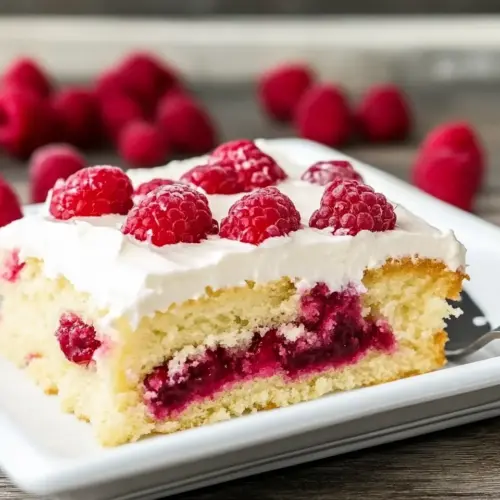
Vanilla Raspberry Sheet Cake
Vanilla Raspberry Sheet Cake is a tender, creamy traybake that pairs a soft vanilla crumb with jammy raspberries and a light cream cheese topping. This easy to slice sheet cake is perfect for spring gatherings and potlucks, offering both striking color and comforting texture. Make it ahead for stress free entertaining, it stays moist and presents beautifully for any celebration.
Equipment
- Baking sheet 13 x 18 x 1
- Large Mixing Bowl
- Electric Mixer
- Small Saucepan
- Spatula
- Refrigerator
Ingredients
- 1 box Vanilla Cake Mix Provides the base structure and primary flavor for the cake batter; contains flour, sugar, leavening agents, and vanilla that simplify mixing and ensure consistent texture. Helps form the crumb and rise during baking, creating the sheet cake foundation for fillings and toppings. Facilitates quick preparation while delivering reliable vanilla flavor throughout the cake.
- 13.4 oz box INSTANT Vanilla Pudding Mix Adds concentrated vanilla flavor and thickening power to the batter or filling; the instant pudding mix dissolves easily and helps create a moist, tender crumb. Contributes additional sweetness and body to the cake, improving mouthfeel and stability when combined with other wet ingredients. Enhances overall vanilla intensity without extra mixing steps.
- 4 large eggs Bind together liquid and dry components while adding richness and structure to the cake; eggs provide protein that helps set the crumb as it bakes. Contribute moisture and emulsification, improving volume and tenderness in the finished sheet cake. Provide lift and color to the batter when beaten and incorporated.
- 1 cup milk Moistens the batter and adjusts consistency for proper mixing and baking; milk hydrates dry ingredients and contributes subtle dairy flavor. Supports gluten development to the right degree for a tender crumb and helps dissolve sugar and pudding mix. Can affect richness depending on fat content.
- 1/2 cup vegetable oil Adds moisture and fat to the batter, promoting tenderness and a soft crumb; vegetable oil yields a moist, even texture that stays fresh longer. Keeps the cake pliable and prevents drying during storage, complementing the cake mix and pudding for a balanced mouthfeel. Distributes evenly through the batter when mixed thoroughly.
- 1/2 cup sour cream Contributes creaminess and slight tang that enhances flavor complexity and moistness in the batter; sour cream helps tenderize the crumb due to its acidity. Improves texture by adding fat and stabilizing the batter, resulting in a denser, more luxurious cake. Reacts with leavening agents to aid in lift and softness.
- 12 oz frozen raspberries Provides concentrated raspberry flavor and a soft, juicy component when folded into batter or used in the filling; frozen raspberries add moisture and fruity pockets. Thawing and draining or gently folding prevents color bleed and maintains texture, while the frozen state offers convenience year-round. Complements the vanilla base with bright, tart notes.
- 1/2 cup sugar Sweetens fillings, sauces, or raspberry mixtures and helps balance tartness from raspberries or sour cream; sugar also contributes to thickening when heated with fruit. Enhances flavor depth and can assist in macerating fresh fruit or stabilizing a compote for the cake topping. Dissolves readily to create glossy syrups or fillings.
- 1 cup water, divided Adjusts liquid balance in batters or fillings and serves as a cooking medium for making fruit sauces or cornstarch slurry; water helps hydrate dry ingredients and dissolve sugar or pudding. Dividing the water allows one portion for batter hydration and another for dissolving cornstarch, ensuring even consistency. Controls thickness and prevents lumps when combined properly.
- 4 tbsp cornstarch Thickens fruit sauces or fillings by forming a smooth, stable gel when heated with liquid; cornstarch provides body without altering flavor. Creates a glossy, spoonable raspberry compote or stabilizes thawed fruit so it stays in place on the cake. Requires proper mixing with cold water first to avoid clumping and ensure uniform thickening.
- 16 oz cream cheese, softened to room temperature Provides a rich, tangy base for frosting or filling and adds creamy stability to layered components; softened cream cheese whips smoothly with other dairy elements. Balances sweetness from whipped topping and fruit with its mild bite, creating a luxurious texture and depth. Needs to be at room temperature to blend evenly for a lump-free spread.
- 16 oz frozen whipped topping, thawed Offers light, airy volume and sweetness for a whipped frosting or mousse-style layer; thawed whipped topping combines easily with cream cheese to lighten texture. Stabilizes the filling while keeping it fluffy and scoopable, reducing density compared to pure cream cheese frosting. Adds neutral sweetness and structure without adding heavy dairy flavor.
- 2 cups fresh raspberries for decorating Provides fresh, vibrant garnish and bursts of tart-sweet flavor when arranged atop the finished cake; fresh raspberries add color and textural contrast. Enhances presentation and gives each slice a refreshing finish that complements the creamy layers and vanilla base. Best added just before serving to preserve appearance and freshness.
Instructions
- Preheat oven to 350 degrees F. Lightly coat a baking sheet (13 x 18 x 1) with non stick baking spray and set aside.: You will notice the kitchen warming as the oven approaches temperature, and a consistent preheat ensures even rise and browning. The baking sheet should feel room temperature before the batter goes in, avoiding thermal shock. If the oven is not fully heated you may see uneven dome formation or undercooked center. A common mistake is skipping the spray, which can cause sticking; take a moment to grease the pan thoroughly so the cake releases cleanly.
- Combine the cake mix, vanilla pudding mix, eggs, milk, oil and sour cream in a large bowl and beat on low speed for 30 seconds, then medium speed for 1 1/2 to 2 minutes, scraping the sides of the bowl as needed. Pour the cake mix into the prepared pan.: At first the batter will look slightly grainy, then smooth out as air is incorporated; you should hear a gentle stirring sound and see a glossy, uniform batter that ribbons slowly from the beater. Scraping the sides prevents pockets of dry mix, which would create gummy bits in the finished cake. Overbeating can develop excess air and create tunnels or a coarse crumb, so follow the timing closely. If the batter seems too thick, check your measuring for the milk and oil , they control consistency.
- Bake for 20 to 25 minutes or until toothpick inserted in center comes out clean. Let cool completely.: When baking, the top should change from a wet sheen to a matte, springy surface; edges will lightly pull away from the pan. A clean toothpick means the crumb is set but still tender. Cool time is crucial, because a warm cake will cause the filling to sink in or run; allow a full cool down until it feels slightly cool to the touch. Common error is cutting too soon, which results in smearing of layers, so be patient and resist the temptation to slice while warm.
- Combine the frozen raspberries, sugar and 1/2 cup water in a small saucepan. Bring the mixture to a small boil, stirring often to break down the raspberries.: As the fruit heats you will hear a gentle simmer and smell intense berry aroma. Berries will break down and release vivid red juice, and stirring helps reduce large chunks. Moderate heat prevents scorching and preserves bright color. If the heat is too high you risk burning the sugars and losing fresh flavor, so maintain a steady simmer and stir frequently to keep the mixture uniform.
- In a separate small dish combine the remaining 1/2 cup water with 4 tbsp cornstarch and pour into the simmering raspberry mixture. Let cook for a few more minutes until the filling starts to thicken. Transfer mixture to a bowl to cool completely. Set in fridge until chilled, then spread mixture evenly over the cooled cake.: The cornstarch slurry will sizzle briefly when added, then the mixture will thicken and become glossy; that sheen signals it has reached gel point. Cooling is essential so it does not seep into the cake; you want a spreadable, jammy consistency that holds shape. A frequent mistake is adding the slurry too cold which causes lumps; ensure the slurry is smooth before mixing and whisk quickly into the hot fruit.
- Add the cream cheese to a large bowl and beat with mixer until light and fluffy. Add the whipped topping and beat in until fully combined.: When beating the softened cream cheese , you will see it lighten and become airy, with a softer, paler color. Folding in the thawed whipped topping creates a silky cloudlike texture, not a dense frosting. Work at medium speed and scrape the bowl so no pockets of dense cheese remain. If the cream cheese is not fully softened you will get lumps, so plan ahead and bring it to room temperature.
- Dollop the cream cheese mixture over the top of the cake and carefully spread into an even layer.: The topping should feel cool and slightly fluffy as you spread; use a wide spatula and gentle strokes to keep it smooth. Visual cues include a glossy, even surface with no streaks or air pockets. Avoid overworking the layer which can flatten the whipped texture. A common slip is trying to spread too aggressively, which can tear the cake surface; work patiently and steady.
- Top with fresh raspberries as desired and keep chilled until ready to serve.: Lay the fresh raspberries in patterns or scatter them artfully for a rustic look; their firm texture will contrast with the soft topping. Chilling sets the layers and firms the filling so slices stay intact. Keep refrigerated to maintain texture, and avoid leaving the cake at room temperature for extended periods as the topping will soften and the filling may become runny.
Notes
- Loosen or firm up the topping by adjusting the ratio of thawed whipped topping to cream cheese, which lets you control whether the finish is cloudlike or richer and denser.
- Intensify raspberry flavor by folding a small spoonful of the cooled cooked raspberry filling into part of the topping to create swirls, giving both visual interest and extra fruit burst.
- Make ahead steps by baking the sheet cake up to two days ahead and keeping it wrapped in the fridge, ensuring assembly is quick before serving.
- Decorate for events with alternating rows of fresh raspberries and mint leaves or edible flowers, which instantly elevates the presentation without changing flavor.
- Adjust sweetness by tasting the cooked filling before thickening; add a touch more sugar if your berries are especially tart, or reduce it for a brighter, less sweet finish.
- Serve chilled by slicing after a chill period of at least one hour so each portion keeps its shape during plating.